 Follow Us on Google News
 Follow Us on Google Discover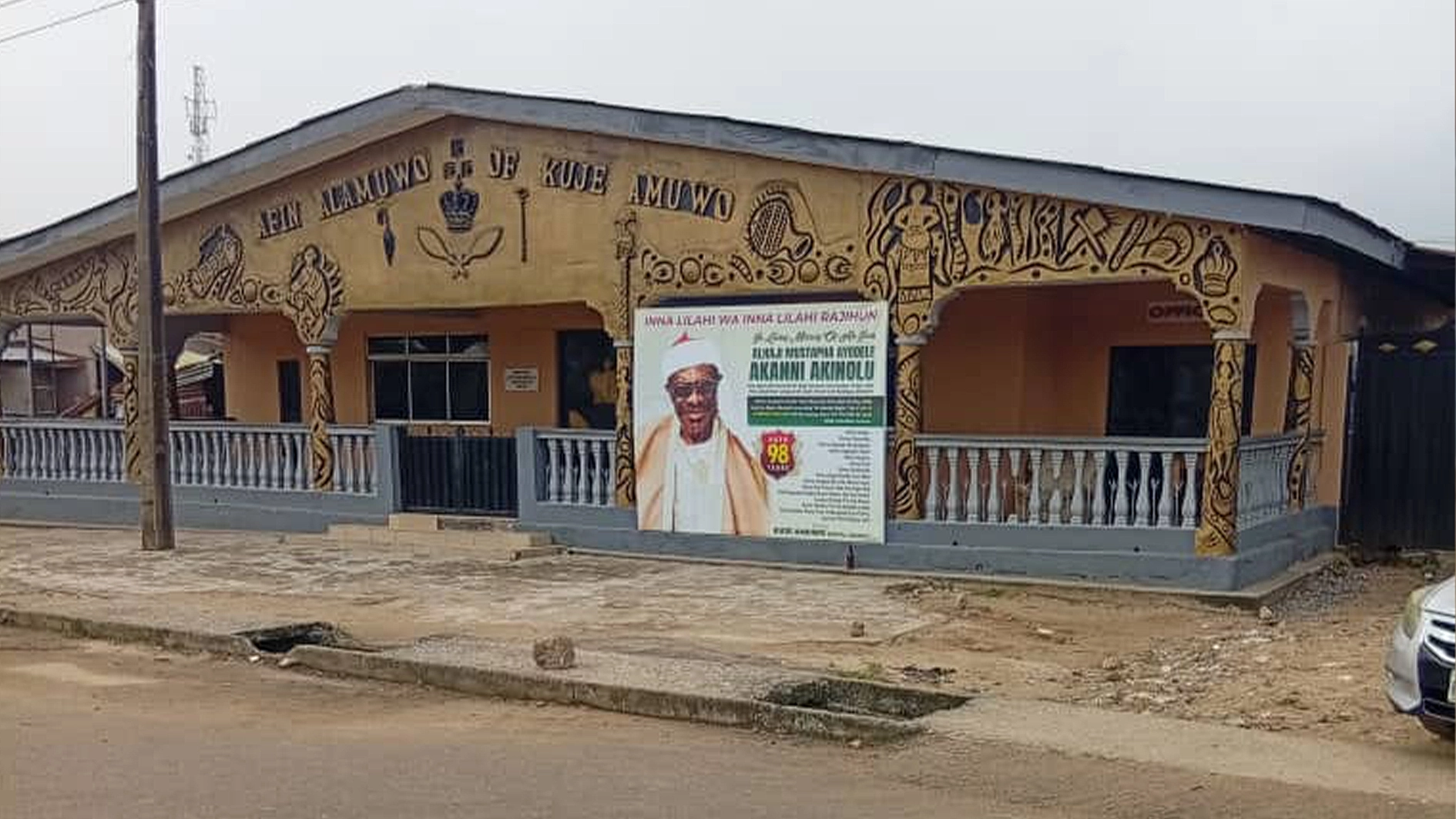
What began as a routine examination of the 2026 Federal Budget has uncovered troubling inconsistencies in allocations for palace projects in Lagos. Beyond the proposed renovation of the palace of the late Alamuwo of Kuje-Amuwo, who passed away in June 2023, The Guardian found that billions of naira have been budgeted for palace and community hall projects without clearly identifying where they will be executed, a development governance experts say undermines transparency and public accountability.
A peruse of the list of projects under the N22.15billion earmarked in the 2026 Federal Government budged for the construction of 106 Palace buildings, with some including furniture and solar installations, showed that four projects were meant to be executed in Lagos. However, while two of the projects mentioned the exact palaces that would be constructed or renovated, the other two projects were vague, with no locations.
According to the budget document, the projects for Lagos include the completion and furnishing of community hall/market/Palace of Itire Ikate valued at N337,136,500.00 listed as ongoing and being executed by the Nigerian Building and Road Research Institute, under the Ministry of Science and Technology and Innovation
The second is completion and furnishing of community and palace hall including solar inverter system and solar poles at Ojo SW 1 and 2 valued at N525 million listed as ongoing and being executed by the Nigerian Building and Road Research Institute, also under the Ministry of Science and Technology and Innovation.
The third project mentioned is the renovation of community halls and palaces in selected central communities in FNRP Lagos put at N2.661 billion to be excuted by the Federal Cooperative College, Ibadan, under the Ministry of Agriculture and Food Security
The fourth is the renovation of the Palaces of the Alamuwo of Kuje Amuwo, Lagos that was paired with that of the Alawe of Ilawe-Ekiti, Ekiti State listed as ongoing and being executed by the Ministry of Housing and Urban Development, but valued at N280 million.

When The Guardian contact the palace, the Secretary of the Kuje-Amuwo Royal family said that the family is not interested in commenting on the issue though it was only last Saturday that someone visited the palace to announce that a project would be executed. According to him, the family does not want to make a comment that will make it look like the family is against government.
However, someone very close to the palace revealed that when the person came to the palace last Saturday, he only asked what the family wanted but the family said what is the project that was planned for the palace. He added that the family however said that it would be happy if a new palace can be built on the available space behind the current palace as they want the current palace to be a monument for generations to see.
The source also revealed that the person who came took measurement and promised that they will come back with no specific time.
It was, however, learnt as part of the ritual rites for the passage of the monarch, the palace was renovated and painted.
Meanwhile the two other palace projects with no specific location raises serious accountability concerns as it would make public oversight almost impossible. The two projects with no specific locations are valued at N3.186 billion. Also, the implementing MDAs have no statutory mandate to construct palaces.
Similarly, also included in the 2026 FG budget is the completion of construction of Akesan Central Mosque in Alimosho Federal Constituency, Lagos, which was dubbed ongoing and valued at N100 million. The Federal College of Produce Inspection and Stored Products Technology, Kano, under Ministry of Agriculture and Food Security is the executing agency of the project.
The Guardian, however, learnt that the mosque management was only contacted last Sunday. A senior member of the mosque told The Guardian that the mosque has been under-construction for about a decade through community and self help. He added that nobody informed them that government wanted to complete the mosque until last Sunday when someone visited and promised they will start work once they finish the project they are executing in Surulere.
But development experts argued that as Nigeria faces increasing debt obligations, constrained public revenues, and growing demands for investments in healthcare, education, infrastructure, and security, the allocation of ₦22.15 billion in the 2026 Federal Budget for 106 palace construction projects warrants close scrutiny.
They noted that the issue extends beyond the projects themselves to the transparency and governance of public spending, as the budget analysis shows that 11 projects worth ₦5.85 billion lack disclosed locations, while implementation has been assigned to agencies whose statutory functions bear no relation to palace construction, including research institutes, educational institutions, hospitals, and regulatory agencies.
Commenting, a lawyer, Barnabas Hunjo, said as a resident, he appreciates the cultural and historical significance of traditional institutions and the role traditional rulers play in promoting peace and community development.
“However, I would be concerned if palace projects are prioritised ahead of critical needs such as education, healthcare, roads, water supply, and youth employment. Given the limited public resources available, many citizens would expect projects that have a more direct and widespread impact on their quality of life.
The key issue is whether such projects reflect the most urgent needs of the community.”
On federal lawmakers allocating constituency funds to construct or renovate traditional rulers’ palaces when the supervision and funding of traditional institutions are primarily the responsibility of local governments, Hunjo said the question goes to the heart of Nigeria’s fiscal and governance structure.
He noted that traditionally, matters relating to traditional institutions fall within the purview of state and local governments. “While members of the National Assembly often nominate constituency projects based on perceived community needs, concerns arise when federal resources are used for projects that appear to fall outside federal priorities.
“Critics argue that this may amount to a misalignment of responsibilities and resources, while supporters contend that lawmakers are simply responding to requests from their constituents. Ultimately, greater clarity and accountability are needed to ensure constituency projects align with developmental priorities and constitutional principles.
“The Constitution does not specifically empower members of the National Assembly to execute projects directly. Their primary role is to make laws, appropriate funds, and perform oversight functions. Constituency projects generally arise from the appropriation process, where lawmakers influence the inclusion of projects in the national budget to address local needs.
“The controversy is not necessarily whether palace projects can be included, but whether they represent the best use of public funds when communities face significant deficits in education, healthcare, water, and infrastructure. Therefore, the real issue is one of public policy, transparency, value for money, and the prioritisation of scarce resources rather than the mere legality of including such projects in the budget.
“In a democracy, every budgetary allocation should be measured against one fundamental question: Does it deliver the greatest benefit to the greatest number of people? That is the standard by which palace projects, like all constituency projects, should be assessed,” Hunjo stated.
Also commenting, Babatunde Balogun noted that palaces are part of traditional institutions, by extension public infrastructure, more often than not, they are built and maintained with public funds or tax payers money.
Also commenting, Babatunde Balogun noted that palaces are part of traditional institutions, by extension public infrastructure, more often than not, they are built and maintained with public funds or tax payers money.
On his part, Programme Manager, Community Life Project, Francis Onahor, said the execution of the palace projects is misplaced priority and an unfortunate waste of scarce public resources. “Across the country, many communities lack functional primary healthcare centres, quality schools, potable water, accessible roads, and basic sanitation. At a time when government resources are severely constrained, it is difficult to justify using federal constituency funds to renovate or construct palaces instead of addressing these pressing development needs. Public funds should first serve the greatest public good.”
On federal lawmakers allocating constituency funds to construct or renovate traditional rulers’ palaces, Onahor stated that it reflects a growing departure from the principles of fiscal responsibility and constitutional role clarity. “Traditional institutions are primarily the responsibility of state and local governments, which already provide various forms of support to them. Federal constituency projects should focus on closing development gaps that directly improve citizens’ welfare, not on assuming functions that belong to another tier of government.
“Beyond that, these projects create the perception that public resources are being used to cultivate political goodwill with influential traditional rulers rather than to respond to objectively identified community priorities. Whether or not that is the intention, such spending undermines public confidence in the integrity of constituency projects.”
He stated that there is no constitutional provision that specifically empowers members of the National Assembly to prioritise palace construction or renovation.
“While constituency projects emerge through the federal appropriation process and may therefore be legally funded once approved, legality should not be confused with good governance.
“The real issue is accountability. Every naira of public money should be justified by its impact on citizens’ lives. When communities continue to struggle with failing schools, inadequate healthcare, unemployment, poor roads, and unsafe drinking water, directing federal funds towards palace projects raises serious questions about equity, transparency, and whether public spending truly reflects the priorities of the people.
“Ultimately, constituency projects should be determined through genuine community consultation, evidence-based needs assessments, and measurable development outcomes – not political influence or symbolic gestures,” Onahor said.

