 Follow Us on Google News
 Follow Us on Google Discover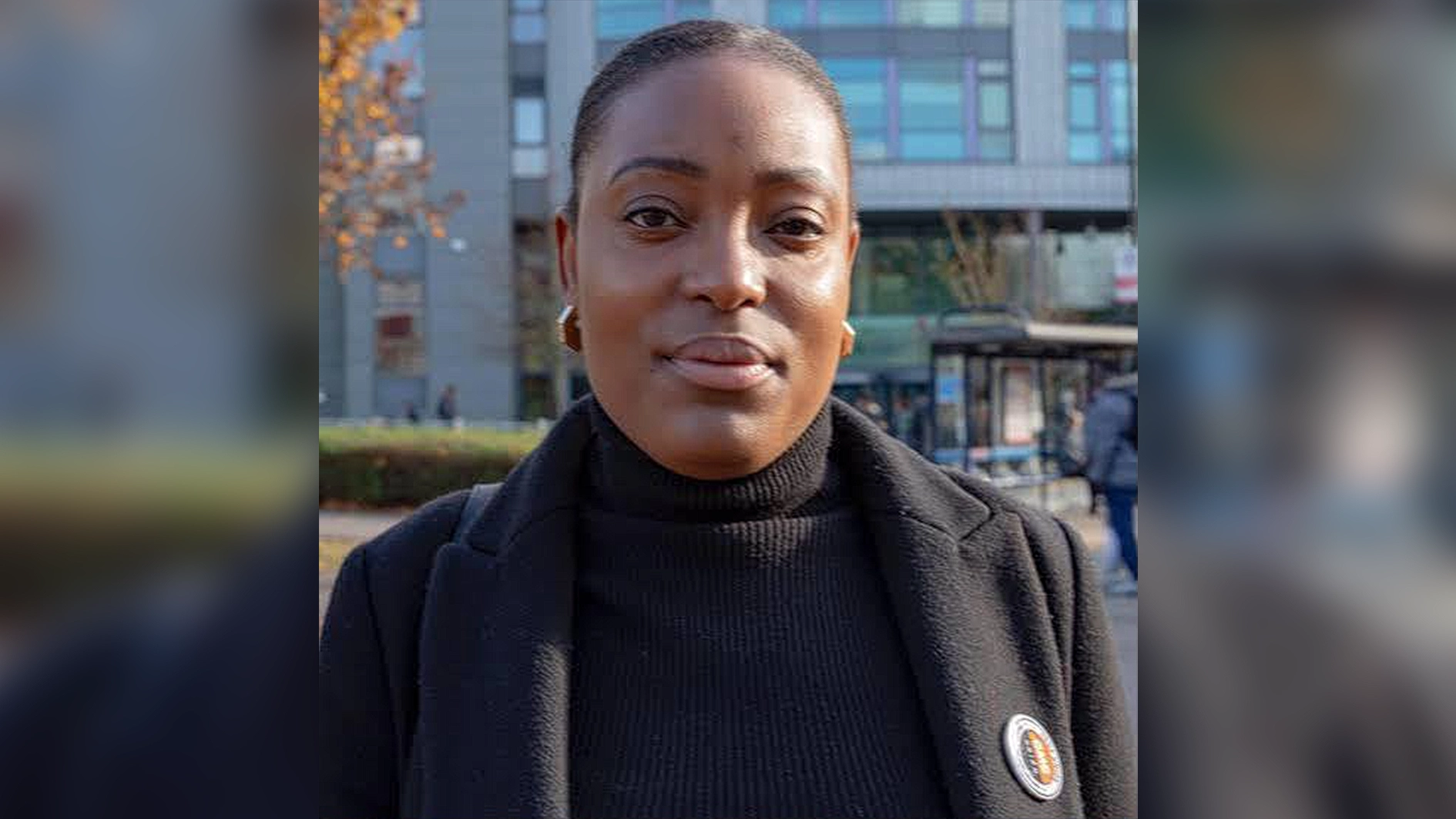
At 26, Taiwo Victoria Owatemi, got elected into the UK House of Commons and has since been a Member of Parliament (MP) for Coventry North West since 2019. In 2024, she was appointed Government Whip and Lord Commissioner of His Majesty’s Treasury, making her the face of Nigeria in the Government of the United Kingdom as the only British Nigerian minister currently serving in His Majesty’s Government. She spoke to TOPE TEMPLER OLAIYA about her journey and the outcomes of President Bola Tinubu’s state visit to the UK earlier this year.
How did this all start for you?
Growing up, my family always watched the news. I was raised to be informed, to pay attention, to understand that what happens in the halls of power does not stay in the halls of power. It comes home.
There was a moment, during my second year at university, when something happened in my local area that was deeply upsetting. I remember coming home, and my mother looked at me and said something I will never forget. She said: “You have two options. Sit down and do nothing. Or go out and make a difference.” I thought about that. And I decided she was right.
In 2019, I stood as a candidate for Coventry North West and won the seat. Within months, I was appointed Parliamentary Private Secretary to the Shadow Home Secretary, Nick Thomas-Symonds, a role I held from April 2020 to September 2021. I was selected to sit on the Health and Social Care Select Committee, where I served for four years, from March 2020 to May 2024, bringing my clinical background into the scrutiny of national health policy. In September 2021, I was appointed Shadow Minister for Women and Equalities, where I advocated for expanded protections against discrimination and pushed to equalise hate crime laws across all protected characteristics. I went on to serve as an Opposition Whip, and I chaired or co-chaired All-Party Parliamentary Groups on Pharmacy, on Child Criminal Exploitation and Knife Crime, and on Alternative Investment Management.
In the 2024 general election, the people of Coventry North West returned me to Parliament with a significantly increased majority. In July 2024, I was appointed Government Whip and Lord Commissioner of His Majesty’s Treasury. That appointment made me the only British Nigerian minister currently serving in His Majesty’s Government. I want you to sit with that for a second. The only one. It is an honour I hold with deep pride, but also with a clear understanding that it comes with a responsibility far greater than any individual ambition. When you are the only one in the room, you are not just representing yourself.
You are representing every young person of Nigerian heritage who has ever been told, in ways subtle or direct, that these spaces are not for them.
My career has never been confined to the House of Commons. I have served on numerous boards spanning the arts, culture, health, and policy. I was appointed to the Strategic Advisory Board for Cancer Research UK, and I served as a Strategic Adviser on Cancer Prevention Trials at King’s College London, focusing on cancer screening, early detection, and prevention, the very issues I spent years working on as a pharmacist. When I was appointed as a Government Whip, I stepped down from these external roles, as the responsibilities of government demanded my full focus. But every one of those positions shaped the way I think, the way I legislate, and the way I serve. In 2022, I was honoured on the Forbes 30 Under 30 list, a recognition that I accept not as a personal achievement, but as a reflection of what is possible when opportunity meets preparation and a mother who refused to let you settle for anything less than your best.
You are the face of Nigeria in the Government of the United Kingdom as the only British Nigerian minister serving currently in His Majesty’s Government. But somehow, many Nigerians, home and abroad don’t know you as much as the leader of the opposition, Kemi Badenoch; why is this so?
My daily approach to this question of visibility draws on my experience as a cancer pharmacist. When I was caring for patients who were suffering from terminal cancer, I would watch families have to make sometimes hundreds of difficult practical decisions about their loved ones’ care and final days in the background. I learned from my work with these patients and their families that there is a distance, sometimes a very long distance, between the room where a decision is made and the kitchen table where that decision is felt. Closing that distance is the work. It is slow, detailed, and often invisible. But it is the work.
That is also, I think, what is sometimes misunderstood about the role of a whip. People assume being a whip is about discipline or about counting heads in a vote. It is much more than that. A whip helps shape how legislation is built, how it moves through UK Parliament, how it is implemented once it leaves us, and how its real impact on the country is reviewed afterwards. The whip is a strategic role. It is a policy role. And it lives, by its nature, in the engine room rather than on the bridge.
So, when people ask me about visibility, and they often do, I think of my colleagues who have built something in public life that I admire. Each of them is doing work that is both important and visible, qualities which are not in tension. Maintaining a visible platform is part of how my colleagues serve, and they serve it well. My route into this is just different. I sit in a different chair, and I am drawn, by temperament and by training, to the work that happens before and after the cameras are on. There is more than one way to represent. And whether the work is loud or quiet, the measure that matters is the same. Does it reach the family at the kitchen table? That is the question I try to answer every day.
Four months ago, the UK government hosted President Bola Tinubu in an historic state visit. How did this make you feel and what are your impressions about the visit?
Honestly, it was a moment of real pride. The ceremony was powerful. To watch Nigeria received with full state honours at Windsor Castle, the carriages, the guard, the two flags side by side, was to see a country being met with the dignity it has always deserved. But what mattered just as much, perhaps more, was the substance underneath the ceremony. You could feel that this was a relationship being taken seriously, a relationship being built on a mutual vision and respect.
It is also worth noting how much has changed since the last Nigerian state visit, almost four decades ago. Nigeria today is a very different country. It is now the largest economy in Africa, with a young population, a fast-growing technology and creative sector, and a financial industry that is increasingly setting the pace on the continent. Trade between our two countries is at a record high. None of that was true in 1989. So, this visit was not just symbolic, it was a recognition of where Nigeria has arrived.
And for many Nigerians, whether at home or in the diaspora, that recognition matters. It matters more than people sometimes realise.
As part of the highlights of the visit, a partnership was announced between Nigeria and Coventry University to bring UK degrees closer home. As a Member of Parliament for Coventry North-West, how much of this was your input and how will this deal shape inclusive education opportunities for both countries?
The credit for this partnership belongs, on the Nigerian side, to the Federal Ministry of Education and Minister Tunji Alausa, and on the UK side, to Coventry University itself and to colleagues in the Department for Business and Trade, who carried out the detailed work. Coventry University is establishing a campus in Alaro City, in Lagos. From late 2026, Nigerian students will be able to earn fully accredited UK degrees, in science, engineering, business, technical and vocational fields, without ever having to leave the country. That is a significant thing. For too long, young Nigerians who wanted a world-class education had only two options, both of them hard – either pay a fortune to study abroad or accept that the best doors would not open at home. This partnership begins to offer a third path.
A partnership like this works best if it is built with Nigeria’s own universities, not at their expense. The goal, in the end, has to lift the whole system, so that a degree from Lagos or Ibadan or Nsukka carries the same weight in the world as one from Coventry. If this partnership contributes to that, it will have done its job.
Other major takeaways from President Tinubu’s visit included Lagos ports modernisation, expanding trade opportunities in SMEs, agriculture, creative economy, youth empowerment, infrastructure investment, pact on security and defence, and agreement on migration. There has been much brouhaha on the last with respect to the UK’s recent policies on immigration. What are the fine details of this agreement?
The thing I would want people to understand is that this visit was not just for a photograph session. Real agreements were reached, real investment was committed; and those agreements will be felt on both sides of this relationship for a long time to come.
Let me give three examples. First, the UK, through UK Export Finance, committed to backing a major modernisation of Nigeria’s two largest ports, Apapa and Tin Can. This means that British investment and expertise will support the infrastructure that handles the overwhelming majority of Nigeria’s trade. For the UK, this is about opening up one of the fastest-growing markets in the world to our companies and our exporters. For Nigeria, it is about efficiency, job-creation and the kind of trade infrastructure that a modern economy depends on. Both countries gain. That is what a good agreement looks like.
Second, the partnership advances long-term UK–Nigeria cooperation through strategic investment in agriculture, particularly the dairy sector. An investment agreement was reached in partnership with the Nigeria Sovereign Investment Authority. Britain has expertise in agricultural technology and supply chains that Nigeria needs, and Nigeria has the land, the workforce, and the domestic market that British companies want to work with. This agreement will be foundational to building a long-term agricultural partnership between Britain and Nigeria.
The third, and in many ways the most important example, is the strategic partnership framework itself. The UK and Nigeria agreed in 2024 that our relationship would rest on six pillars, including growth and jobs, security, migration and justice, and the people-to-people links that have always been the real fabric of this relationship. The state visit gave this framework real substance and practical weight. It was backed by concrete agreements, clear timelines and committed investment, turning a communiqué into a genuine commitment. Taken together, what you see is a new kind of UK-Nigeria relationship. One that is less about what our two countries were to each other in the past, and more about what we can build together now.
But there has been much concern about migration policies. What was actually agreed?
The first agreement is a Memorandum of Understanding (MoU) on Migration Partnership that was signed during the state visit. It builds on an earlier agreement between the UK and Nigeria from 2022, and it sets out a framework for how legal migration between our two countries is managed. That includes commitments to regular and orderly migration, and commitments on both sides to return people who do not have the right to remain. I know that particular piece will worry some people. What I would say is that the agreement does not change the rules about who has the right to be in the UK. It is about making the processes behind existing rules work more transparently.
The second is a Statement of Intent on Cooperation on Organised Immigration Crime and Border Security. It is not an agreement to police Nigerian migrants as a group. It is an agreement to go after the criminal networks that profit from migration: the smugglers, the document forgers, the traffickers, the people who take thousands of pounds from a family in Lagos and deliver that family’s son or daughter into exploitation. For years, Nigerian families have been the victims of these networks, not their beneficiaries. This agreement is about making it harder for those criminals to operate on both sides.
The third is a Statement of Intent on the expansion of business visas for UK companies working in Nigeria. This one points towards opportunity rather than enforcement. As British companies invest more into Nigeria, and as Nigerian entrepreneurs build businesses that trade with the UK, the visa system needs to keep up. The route for commerce, foreign investment, and by extension, for the people building the next generation of UK-Nigeria businesses, is being widened. Taken together, these three agreements try to reduce friction in the legal migration process, target the criminality that hurts Nigerian families the most, and open up the commercial routes that matter for both economies.
What should the governments of both countries do to follow through on all the agreements reached as well as build on their longstanding relationship?
The test of the success of any state visit is not what is signed in the room, but what happens in the months and years after the cameras leave. And I think the honest answer to your question is that both governments now need to do the less photogenic work of turning agreements into delivery. On both sides, that means putting the right structures in place so the commitments are tracked, the timelines are kept, and the people responsible for each strand of work are clearly identified.
A partnership of this size cannot live inside a single ministry in Abuja or a single department in London. It has to be built across governments, with regular ministerial contact, working-level engagement, and review points that are honest about what is working and what is not. But the deeper answer is that governments alone cannot carry a relationship of this size. The fabric of UK-Nigeria ties is not only made up of treaties and trade deals, it is made up of businesses doing business with each other, universities teaching each other’s students, churches and mosques sharing congregations, artists and musicians travelling between Lagos and London, sports teams scouting and training together, and technology companies building products for markets on both sides. These are the threads that hold the relationship up when politics is difficult, and they are the threads that governments on both sides should be actively supporting, not crowding out.
Another issue bothering the minds of many among the Nigerian community in the UK is the Home Secretary’s plan to double the time required for migrants to qualify for Indefinite Leave to Remain (ILR). Under the new proposals, most migrants, including refugees and care workers, would have to wait 10 years instead of five to secure permanent residency. How do you intend to douse this panic as their face in His Majesty’s Government?
The concern is real, and my role is to make sure it is heard clearly at the highest levels of government. My mum was a nurse. When I talk about Nigerians in our NHS, I am speaking from the kitchen in the house I grew up in, where she came home from shifts exhausted and got up and did it again. There are thousands of people like her still on British wards tonight. There are care workers quietly holding up an adult social care system the country cannot do without. There are doctors, pharmacists, technicians, cleaners and porters, many of whom came from Nigeria for a chance at a career and stayed because they built a life.
When people in our community hear that changes to Indefinite Leave to Remain might be coming, it is those lives they are thinking about. It is not only the NHS staff who are worried, it is the families who came in the early 2020s and have been here ever since, paying their taxes, raising their children, becoming part of the fabric of the streets they live on. It is the young professionals, many of them still in their first or second year in the UK, wondering whether the country they planned their future around is still planning for them. It is the students who were told that if they came, studied and worked hard, the path was clear. Each of these groups is asking a version of the same question, which is whether the contribution they are making or planning to make will be recognised fairly at the end of it.
I also want to say this. Every generation of British Nigerians in this country has had some version of this conversation. My parents’ generation came with almost nothing and built something out of it. My generation has been lucky enough to take those foundations and make our own careers in law, medicine, engineering, business, politics and much else besides. The question the community is asking now, in its quieter moments, is whether the next generation will be given the chance to do the same. That is a serious question, and it deserves a serious answer. The one I hold onto is that the best way to honour what our parents built is to make sure the door they walked through is still there for the people coming after them. Not open to everyone, without rules, because no country works that way. But fair; and recognisably fair, to the families who are waiting.
How do you intend to connect to your roots and give back to Nigeria?
Connection and contribution are two sides of the same coin for me. I stay close to Nigeria in the ways that matter most. I work with community organisations in Coventry and nationally that serve British Nigerians every day, the kinds of organisations that help a family navigate a school admission, support an elderly relative, run a Saturday school or quietly hold the line for people who would otherwise fall through the cracks. I spend time with our churches, because the Nigerian church in Britain is not only a place of worship; it is one of the most important community institutions our people have built in this country. And through Parliament, I engage with the All-Party Parliamentary Groups and the wider policy work that touches Nigeria.
What underpins all of these practical efforts is carrying the memory of my grandparents with me. They could not have imagined, when they first came to the UK and began to build their lives here, the rooms that I now walk into. But everything I do in those rooms, I do because of what they put in motion, and am motivated by their sacrifice and their dreams.
All of this happened because the path was clear for me. It happened because a nurse from Nigeria, raising three children alone in south London, refused to let her daughter believe that the ceiling above her was the sky. The sky was the sky. And she could reach it. This is my story. Not a Japa story in the traditional sense, but a diaspora story, all the same. Because the values that carried my grandparents across an ocean are the same values that carried me from a hospital ward in Dartford to the floor of the House of Commons and into His Majesty’s Government.
If there is one young Nigerian out there, in Plumstead or in Peckham or in Coventry or in Lagos or in Ibadan, who reads this and thinks, “Maybe I can do that too,” then every late night, every difficult vote, every medicine shortage I ever wrestled with will have been worth it.
And I think this is what the role of the diaspora actually is. We are not the people who left; we are the bridge. We carry Nigeria into the places we have travelled, and we carry the places we have travelled back into Nigeria. That is the diaspora’s work. It is work I am proud to do. And it is work I will keep doing, for as long as the privilege is mine to do it.

