 Follow Us on Google News
 Follow Us on Google Discover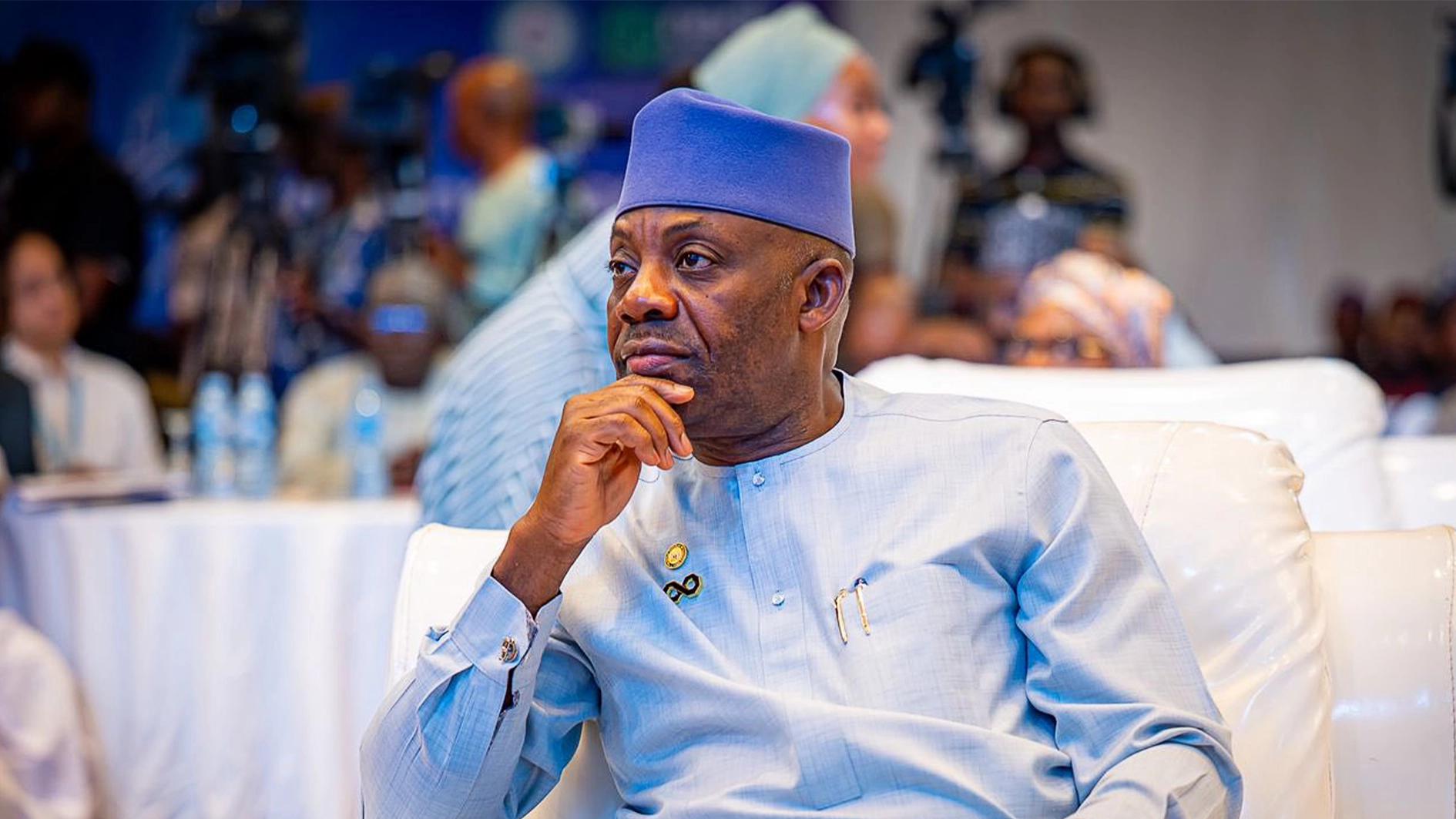
Official enrolment data from the Universal Basic Education Commission (UBEC) and the National Senior Secondary Education Commission (NSSEC) reveal that over 26 million learners drop out of school between primary and senior secondary levels. The figure, which is roughly equivalent to a combined population of 14 African countries, exposes the school retention challenge and raises fresh concerns over human capital crises, OWEDE AGBAJILEKE reports.
That over 26 million Nigerian learners abandon formal education before attaining senior secondary level is worrisome. The staggering data obtained from the Universal Basic Education Commission (UBEC) and National Senior Secondary Education Commission (NSSEC) reveal that of the 31,771,916 pupils enrolled in primary schools nationwide, only about 5.5 million remained till the senior secondary school level, underscoring the enormous retention challenge.
Specifically, UBEC’s National Personnel Audit showed that primary education accounts for the largest segment of the school system in the country, with nearly 32 million pupils. Enrolment, however, drops sharply at the junior secondary level, where only 8,003,397 students are recorded, indicating that over 23 million learners could not transit from primary to junior secondary level.
The decline becomes even steeper at the senior secondary level as the NSSEC records showed that enrolment depleted further to 5.5 million students. The statistics suggest that for every 100 children who register for primary education, only about 17 continue till the senior secondary level. In other words, about four out of every five children that begins formal education drop out before completing secondary school.
The findings came against the backdrop of Nigeria’s estimated 15 million out-of-school children, recorded as the highest number globally. The development paints a troubling picture of an education system that battles both access and retention. While millions of children are never enrolled, millions more, who gain access to classrooms, are unable to remain in school long enough to complete secondary education.
Although the Minister of Education, Dr Tunji Alausa, recently estimated that about 20 million learners are lost between primary and secondary levels, analysis of the official enrolment data from UBEC and NSSEC clearly indicated a significantly higher gap.

Speaking at the inauguration of UBEC’s Ministerial Implementation and Monitoring Committee in Abuja, Alausa blamed the alarming dropout rate largely on the disarticulation policy, which separated Junior Secondary Schools (JSS) from Senior Secondary Schools (SSS) physically and administratively.
He noted that the policy, which was originally introduced to improve administration, has rather weakened learners’ progression by creating an unnecessary break between junior and senior secondary education, making it easier for students to drop out after completing JSS.
He used the forum to announce the government’s decision to discontinue the policy while presenting the proposal to the National Council on Education (NCE), the country’s highest education policy-making body, as part of broader reforms aimed at improving retention and ensuring that more learners complete secondary education.
He said: “So, I can objectively report today that this disarticulation policy has failed. We will phase it out. We can’t be creating positions because we want to create director level for people while we harm our education system. It is not right. It is about doing what is good for every Nigerian child.”
But analysts blame the poor retention crisis on a combination of factors, including poverty, insecurity, school attacks and child labour. Others are early marriage, teenage pregnancy, inadequate infrastructure, rising household costs and weak transition mechanisms between different levels of education.
They noted that in most rural communities, children leave school to support family livelihoods. Insecurity has equally forced prolonged school closures and displaced thousands of learners.
Education stakeholders believe that reversing the trend will require more than structural reforms. Rather than tamper with an already smooth-running structure, they argued that government at all levels must strengthen social protection for vulnerable families, expand school feeding programmes, improve security around schools, provide targeted support for girls and children in conflict-affected communities, and ensure that the transition from basic to senior secondary education becomes seamless.
The magnitude of the country’s education attrition becomes more striking when one considers that an estimated 26 million learners lost between primary and secondary school levels is roughly equivalent to the populations of about 14 African countries, including Seychelles, São Tomé and Príncipe, Comoros, Djibouti, Eswatini, Mauritius, Equatorial Guinea, Botswana, Namibia, Gabon, Lesotho, Eritrea, Liberia and Central African Republic put together.
They consequently warned that unless the government urgently addresses the retention challenge from its root, the country risks sacrificing an entire generation of future workers, innovators and leaders. They added that while improving enrolment is critical, attention must be paid to retaining children in school and ensuring thàt they complete their education.
In his reaction, Prof. Edem Eniang of the University of Uyo, attributed Nigeria’s worsening school drop-out crisis to poverty, insecurity, weak education infrastructure and inadequate investment in the sector, and warned that the country risks creating a generation of unskilled youths if urgent measures are not taken.
Eniang decried the worsening economic conditions, emphasising that they have left many parents unable to pay school fees or provide uniforms, books and transportation for their children, thereby forcing thousands of learners to abandon classrooms for menial jobs to support family incomes.
He added that the situation has been compounded by persistent attacks on schools and rising cases of kidnapping in parts of the country, which have heightened apprehension among parents and discouraged school attendance.
The professor also identified cultural practices, particularly early marriage in some parts of the North, as a major factor pushing girls out of school.
According to him, poor learning environments characterised by overcrowded classrooms, dilapidated buildings and inadequate teaching materials further weaken pupils’ interest in education, while a shortage of qualified teachers continues to undermine the quality of learning across public schools.
Eniang noted that outdated curricula, ineffective teaching methods, weak guidance and counselling services, substance abuse, peer pressure, teenage pregnancy, ill health and the loss of parents or sponsors have also contributed significantly to the rising number of school dropouts across the country.
The don, who doubles as the Executive Director, Biodiversity Preservation Centre, Uyo, warned that the implications extend beyond the education sector as the growing number of children leaving school prematurely poses a serious threat to future workforce and economic competitiveness.
He stressed that idle and uneducated youths are more susceptible to recruitment by criminal and extremist groups, while the disproportionate impact of early marriage on girls deepens gender inequality and social exclusion.
To reverse the trend, the education expert called for comprehensive reforms, including increased funding for education, stronger school security, aggressive teacher recruitment and continuous professional development. He also proposed stronger community engagement to discourage harmful cultural practices that keep children, especially girls, out of school.
“Government must substantially increase investment in education because the current allocation remains far below international recommendations. Beyond funding, we need to recruit and train more teachers, strengthen counselling services for at-risk learners, secure schools, adopt innovative teaching strategies and introduce merit-based reward systems such as scholarships and incentives for outstanding teachers and students.
Also speaking, the National Mobilisation Officer, Education Rights Campaign, Michael Adaramoye, blamed the growing number of school drop-outs on years of the government’s neglect of the education sector.
He stated that the rising cost of education, particularly at the secondary school level, has placed an unbearable financial burden on working-class and low-income families, forcing many children to abandon their education.
He lamented that the persistent underfunding of public schools has left millions of pupils learning in dilapidated classrooms with inadequate facilities and severe teacher shortages, conditions that have discouraged many from pursuing education beyond the primary level.
He also expressed concern that the deteriorating quality of public education has eroded confidence in the system and diminished learners’ motivation to continue their academic journey.
Adaramoye insisted that the responsibility for reversing the trend rests squarely on the government, noting that the constitution places an obligation on the state to provide citizens with access to free and quality education.
He therefore called for increased investment in education to make public schools more accessible, affordable, and higher-quality.
He also advocated greater participation of education stakeholders, including teachers and academic unions in policy formulation and implementation. He stressed that organisations promoting education, labour unions and Nigerians generally must intensify advocacy for reforms capable of rescuing the sector as failure to act decisively could further accelerate the collapse of public education system.
Also speaking on the development, the Initiator, Creative Change Centre, Omole Ibukun, described the rising number of school dropouts as a national development and security challenge, warning that every child, who leaves school represents lost human potential.
He said the trend extends beyond the education sector and poses serious implications for economic growth, social stability and democratic development.
Ibukun advocated for improved data and tracking systems to enable education authorities to identify children at risk of dropping out early rather than allowing them to disappear from the school system unnoticed.
He also urged governments at all levels to substantially increase investment in public education, strengthen school feeding and social protection programmes, improve teacher recruitment and welfare, expand access to schools in underserved communities, and work more closely with local communities to remove barriers that prevent children from remaining in school.
He stressed the need for stronger accountability mechanisms to ensure education funds are transparently managed and utilised for their intended purposes.

