 Follow Us on Google News
 Follow Us on Google Discover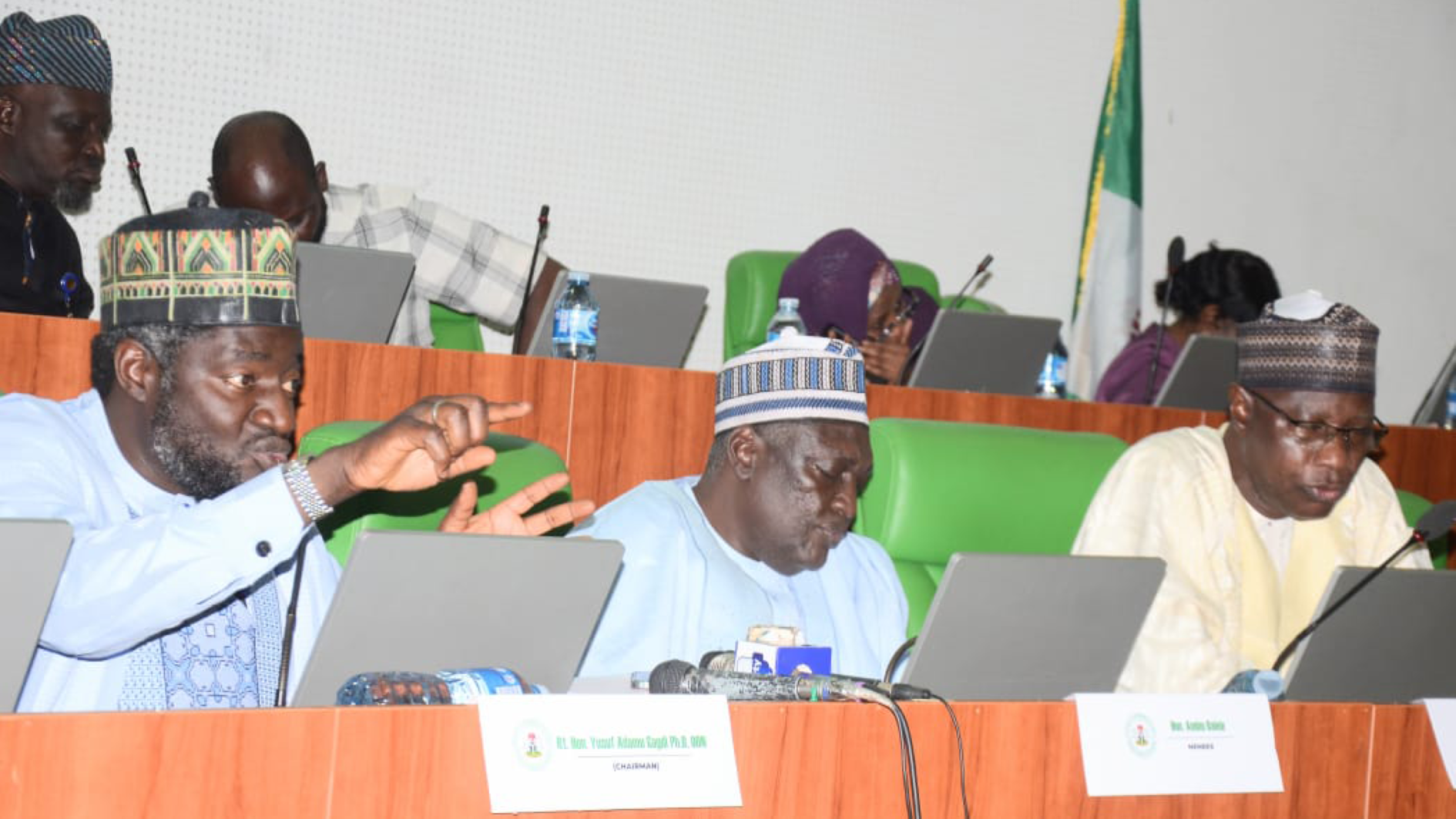
• Committee compares signatures, spots forged official documents
• Agencies disown approvals, deny recognising PFIPC
• Accountant-general says response exposing forgery was intercepted
The House of Representatives Ad-hoc Committee investigating the activities of the controversial Presidential Foreign Investment Promotion Council (PFIPC) has directed the Inspector-General of Police (IGP) Tunji Disu to produce the self-acclaimed Director-General of the organisation, Adeniyi Adeyemi, before the panel by 12 noon tomorrow.
The directive was issued yesterday during the committee’s resumed investigative hearing at the National Assembly, Abuja, as lawmakers intensified their probe into the legal status, operations and funding of the council, which the Federal Government has consistently maintained was never lawfully established.
The committee, chaired by Yusuf Gagdi, also disclosed that it had uncovered about 29 documents suspected of being forged in connection with the operations of the purported agency.
Representing the IGP, Assistant Commissioner of Police Bashir Abdullahi told the lawmakers that the police had already arrested and arraigned Adeyemi before the Federal High Court on an eight-count charge, following investigations initiated in response to petitions from the Office of the Chief of Staff to the President.
He cautioned against disclosures that could prejudice the ongoing criminal proceedings but assured the committee of the police’s cooperation in its investigation.

“The Nigerian Police Force investigated part of this case late last year and filed eight-count charges before a Federal High Court. The case is ongoing,” Abdullahi said.
He disclosed that police investigations commenced after the police received a petition dated October 17, 2025, from the Office of the Chief of Staff to the President, alleging that Adeyemi falsely presented himself as Director-General of both the Presidential Economic Advisory Council and the PFIPC.
According to the police, further petitions alleged that the suspect used the purported office to secure accommodation at the Phase III Federal Secretariat in Abuja, sought approval to recruit about 300 personnel, attempted to obtain a N1.32 billion allocation for the council in the 2026 Appropriation Act, and planned to organise a World Investment Summit under the council’s platform.
One of the highlights of the hearing was the committee’s examination of signatures on documents allegedly issued from the Office of the Chief of Staff to the President and comparison with verified official correspondence obtained by the police.
When lawmakers asked whether the signatures matched, Abdullahi replied: “They are not the same.”
Reacting, Gagdi said the findings had reinforced suspicions that several official government documents were forged.
“So, it is not only a letter that was suspected to be forged? We are dealing with documents that include what is said to be a forged Act of the National Assembly in an attempt to establish a fake agency,” he said.
The committee chairman disclosed that about 29 allegedly forged documents had so far been identified, including purported approvals from the State House, the Office of the Secretary to the Government of the Federation, the Office of the Head of the Civil Service of the Federation, the Federal Ministry of Finance and several other government institutions.
He added that officials from many of the affected institutions had already appeared before the committee and denied issuing the documents attributed to them.
Since the commencement of the investigation, senior officials from the State House, the Office of the Secretary to the Government of the Federation, the Office of the Head of the Civil Service of the Federation, the Federal Ministries of Finance, Justice, Budget and Economic Planning, Foreign Affairs, and Information and National Orientation have testified before the panel.
Representatives of the Nigerian Investment Promotion Commission, the Corporate Affairs Commission, the Independent Corrupt Practices and Other Related Offences Commission, the Code of Conduct Bureau, the Office of the Accountant-General of the Federation and other agencies have also appeared before the lawmakers.
Most of the institutions distanced themselves from the PFIPC, insisting they neither approved nor recognised its establishment. Several witnesses also disowned letters, approvals and endorsements bearing the names or insignia of their respective offices, maintaining that the documents neither originated from nor were issued by their institutions.
Gagdi noted that the committee had deliberately avoided compelling the police to disclose sensitive information that could undermine the ongoing investigation.
The committee chairman ruled that the IGP should produce Adeyemi before the panel by 12 noon tomorrow.
“This committee clearly needs the suspected Director-General to appear before it. People’s names are involved. People’s integrity is involved. Institutional names are involved. Institutional integrity is involved.
“It is not an option now. We need him here to confirm some documents so that our investigation will not be undermined and we can submit our report on time,” Gagdi said.
The committee is investigating how the PFIPC allegedly operated despite lacking legal backing, including claims that it secured office accommodation at the Federal Secretariat, sought budgetary allocation in the 2026 Appropriation Act and circulated documents purportedly issued by several government institutions.
Accountant-general alleges response exposing forgery was intercepted
THE investigation took a fresh turn yesterday as Accountant-General of the Federation, Shamseldeen Ogunjimi, told the committee that a response from his office, which could have exposed the alleged forgery at the heart of the PFIPC controversy, was intercepted before it reached the State House.
Appearing before the House of Representatives Ad-hoc committee, Ogunjimi said the Office of the Accountant-General of the Federation (OAGF) first dealt with the council in November 2024 after receiving what appeared to be a genuine request on State House letterhead for the creation of an administrative code to facilitate budgeting, accounting and financial reporting.
He said the OAGF processed the request in line with established procedures and, on November 29, 2024, replied to the State House while copying the Budget Office of the Federation.
According to him, the response never reached the Presidency because it was allegedly intercepted by Adeniyi Adeyemi.
“The letter that was written to the treasury for us to give an administrative code was responded to.
“Unfortunately, as events unfolded, it was discovered that that letter did not get to the State House. It was hijacked, precisely by the same man who claimed to be the director-general.
“Because if our letter responding to the request of the State House that an administrative code should be issued had gotten to the State House, definitely the State House would have noticed that the letter requesting an administrative code was never issued by the State House,” Ogunjimi said.
He said the treasury only later discovered that all the documents submitted in support of the council’s operations were allegedly forged.
“What the fake agency did was to submit a fake Act — so we can call it fake now because we have seen it to be fake — purportedly enacted by the National Assembly, a fake letter of appointment; everything that was submitted to the leadership in treasury was fake,” he said.
Ogunjimi explained that treasury officials acted in good faith because the request appeared to have originated from the State House.
“And so, probably they (OAGF) did not realise that it was fake, and because it was coming from State House, the approval was given for the administrative code to be issued,” he said.
The accountant-general also shed light on how two treasury officials came to work with the council, explaining that they had originally been deployed to the Office of the Chief Economic Adviser to the President in 2010 and 2013.
“We never knew. We believed, based on the records available to treasury, that those officers were still with the Office of the Chief Economic Adviser to the President.
“It was when all this matter came to light that we got to know that two of our staff were actually working or had been absorbed by the fake agency,” he said.
Ogunjimi further disclosed that the council applied to open a Treasury Single Account (TSA) and two domiciliary accounts in United States dollars and British pounds with the Central Bank of Nigeria to facilitate foreign investment transactions and preparations for a world investment summit.
He said that while the domiciliary accounts were opened for inflows only, the request for a TSA was declined. He added that the accounts never became operational because the council failed to meet subsequent requirements.

