 Follow Us on Google News
 Follow Us on Google Discover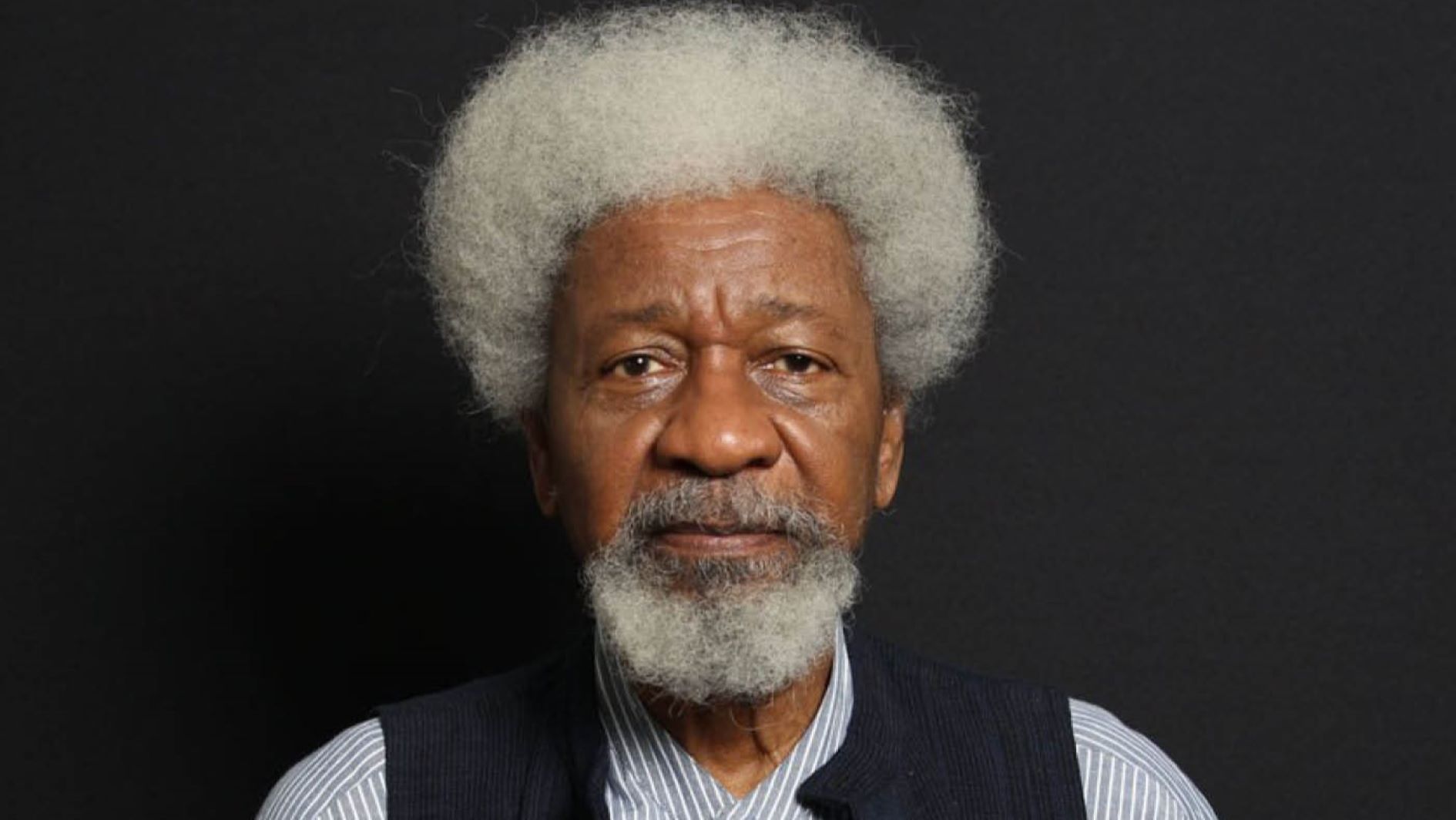
By Adesoji Adesugba
Africa’s first Nobel Laureate in Literature is less a monument to be admired than a question we have not yet answered.
When Professor Wole Soyinka leaned back in his chair after several hours of conversation in Lagos last year, the room seemed to absorb the weight of all that had been said. We had spoken of rebellion and leadership, religion and fanaticism, democracy and the individual conscience. Then, with the ease of a man continuing an ordinary chat rather than concluding an extraordinary one, he invited Dr. Dolapo Sikuade and me to visit him at his home in Abeokuta, so that we might carry on where we had stopped. Most people would have regarded the interview as complete. I left feeling it had only just begun.
My acquaintance with his ideas is much older than that afternoon. It began in 1975, when I stayed with Ayo Adewusi while sitting examinations at the University of Ife. Ayo did not begin with the plays or the vocabulary of literary criticism. He spoke about courage: a scholar unwilling to accept the comfortable separation between thought and action, a man for whom public responsibility was not an optional extension of intellectual life but one of its essential tests. This was eleven years before the Nobel Prize. The stories had the texture of legend, yet they planted a question that has followed me into adulthood: what does it mean for an intellectual to live by his ideas?
Three years later, as a student at the University of Lagos, I joined the Pyrates Confraternity, which Soyinka and six others founded at University College, Ibadan, in 1952. Its impulse was irreverent but serious. It challenged elitism, mocked pomposity, rejected tribal discrimination and insisted that educated young people had obligations beyond their own success. The tragedy is that the word “confraternity” would later be disfigured by violent campus organisations that copied its symbols while abandoning its philosophy. The movement I encountered was not an instrument of fear. It was a rebellion against fear, conformity and injustice, intended to produce not obedient followers but independent minds capable of telling the difference between authority and legitimacy.
What Soyinka contributed to that tradition was greater than an organisational identity. He helped shape a moral temperament: the refusal to be overawed by office, the instinct to challenge injustice, the use of humour against pretension, and the conviction that silence can become a form of complicity. The lesson was never that rebellion is automatically virtuous; rebellion without ethical purpose is mere destructiveness. It was that resistance becomes morally necessary when obedience requires the surrender of conscience.

That idea accompanied me through a working life across the Customs Service, law, investment promotion, arbitration, public administration and academia. In each, I met the difference between the formal possession of authority and the moral capacity to exercise it. Institutions can have elaborate rules and still fail. Leaders can hold impressive credentials and lack the character to place the public interest above personal convenience.
Soyinka’s work returns endlessly to this gap between power and legitimacy. His prison memoir, The Man Died, gave enduring form to a principle that now defines his public life: the man dies in all who keep silent in the face of tyranny. He was not speaking only of the physical victims of repression. He was describing the moral death that occurs when fear, ambition or convenience persuades people to accommodate injustice. Tyranny is sustained not only by those who command its machinery but by those who quietly adjust themselves to its presence.
These questions have not lost their urgency; they may be more urgent now, because the external forms of democracy can conceal internal moral decay. Elections take place while citizenship weakens. Constitutions remain in force while fear limits free speech. Officials invoke the national interest while institutions are bent toward private advantage. A society can keep the rituals of democracy and lose its democratic conscience. This is why Soyinka at ninety-two should not be treated as a monument to a completed past. The tribalism resisted by the young founders of the Pyrates has not disappeared; it has migrated into political calculation, public appointments and digital propaganda. The authoritarian instinct did not vanish with military rule; it returns in civilian language and bureaucratic intimidation.
On 13 July, a distinguished gathering convened at the Musa Yar’Adua Centre in Abuja to mark his ninety-second birthday and to present my book on his thought. The occasion was conceived not merely as a tribute to longevity but as a meditation on conscience, citizenship and the moral failure that so often lies beneath national insecurity. For our security crisis is also a failure of conscience. A society becomes insecure before the first weapon is fired. It becomes insecure when public trust collapses, when justice appears purchasable, when prejudice is rewarded, when young people conclude that merit is irrelevant, and when citizens cease to believe that institutions will protect them. Policing can suppress the symptoms of such a crisis, but it cannot by itself repair the compact between the state and the people.
Soyinka’s conception of citizenship demands more than periodic voting. It requires the defence of public reason, the courage to criticise one’s own group, and the recognition that silence has consequences. When institutions fail, citizens cannot simply wait for heroes. The writer may alert society to tremors beneath the surface, but no writer changes the world alone. Ideas become historically consequential only when others take responsibility for them. That is the meaning behind the title of my book. It is not a sentimental assurance that every idea survives, for many deservedly disappear. It is that ideas rooted in conscience can outlast the circumstances that first produced them, because they reappear in new minds and new struggles. Governments fall, prisons open, censors retire and slogans fade. Yet an idea once released into the moral imagination of a people can travel in ways its originator cannot control.
I am evidence of that journey. An idea reached me in 1975 through a conversation with a friend. It deepened in 1978 through the Pyrates. It accompanied me through public service, and it led, decades later, to a documentary, an interview and a book. The chain was neither planned nor visible from the beginning. Ideas seldom announce the distance they intend to travel.
When next I meet Professor Soyinka at his home in Abeokuta, I will still want to discuss Nigeria, literature and the burdens of leadership. But I will also ask about ordinary things, because the ordinary is where philosophy becomes habit. I want to know how he structures a day, what still makes him laugh without restraint, and which friendships have offered refuge from the exhausting obligation of being Wole Soyinka. History records the moment of defiance but neglects the private disciplines that make defiance possible. Courage is not summoned from emptiness. It is sustained by memory, friendship, humour and work.
His enduring importance lies not in offering a final doctrine for Africa. It lies in his refusal to let us escape the moral questions beneath our public crises. What is power for? When does obedience become complicity? What do we owe those whose voices have been silenced? And what happens to a nation when its educated citizens learn to explain injustice more readily than they resist it? At ninety-two, Wole Soyinka is less a monument than a continuing argument about the responsibilities of freedom. His life does not assure us that courage will always prevail. It offers the more demanding lesson that human dignity survives only when individuals choose to defend it, and that the choice must be made repeatedly. It cannot be delegated to Nobel Laureates or to heroes from the past.
So the most important question is not the one I will put to him in Abeokuta. It is the one that faces the rest of us. After celebrating the man, reading the books and repeating the famous declarations, what are we prepared to do with the ideas he has placed in our care?
Prof. Adesoji Adesugba, DBA, Ed.D is a development economist based in Abuja and the author of Ideas Do Not Die: Wole Soyinka and the Philosophy of Moral Rebellio

