 Follow Us on Google News
 Follow Us on Google Discover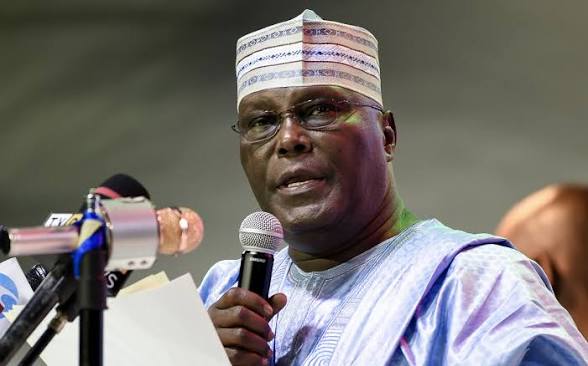
Former Vice President and Presidential Candidate of the African Democratic Congress (ADC), Atiku Abubakar, has responded to former President Olusegun Obasanjo’s recent remarks against him, saying his decision to oppose the controversial third-term agenda remains one of the defining moments of his political career and one he would never apologise for.
Reacting through his Senior Special Assistant on Public Communication, Phrank Shaibu, Atiku described Obasanjo’s latest comments as an attempt to distort history, insisting that personal grievances should never override documented facts or Nigeria’s democratic journey.
According to Atiku, his opposition to the third-term bid was driven by loyalty to the Nigerian Constitution rather than personal interest.
«”I am proud that I stood against the third-term agenda. I am proud that I stood by the Constitution of the Federal Republic of Nigeria. I have no apology whatsoever for frustrating every attempt to subvert our democracy for personal ambition.
“If Chief Obasanjo’s bitterness stems from my refusal to support an unconstitutional third term, then I wear that resentment as a badge of honour. No individual, regardless of his status or accomplishments, is bigger than the Federal Republic of Nigeria. The Constitution is supreme, and I chose Nigeria over personal loyalty.
“The Nigerian people won that battle. Democracy won that battle. History has already delivered its verdict.”»

Atiku also questioned the timing of Obasanjo’s latest criticism, noting that it came barely a day after the Director-General of the World Trade Organization (WTO), Dr. Ngozi Okonjo-Iweala, publicly commended the economic management team that served during the Obasanjo administration.
«”Whether or not the timing is merely coincidental is for Nigerians to judge. What is beyond dispute, however, is that while distinguished Nigerians who served at the highest levels continue to acknowledge my contributions to one of Nigeria’s most successful periods of economic management, Chief Obasanjo appears determined to diminish them.
“Chief Obasanjo may choose not to appreciate my role in building one of Nigeria’s most prosperous economic eras, but history has been far kinder. The record speaks for itself, and so do the testimonies of those who worked closely with that administration.”»
Reflecting on their relationship before they occupied the nation’s highest offices, Atiku recounted the role he said he played during Obasanjo’s imprisonment and eventual return to politics, insisting that his support was offered without expecting anything in return.
«”History records that while Chief Obasanjo was in prison, I stood firmly by him. I supported his family, worked tirelessly with other patriots for his release and never wavered in my belief that he deserved his freedom.
“When he eventually regained his freedom, he had little to his name. I received him, clothed him, ensured he was properly cared for and extended every support necessary to help him regain his footing. Beyond that, I mobilised political structures, built alliances and made enormous personal and political sacrifices that culminated in his emergence as President of the Federal Republic of Nigeria.
“Do I regret helping Chief Obasanjo? Absolutely not. When God gives you the opportunity to lift another human being, you do so without expecting repayment. Acts of kindness are matters of conscience, not commercial transactions.
“If the true history of Chief Obasanjo’s political journey is ever written—free from selective recollection and personal bitterness—Atiku Abubakar will feature prominently as one of those whom God used to change the course of his life and political career.”»
The ADC presidential candidate also expressed disappointment that public discourse was being dominated by old political disagreements at a time when many Nigerians are facing worsening economic conditions, insecurity and unemployment.
«”The 2027 election should be about rebuilding Nigeria, restoring security, reviving the economy and giving hope to the next generation—not reopening old political wounds.
“That restraint should never be mistaken for weakness or docility.
“There comes a point when silence in the face of repeated distortions of history ceases to be a virtue. While I have no desire to engage in a public quarrel with a man I once stood beside in his most difficult moments, neither will I permit falsehoods, half-truths and calculated attempts to rewrite history to go unanswered.
“Chief Obasanjo is entitled to his opinions. He is entitled to his personal grievances. What he is not entitled to are his own facts.
“I have chosen the path of service over resentment, vision over vendetta and national renewal over personal recrimination. Those who mistake my civility for capitulation, or my restraint for weakness, make a grave mistake.
“History is stubborn. It cannot be rewritten by bitterness, nor erased by repeated falsehoods. In the end, history will render its verdict—and so will the Nigerian people.”»
The latest exchange between the two political heavyweights has once again brought the long-running disagreement between Atiku and Obasanjo back into the national spotlight. Coming as political activities gradually gather momentum ahead of the 2027 general election, Atiku’s response underscores his determination to defend his role in Nigeria’s democratic history while shifting attention to what he says should be the country’s real priorities—economic recovery, security, and national renewal.

