 Follow Us on Google News
 Follow Us on Google Discover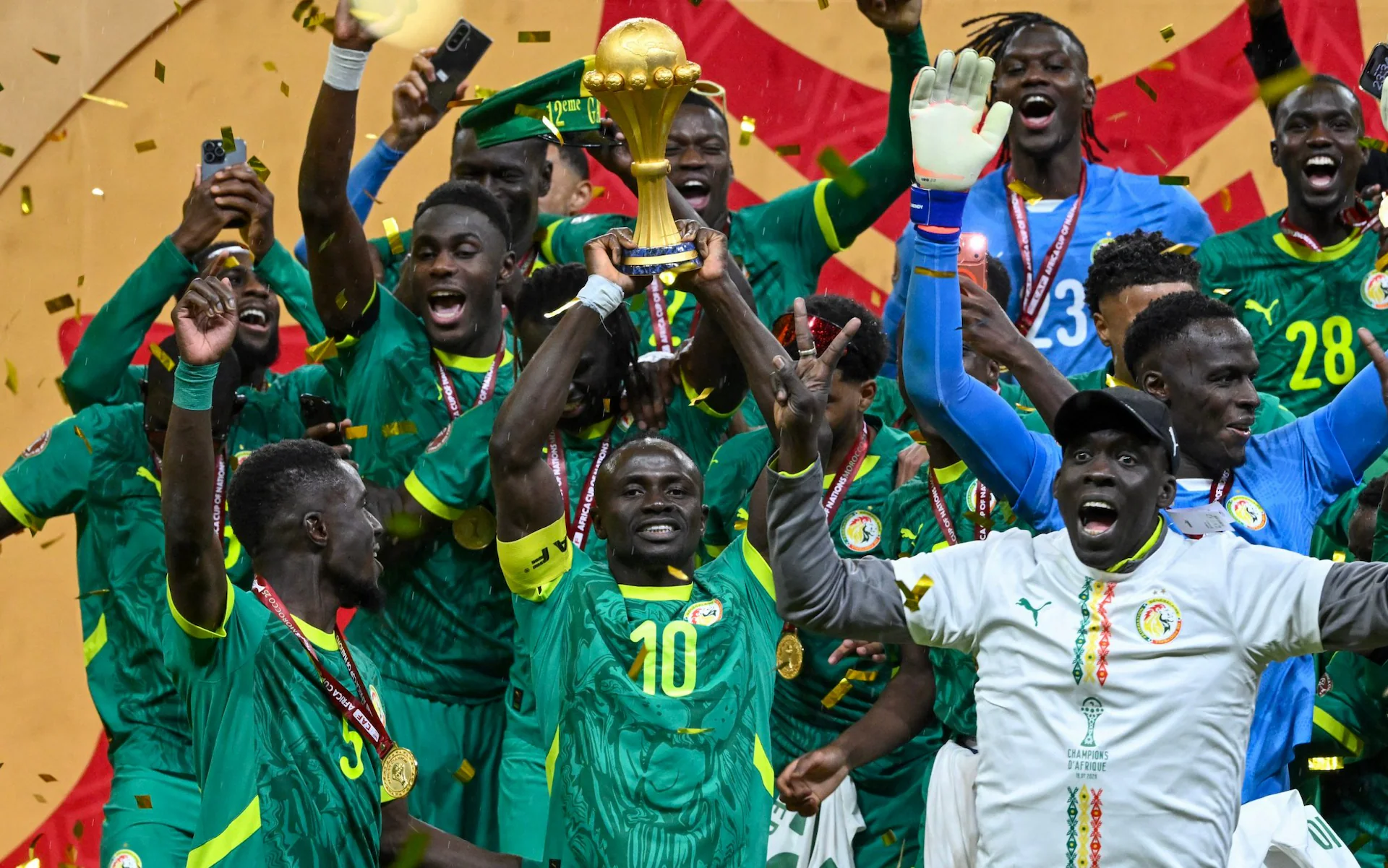
The fight over the 2025 Africa Cup of Nations title is set for another major showdown as the Court of Arbitration for Sport (CAS) prepares to hear Senegal’s appeal against the decision that handed the trophy to Morocco.
The hearing, scheduled for Thursday in Lausanne, Switzerland, will determine the next stage of a dispute that has dragged on for months following one of the most controversial AFCON finals in recent history.
Senegal were initially crowned champions after defeating hosts Morocco 1-0 after extra time in the final played in Rabat on January 18.
Pape Gueye scored the decisive goal in extra time, appearing to settle a tense encounter and give Senegal their second AFCON title after their 2021 triumph.
But what happened before the final whistle would eventually change the status of the championship.
With the match still goalless late in normal time, Morocco were awarded a penalty following a VAR review. The decision triggered strong protests from the Senegalese players and officials, who subsequently left the pitch.

The game was interrupted for more than 10 minutes before Senegal returned to the field. Morocco failed to convert the penalty, and the match continued into extra time, where Gueye’s goal gave Senegal the victory.
Morocco later challenged the outcome, arguing that Senegal’s departure from the pitch amounted to abandoning the match.
The dispute eventually reached CAF’s disciplinary process. In March, CAF overturned the result, ruling that Senegal had forfeited the final and officially recording the match as a 3-0 victory for Morocco. Morocco were consequently recognised as the 2025 AFCON champions.
The decision effectively erased the result that had been settled on the pitch and transformed Morocco from beaten finalists into champions.
Senegal rejected the ruling and took the matter beyond CAF, filing an appeal with CAS on March 25. The Senegalese Football Federation is asking the sports tribunal to overturn CAF’s decision and restore Senegal as the winners of the tournament.
At the centre of the case is the question of whether Senegal’s temporary withdrawal from the pitch should be treated as a forfeiture of the match, particularly after the players returned and the game was allowed to continue.
CAF relied on its tournament regulations in overturning the original result. The relevant provision states: “If, for any reason whatsoever, a team withdraws from the competition or does not report for a match, or refuses to play or leaves the ground before the regular end of the match without the authorization of the referee, it shall be considered loser and shall be eliminated for good from the current competition.”
Senegal’s appeal now places that interpretation before Court of Arbitration for Sport (CAS), which is independent of CAF.
The hearing will be held behind closed doors at CAS headquarters in Lausanne. Representatives of the Senegalese Football Federation and the Royal Moroccan Football Federation are expected to attend in person, while CAF will be represented by its lawyers. The proceedings will be conducted in French.
A three-member panel comprising Gérald Simon of France, Luigi Fumagalli of Italy and Ulrich Haas of Germany will hear the case.
However, neither side is expected to know the outcome immediately after Thursday’s proceedings. CAS has said the panel will begin deliberations after the hearing and that a final decision will not be announced on the same day.
The case therefore remains open, with the possibility that the status of the AFCON title could change again depending on the tribunal’s eventual ruling.
For Morocco, a decision in their favour would cement the title already awarded to them by CAF. For Senegal, victory at CAS would mean overturning the forfeiture decision and restoring the result of the final as played in Rabat.
The hearing consequently represents more than another stage in a prolonged dispute. It could determine whether the trophy ultimately remains with Morocco or returns to Senegal, bringing a definitive legal conclusion to an AFCON final whose controversy continued long after the final whistle.

