 Follow Us on Google News
 Follow Us on Google Discover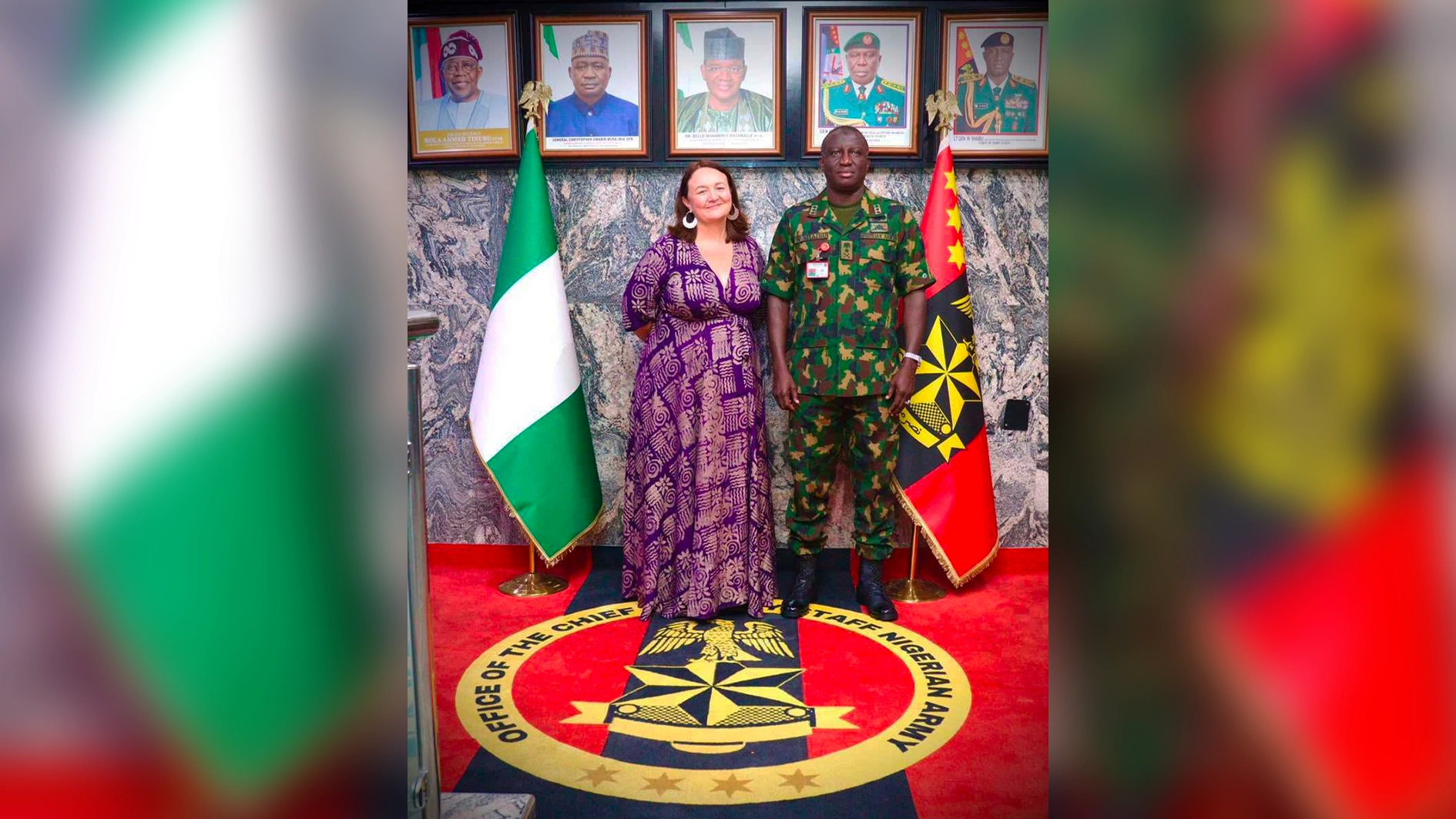
*Calls for clearance of IEDs, UXOs from communities
The Office of the United Nations Office for the Coordination of Humanitarian Affairs (UN OCHA) in Nigeria, has disclosed that nearly six million people still depend on humanitarian assistance, even as global humanitarian funding continues to decline.
Head of UN OCHA Nigeria, Miss Danielle Parry, stated this when she led a delegation to pay a courtesy visit to the Chief of Army Staff (COAS), Lt.-Gen. Waidi Shaibu, at the Nigerian Army Headquartres, Abuja.
Though Parry commended the Nigerian Army for its consistent support in facilitating humanitarian operations across the North East, she identified persistent security challenges in Gwoza, Bama, Damboa, Dikwa and Monguno as major impediments to humanitarian access and appealed for sustained military support to enable displaced persons to safely return to farming and other livelihood activities.
She also requested increased military assistance in clearing Improvised Explosive Devices (IEDs) and Unexploded Ordnance (UXOs) from resettlement communities, intensified patrols along critical rainy-season supply routes and enhanced security escorts for humanitarian convoys.
She reaffirmed UN OCHA’s commitment to deepening civil-military coordination and commended the professionalism, dedication and sacrifices of Nigerian Army personnel.

According to her, sustained collaboration between the Nigerian Army and humanitarian actors remains indispensable to protecting vulnerable populations, delivering life-saving assistance and advancing long-term peace, recovery and development across the North East.
Responding, The Chief of Army Staff reaffirmed the unwavering commitment of Nigerian Army to strengthening civil-military cooperation in support of humanitarian operations, civilian protection and stabilisation initiatives across conflict-affected areas of the country.
Shaibu underscored that guaranteeing safe and unhindered humanitarian access remains a vital pillar of the Nigerian Army’s comprehensive strategy to consolidate operational successes, facilitate the safe and dignified return of displaced persons and foster enduring peace and stability in the North East.
He described the longstanding collaboration between the Nigerian Army and the United Nations humanitarian agencies as a strategic partnership that has continued to strengthen humanitarian response, improve civilian protection and support ongoing stabilisation efforts in the region.
The army chief assured of the Nigerian Army‘s sustained commitment to providing the security necessary for the safe movement of humanitarian personnel, relief materials and critical supplies, particularly along key operational corridors.
He acknowledged the security implications associated with the ongoing decongestion of Internally Displaced Persons (IDP) camps and the resettlement of affected communities in Borno State, and reiterated that the Army would continue to work closely with humanitarian partners to ensure that these initiatives are implemented in a secure and coordinated environment.
The COAS directed the Theatre Commander to reinforce security measures along vulnerable humanitarian supply routes, particularly the Dikwa-Gamboru Ngala axis, where remnants of terrorist elements continue to pose threats to humanitarian operations, stressing the need for innovative force protection measures, more robust convoy escort arrangements and enhanced operational coordination between the military and humanitarian organisations.
Shaibu also urged UN OCHA to optimise available resources through improved forward logistics planning, including local warehousing and expanded implementation of the Humanitarian Reset Initiative, to ensure uninterrupted humanitarian assistance despite prevailing funding constraints.

