 Follow Us on Google News
 Follow Us on Google Discover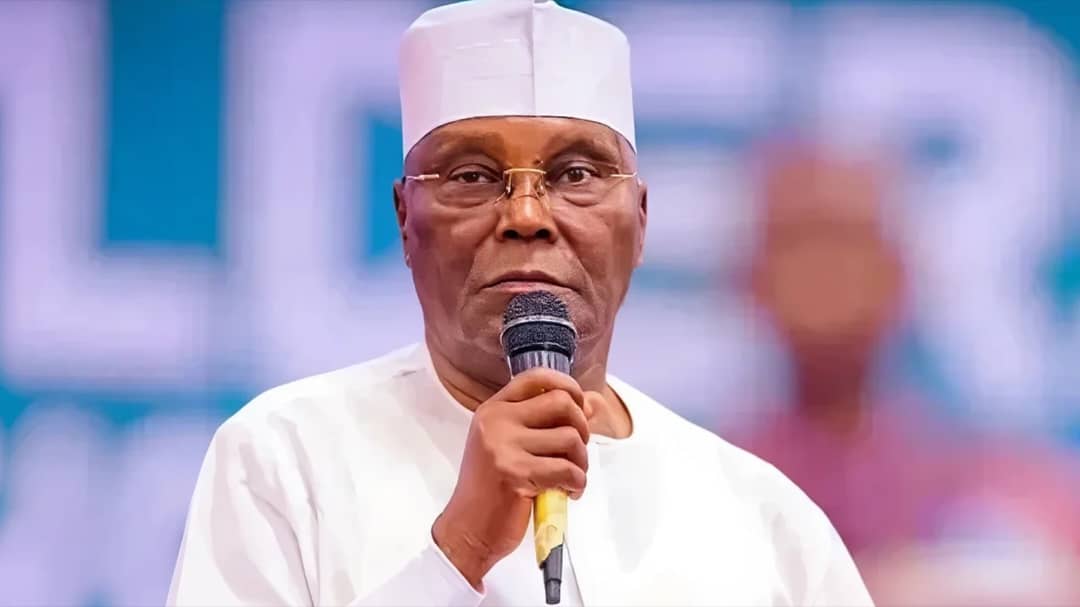
Former Vice President of Nigeria and Presidential Candidate of the African Democratic Congress (ADC), Atiku Abubakar, has accused the Tinubu administration of attempting to defend its economic record with figures that do not reflect the realities facing millions of Nigerians.
Reacting to recent comments by the Chairman of the Presidential Committee on Fiscal Policy and Tax Reforms, Taiwo Oyedele, Atiku described the government’s position as an effort to justify policies that have worsened the economic situation rather than address the hardship experienced across the country.
In a statement released by his Senior Special Assistant on Public Communication, Phrank Shaibu, the former vice president argued that the administration’s claims on public debt, subsidy removal, debt servicing and workers’ welfare are contradicted by publicly available records.
Addressing the government’s position on the use of savings from fuel subsidy removal, Atiku insisted that the narrative being presented does not align with the country’s debt profile.
“As of May 2023, when President Tinubu assumed office, the Federal Government’s exposure to the Central Bank of Nigeria stood at approximately ₦26.9 trillion. Today, that exposure has ballooned to over ₦40.38 trillion.
“This administration has not reduced its indebtedness to the CBN. It has merely changed the label on the debt by converting Ways and Means advances into Treasury Bills and bonds while simultaneously piling up fresh obligations. That is debt restructuring—not debt repayment.”
He further referenced recent figures disclosed by the Governor of the Central Bank of Nigeria, Olayemi Cardoso, which showed that the CBN’s credit to the Federal Government increased from ₦22.99 trillion in May 2025 to ₦40.38 trillion in May 2026. According to Atiku, the figures undermine the government’s claim that subsidy savings are being channelled towards reducing public debt.
“This completely destroys the narrative that subsidy savings are being used to reduce government indebtedness. Nigerians deserve honesty, not creative accounting.”
The former vice president also challenged the administration’s assertion that subsidy savings have translated into improved welfare for workers, arguing that key components of the new wage package are yet to be fully implemented.
“Which salary increase is the government talking about? The Federal Government is yet to fully implement the new minimum wage. The 40 per cent peculiar allowance tied to the wage adjustment remains unpaid despite official directives that it should take effect from May 1, 2026. The promised wage award has equally not been fully implemented. These are not opposition allegations; they are the grievances of organised labour.”
On the funding of the Nigerian Education Loan Fund (NELFUND), Atiku questioned what he described as conflicting explanations from the government regarding the source of the intervention.
“The Chief Executive Officer of NELFUND publicly stated that the scheme received a ₦50 billion injection from recovered funds by the Economic and Financial Crimes Commission (EFCC). If that is the case, why is the government now presenting subsidy savings as the source? Nigerians are tired of an administration that changes its story each time it is confronted with facts.”
He also criticised attempts to attribute rising debt servicing costs solely to interest rates, insisting that government policies have significantly contributed to the current situation.
“Who drove interest rates to their current levels? Under this administration, the Monetary Policy Rate has climbed dramatically, making borrowing prohibitively expensive for manufacturers and the private sector. Government’s insatiable appetite for borrowing has crowded out productive businesses while pushing debt servicing to unsustainable levels. To now blame interest rates is nothing short of an admission of policy failure.”
According to Atiku, official statistics cannot erase the economic realities confronting ordinary Nigerians, many of whom continue to grapple with rising living costs and declining purchasing power.
“Food prices have spiralled beyond the reach of ordinary families. Inflation continues to erode incomes. Businesses are shutting down. Unemployment remains alarming. The naira has suffered unprecedented depreciation, while poverty has deepened across the country. These are the realities Nigerians confront daily—not the glossy presentations from government officials.”
He maintained that public perception of the administration would ultimately be shaped by the living conditions of Nigerians rather than official presentations or government briefings.
“Governments are judged not by PowerPoint presentations or television interviews but by the quality of life of their citizens. On that score, this administration has failed spectacularly. Economic hardship cannot be explained away with clever rhetoric. Nigerians are living the consequences every day.”
Atiku called on government officials to move beyond public relations campaigns and confront the country’s economic challenges with sincerity, competence and accountability.

