 Follow Us on Google News
 Follow Us on Google Discover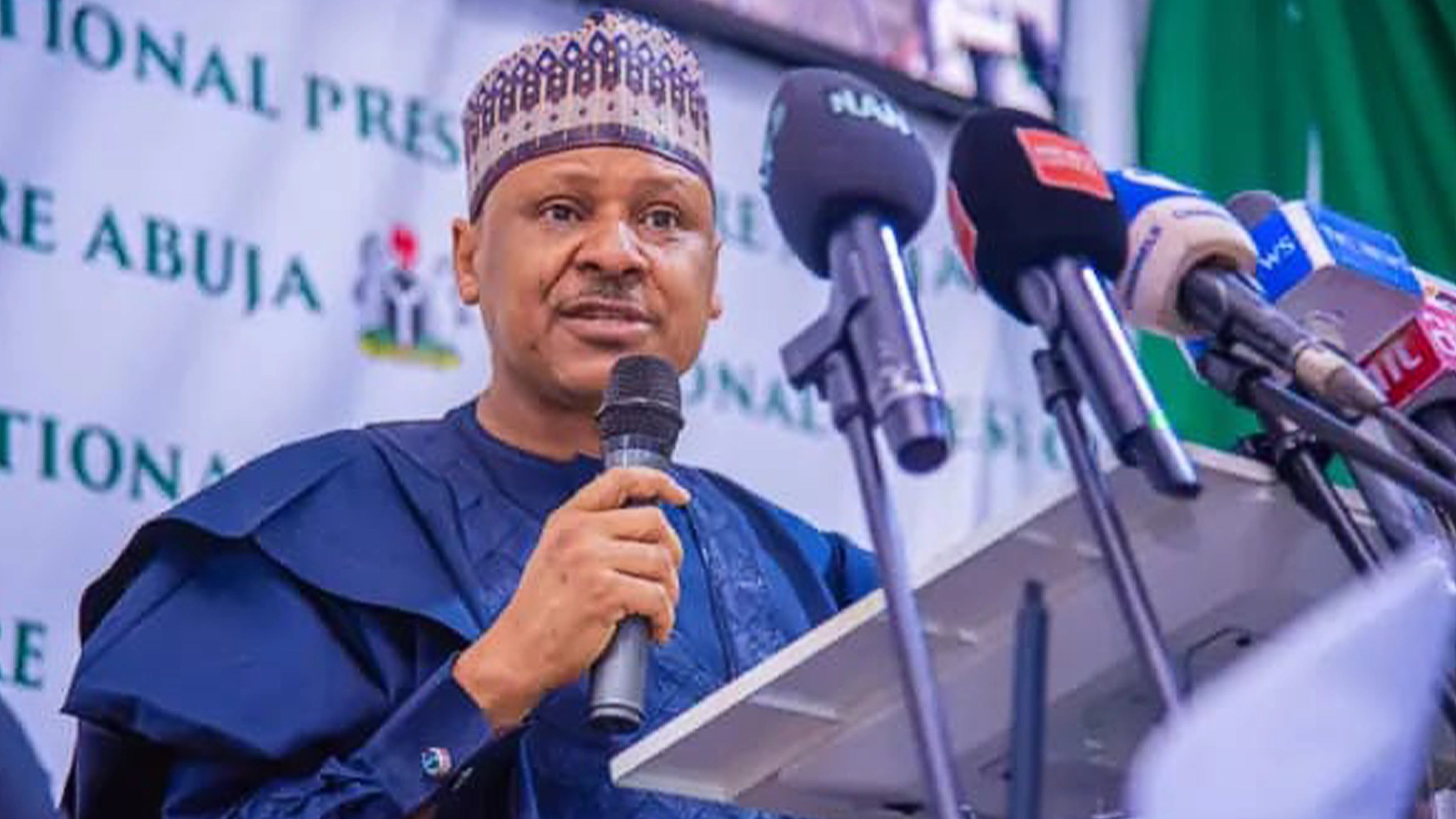
UN OCHA urges IEDs, UXOs clearance as 6m people seek assistance globally
The federal government has launched the Humanitarian-Development-Peace (HDP) Nexus Policy Coherence and Learning Soft Working Group to strengthen policy coordination and institutionalise an integrated approach to addressing humanitarian crises.
In another development, the Office of the United Nations Office for the Coordination of Humanitarian Affairs (UN OCHA) in Nigeria has disclosed that nearly six million people still depend on humanitarian assistance, even as global humanitarian funding continues to decline.
Head of UN OCHA Nigeria, Danielle Parry, stated this when she led a delegation on a courtesy visit to the Chief of Army Staff (COAS), Lt.-Gen. Waidi Shaibu, at the Nigerian Army Headquarters in Abuja.
Speaking at the formal launch of the platform in Abuja, the Minister of Humanitarian Affairs and Poverty Reduction, Dr Bernard Doro, said the HDP Policy would also promote sustainable development and build a lasting peace in the country.
The minister, who was represented by Mrs Katherine Bulus, described the initiative as a major milestone in the country’s efforts to institutionalise a coordinated response to humanitarian, development and peacebuilding challenges.

He commended the institutions and development partners that contributed to the establishment of the working group, noting that the collaboration reflects the government’s commitment to strengthening national leadership in implementing the HDP Nexus Policy.
According to him, the HDP Nexus provides an opportunity to move beyond crisis response to integrated planning, coordinated investments and collective action aimed at reducing humanitarian needs, strengthening resilience and promoting sustainable development.
Bulus further stressed that the future of humanitarian action in Nigeria must be nationally led, nationally coordinated and nationally owned.
He explained that the newly inaugurated Policy Coherence and Learning Soft Working Group would promote policy alignment, facilitate cross-sector collaboration, generate evidence for decision-making, strengthen institutional capacity and support the implementation of the HDP Nexus across the federal, state and local government levels.
Meanwhile, ActionAid Nigeria Country Director, Andrew Mamedu, represented by the Director of Business Development and Innovation, Nkechi Illochi-Kanny, said the HDP Nexus had become imperative as communities across Nigeria continue to grapple with displacement, recovery and rebuilding.
He noted that the framework provides a pathway for moving beyond fragmented responses to integrated interventions that make humanitarian assistance more impactful, development more sustainable and peace more enduring.
Mamedu said ActionAid Nigeria had spent the last six years working with government institutions, civil society organisations and local communities to demonstrate the effectiveness of coordinated humanitarian, development and peace interventions.
Also speaking, the Director-General of Peace and Conflict Resolution, Dr. Joseph Ochogwu, described the HDP Nexus as an evolving framework aimed at transforming humanitarian, development and peace-building practice through stronger collaboration.
He explained that “the entire essence of the Nexus is to bring humanitarian, development and peace actors together to work in sync and deliver better outcomes for people, particularly those in conflict-affected and hard-to-reach communities.”
In his remarks, the Federal Commissioner of the National Commission for Refugees, Migrants and Internally Displaced Persons, Dr Tijjani Aliyu, said the dialogue aimed at shaping how humanitarian-development-peace interventions would be financed, expanded and implemented nationwide.
Aliyu noted that while global internal displacement had reached over 83 million people by the end of 2024, Nigeria currently has about 6.7 million internally displaced persons, adding that the country must shift from continuous relief distribution to sustainable livelihood support that enables displaced persons to become self-reliant.
In the meantime, Parry, who commended the Nigerian Army for its consistent support in facilitating humanitarian operations across the North East, identified persistent security challenges in Gwoza, Bama, Damboa, Dikwa and Monguno as major impediments to humanitarian access and appealed for sustained military support to enable displaced persons to safely return to farming and other livelihood activities.
She also requested increased military assistance in clearing Improvised Explosive Devices (IEDs) and Unexploded Ordnance (UXOs) from resettlement communities, intensified patrols along critical rainy-season supply routes and enhanced security escorts for humanitarian convoys.
She reaffirmed UN OCHA’s commitment to deepening civil-military coordination and commended the professionalism, dedication and sacrifices of Nigerian Army personnel.
According to her, sustained collaboration between the Nigerian Army and humanitarian actors remains indispensable to protecting vulnerable populations, delivering life-saving assistance and advancing long-term peace, recovery and development across the North East.
For his part, the COAS reaffirmed the army’s unwavering commitment of to strengthening civil-military cooperation in support of humanitarian operations, civilian protection and stabilisation initiatives across conflict-affected areas of the country.
Shaibu stressed that guaranteeing safe and unhindered humanitarian access remains a vital pillar of the army’s comprehensive strategy to consolidate operational successes, facilitate the safe and dignified return of displaced persons and foster enduring peace and stability in the North East.
He described the longstanding collaboration between the Nigerian Army and the United Nations humanitarian agencies as a strategic partnership that has continued to strengthen humanitarian response, improve civilian protection and support ongoing stabilisation efforts in the region.
Acknowledging the security implications of the ongoing decongestion of Internally Displaced Persons (IDP) camps and the resettlement of affected communities in Borno State, he reiterated that the army would continue to work closely with humanitarian partners to ensure that these initiatives are implemented in a secure and coordinated environment.
He further directed the theatre commander to reinforce security measures along vulnerable humanitarian supply routes, particularly the Dikwa-Gamboru Ngala axis, where remnants of terrorist elements continue to pose threats to humanitarian operations. He stressed the need for innovative force protection measures, more robust convoy escort arrangements and enhanced operational coordination between the military and humanitarian organisations.

