 Follow Us on Google News


 Follow Us on Google Discover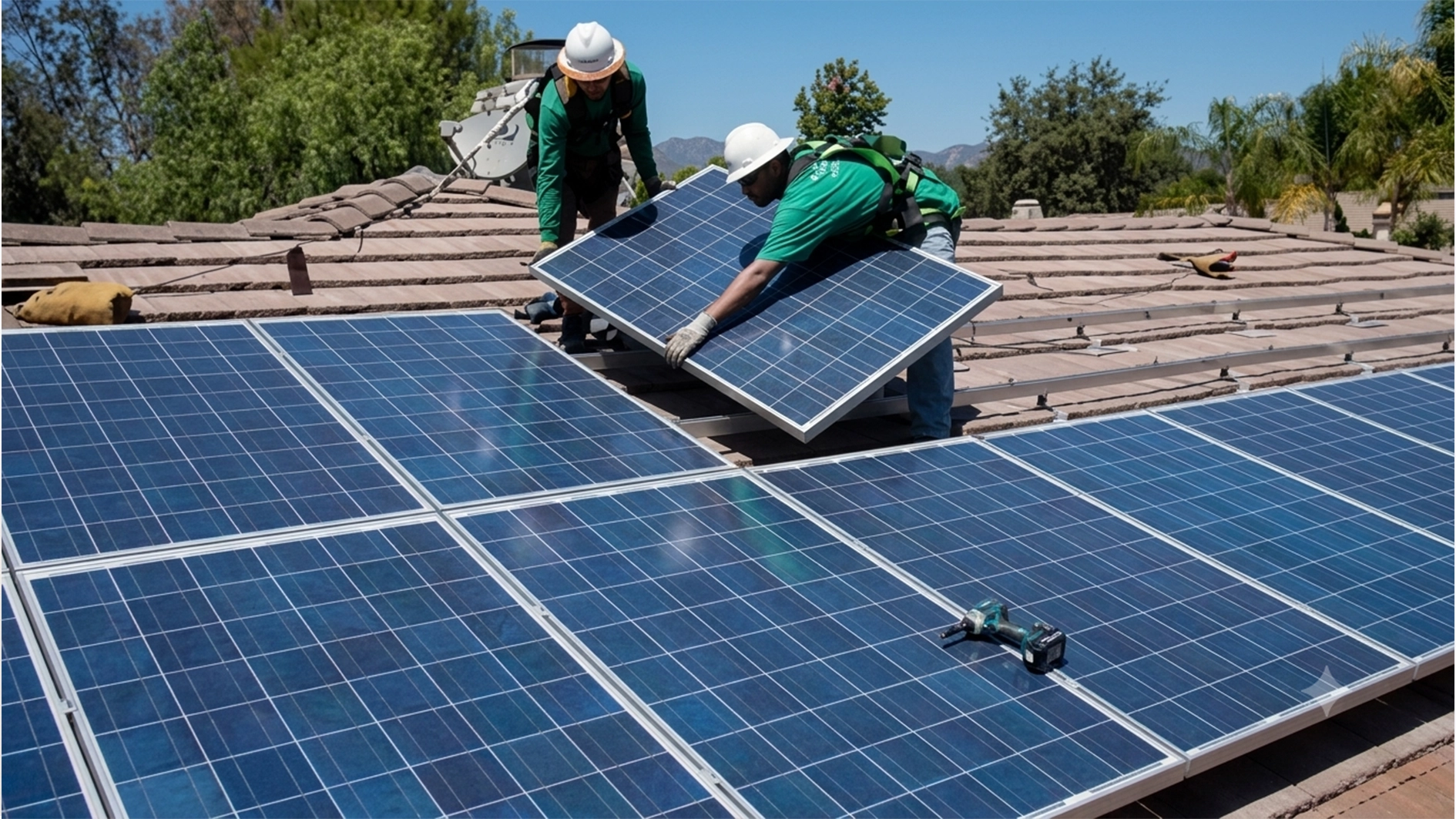
The last few kilometres into Rubochi are slow and somewhat punishing. Deep potholes and stretches of eroded earth force vehicles to crawl, a reminder that for many rural communities in Nigeria, development rarely arrives all at once.
Yet beyond the rough road lies a different story. As darkness falls, homes glow with light, barbers keep their clippers running, shop owners serve customers into the evening, and students read long after sunset.
For residents of Rubochi and neighbouring Ikwa in the Federal Capital Territory’s Kuje Area Council, a solar mini-grid has begun rewriting decades of life without reliable electricity. However, whether that transformation will endure still remains an open question.
Until recently, life in both communities revolved around daylight. As evening approached, businesses closed, students struggled to study under the dim glow of kerosene lamps, and health workers worked with little or no electricity.
For decades, reliable power remained out of reach, shaping nearly every aspect of life in Rubochi and neighbouring Ikwa.
That reality began to change around late 2025 when the Rural Electrification Agency (REA) commissioned two solar-powered mini-grids with a combined capacity of one megawatt, bringing uninterrupted electricity to thousands of households, businesses, schools and health facilities

Five months after the project was installed in the community, in February, 2026 the milestone was marked with celebrations by residents, many of whom were experiencing reliable electricity for the first time in their lives.
During a visit to the community, some residents alluded to the significance of the solar power and how it has affected their lives.
Yunusa Rabiu, a commercial motorcyclist and lifelong resident of Rubochi, said the solar mini-grid had transformed daily life in the community, which had endured decades without electricity.
He recalled that residents relied on lanterns for lighting, while businesses such as barbing salons depended on costly petrol generators.
Although not every household has been connected to the mini-grid, he said access to electricity has improved healthcare services and reduced the need for residents to travel long distances to charge their phones or access basic electrical services.
“I have been in this community and living here since when I was born. And I want to tell you that for a very long time since I was in this community, we used to have the issue of light. We don’t used to have lights most of the time.
“In my house for instance, we use lanterns and this charcoal iron. That time, anyone who needed electricity had to spend money on fuel or travel outside the community.
“Things have changed since the solar project came. Even though some of us are still waiting to be connected, we can already see the difference. Our hospital here now has reliable power and many businesses are operating more easily.
For, Jatau John, a community leader in Rubochi, the solar mini-grid had brought long-awaited relief to residents after years of living without electricity.
While noting that the power supply is not always available throughout the day because the system depends on solar energy, he said it has significantly improved living conditions by providing electricity for homes, businesses and essential public facilities.
Indeed, the transformation in Rubochi and neighbouring Ikwa began under the Korea-Nigeria Energy Project (KEP), implemented by the Rural Electrification Agency (REA) with support from the South Korean government.
The intervention delivered two solar-powered mini-grids with a combined capacity of one megawatt—a 900-kilowatt-peak (kWp) installation in Rubochi and a 100kWp system in Ikwa—bringing reliable electricity to communities that had lived for decades without access to the national grid.
Plant A of the project includes a 300kWp with 600kWh battery, and Plant B is 600kWp with 1,200kWh battery, powering about two-thirds of the community.
About 3,000 connections have been completed, including 2,500 in Rubochi and 300 in Ikwa.
Beyond generating electricity, the project included about 19 kilometres of distribution lines, household wiring, energy-efficient bulbs and a fully operational Energy Management System to support the mini-grids.
Every household received circuits, lighting bulbs, switches, sockets, and two rice milling machines to support agricultural processing.
Schools, police stations, and hostels were retrofitted, while a centralised monitoring system alerts REA to unusual load patterns which has enablex prompt intervention
The power supply now serves homes, schools, healthcare facilities and businesses.
At the Rubochi General Hospital, electricity now powers laboratories, wards and administrative offices, while schools, including the Federal Government College, Rubochi, have benefited from a stable power supply that has improved teaching and learning.
During the day, solar panels generate electricity while batteries store excess power for use at night. But once the batteries are depleted, supply may reduce until the following day depending on demand.
At the official commissioning of the project in February, the Federal Government described the intervention as part of its broader strategy to expand electricity access through decentralised renewable energy.
The government disclosed that the project was conceived as a fully integrated energy solution, combining solar generation plants, battery storage, distribution networks, smart metering, and household wiring to ensure immediate productive use of electricity
Community leaders such as the traditional ruler of Robochi, HRH Ibrahim Mohammed Pada, observed that after decades without electricity, the community has now enjoyed five months of uninterrupted power supply from the project.
The Principal of Federal Government College, Robochi, Funsho Adewale, recalled that when he was posted to the college in March last year, he was surprised to discover that the school was not connected to the national grid.
Speaking with this reporter after making a cash withdrawal from his PoS terminal, Madaki Bako, agreed that the availability of reliable electricity has transformed his business and improved access to financial services in the community.
Although his outlet where he runs the PoS business is not connected to the solar mini-grid, Bako said a neighbouring shop that already has electricity allows him to charge his phone and PoS terminal which has enabled him to keep his business running
“Before this solar light came, my PoS business was suffering. If my phone or machine went off, that was the end of work for that day. I would either travel to charge them or spend money buying fuel for generator of my neighbour, and sometimes I still couldn’t attend to customers.
“Many people would leave because I had no power. But now, I don’t really face that problem again. People come from different parts of the community because they know they can withdraw money, send money or make transfers here. L
Nuhu Shaba, a barber in Ikwa, acknowledged that the solar mini-grid has improved life in the community but said many residents and businesses are yet to be connected.
He urged the government to expand the project so that more households and small businesses can benefit from reliable electricity.
“We thank the government for bringing this project because it has changed many things in our community.
“But many of us are still waiting to be connected. My barbing shop is one of them. I still have to look for where to charge my clippers before I can work. We are appealing to the government not to stop here. They should extend the connection to the remaining houses and shops so everybody can enjoy the light.
“I know that it will cost us too. But when all of us have electricity, more businesses will grow, more young people will get work and this community will develop faster.”
Indeed, despite being Africa’s largest economy, Nigeria has one of the world’s largest electricity access deficits.
According to the World Bank, more than 85 million Nigerians, that is, about 43 per cent of the population lack access to electricity, with rural communities bearing the brunt of the crisis.
For many of these communities, unreliable or non-existent power continues to limit education, healthcare delivery, agricultural productivity and economic growth.
To bridge this gap, the Federal Government and its development partners have increasingly turned to decentralised renewable energy solutions, particularly solar mini-grids, as an alternative to extending the national grid to remote and underserved communities.
Through programmes led by the Rural Electrification Agency (REA), hundreds of mini-grids are being deployed across the country to provide reliable electricity to households, schools, health facilities and businesses that have long remained beyond the reach of conventional power infrastructure.
Energy experts, however, say the long-term success of such interventions will depend not only on expanding access but also on ensuring their sustainability.
They argue that continued investment, supportive policies, regular maintenance and complementary infrastructure such as good roads, healthcare and education will determine whether communities like Rubochi and Ikwa can fully realise the economic and social benefits that reliable electricity promises.
An economist and sustainable development expert, Dr Cheryl Ikejiaku, observed that mini-grids demonstrate the potential of decentralised renewable energy to tackle electricity poverty in rural Nigeria.
She, however, argued that the government must move beyond commissioning projects by developing sustainable financing models, attracting private investment and ensuring communities continue to benefit long after the installations are completed.
The Nigerian Economic Summit Group (NESG) has also argued that decentralised renewable energy should be integrated into broader rural development policies.
According to the group, access to electricity delivers greater economic benefits when accompanied by investments in roads, healthcare, education and enterprise development, enabling rural communities to translate improved energy access into higher incomes and better living standards.
Furthermore, REA Managing Director, Dr Abba Aliyu, noted that decentralised mini-grids represent a practical solution for communities that have remained outside the national grid for decades.
He said the projects are deliberately designed with dedicated distribution infrastructure and full metering to improve operational sustainability and shield communities from recurring failures on the national grid.
An energy expert, Abdullahi Mamman, said mini-grid solar project demonstrates the growing role of decentralised renewable energy in addressing Nigeria’s electricity access deficit, particularly in communities where extending the national grid is either technically difficult or economically unviable.
He said such projects have proven capable of improving livelihoods, boosting small businesses and strengthening healthcare and education, their long-term impact will depend on consistent maintenance, supportive regulation and sustained investment.
“Commissioning a mini-grid should never be mistaken for the end of the job.
“The real test begins after the ribbon-cutting ceremony.
“Government must ensure there is a sustainable maintenance framework, continuous technical support and periodic monitoring to keep these systems running for many years. Otherwise, communities risk returning to the same energy poverty the projects were designed to eliminate”, he said.

