 Follow Us on Google News
 Follow Us on Google Discover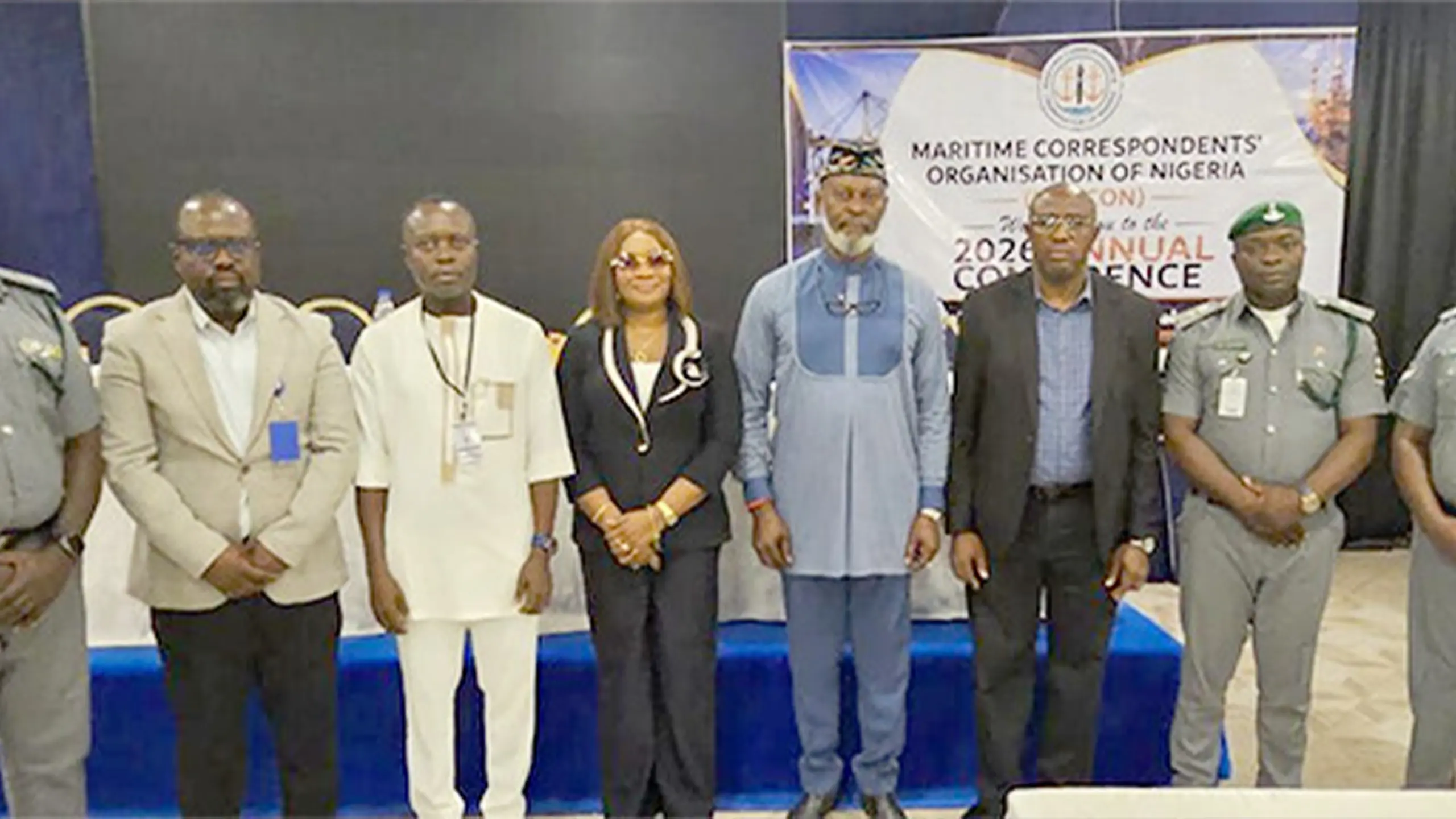
The Federal Government said the ongoing rehabilitation of critical ports infrastructure, continuous channel maintenance and improvements in marine operations are deliberate investments aimed at supporting expanding industrial activities, rising trade volumes and the increasing investors’ demands of the country’s Special Economic Zones (SEZs).
This was made known at the 2026 yearly conference of the Maritime Correspondents’ Organisation of Nigeria (MARCON) held in Rivers State, with the theme, ‘Special Economic Zones as Catalysts to Sustainable Blue Economy’.
The Minister of Marine and Blue Economy, Adegboyega Oyetola, reaffirmed the importance of modernising Nigeria’s port infrastructure as a critical step towards strengthening and unlocking the full potential of the country’s SEZs, enhancing trade and attracting investment.
Oyetola, who was represented by the Ports Manager, Rivers Port Complex, Kenechi Okezie, also emphasised that efficient port infrastructure remains indispensable to achieving the Federal Government’s vision of a sustainable and globally competitive maritime economy.
The Minister called for valuable partnerships to support ongoing efforts to modernise the country’s port system and help unlock the immense opportunities within the maritime sector, while advancing the Federal Government’s agenda for the blue economy.
The Managing Director of the NPA, Dr Abubakar Dantsoho, outlined a coordinated strategy for optimising port infrastructure, including infrastructure renewal, technological innovation, multimodal transport connectivity, private-sector participation and operational excellence.

Dantsoho, who was also represented by the Port Manager, said the Authority remains committed to investing in rehabilitating ageing port infrastructure, maintaining navigable channels through continuous dredging, modernising port facilities and improving marine operations to accommodate larger vessels, reduce turnaround time and lower the cost of doing business.
He also said investors increasingly assess logistics costs, turnaround time, reliability and cargo clearance efficiency before deciding where to establish manufacturing operations and investing in SEZs.
According to him, for businesses operating within SEZs, time is money, adding that every hour saved in cargo clearance strengthens supply chains and increases investor confidence.
“Every unnecessary delay at the port raises logistics costs. Every bottleneck weakens competitiveness. Inefficiency reduces investor confidence. Conversely, every improvement in efficiency strengthens the attractiveness of our SEZs and enhances Nigeria’s overall competitiveness,” he said.
Dantsoho added that efficient cargo evacuation beyond the ports remains critical, stressing that port optimisation requires integrated logistics linking seaports to industrial clusters and SEZs through roads, railways and inland waterways.
He said countries such as Rotterdam, Singapore, Shanghai and Dubai built prosperous economies by investing in efficient transport and logistics systems that connect production centres to global markets.
According to him, the NPA is working with stakeholders to strengthen multimodal transport systems and expand the role of Inland Dry Ports (IDPs) to decongest seaports, improve logistics efficiency and connect inland economic zones to international markets.
Managing Director of Oil and Gas Free Zones Authority (OGFZA), Bamang Jada, who was represented by his Technical Adviser on Free Zones Development, Jackson Iniobong, highlighted the strategic role of SEZs in advancing Nigeria’s blue economy through industrialisation, maritime logistics, offshore support services, export-oriented manufacturing, energy exports and sustainable economic growth.
Delivering an address on ‘The Strategic Role of OGFZA in Supporting Nigeria’s Blue Economy and Energy Exports’, Jada described the blue economy as a framework for harnessing the country’s oceans, rivers, ports and coastal resources to stimulate economic prosperity while safeguarding the environment for future generations.
He noted that the Authority’s offshore facilities have continued to support safe maritime operations and energy exports, while its free zones have attracted substantial local and foreign investments, expanded export capacity, generated thousands of jobs, facilitated technology transfer and positioned the country as a preferred investment hub in West Africa.
According to him, the regulatory framework has enhanced port efficiency, reduced operational bottlenecks and encouraged the growth of indigenous capacity in fabrication, engineering, marine support services, vessel maintenance and logistics, with facilities contributing to increased local content.
The National Public Relations Officer of the Nigeria Customs Service (NCS), Dr Abdullahi Maiwada, said SEZs have become powerful engines of industrial growth across the world, noting that if well managed, they have the capacity to attract investment, boost exports, stimulate manufacturing and transform local economies.
Maiwada, who was represented by the Chief Superintendent of Customs, Emmanuel Tangwa, stated that Nigeria is well-positioned to harness such opportunities through its seaports, inland waterways, export processing zones and free trade zones.
Maiwada pointed out that countries such as China and the United Arab Emirates have demonstrated how well-managed economic zones can drive investment, manufacturing and export growth, noting that Nigeria possesses similar potential to accelerate economic development through its maritime assets.

