 Follow Us on Google News
 Follow Us on Google Discover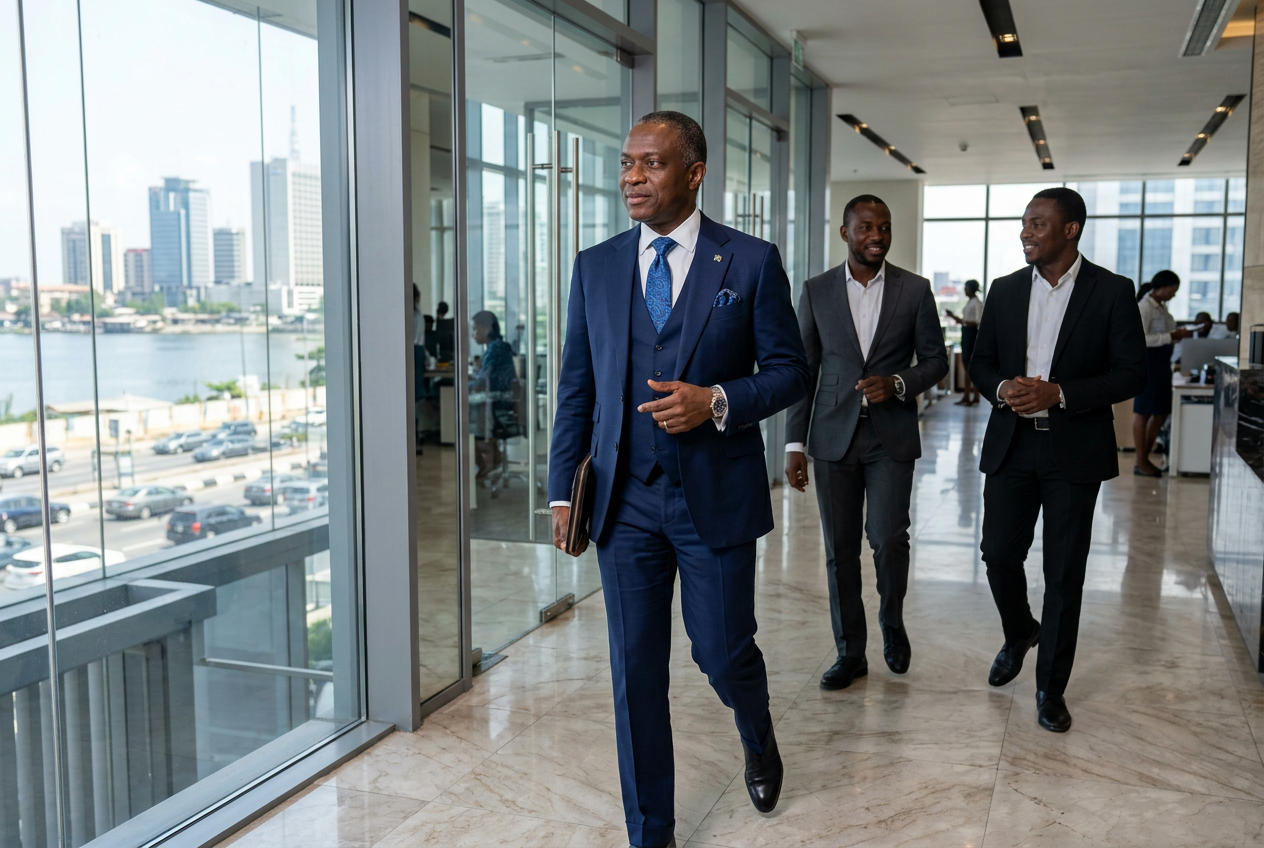
Let me start with a confession. I have spent the better part of the last few months buried in billionaire indices, Forbes footnotes, currency tables and Lagos company filings, and I keep arriving at the same stubborn answer to the question of who is the richest African in the world. That answer is the cement and sugar magnate from Kano, Aliko Dangote, and after more than a decade of writing about Nigerian business and wealth, I can tell you the reasons are more interesting than the number itself.
You have probably heard his name at a wedding, or on the radio, or muttered in a danfo when petrol prices shift. That is the thing about the richest man on the continent: he is not an abstraction. His cement is likely in the walls around you, and there is a decent chance the fuel in your tank passed through his refinery near Lagos.
So who is the richest African in the world, really? And why has one Nigerian held that crown while South African diamond heirs and Egyptian construction dynasties circle just below him? Sit with me. This is the article I wish I had read years ago.
Who Is the Richest Man in Africa Now in 2026?
Aliko Dangote. Full stop.
He is the founder and chairman of the Dangote Group, and in 2026 he is not merely ahead of the pack, he is a comfortable distance in front of it. Forbes valued his fortune at about 28.5 billion dollars in its 2026 Africa ranking, published in March, which made it fifteen straight years at number one. Bloomberg, using a later measurement date and a slightly different method, put him closer to 32.5 billion dollars by the end of that same month.
Which figure is right? Both, in a sense. Billionaire wealth is a moving target measured against share prices and exchange rates on a specific day, so the two trackers rarely agree to the decimal. What they do agree on is the shape of things: Dangote is first, and it is not close.
This is not a new development, either. The Guardian reported years ago on how he kept the crown even as a fellow Nigerian tycoon clawed his way back onto the Forbes roll, and the pattern has only hardened since.
In naira, that fortune sits comfortably north of ₦40 trillion, though the exact figure wobbles with every move in the exchange rate. To give you a sense of scale, that is larger than the annual budget of many Nigerian states combined. It is the kind of number that stops meaning very much as money and starts meaning something closer to gravity.
Now, a fair question. Why does a cement fortune swing by billions from one month to the next? A great deal of it comes down to the naira. When the currency was floated and repeatedly repriced from 2023 onward, the dollar value of Dangote’s Nigerian assets moved with it, and the Central Bank’s own account of how the foreign exchange market evolved explains why those swings were so violent. A man can be worth several billion more or less simply because traders in the Nigerian Foreign Exchange Market woke up in a different mood.
Is Anyone Richer Than Dangote in Africa?
The short version: no.
The longer version is worth your time, because the gap tells you something about how African wealth is built. Dangote’s nearest challenger in 2026 is South Africa’s Johann Rupert, the luxury goods magnate behind Richemont, whose brands include Cartier and Montblanc. Rupert is worth roughly 16.1 billion dollars, which is a colossal fortune by any sane measure and still more than 12 billion dollars behind the leader.
Behind Rupert sits a fellow Nigerian, Abdulsamad Rabiu of the BUA Group, who had the single best year on the entire list. His fortune leapt around 120 per cent to about 11.2 billion dollars as BUA Cement shares soared, vaulting him from sixth to third. Then comes Nicky Oppenheimer, heir to the De Beers diamond legacy, at roughly 10.6 billion.
So no, nobody in Africa is richer than Dangote. But notice the pattern. The men closest to him made their money in cement, in luxury, in diamonds, in construction, and increasingly in the Nigerian stock market, which spent the past year at record highs. As one Guardian colleague noted in a detailed profile marking his sixty-ninth birthday, the refinery turning Nigeria from a fuel importer into an exporter was the single biggest reason the lead widened rather than narrowed.
Could that change? Of course. Rabiu’s surge shows how quickly the order below the summit can reshuffle. But displacing Dangote himself would take either a spectacular collapse in Nigerian equities or an equally spectacular rise by a rival, and neither looks likely as I write.
Who Is the Richest African in the World, and Why Him?
Here is the heart of it, the paragraph you came for.
The richest African in the world is Aliko Dangote, a self-made Nigerian industrialist worth between 28.5 and 32.5 billion dollars in 2026 depending on which index you trust, and his fortune rests on four pillars: cement, sugar and food staples, fertiliser, and now refined petroleum. Dangote Cement is the largest producer on the continent, operating across ten countries. His refinery near Lagos, which cost around 20 billion dollars and took eleven years to build, reached its full capacity of 650,000 barrels a day and reshaped how the country fuels itself. Layer on his standing as the world’s richest Black person, his position as the only African inside the global top seventy, and a family commercial history stretching back generations, and you have a man who is not simply rich but structurally embedded in the Nigerian economy.
The closely related names you will hear in the same breath, and it helps to know them, are these: Johann Rupert, Abdulsamad Rabiu, Nicky Oppenheimer, Nassef Sawiris, Mike Adenuga, Naguib Sawiris, Patrice Motsepe, Mohamed Mansour and Michiel Le Roux. Together with Dangote they form the top ten, and every single one hails from Nigeria, South Africa or Egypt.
What separates Dangote from the rest is not just the size of the number but its foundation. Rupert’s wealth rides on global demand for handbags and watches. Oppenheimer’s grew from diamonds dug decades ago. Dangote’s, by contrast, is welded to things Nigeria physically needs: houses, roads, sugar, flour and fuel. That is a sturdier kind of fortune, rather like the difference between owning a fashionable restaurant and owning the water supply.
There is a national dimension too. The federal government’s decision to sell crude to local refineries in naira, described in the Ministry of Finance announcement on energy self-sufficiency, pulled Dangote’s refinery even deeper into the machinery of the state. When the government later framed the same policy as a shield against global shocks, in a State House commentary on supply security, it made plain how intertwined one man’s balance sheet and the nation’s fuel queues have become.
Who Is the Richest Black Man in Africa and the World?
This is where the story stretches beyond the continent.
Aliko Dangote is not only the richest Black man in Africa. He is the richest Black person on Earth, a distinction confirmed by the Bloomberg Billionaires Index and echoed across the financial press through 2025 and 2026. No other Black billionaire, whether on the continent or across the diaspora in the United States, Europe or the Caribbean, sits anywhere near his valuation.
It is a striking fact when you pause on it. A boy who began by trading sweets and later commodities in Lagos, backed by a loan from his uncle, now holds a title that spans the globe. His maternal great-grandfather, Alhassan Dantata, happened to be the wealthiest man in West Africa when he died in 1955, so perhaps the outcome was written in the family ledger long ago. Still, Forbes classes Dangote as self-made, and the empire bearing his name was built in his own lifetime.
I find this part quietly moving, if I am honest. For a generation of young Nigerians, the answer to who is the richest African in the world is not a foreigner or a colonial inheritance. It is a man who speaks Hausa, prays five times a day, and made his billions selling the most ordinary materials imaginable.
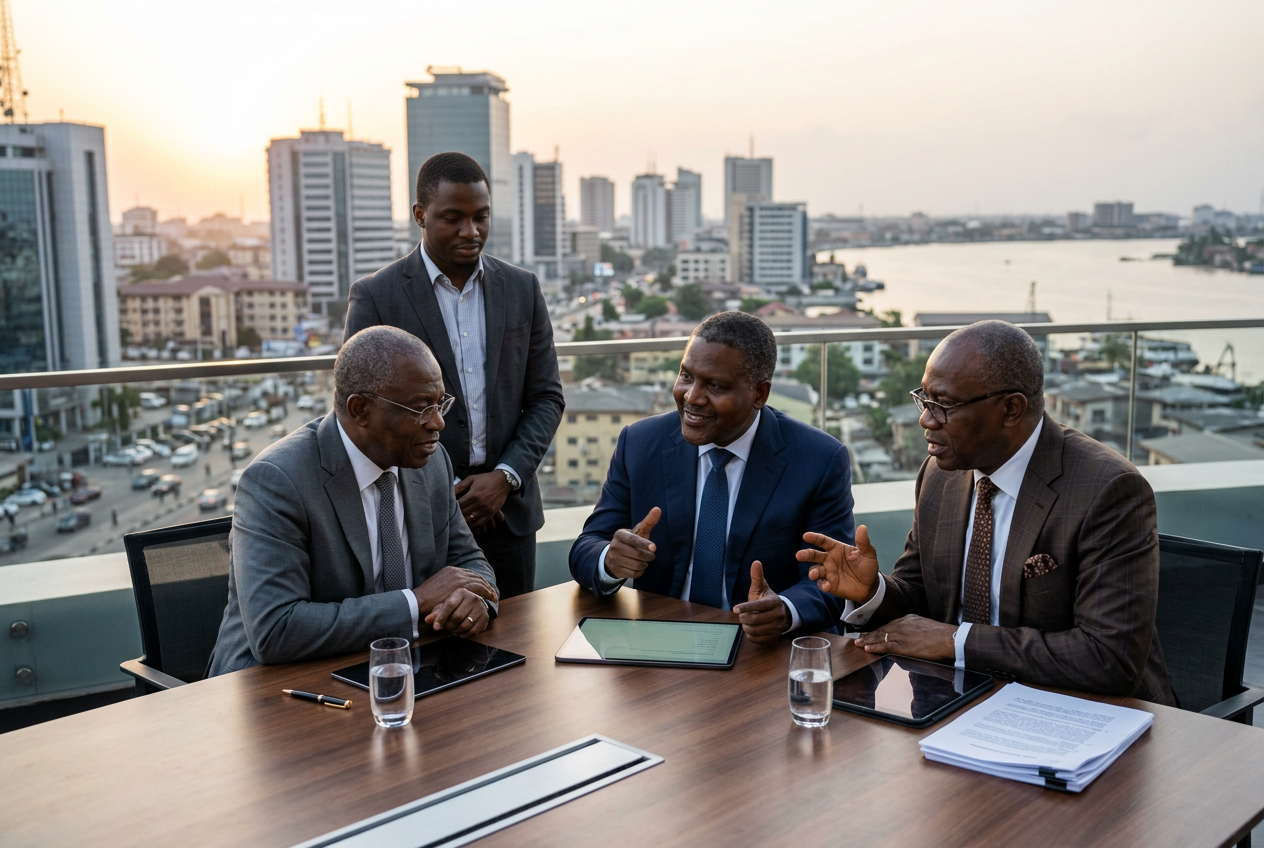
Who Are Africa’s Top 10 Richest in 2026?
Let me lay the whole leaderboard out, because the names below Dangote matter just as much for understanding the shape of African wealth.
The 2026 Forbes ranking counts 23 African billionaires worth a combined 126.7 billion dollars, up a striking 21 per cent on the previous year as stock markets rallied and currencies steadied. Three countries dominate almost entirely: Nigeria, South Africa and Egypt. The rest of the continent, for all its size and promise, barely features, which itself is a story about where capital concentrates.
Before the table, a word on the sectors. Cement and construction alone, through Dangote and Rabiu, account for close to 40 billion dollars. Mining shows up through Oppenheimer and Motsepe. Telecoms built the fortunes of Adenuga and the Sawiris brothers. Luxury sits with Rupert, and banking with Le Roux. When you sort African billionaires by industry, you are really sorting them by what each economy sells to the world.
Africa’s Top 10 Richest People by Net Worth (Forbes 2026)
| Rank | Name | Country | Net worth (USD) | Source of wealth |
|---|---|---|---|---|
| 1 | Aliko Dangote | Nigeria | $28.5 billion | Cement, sugar, refining |
| 2 | Johann Rupert and family | South Africa | $16.1 billion | Luxury goods |
| 3 | Abdulsamad Rabiu | Nigeria | $11.2 billion | Cement, food |
| 4 | Nicky Oppenheimer and family | South Africa | $10.6 billion | Diamonds |
| 5 | Nassef Sawiris | Egypt | $9.6 billion | Construction, investments |
| 6 | Mike Adenuga | Nigeria | $6.5 billion | Telecoms, oil |
| 7 | Naguib Sawiris | Egypt | $5.6 billion | Telecoms |
| 8 | Patrice Motsepe | South Africa | $4.3 billion | Mining |
| 9 | Mohamed Mansour | Egypt | $4.0 billion | Automotive, consumer goods |
| 10 | Michiel Le Roux | South Africa | $3.8 billion | Banking |
Read down that column and the lesson is plain: Dangote’s 28.5 billion dollars nearly doubles the fortune of the man in second place, and Nigeria places three names inside the top six despite fierce competition from Johannesburg and Cairo. The continent’s wealth, in other words, leans heavily on Lagos.
Two of those Nigerian names deserve a footnote. Mike Adenuga built Globacom, one of the country’s largest mobile networks, alongside oil interests through Conoil. And Femi Otedola, a familiar face in these pages, slipped this year to the foot of the list at 1.3 billion dollars after selling much of his Geregu Power stake, a reminder that even billionaire fortunes breathe in and out.
How Africa’s Richest Fortunes Are Actually Built
People often assume immense wealth is a matter of luck or inheritance. Sometimes it is. More often, on this continent, it follows a recognisable path, and I have watched enough of these stories unfold to sketch the pattern.
Here is how the largest African fortunes, Dangote’s very much included, tend to come together.
- Start with a single traded commodity, usually something dull and essential, then reinvest every early profit rather than spending it.
- Move from trading that commodity to manufacturing it locally, capturing the margin that used to leave the country with importers.
- Integrate backwards, so you own the raw materials, the production and the distribution, and no middleman can squeeze you.
- List the flagship business on the local stock exchange, which both raises capital and lets the market reveal your true worth to the world.
- Expand across borders into neighbouring African economies hungry for the same basic goods, turning a national champion into a continental one.
- Add a genuinely enormous, difficult project, a refinery or a fertiliser plant, that competitors lack the patience or capital to attempt.
- Weather the currency swings, because in naira, rand or Egyptian pound terms your fortune will lurch, and the winners are simply the ones who hold on through the storms.
Notice what is missing from that list. There is no viral app, no overnight windfall, no crypto miracle. African wealth at this altitude is patient, physical and stubbornly unglamorous, which is exactly why it endures. If you want a fuller sense of what genuine affluence looks like closer to ground level, my earlier piece on what counts as a rich salary in Nigeria walks through the numbers that separate comfort from real wealth for ordinary earners.
The Human Side of a Fortune This Size
Numbers can go numb on you, so let me bring a person back into focus.
I once stood in a queue outside a filling station in the thick of a fuel scarcity, sweating, listening to strangers argue about whose fault it all was. A trader beside me shrugged and said, in Pidgin, that only one man in this country could truly fix it. He meant Dangote. Whether or not that faith is warranted, it captures something real: for millions of Nigerians, the richest African in the world is not a distant name on a list but a figure they half expect to personally rescue the economy.
That expectation is a burden as much as a tribute. When the refinery stumbles, he is blamed. When petrol flows, he is praised. The government has folded his private empire so deeply into national policy that his fortunes and the country’s now rise and fall in something close to lockstep.
There is a cultural weight to all this too. Wealth in Nigeria has never been purely about money; it carries obligation, community and status in ways outsiders often miss. I explored that idea at length in my look at which culture is considered the richest in Nigeria, and the same threads run through Dangote’s story: family lineage, regional pride, and the quiet expectation that the wealthy will carry others with them.
He gives, for what it is worth. His foundation has poured funds into health and disaster relief. Yet even his philanthropy, like everything at this scale, becomes a matter of national conversation, weighed and debated in newspapers and living rooms alike.
How Dangote Compares to the World’s Richest
Step off the continent and the perspective shifts sharply.
On the global Bloomberg ranking, Dangote sits somewhere around 64th, the only African inside the top seventy. That is a remarkable achievement and also a humbling one, because the summit of world wealth belongs almost entirely to American and Chinese technology founders whose fortunes dwarf his. Elon Musk alone is worth many times what Dangote commands.
This tells you something uncomfortable about global capital. A man can build the largest industrial empire on an entire continent, refine fuel for a nation of over 200 million people, and still rank below software entrepreneurs whose products you could delete from your phone this afternoon. The world rewards code more richly than concrete.
For a Nigerian reader, though, there is pride in the placement. When you next hear someone ask who is the richest African in the world, you can add the sequel: he is also the highest-ranked African on the planet, and the wealthiest Black person anywhere, holding his own in a top hundred otherwise crowded with Silicon Valley and Shenzhen. The context makes the achievement larger, not smaller. For the broader picture of why Nigerian billionaires keep multiplying, the Guardian’s feature on the industrialists leading the 2025 billionaires roll of honour is a rewarding read.
Final Thoughts on Who Is the Richest African in the World
So we come back to where we began, and the answer has not budged. The richest African in the world is Aliko Dangote, and having spent months in the numbers, I am more convinced than ever that his position is built on foundations far sturdier than a single good year on the stock exchange.
His story is really the story of a particular way of building wealth: patiently, physically, in the raw materials a growing continent cannot do without. Cement for its cities, sugar for its tables, fuel for its engines. That is why he sits where he sits, and why the challengers below him, for all their billions, remain challengers.
If you take anything practical from all of this, let it be a sharper eye for how fortunes are actually made in Africa, and a healthy scepticism toward any single valuation, since the naira can rewrite a billionaire’s net worth overnight. Read the trackers, but read the methodology beneath them.
Here are the actions I would suggest you take from here:
- Check both Forbes and Bloomberg before quoting any billionaire’s net worth, and note the measurement date, because the two rarely match and the gap can run to billions.
- Watch the underlying businesses, not the headline number, since Dangote’s cement shares and refinery output tell you far more about his trajectory than any single ranking.
- Keep the naira in view, as every valuation of a Nigerian fortune is really a bet on the exchange rate as much as on the man himself.
Related Articles
If this look at continental wealth sparked your curiosity, I would point you towards two of my own pieces that sit right alongside it. My deep dive into what a rich salary in Nigeria actually looks like brings the conversation down from billionaires to the earnings that genuinely mark you out as wealthy in Lagos or Abuja, with real figures rather than vague adjectives.
And for the cultural roots of prosperity, my exploration of which culture is regarded as the richest in Nigeria unpacks the history, trade and tradition behind the country’s most affluent communities, threads that run straight through Dangote’s own northern commercial heritage.
Key Takeaways
- Aliko Dangote is the richest African in the world in 2026, worth roughly 28.5 billion dollars by Forbes and around 32.5 billion dollars by Bloomberg, holding the title for a fifteenth consecutive year.
- His lead is commanding, with second-placed Johann Rupert more than 12 billion dollars behind, and his fortune rests on cement, sugar, fertiliser and his enormous Lagos refinery.
- He is also the wealthiest Black person on the planet and the only African inside the global top seventy, though technology fortunes abroad still rank far above him.
Frequently Asked Questions About the Richest African in the World
Who is the richest African in the world?
Aliko Dangote is the richest African in the world, with a fortune Forbes valued at around 28.5 billion dollars in its 2026 ranking and Bloomberg put closer to 32.5 billion dollars by late March. The Nigerian industrialist has held the title for fifteen consecutive years, built largely on cement, sugar and his enormous Lagos refinery.
How much is Aliko Dangote worth in 2026?
His net worth sat at roughly 28.5 billion dollars on the Forbes 2026 list and about 32.5 billion dollars on the Bloomberg index in March, the gap reflecting different valuation dates and methods. In naira terms that is comfortably north of ₦40 trillion, depending on the day’s exchange rate.
Who is the richest man in Africa now in 2026?
The richest man in Africa in 2026 is Aliko Dangote, founder and chairman of the Dangote Group. He extended his lead over the rest of the continent this year as shares in Dangote Cement surged and his refinery reached full capacity.
Is anyone richer than Dangote in Africa?
No, nobody in Africa is richer than Dangote in 2026, and his lead is commanding rather than narrow. His nearest challenger, South Africa’s Johann Rupert, trailed by more than 12 billion dollars on the Forbes list.
Who is the richest black man in Africa and the world?
Aliko Dangote is both the richest Black man in Africa and the richest Black person on the planet, according to the Bloomberg Billionaires Index. No other Black billionaire, on the continent or across the diaspora, comes close to his current valuation.
Who are the top 10 richest people in Africa in 2026?
The 2026 Forbes ranking runs Dangote, Johann Rupert, Abdulsamad Rabiu, Nicky Oppenheimer, Nassef Sawiris, Mike Adenuga, Naguib Sawiris, Patrice Motsepe, Mohamed Mansour and Michiel Le Roux. Nigeria, South Africa and Egypt supply almost every name on that list.
How did Aliko Dangote make his money?
Dangote built his fortune on cement through Dangote Cement, the largest producer on the continent, alongside sugar, salt, flour and fertiliser. His 20 billion dollar refinery near Lagos, which reached full capacity in 2025, added a powerful new pillar to the empire.
Why did Dangote briefly lose the top spot in 2024?
For a short stretch in early 2024 a naira devaluation cut the dollar value of his Nigerian assets, and Johann Rupert edged ahead. Once the refinery’s value was folded into the calculations and the currency steadied, Dangote reclaimed the crown decisively.
How many billionaires does Africa have in 2026?
Forbes counted 23 African billionaires in 2026, worth a combined 126.7 billion dollars, up 21 per cent on the previous year. Nigeria contributed four names, while South Africa and Egypt supplied the largest national contingents.
How does Dangote compare to the richest people in the world?
Dangote sits around 64th on the Bloomberg global ranking, far below Elon Musk and other technology founders who dominate the very top. He is, however, the only African inside the world’s top seventy and a rare industrialist among a list crowded with software fortunes.
Is the richest African self-made?
Yes, Dangote is self-made, having started by trading commodities in Lagos with a loan from his uncle before building his manufacturing empire. His maternal great-grandfather, Alhassan Dantata, was nonetheless the wealthiest man in West Africa at his death in 1955, so commerce runs deep in the family.
Will Dangote remain Africa’s richest person?
His lead is wide enough that displacing him would take either a dramatic collapse in Nigerian equities or an extraordinary surge by a rival. For the foreseeable future the safe answer to who is the richest African in the world is still Aliko Dangote.

