 Follow Us on Google News


 Follow Us on Google Discover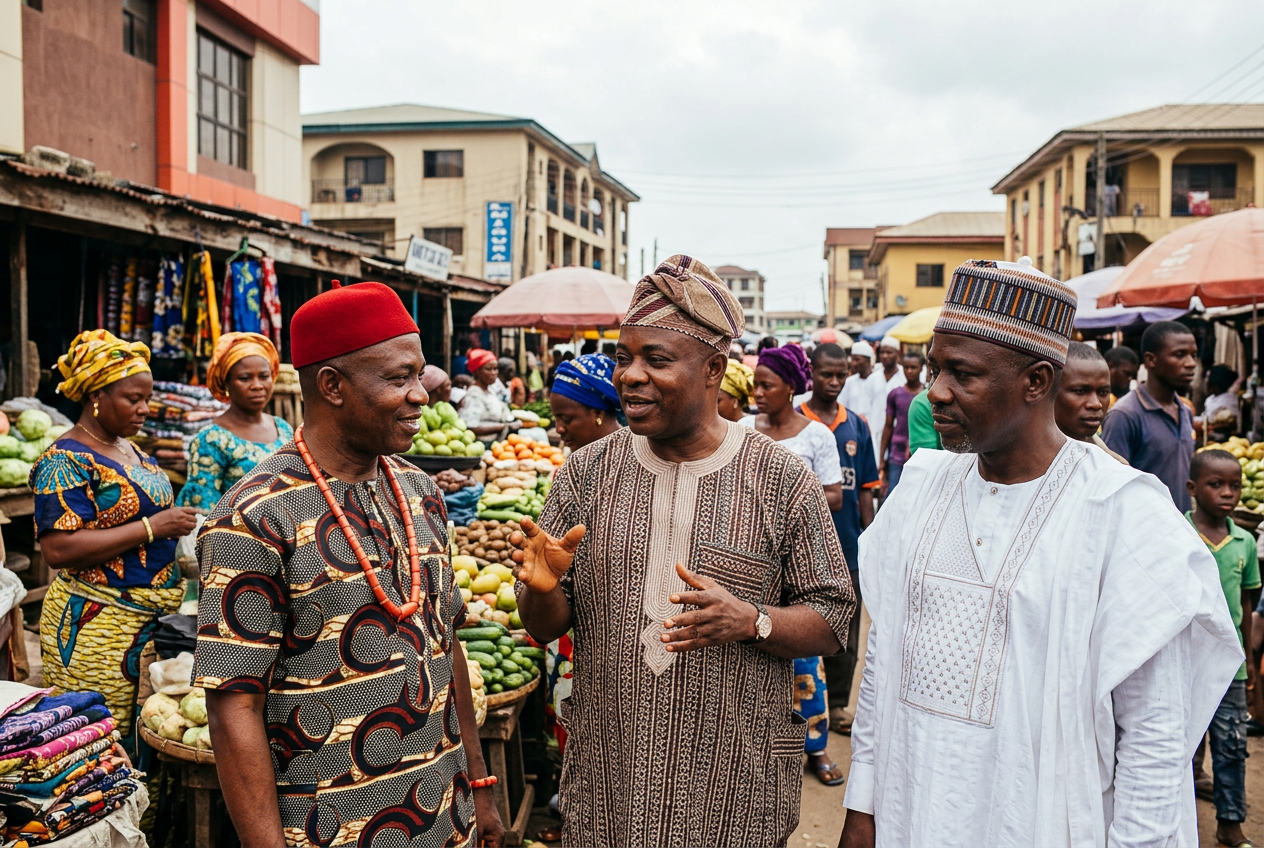
Hello, and thank you for pulling up a chair. If you have ever sat through a lively Lagos dinner where someone slaps the table and declares their people the wealthiest in the land, you already understand why the question of who is the richest culture in Nigeria generates so much heat. This piece is the conclusion of months of research and years spent reporting on Nigerian business, sitting in markets in Onitsha, factories in Nnewi, and boardrooms in Victoria Island.
I will be honest with you from the start. The answer is more interesting than the argument, and by the end I hope you will care less about scoring a point for your tribe and more about how wealth actually gets built here.
Let us take our time and get it right.
What Culture Has the Richest People in Nigeria?
Here is the first thing worth knowing: wealth in Nigeria does not sit neatly inside any one ethnic group. It is spread, layered, and often invisible.
When people ask which culture holds the richest people, they usually mean one of a few different things, and those things pull in different directions. Are we counting billionaires? Business ownership across the whole population? Control of a particular sector like banking or telecoms? Each measure crowns a different winner.
Nigeria runs on three big cultural blocks, the Hausa-Fulani in the north, the Yoruba in the south-west, and the Igbo in the south-east, with each representing roughly a fifth of the population and hundreds of smaller groups filling in the rest. That balance matters. According to the National Bureau of Statistics, the economy grew by 4.07 per cent in the fourth quarter of 2025, and the Bureau’s detailed quarterly GDP reports show agriculture and services doing much of the heavy lifting. Those sectors are not owned by a single culture. They are worked by all of us.

Most of that work happens through small businesses, the very enterprises the Small and Medium Enterprises Development Agency of Nigeria exists to support, and they belong to Nigerians of every background rather than any single tribe.
I remember interviewing a retired banker in Ikoyi who put it beautifully. “Wealth in this country,” he said, “is like harmattan dust. It settles everywhere, but you only notice it on the surfaces people polish.” His point stuck with me. Visibility is not the same as volume.
So before we crown anyone, we need to separate what is loud from what is large.
Are the Igbo or Yoruba Richer in Nigeria?
Ah, the classic quarrel. This is the comparison that empties phone batteries in WhatsApp groups across the country.
Let us deal with perception first, because perception is where most of the shouting happens. The Igbo carry a national reputation as Nigeria’s traders and builders, the people who will open a shop in a town where they know nobody and turn it into an empire. The Yoruba, meanwhile, are widely seen as the professionals and institution-builders, dominating banking, law, media, entertainment, and increasingly technology.
Both reputations contain real truth, and both flatten a messier reality.
The Yoruba advantage is structural and old. Lagos, the commercial capital, sits in Yoruba country, and proximity to that engine has produced generations of bankers, lawyers, and corporate chiefs. Yoruba business families often pool capital through traditional savings schemes such as esusu or ajo, quietly funding one another the way a co-operative funds a harvest.
The Igbo advantage is broad and deep. Rather like water finding every crack in a wall, Igbo commerce spreads into the smallest corners of the country. The genius sits in an apprenticeship tradition that manufactures entrepreneurs by the thousand, a model so effective that business schools from Enugu to Harvard have studied it. Guardian Nigeria has documented how leaders are pushing to formalise and reposition the Igbo apprenticeship scheme as a national tool against unemployment.
So who is richer? If you count dollar billionaires, the Yoruba currently edge ahead, thanks to figures like Mike Adenuga and Femi Otedola. If you count the sheer number of families running their own viable businesses, the Igbo model spreads prosperity more widely across ordinary people. Different questions, different champions.
That distinction, concentration versus distribution, is the whole ball game, and it is exactly where the primary question deserves a proper answer.
Who is the Richest Culture in Nigeria?
Let me answer this directly, because you came here for a straight reply and you deserve one.
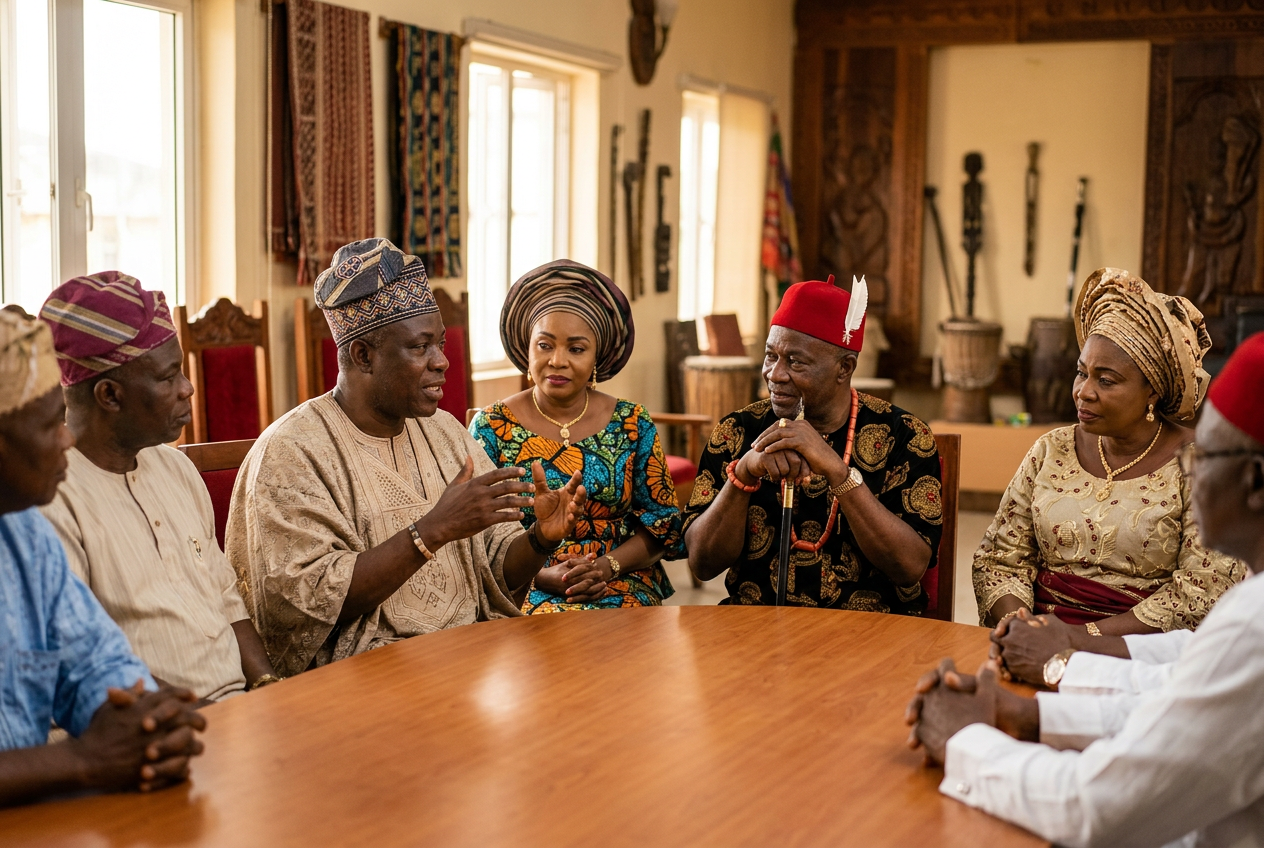
No single culture is definitively the richest in Nigeria, and any honest look at the evidence lands in the same place. The reason is that “richest” is not one measurement but several, and each of Nigeria’s major cultures leads on a different one. The Hausa-Fulani hold the single wealthiest individual in Africa and command vast agricultural, cement, and commodity fortunes in the north. The Yoruba dominate banking, professional services, entertainment, and the Lagos property that anchors so much national wealth. The Igbo own the widest spread of small and medium enterprises, the businesses that Nigeria’s development agencies work hardest to nurture.
When you ask “richest culture,” you are really choosing between these lenses:
- Billionaire count and dollar net worth, where northern and Yoruba magnates currently lead.
- Breadth of business ownership, where Igbo entrepreneurship reaches deepest into the general population.
- Sectoral control, where each group rules a different corner (commodities for the north, finance and media for the Yoruba, trading and manufacturing for the Igbo).
- Regional commercial density, where the south-east and Lagos both punch above their weight.
The perception that the Igbo are “the richest” comes from that fourth lens. Their commercial success is simply the most visible, because you meet Igbo traders and manufacturers in every state, not just in one homeland. Visibility breeds reputation, and reputation hardens into myth.
Here is the professional insight I keep returning to after years of this beat. The joint survey by the National Bureau of Statistics and SMEDAN counted nearly 39.7 million micro, small, and medium enterprises contributing around 46 per cent of GDP and the overwhelming majority of employment. That backbone is not a tribal trophy. It belongs to Nigerians of every culture, and it is where real, distributed wealth actually lives.
Who are the Top 3 Richest People in Nigeria?
Names settle arguments faster than theories, so let us look at the people at the very top.
As of the 2026 Forbes rankings, Aliko Dangote remains not only Nigeria’s richest person but the wealthiest Black person on earth, built on cement, sugar, and now a colossal oil refinery. Behind him sits Abdulsamad Rabiu, whose BUA cement and sugar empire enjoyed a spectacular year, and then Mike Adenuga, the telecoms and oil tycoon behind Globacom. Two hail from the north and one from the south-west, which tells you plenty about the tribal-superiority argument in a single glance.
I have added a couple of extra names below so you can see the pattern rather than just the podium.
Nigeria’s Top Billionaires and Their Cultural Backgrounds (2026)
| Name | Cultural background | Estimated net worth (2026) | Main industry |
|---|---|---|---|
| Aliko Dangote | Hausa-Fulani (Kano) | 28.5 billion dollars | Cement, sugar, refining |
| Abdulsamad Rabiu | Hausa-Fulani (Kano) | 11.2 billion dollars | Cement, sugar |
| Mike Adenuga | Yoruba (Lagos, Ogun roots) | 6.5 billion dollars | Telecoms, oil |
| Femi Otedola | Yoruba (Lagos) | 1.3 billion dollars | Energy, power |
| Tony Elumelu | Igbo (Delta roots) | Multi-sector holdings | Banking, energy |
The table makes the headline point far better than any speech could: Nigeria’s summit of wealth is genuinely mixed, with the top three spread across two cultures and the wider list reaching into all three. No single group has captured the peak.
Notice too that these are dollar fortunes. Measured in Naira, the numbers swell into the trillions, and they swing with every move of the exchange rate, which is part of why smart Nigerian tycoons increasingly build export revenue to steady their books.
Which Part of Igboland is the Richest?
Since so much of the “richest culture” debate circles the Igbo, it is fair to ask where, precisely, Igbo wealth concentrates. The answer is not shy about itself.
Anambra State is widely regarded as the richest part of Igboland, and honestly it is not a close contest. Two towns do most of the talking.
Onitsha holds one of the largest markets in West Africa, a river-port trading city where electronics, textiles, spare parts, and household goods move in volumes that are hard to overstate. Nnewi, about 22 kilometres to the south-east, has earned the nickname “the Japan of Africa” for its manufacturing muscle. It is home to Innoson, Nigeria’s first indigenous vehicle maker, alongside the Ibeto Group, Cutix, and Chicason. The Guardian’s own profile of Nnewi as Nigeria’s self-made industrial hub captures how the town built world-class fabrication with barely any government help.
I spent an afternoon once with an auto-parts trader in Nkwo Nnewi who started as a boy sweeping his master’s shop. Three decades on, he manufactures the very components he once sold. That arc, from apprentice to owner to maker, is the Anambra story in miniature, and it repeats across the whole culture. If you want to meet the people who fill that story, the Guardian’s Igbo business leaders hall of fame is a fine roll call of the pioneers.
How does a boy with no capital become a factory owner? Through a method the Igbo have refined for generations. Here is how the Igba-boi system builds wealth, step by step:
- A young person joins an established trader as an apprentice, often in their teens.
- They work and learn the trade in full, from stock to suppliers to customers, for three to seven years.
- They earn trust rather than a big wage, absorbing the master’s networks and reputation.
- At the end of the term, the master “settles” them with seed capital, commonly ₦500,000 to a few million Naira.
- The former apprentice opens their own business and, in time, trains apprentices of their own.
Each cycle multiplies entrepreneurs instead of employees, which is precisely why Igbo commercial culture spreads so widely and why Anambra keeps producing self-made wealth.
Final Thoughts on Who is the Richest Culture in Nigeria
After all this, let me give you my honest conclusion. The most useful answer to who is the richest culture in Nigeria is that the question itself needs retiring.
The Hausa-Fulani hold the single largest fortunes and dominate commodities. The Yoruba control finance, professional services, and the Lagos economy. The Igbo spread entrepreneurship more broadly through their population than any other group. Each culture is “richest” by a measure that suits it, and each is far from wealthiest by measures that do not. That is not a cop-out. It is the truth the data keeps confirming.
What genuinely excites me, having watched this space for years, is the collaboration crossing tribal lines: Igbo manufacturers supplying Hausa distributors, Yoruba tech founders raising money from northern investors. That is where the real money of the next decade will be made.
So here are your actionable steps. First, stop measuring a culture’s worth by its loudest billionaires and start noticing its ordinary business owners. Second, if you want to build wealth, study the Igba-boi model of learning a trade deeply before striking out, whatever your background. Third, back merit and networks over ethnic pride, because the Nigerians actually getting rich are the ones who partner across lines rather than argue across them.
The richest culture, in the end, is the one that keeps building. That description fits more of us than any single tribe.
Related Articles
If this exploration of wealth and identity interested you, I have written companion pieces that go deeper into the human backdrop of these numbers. For a broader look at how ethnic identity shapes national life, my article on the biggest culture in Nigeria unpacks how size and influence do not always move together. And to understand the demographic mix that underpins every wealth debate in this country, do read my piece on the racial makeup of Nigeria, which sets out exactly who lives here and where.
Key Takeaways
- No single culture is definitively the richest in Nigeria, because “richest” splits into billionaire count, business ownership, and sectoral control, and each major group leads a different measure.
- Nigeria’s top three billionaires in 2026 (Dangote, Rabiu, and Adenuga) come from Hausa-Fulani and Yoruba backgrounds, while the Igbo lead on the sheer breadth of small and medium enterprises.
- Anambra State, powered by Onitsha’s market and Nnewi’s factories, is the wealthiest part of Igboland, and the Igba-boi apprenticeship system is the engine behind that distributed prosperity.
Frequently Asked Questions About Who is the Richest Culture in Nigeria
Who is the richest culture in Nigeria?
No single culture is definitively the richest, because Nigeria’s Hausa-Fulani, Yoruba, and Igbo each lead on a different measure of wealth. The Hausa-Fulani hold the biggest individual fortunes, the Yoruba dominate finance and Lagos, and the Igbo own the widest spread of businesses.
Are the Igbo or Yoruba richer?
By dollar-billionaire count the Yoruba currently edge ahead, thanks to figures like Mike Adenuga and Femi Otedola. By breadth of business ownership across ordinary people, the Igbo model distributes wealth more widely, so the honest answer depends entirely on what you are measuring.
What culture has the richest people in Nigeria?
If you mean the single largest fortunes, the Hausa-Fulani lead through Aliko Dangote and Abdulsamad Rabiu. If you mean the most people running their own viable enterprises, Igbo entrepreneurial culture reaches deepest into the general population.
Who are the top 3 richest people in Nigeria?
As of the 2026 Forbes rankings, the top three are Aliko Dangote, Abdulsamad Rabiu, and Mike Adenuga. Dangote leads on cement, sugar, and refining, Rabiu on cement and sugar, and Adenuga on telecoms and oil.
Which part of Igboland is the richest?
Anambra State is widely regarded as the richest part of Igboland by a clear margin. Its wealth centres on Onitsha, home to one of West Africa’s largest markets, and Nnewi, the manufacturing hub nicknamed the “Japan of Africa”.
Why are the Igbo seen as Nigeria’s most entrepreneurial culture?
The Igbo are seen this way because their commerce is the most visible, appearing in markets and workshops in every Nigerian state rather than one region. Their Igba-boi apprenticeship system also produces new business owners generation after generation, spreading enterprise widely.
Is Aliko Dangote Igbo, Yoruba or Hausa-Fulani?
Aliko Dangote is Hausa-Fulani, born into a prominent business family in Kano in northern Nigeria. His wealth undercuts the common assumption that Nigeria’s biggest fortunes are concentrated in the south.
What is the Igba-boi apprenticeship system?
The Igba-boi system is an Igbo model where a young person works for an established trader for several years to learn the business in full. At the end of the term, the master provides seed capital so the apprentice can start an enterprise of their own.
Which Nigerian city has the largest market?
Onitsha in Anambra State hosts the Onitsha Main Market, one of the largest markets in West Africa. Traders travel from across the country and the wider region to buy goods there in bulk.
Do the Hausa-Fulani count among Nigeria’s wealthiest?
Yes, very much so, and they hold the single richest individual in the country in Aliko Dangote. Northern fortunes are often less visible nationally because they concentrate in commodities, agriculture, and cement rather than everyday retail.
Does ethnicity determine wealth in Nigeria?
Ethnicity offers different starting advantages such as networks, capital, and location, but it does not determine individual outcomes. Every major culture contains both billionaires and people living in hardship, so education, effort, and access to capital usually matter more than tribe.
How is wealth changing across Nigerian cultures?
Wealth is spreading as education equalises opportunity, technology opens new pathways beyond ethnic networks, and younger Nigerians increasingly build ventures across tribal lines. Northern investment in education and Igbo moves into family trusts and formal companies are gradually making wealth patterns more similar across cultures.

