 Follow Us on Google News
 Follow Us on Google Discover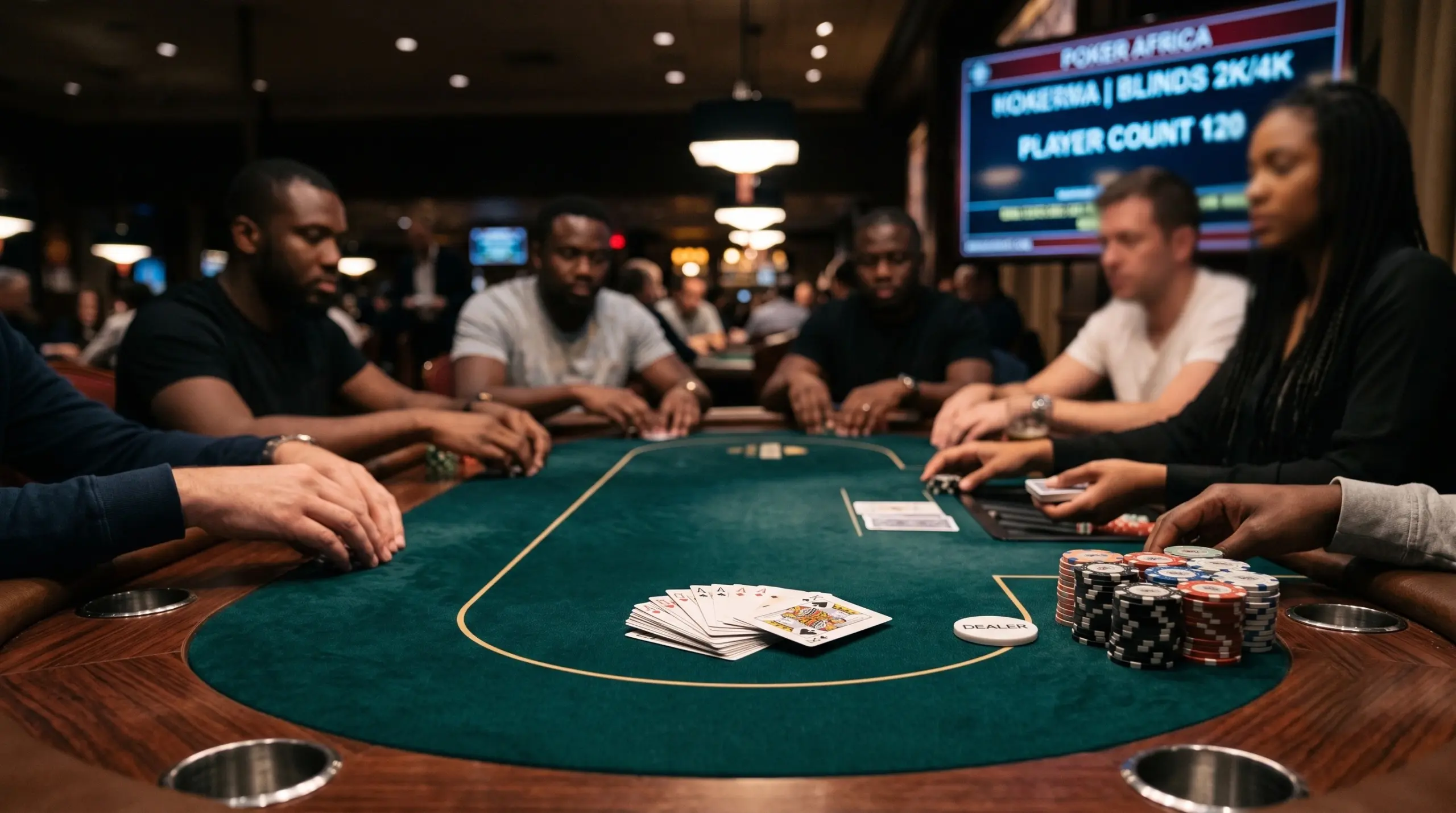
Growing up around poker tables taught me something that took years to fully understand. The cards matter, but they are rarely the most interesting part of the game. What really matters is how people think, how they react under pressure and the decisions they make when nobody can tell them what comes next.
There is a moment at every poker table when the room falls silent. The dealer has finished laying out the cards. The chips sit neatly stacked in front of each player. Nobody is speaking. Nobody is moving. Yet the table is alive with tension.
To someone walking past, it looks like a simple card game.
To those of us sitting around the table, it is a conversation without words.
Long before I understood poker, I understood people.
I grew up in a family where casinos weren’t mysterious places hidden behind closed doors. They were part of everyday life. My father, Johnny Abdallah, has spent decades in Nigeria’s casino industry and became one of the pioneers who helped establish poker as a serious game. As children, my brothers and I didn’t simply watch people play. We watched people reveal themselves.
Some celebrated too early.
Some refused to accept defeat.
Some could remain calm while thousands of dollars sat in the middle of the table.
Others lost control over far less.
Looking back, I realise I wasn’t learning poker at all.
I was learning human nature.
That is why I’ve always found it interesting when people describe poker as “just gambling”.
I understand where the perception comes from. Money changes hands, fortunes rise and fall, and luck certainly plays its part. But reducing poker to gambling is like saying chess is only about moving pieces across a board. It ignores the psychology, discipline and decision-making that separate experienced players from everyone else.
The cards are random.
The decisions are not.
That distinction changes everything.
One of the first lessons poker teaches is that you cannot control the hand you’re dealt.
You can only control how you play it.
That may sound obvious, but think about how often we struggle with that idea in everyday life.
Nobody chooses the family they are born into.
Nobody chooses every opportunity that comes their way.
Nobody controls every setback.
Yet we spend an extraordinary amount of energy wishing our circumstances were different instead of making better decisions with what we already have.
Poker doesn’t allow that kind of thinking for very long.
Every hand asks a simple question.
What are you going to do now?
That question has shaped much of my life, both inside and outside the casino.
People often imagine that the best poker players are fearless risk-takers. The reality is almost the opposite. The strongest players I’ve known are remarkably patient. They don’t chase every opportunity. They don’t try to win every hand. More importantly, they don’t allow pride to make decisions on their behalf.
They understand something that took me years to appreciate.
Sometimes the smartest move is to fold.
Walking away is rarely celebrated in our culture. We admire persistence, determination and refusing to give up. Those qualities have their place, but poker teaches another lesson that life constantly confirms.
Persistence without judgement can become stubbornness.
I’ve watched talented players lose everything because they couldn’t let go of one hand. They convinced themselves that the next card would change everything. Sometimes it did.
Most times it didn’t.
Outside the casino, the same pattern repeats itself.
Businesses continue with failing strategies because nobody wants to admit they were wrong.
People stay in unhealthy relationships because they have already invested too much emotionally.
Leaders refuse to change direction because they worry about appearing weak.
The cards may be different, but the psychology is exactly the same.
Another misconception about poker is that success belongs to the cleverest person at the table.
Intelligence certainly helps.
Mathematics helps.
Experience helps.
But after years around poker tables, I’ve become convinced that emotional control is the greatest competitive advantage of all.
Every player experiences disappointment.
Every player suffers bad luck.
Every player eventually loses with what they believed was the winning hand.
The question is never whether setbacks will happen.
The question is how you respond when they do.
Some players spend the rest of the evening trying to recover what they lost. They become impatient, frustrated and reckless. Before long, they are no longer making decisions. Their emotions are making them instead.
Others take a breath.
They slow down.
They accept what has happened.
Then they wait for the next opportunity.
That ability to remain composed under pressure is valuable far beyond poker. It influences how we negotiate, how we lead teams, how we manage money and even how we raise families.
Perhaps that is why poker has stayed with me for so many years.
It has never been just about winning.
It has always been about learning.
Learning when to speak and when silence carries more weight.
Learning when confidence becomes arrogance.
Learning that patience is not weakness.
Learning that losing one battle does not mean you’ve lost the war.
Nigeria is changing. More people are discovering poker, more conversations are taking place and the industry continues to evolve. As that happens, I hope we begin to judge poker not by old stereotypes but by a deeper understanding of what it actually demands from those who play it responsibly.
This column is my invitation to have that conversation.
Some weeks we’ll explore remarkable hands played around poker tables.
Other weeks we’ll discuss psychology, leadership, negotiation, business or resilience.
We’ll meet unforgettable personalities, revisit painful defeats and celebrate hard-earned victories.
But every week we’ll return to the same idea.
Because beyond every card is a choice.
Beyond every choice is a lesson.
And beyond every lesson is an opportunity to become better than we were yesterday.
Beyond the Cards
The hand you’re dealt will always involve an element of chance. The life you build from it rarely does. Character is shaped less by circumstance than by the choices we make when uncertainty sits across the table from us.
Elloy Johnny Michel is a second-generation poker professional and casino operator whose weekly column explores leadership, psychology, decision-making and human behaviour through the lens of poker.

