 Follow Us on Google News
 Follow Us on Google Discover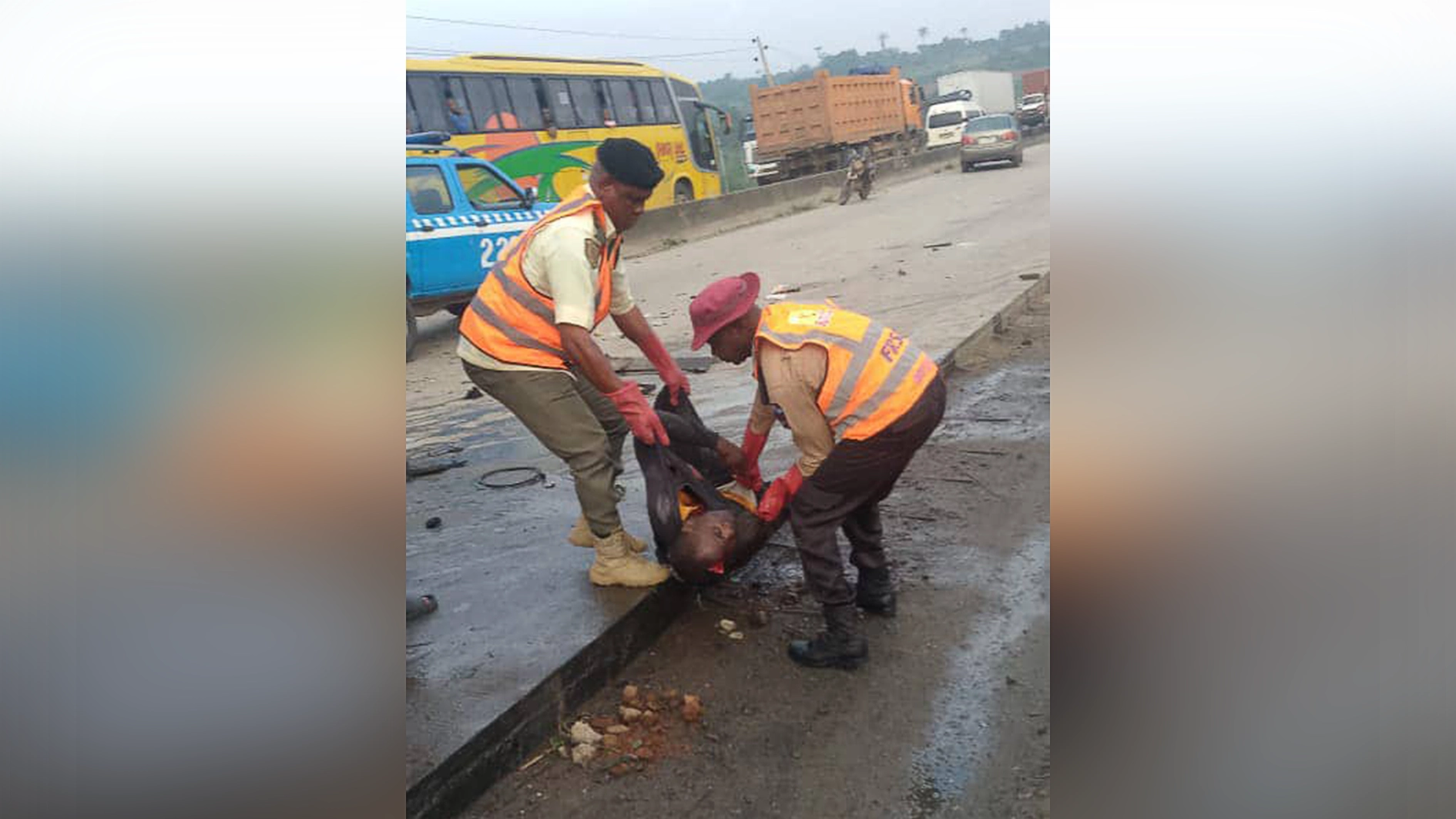
The early morning calm on the Sagamu–Benin Expressway was shattered on Wednesday when a crane travelling against traffic slammed head-on into an oncoming truck, leaving three people dead and three others injured in a devastating crash.
The accident, which occurred at about 5:00 a.m. near the Babcock University Junction in Ikenne Local Council of Ogun State, turned a busy stretch of the highway into a scene of grief as emergency responders raced to rescue survivors trapped in the wreckage.
Officials said the crash involved a white Mercedes-Benz truck with registration number LG 59 BLF and a yellow crane that had no registration number.
Confirming the incident, the spokesperson for the Ogun State Traffic Compliance and Enforcement Agency (TRACE), Babatunde Akinbiyi, said six people, three men and three women were involved in the collision.
According to him, three of the occupants died instantly from the impact, while the remaining three sustained varying degrees of injuries and were rescued by emergency workers.
Preliminary investigations, Akinbiyi disclosed, revealed that the tragedy was caused by the crane driver’s excessive speed and dangerous decision to drive against the flow of traffic before crashing into the oncoming truck.

He said personnel of TRACE, working alongside officers of the Federal Road Safety Corps (FRSC), responded promptly to the emergency, rescued the injured victims and diverted traffic to ease congestion and prevent secondary accidents.
The injured were taken to the Babcock University Teaching Hospital for medical treatment, while the bodies of the deceased were deposited at the Olabisi Onabanjo University Teaching Hospital (OOUTH), Sagamu.
The incident adds to the growing number of fatal crashes recorded on Nigerian highways, once again highlighting the deadly consequences of reckless driving, excessive speed and disregard for basic traffic regulations.
Safety experts have repeatedly urged motorists and operators of heavy-duty vehicles to obey traffic rules and exercise greater caution to prevent avoidable loss of lives.

