 Follow Us on Google News
 Follow Us on Google Discover
The S’apeyi of Garki, His Royal Highness, Alhaji Usman Nga Kupi, recently joined residents of his domain to undergo free hepatitis screening, using the occasion to urge government agencies, healthcare providers and development partners to expand community-based health interventions in the Federal Capital Territory.
The monarch spoke at the World Hepatitis Day outreach hosted at the Sa’peyi Palace in Garki, organised by Garki Hospital in partnership with the Institute of Human Virology Nigeria, Zolon Healthcare Limited, MEGA, URAH, Clinton Health Access Initiative and Abbott.
The one-day programme themed, ‘Early Detection Saves Lives, Know Your Status,’ offered free hepatitis, HIV, syphilis and malaria testing, counselling and public health education.
The royal father set the tone by taking the test. In a gesture widely applauded by residents and health workers, the S’apeyi publicly submitted himself for screening alongside members of his community — a move organisers said was crucial in dismantling the stigma and fear that often discourage people from knowing their hepatitis status.
“I am grateful to the organisers for bringing this kind of service directly to our people,” the monarch said after his test. “Many of our residents cannot easily access such screenings and by coming to the palace, you have shown that healthcare can and should meet the people where they are.”
The traditional ruler appealed for the sustenance and expansion of the outreach, calling for future gestures to cover other pressing health concerns affecting his subjects, particularly prostate enlargement and diabetes, which he noted are increasingly common among older residents.
He further urged government at all levels, private hospitals and development partners to work together to make healthcare more affordable for low-income earners, stressing that the cost of testing and treatment remains one of the biggest barriers to early diagnosis in the community.
“Our people are willing to be tested and treated, but many cannot afford it. I appeal to the authorities and our partners to continue to support programmes like this so that no one is left behind because of poverty,” he said.
Consultant Physician and Gastroenterologist at Garki Hospital, Dr. Justice Igbiti, said the decision to hold the outreach at the palace was deliberate, explaining that it was designed to bring services closer to underserved communities and to leverage the influence of traditional institutions in mobilising residents.
Igbiti educated participants on the five major types of viral hepatitis — A, B, C, D and E — and their modes of transmission through contaminated food or water, infected blood and other bodily fluids.
He distinguished between acute hepatitis, which the immune system can sometimes clear within six months, and chronic hepatitis, which persists longer and can lead to liver cirrhosis, liver failure or liver cancer if untreated.
He also dispelled the widespread myth that people living with hepatitis must avoid beans, stressing that beans and other protein-rich foods are essential to a balanced diet and support the body’s nutritional needs. Patients, he said, should not eliminate nutritious foods based on misinformation.
Speaking with journalists, Igbiti warned that Hepatitis B is significantly more infectious than HIV, yet many Nigerians only seek care after developing severe complications such as cirrhosis or liver cancer.
He advised adults born before the introduction of routine hepatitis B vaccination to get tested, urging parents to ensure that newborns continue to receive the vaccine at birth. He noted that while there is no vaccine for Hepatitis C, the disease is curable when detected and treated early.
He promised that anyone who tested positive during the outreach would receive follow-up care at NisaGarki Hospital.
Representing the FCT Mandate Secretary for Health, Dr. Adedolapo Fasawe, the Director of Public Health, Dr. Teresa Nwachukwu, commended the S’apeyi, the organisers and community members for the initiative.
She said the FCT Administration is committed to eliminating barriers such as cost, stigma and distance that discourage residents from seeking healthcare, reiterating that knowing one’s hepatitis status could save lives.
Head of Marketing and Communications at Garki Hospital, Uche Francis, said this year’s campaign was deliberately taken into the community rather than held at the hospital to reach people who might otherwise have little access to health information.
She described hepatitis awareness in Nigeria as inadequate and called for more community-based sensitisation, especially in underserved areas. Free screening for HIV and syphilis, along with medications and counselling, were also provided where necessary.
Residents, who took part in the screening, thanked the organisers for the free testing and encouraged their neighbours to know their health status rather than avoid testing out of fear.
Hepatitis: Traditional ruler, hospital, health bodies seek community-based action
Date: 8 August 2026 4:22am WAT
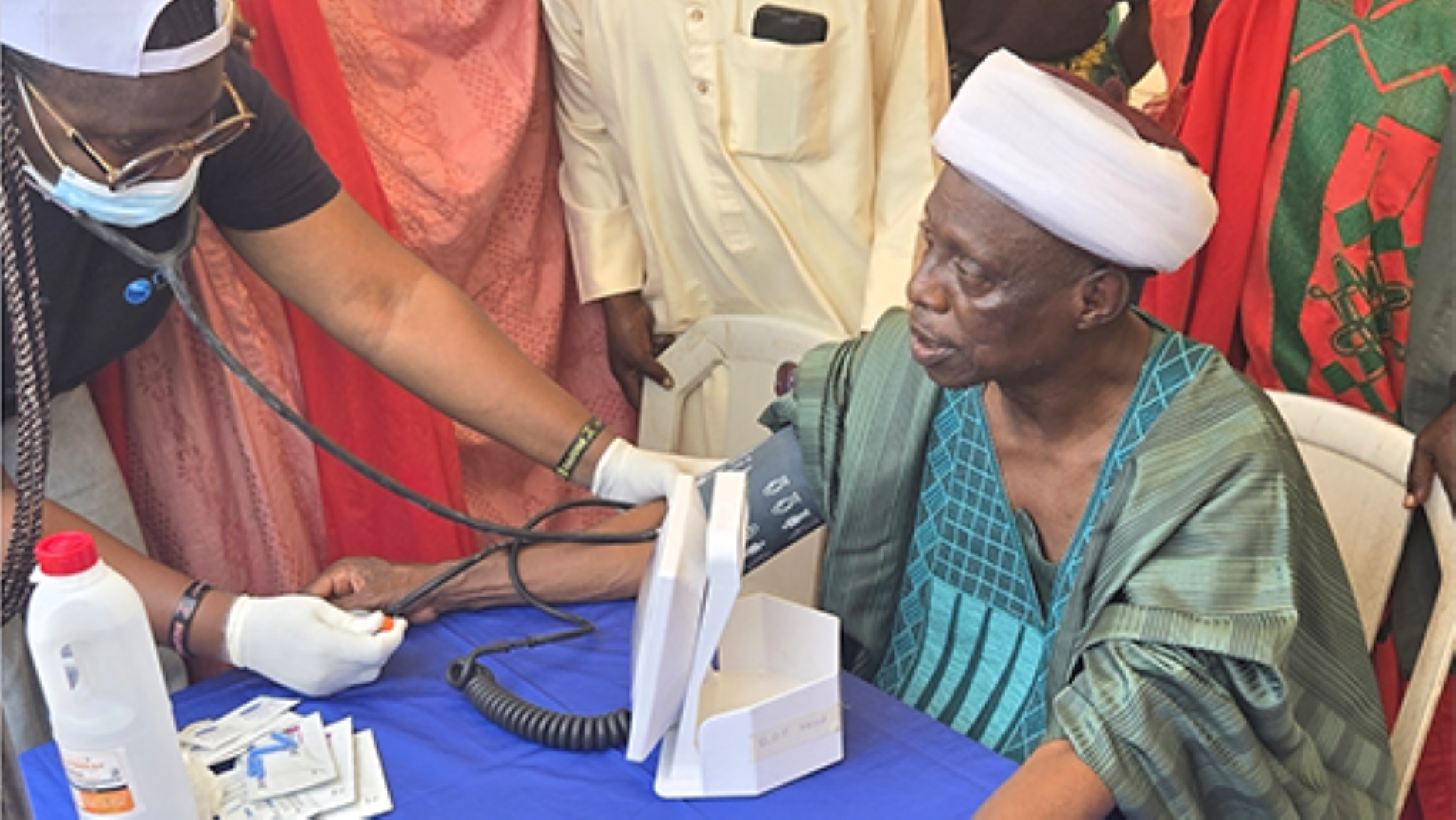
The S’apeyi of Garki, His Royal Highness, Alhaji Usman Nga Kupi, undergoing free hepatitis screening during the World Hep- atitis Day outreach hosted at his palace by Garki Hospital in partnership with the Institute of Human Virology Nigeria, Zolon Healthcare Limited, MEGA, URAH, Clinton Health Access Initiative and Abbott...recently.
The S’apeyi of Garki, His Royal Highness, Alhaji Usman Nga Kupi, undergoing free hepatitis screening during the World Hep- atitis Day outreach hosted at his palace by Garki Hospital in partnership with the Institute of Human Virology Nigeria, Zolon Healthcare Limited, MEGA, URAH, Clinton Health Access Initiative and Abbott...recently.

