 Follow Us on Google News
 Follow Us on Google Discover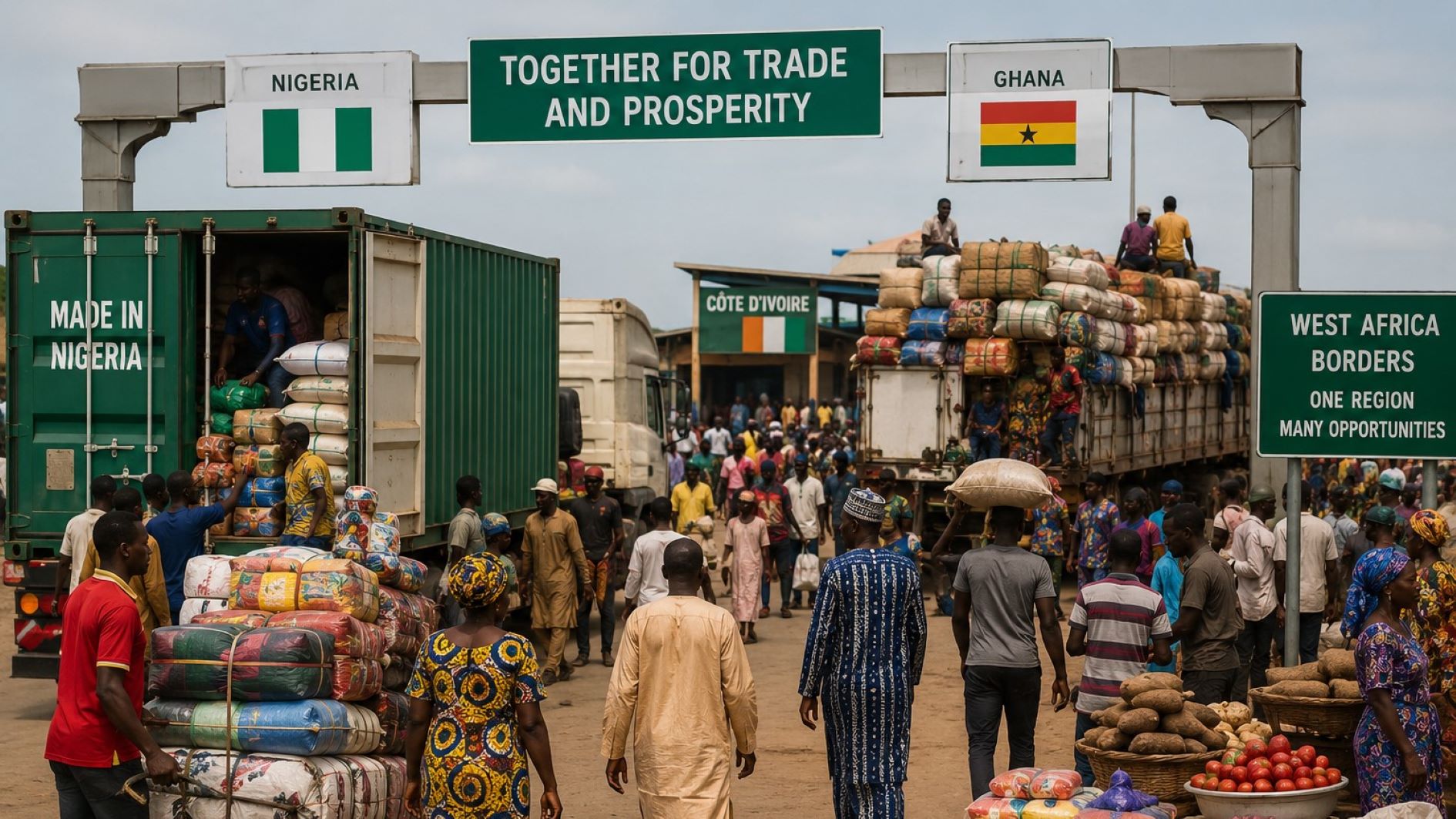
• NOTN Committed To Boosting Cross-border Trade
• Only 20% Of SMEs Resolve Disputes Efficiently – LCCI Survey
• Experts Call For Standardised Laws Across Africa
As Nigeria intensifies its quest for economic diversification, particularly through regional and global trade expansion, trade tensions, shifting trade corridors, interrupted supply chains, regulatory fragmentation and infrastructure bottlenecks are impacting how goods and service move across the continent.
There are significant opportunities for trade in Africa driven by the African Continental Free Trade Area (AfCFTA), a growing consumer market, expanding regional value chains, and increasing investment in infrastructure and digital connectivity.
AfCFTA offers a market of over 1.4 billion people and a combined Gross Domestic Product (GDP) of $3.4 trillion.
Connecting the free movement of goods and services and the free movement of persons is essential to harness the benefits of intra-African trade and economic integration. But while many African countries have ratified or signed the African Continental Free Trade Area (AfCFTA) agreement, the AU’s free movement protocol (AU-FMP) has not received as much attention.
The Guardian gathered that Small and Medium-sized Enterprises (SMEs), legal professionals and other informal cross-border traders face harsh crackdowns, high tariffs, and complex customs documentation.

They are also blocked by restrictive work and business permit rules. Lawyers aiming to practice in other African countries are also confronted by lack of mutual recognition agreements. These factors create severe friction for regional integration and the African Continental Free Trade Area.
According to a report by the Nigerian Export Promotion Council (NEPC), over 65 per cent of SMEs attempting to export goods or services within Africa cite legal and regulatory barriers as their biggest constraint.
The report noted that there are cumbersome documentation processes, which many SMEs lack the capacity to navigate. These include the extensive paperwork required for customs clearance, export licensing, and standards compliance across multiple jurisdictions.
Other challenges include the lack of harmonised professional standards across African countries; restrictions on foreign legal consultancy services in several jurisdictions and delays in ratifying professional mobility protocols under AfCFTA’s Protocol on Services.
The Guardian gathered that such other hurdles include that Nigerian-trained lawyers must undergo fresh qualification or accreditation processes before being allowed to offer cross-border services, even within the Economic Community of West African States (ECOWAS) region and among common law jurisdictions.
Intra-African mobility is central to realising Agenda 2063 — an integrated, prosperous and peaceful Africa driven by its own citizens. As ECOWAS has shown, free movement is possible and powerful. Now is the time for the rest of Africa to follow suit.
By embracing mobility, Africa can unlock its full potential, foster unity and build a future where borders connect rather than divide. Achieving this vision will require coordinated effort and commitment, but it is within reach.
According to the United Nations (ECA), full implementation of AfCFTA could increase Africa’s GDP by $141 billion and intra-African trade by $276 billion, an increase of 45%.
However, trade is not just about goods and services. It is also about people and skilled labour. Labour mobility is the lifeblood of economic integration. The AU-FMP, though still awaiting widespread ratification, is essential to realising AfCFTA’s full potential.
The consequences of lawyers not being able to deliver legal services seamlessly across the continent manifest in businesses facing slow and expensive dispute resolution processes, as National laws prioritise domestic labour over regional talent mobility, stalling cross-border corporate services.
A study by the Lagos Chamber of Commerce and Industry (LCCI) revealed that only 20 per cent of SMEs involved in cross-border disputes successfully enforce contracts within a reasonable timeframe.
In the World Bank’s Business Ready (B-READY) 2025 report, Nigeria achieved 63.48 per cent score for the regulatory framework, 24.50 for public services, and 53.80 for operational efficiency within the dispute resolution pillar.
While legal frameworks are established, the report indicates a significant gap between these laws and the available public infrastructure to enforce them.
Even where lawyers can advise clients on trade transactions, enforcement of cross-border agreements remains problematic.
At the moment, the British Nigeria Law Forum (BNLF) wants Nigerian lawyers to renew strategic collaboration between them and Britain to advance cross-border legal practice, harness global opportunities, and address emerging challenges in a fast-evolving legal and commercial landscape.
A Senior Advocate of Nigeria (SAN), Chris Ehumadu Okeke, who weighed in on the challenges facing cross-border legal practice in Africa, particularly in light of AfCFTA, which aims to ease movement of goods and services, including legal services, across the continent, said legal reforms would address some of the challenges.
Okeke said structural legal impediments hinder cross-border legal practice, explaining that law, like medicine, remains a localised profession governed strictly by national legislation.
“The idea is a latching on the African Free Trade Zone, and to my mind, you cannot trade without legal practice. But the challenge is that law practice, like medical practice, is localised. Each jurisdiction is autonomous,” Okeke explained.
He cited the example of Nigeria’s Legal Practitioners Act, which defines who may legally practice within the country’s borders.
According to Okeke, the definition limits legal practice to individuals called to the Nigerian Bar, thereby excluding international practitioners.
He explained that unless the law is specifically amended, foreigners will not practice in the country.
“Even when Nigeria and Ghana are brothers and both Commonwealth countries, the law has always restricted practice to those locally certified. That’s the challenge,” he stated.
Okeke emphasised that any change to this status quo would require legislative action across various national parliaments, including Nigeria.
Without such reforms, he argued, the dream of seamless legal services across African borders would remain out of reach.
The SAN also criticised what he sees as an imbalanced arrangement in emerging bilateral frameworks, particularly between Nigeria and Britain.
According to him, UK-trained lawyers are entering the Nigerian legal space without reciprocal provisions for Nigerian lawyers.
“Many of us are becoming very skeptical. Is this a backdoor arrangement to allow UK practitioners into Nigeria without granting the same access to Nigerians in the UK? That’s the anxiety,” he said.
Executive Director, Cadrell Advocacy Centre, Evans Ufeli, said despite growing momentum for regional economic integration, the continent’s fragmented legal systems continue to obstruct progress.
According to him, one of the primary challenges lies in the diverse legal systems that span the continent, including common law, civil law, and customary law traditions.
These differences, he said, make it difficult for legal practitioners to offer services or represent clients across multiple jurisdictions without encountering procedural and regulatory roadblocks.
“Each African country maintains its own regulations around trade, taxation, employment, and investment.
The lack of harmonisation of laws creates unpredictability for both lawyers and SMEs involved in cross-border transactions,” he said.
“Without targeted legal backing, SMEs often struggle with customs procedures, compliance issues, and access to dispute resolution mechanisms,” he added.
To resolve these challenges, Ufeli proposed a multi-pronged approach focused on harmonisation, mutual recognition and legal education.
“Key recommendations include standardising laws across African nations through the leadership of the African Union (AU) and Regional Economic Communities (RECs); creating a continental framework for the mutual recognition of legal qualifications; offering cross-border legal training to empower practitioners to navigate foreign legal environments; enhancing government–SME collaboration to reduce bureaucratic hurdles and legal uncertainty.
“Lawyers need the tools and freedom to operate beyond borders if AfCFTA is to truly benefit the African people,” Ufeli declared.
He referred to the European Union and the Association of Southeast Asian Nations (ASEAN) as examples of how regional blocs have effectively facilitated cross-border legal practice through unified directives and cooperative frameworks.
“These models demonstrate that it is possible to retain national sovereignty while ensuring legal alignment that promotes trade, investment, and mobility,” he said.
He also urged African countries to leverage technology, such as virtual legal services and online dispute resolution platforms, to support remote cross-border practice.
“In the long run, removing legal and regulatory barriers will not only empower lawyers but also unlock the potential of millions of SMEs that are vital to Africa’s economic future,” Ufeli stated.
Legal consultant at De Legal Pilots, Aduware Osemwegie, who frowned at the challenges, suggested that harmonised legal frameworks would foster inter-African collaboration and economic integration.
Osemwegie noted that many African countries still require lawyers to obtain local licenses before they can offer legal services within their jurisdictions.
She attributed this to the unique and diverse legal systems across the continent, which make it essential for non-local practitioners to have a deep understanding of a country’s specific legal landscape.
“Most African countries have different laws and legal procedures. So, non-locals are licensed before they can practice, as this underscores a deep understanding of the legal system in that country,” Osemwegie explained.
According to her, mutual recognition of legal qualifications across African nations could greatly enhance trade and regional cooperation.
Osemwegie referenced the EU’s directive on mutual professional recognition, which facilitated the integration of its Single Market system by allowing professionals including lawyers, to work freely across member states.
She urged Africa to adopt a similar model by leveraging existing regional institutions such as the AU and the Economic Community of West African States (ECOWAS).
These bodies, she suggested, could establish regional legal training institutions that provide certification in cross-border legal procedures.
“These institutions could create a structured pathway for lawyers to gain the competence needed to work beyond their home countries. This would also give governments a stronger basis to develop policies that allow for cross-border legal practice. Law is part of trade, and if we are serious about integration, then legal services must be part of the conversation,” she said.
Osemwegie called for the strengthening of regional bar associations and legal networks.
Such organisations, she argued, could offer much-needed support through training, policy dialogue, and knowledge-sharing.
Damilola Awotula, a doctoral candidate, and Research Fellow, McGill Business Law Platform, Faculty of Law, McGill University, believes that the success of the African Continental Free Trade Area (AfCFTA) turns in part on whether the legal profession is equipped to service the commercial relationships it will generate.
He noted the challenge of ensuring that African lawyers are educationally and professionally equipped for cross-border legal practice is one that policymakers and the African legal academy have not adequately reckoned with.
“Two structural deficits are identified. First, the procedural liberalisation of legal services markets, standing alone, cannot produce professionally competent cross-border lawyers in the absence of corresponding curricular and pedagogical reforms.
“Second, continental and regional frameworks for legal education harmonisation as they exist today remain too generic and too underdeveloped to meaningfully support the cross-border mobility of lawyers.
“Undergirding both deficits, among others, is the phenomenon of sovereign sensitivity, whereby states retain a peculiar interest in confining legal education and professional admission to nationally defined parameters.”
He noted, “rather than waiting for the resolution of these macro-level institutional obstacles, African law schools and individual legal educators can begin to address the competence gap through micro-level pedagogical reform. Two integrative approaches are conceptually mapped out: comparativist legal pedagogy, which exposes students to the plurality of legal traditions operating across the continent, and transsystemic legal pedagogy, which invites students to reason across and beyond jurisdictional boundaries simultaneously.”
In their recent report, the authors: Andrew Buchmann, Julia Choate, Wang’ombe Kariuki, and Xolani Nyali said: “There are important shifts in dispute resolution and arbitration. English law governs the majority of the world’s cross‑border trade, including commodities, maritime and shipping. Existing frameworks in international arbitration are constantly evolving, with implications for how disputes are managed, how damages are assessed, what constitutes a binding agreement and how contractual tweaks affect enforceability.”
They noted that delay‑related disputes will continue to rise, particularly where contracts have not been updated to reflect current risks.
For traders, these legal developments influence how deals should be structured, risks allocated and disputes resolved. Contracts need greater flexibility to accommodate multijurisdictional performance and anticipate regulatory change. Projects linked to public sector procurement require clearer risk allocation.
“Traders must look outward to identify new markets and anticipate obstacles before they arise. Success depends on flexibility, close monitoring of regulatory reforms, embracing technology, engaging teams of cross-border experts on the ground and planning rather than reacting. Businesses that can move like water and adapt to the current conditions will be able to flow through the barriers.”
On its role in creating a desired template for operation, the Nigerian Office for Trade Negotiations (NOTN) said it has continued to implement initiatives aimed at boosting cross-border trade “despite the passing of former Executive Secretary, Segun Awolowo.”
Insiders say nothing has changed as things are still working normally. A lawyer and international trade advisor, Mobola Adekola, said NOTN has remained active since the leadership transition, adding that ongoing efforts suggest continuity in its mandate to strengthen Nigeria’s trade engagement across borders.
According to her, an acting official has been appointed to oversee the office, with several activities already underway to sustain its operations.
“Since the appointment in an acting capacity, there have been different activities going on. So, it would be difficult to conclude that there are bottlenecks within the system,” she said.
However, the NEPC said it is aggressively pushing to formalise informal cross-border trade to boost non-oil export earnings and economic growth.

