 Follow Us on Google News
 Follow Us on Google Discover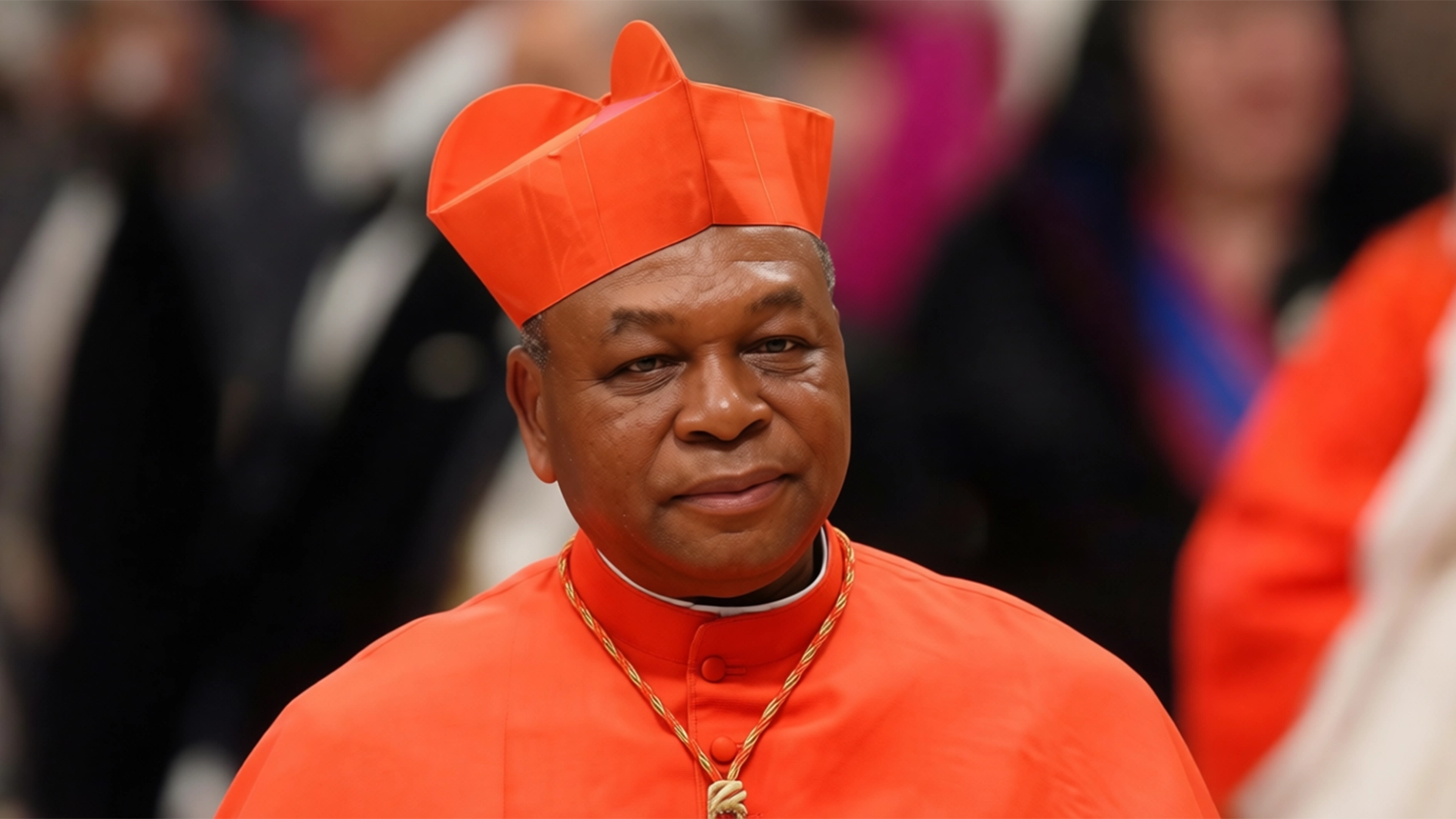
By Rasheed Ojikutu
The cassock is a uniquely perfect dress. It is not like the Agbada of the politician, the green beret of the soldier or the wig of the lawyer, the cassock derives its authority neither from a terrestrial or coercive signature but from a divine and celestially acknowledged institution. Its authority is fundamentally moral.
The Bishop just like all those in genuine pastoral responsibilities commands attention because society presumes that he speaks from a position somewhat removed from the calculations of partisan politics.
That distinction is particularly important in Nigeria, where, despite the constitutional identification of the country as a “secular state” religion still occupies an extraordinary and dominant position in national life. Therefore, religious leaders are expected to be counsellors to all and sundry.
They console the bereaved, admonish those in authority, advocate for the poor and sometimes mediate during moments of national crisis. Due to this privileged position, society reasonably expects from them a corresponding degree of restraint, fairness and discretion.
It is against this background that the recent television intervention of His Eminence, John Cardinal Onaiyekan, Archbishop Emeritus of Abuja deserves careful examination.

The issue is not whether he or any other clergy has a right to speak about Nigeria. Of course they do because ordination or elevation to the College of Cardinals as it is in the case does not extinguish the rights of citizenship. He is a Nigerian citizen, a distinguished churchman and an elder statesman.
Section 39 of Nigeria’s 1999 Constitution guarantees freedom of expression, including the freedom to hold opinions and to receive and impart ideas and information. However, the suspicion here is that the Kaaba born Bishop thought he was living up to his Kogi dialect name Onaiyekan which in Oyo dialect means “Eni Aiye Kan”( E se Aiye re).
Fine but the real question is “At what point does legitimate prophetic intervention by a religious leader begin to assume the appearance of partisan political engagement?” “And what obligation of confidentiality accompanies the extraordinary privilege of private access to the President of the Federal Republic?”
These two questions lie at the heart of the controversy generated by the Bishop’s recent appearance on ARISE Television. The truth is that the context matters. In this case, some Senior Catholic leaders had met President Bola Ahmed Tinubu. Such meetings between political authorities and religious leaders are not unusual. Indeed, they are desirable in a plural democracy such as Nigeria. The Government has legitimate reasons to listen to those leaders, just as it should listen to Muslim leaders, traditional rulers, professional associations, organised labour and civil-society organisations.
But the crucial difference here is between a public conference and a private audience. Ordinarily such closed-door meeting is expected to create an atmosphere whether the participants will have some space for frank conversation. The value of such meetings lies precisely in their privacy.
Bishops and any other religious groups who sit privately with a president should be able to tell him uncomfortable truths. Equally, a president should be able to explain his difficulties, frustrations, fears, disagreements and political calculations without wondering whether every expression, reaction or disagreement will subsequently become material for television discussion.
Bishop Onaiyeikan’s television’s campaign may have destroyed that confidence and hence, something valuable may have been lost in the religious leaders versus Government confidential tete a tete in Nigeria.
Future presidents may still meet religious leaders, but they may speak to them as politicians speak before cameras, cautiously, defensively and with every sentence calculated for possible publication.
That would impoverish both the Church and the State. This type of flinging-out institutional opportunities though the windows for cheap personal aggrandisement is peculiar to Nigeria where leaders are sometimes too naive to estimate the overall consequences of their action.
Let it be known that access to power is a privilege in any place in the world. That privilege exists to those senior religious leaders because they are understood to represent constituencies much larger than themselves and, more importantly, because political leaders recognise their moral standing. However, privilege without responsibility easily becomes problematic.
If a clergyman is admitted into the inner chambers of political authority because of his religious office, should information obtained through that privileged access subsequently become material for political commentary? This question deserves serious consideration which the Catholic Bishops who attended that meeting should ponder over.
What becomes more difficult to justify is moving from announcing one’s own position to narrating the reactions, disposition or statements of another participant in what was understood to be a private engagement. That is where the ethical question arises.
Prophets don’t flatter kings. Nathan confronted David. Elijah challenged Ahab. John the Baptist confronted Herod. Prophet Mohammed (Peace be upon him) confronted the leadership in Mecca over idolatry.
Religious history would be considerably poorer if religious leaders had interpreted neutrality to mean silence before injustice.
Therefore, the argument that those on pastoral duties should never speak about politics is both historically and theologically unsustainable, but, there is an equally important distinction between speaking about political morality and participating in partisan political campaign. Indeed, this ability to stand above political camps is precisely what gives religious intervention its unusual power.
There is another dimension that cannot simply be ignored. This is the choice of media platform. Cardinal Onaiyekan’s chosen outlet for interview. That is, the ARISE Television. A public figure is entitled to appear on whichever legitimate television station invites him but unfortunately political communication is never entirely divorced from context. ARISE Television has, particularly during and after the contentious 2023 elections, acquired among some supporters of President Tinubu a reputation as a platform on which vigorous criticism of the administration receives considerable airtime. Supporters of ARISE TV would undoubtedly reject the suggestion that this amounts to anti-government bias and would instead describe the station as independent journalism holding power accountable. That disagreement itself is significant.
The point, therefore, is not to declare ARISE Television “anti-Tinubu” as though that were an established empirical fact. It is to recognise the political perception surrounding the platform.
For a statesman and even more so for a senior churchman, perception matters. Consequently, when comments concerning a private encounter with President Tinubu are made on a platform already perceived in some political circles as strongly critical of the administration, the interview inevitably acquires a political character beyond the literal words spoken.
This does not establish intention but it certainly affects interpretation. Therefore, experienced public figures should understand that both message and medium contribute to political meaning.
There is an interesting irony here. The Catholic Church has a tradition of political neutrality because the church itself understands the danger of institutional partisanship. It reflects an important principle. The Church must remain sufficiently independent of political parties to minister credibly to everyone.
Moral authority should not be allowed to create the perception that the Church has become an extension of the opposition to President Tinubu. Neutrality cannot mean refusing partisan identification with government while tolerating partisan identification against government.
The cassock must remain recognisably different from the party uniform which is usually Agbada or Babanriga.
A Catholic church contains supporters of Tinubu, Atiku Abubakar, Peter Obi and citizens who support none of them. When these, members kneel before the altar, their votes should not determine their standing in the Church. A bishop therefore carries an extraordinary burden.
He must be capable of rebuking President Tinubu without becoming anti-Tinubu; Condemn Tinubu without becoming pro-APC, criticise Peter Obi without becoming anti-Igbo and commend Atiku without becoming ADC. That is the difficult but noble territory of spiritual leadership. This is why “politics in cassocks” should worry both Christians and democrats.
The cassock should speak truth to power. But it must never become a party uniform.
Ojikutu is Professor of Statistics (Rtd), University of Lagos.

