 Follow Us on Google News


 Follow Us on Google Discover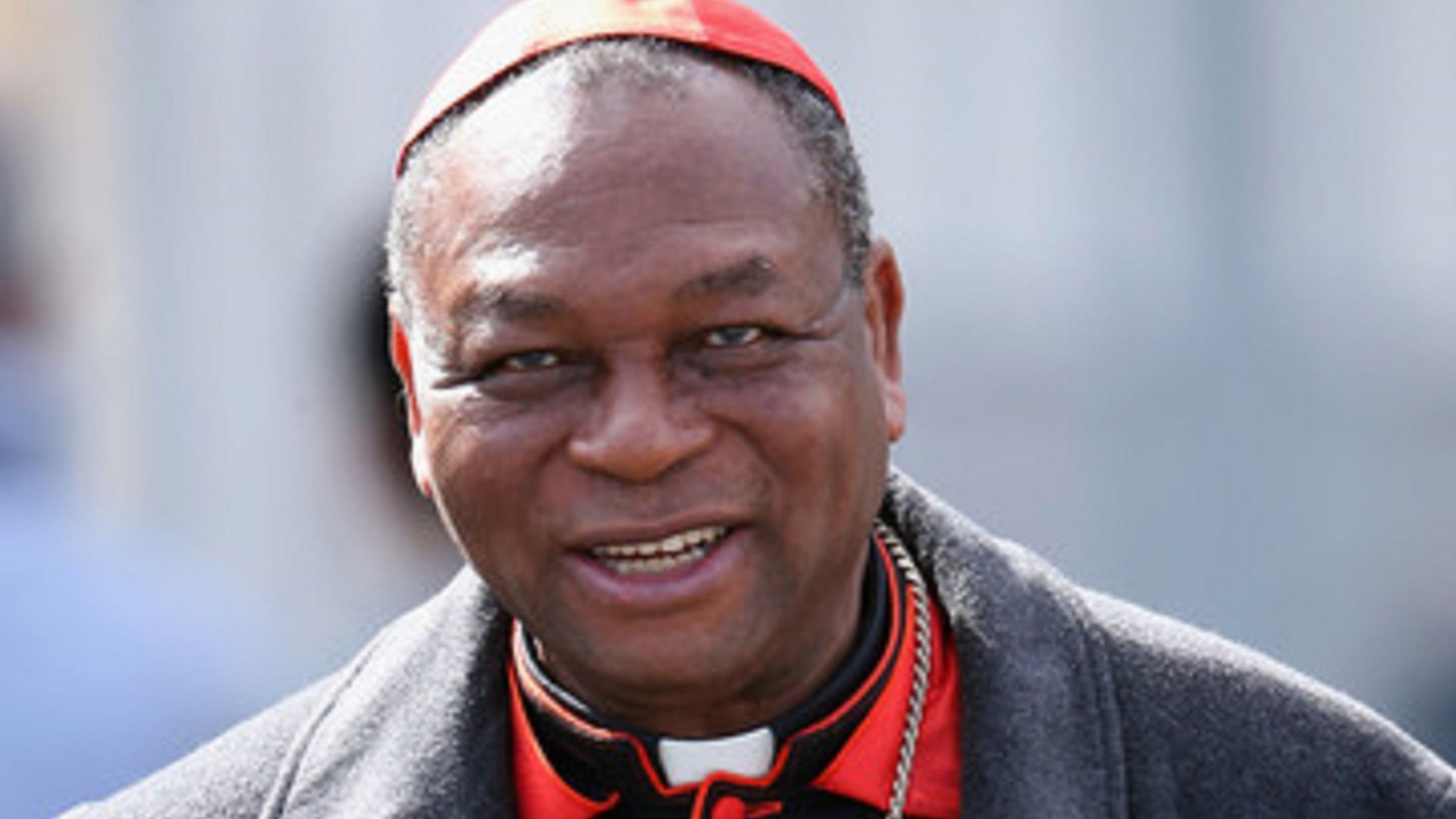
• Atiku demands apology to cardinal, Catholic faithful
• Northern Christians back bishops, caution Bwala
• HURIWA faults aides over attacks on cleric
• APC insists Tinubu has structure to win 2027
• Christian group petitions Trump over Muslim-Muslim ticket
• CYAN urges sustained U.S. pressure on Nigeria
• APC chieftain urges Nigerians to reject religious politics
The African Democratic Congress (ADC) presidential candidate, Atiku Abubakar, the Northern Christian Association (NCA), and the Human Rights Writers Association of Nigeria (HURIWA) yesterday separately condemned the Presidency’s criticism of Cardinal John Onaiyekan, describing the attacks as intolerance of dissent and urging respect for the Catholic Church.
The reactions followed a public exchange between the Presidency and the former Catholic Archbishop of Abuja after his comments on the outcome of a meeting between President Bola Tinubu and the Catholic Bishops’ Conference of Nigeria (CBCN), with critics accusing the government of attacking a respected cleric instead of addressing the issues he raised.
Former Vice President Atiku Abubakar condemned the presidency’s criticism, describing it as an attack on one of Nigeria’s most respected moral institutions and a sign of growing intolerance of dissent under the Tinubu administration.
Atiku also demanded an immediate and unreserved apology to the former Catholic Archbishop of Abuja and the Catholic faithful, saying the presidency’s response to the cleric’s recent comments was “arrogant, disrespectful and unbecoming of a democratic government.”
In a statement by his Senior Special Assistant on Public Communication, Phrank Shaibu, the former vice president said: “It was both unfortunate and dangerous that, instead of reflecting on the substance of the cleric’s message, the Presidency chose the familiar path of intimidation, ridicule and political attacks.”

He described the Catholic Church as one of Nigeria’s enduring moral voices, saying: “Its bishops and priests have consistently spoken for the poor, the oppressed and the vulnerable, irrespective of who occupies Aso Rock. Their duty is not to flatter those in power but to speak truth to power.”
Atiku commended the bishops for what he described as courage in openly expressing concerns about the country’s economic and political situation, saying they had fulfilled their moral obligation by speaking candidly about national challenges.
He urged other religious leaders, irrespective of denomination or faith, to emulate the bishops by speaking truth to power whenever national interest demanded it.
The ADC presidential candidate also defended Onaiyekan’s decision to grant an interview following the bishops’ engagement with President Tinubu, arguing that the cleric merely sought to present the facts to Nigerians.
Atiku alleged that the Presidency had attempted to dominate and distort public discourse surrounding the meeting and accused government media handlers of reacting disrespectfully to the cardinal’s comments.
He further accused the Presidency of trying to undermine the credibility of the bishops through what he described as selective editing and reframing of their engagement with the president to create a narrative favourable to the government.
According to him, such actions amounted to an affront to the integrity, credibility and moral authority of the bishops.
The former vice president also criticised what he called the administration’s intolerance of independent voices, warning that democracy could not thrive in an environment where citizens, religious leaders and civil society organisations were attacked for expressing dissenting opinions.
“The Presidency is not a secret cult where only approved voices are permitted to speak. In a constitutional democracy, no one needs the permission of Aso Rock to tell the truth about the state of the nation,” he said.
In an apparent reference to the controversy surrounding clerics who attended President Tinubu’s inauguration in 2023, Atiku suggested that the administration had become accustomed to treating religious leaders as political tools.
He maintained that Catholic bishops were guided by a moral obligation to speak truth to power and could not be recruited for political propaganda.
Atiku also argued that criticism of respected clerics would not solve the economic and social challenges facing Nigerians, including insecurity, poverty, unemployment and the rising cost of living.
“The cleric merely gave voice to what millions of Nigerians discuss daily in their homes, markets, churches and workplaces. Silencing or attacking him will not erase the harsh realities of hunger, insecurity, rising poverty, unemployment and the unprecedented cost-of-living crisis confronting ordinary citizens,” he said.
The former vice president maintained that governments gain public confidence by responding constructively to criticism rather than attacking those who express contrary views.
N
orthern Christians back Catholic bishops, tackle Bwala
ALSO, the Northern Christian Association (NCA) expressed support for Catholic bishops, urging the Special Adviser to the President on Media and Policy Communications, Daniel Bwala, to avoid comments it believes could create unnecessary divisions within the Christian community.
The association stated that the meeting with Tinubu focused on matters of national interest, including issues affecting Christians and the wider Nigerian society, and should not be viewed through a denominational or partisan lens.
In a statement signed by its Chairman, Rev. Joseph John Hayab, the NCA said the bishops’ intervention was intended to contribute to national development through constructive engagement with the President.
Hayab said the association would continue to promote unity among Christians across denominational lines, stressing that the NCA comprises members from various Christian traditions, including the Catholic Church, Baptist, ECWA, Methodist, Anglican, Pentecostal and other denominations.
According to him, the diversity within the association reflects the broader unity of the Christian faith, making attempts to create divisions among believers both unnecessary and unhelpful.
“We refuse to be divided by politics that seek to create unnecessary differences among Christians,” Hayab said.
He maintained that the Catholic bishops who met with the President represented concerns shared by many Nigerians and were not speaking solely on behalf of the Catholic Church.
HURIWA defends Onaiyekan, knocks Tinubu’s aides over criticism
SIMILARLY, the Human Rights Writers Association of Nigeria (HURIWA) defended John Cardinal Onaiyekan.
The rights group accused presidential aides of showing disrespect to the senior cleric, insisting that Onaiyekan acted in the public interest by speaking on issues affecting Nigerians.
In a statement signed by its National Coordinator, Comrade Emmanuel Onwubiko, HURIWA criticised Special Adviser to the President on Policy Communication, Daniel Bwala, and Senior Special Assistant to the President on Media and Publicity, Temitope Ajayi, over their reactions to the cardinal’s television interview.
HURIWA dismissed the criticism as unfair and disrespectful to a respected statesman and cleric.
The organisation said Onaiyekan has, over several decades, built a reputation for speaking truth to power irrespective of the government in office.
It said the cardinal’s remarks reflected the concerns of millions of Nigerians grappling with poverty and economic hardship, rather than the views of Catholics alone.
“It is unfortunate that the two presidential aides chose to attack one of Nigeria’s most respected clerics. Cardinal Onaiyekan spoke in the best public interest and for millions of Nigerians affected by multidimensional poverty, irrespective of their religion or ethnicity,” HURIWA said.
APC has structure to secure Tinubu’s re-election in 2027, says Yilwatda
AMID the backlash, the National Chairman of the All Progressives Congress, Nentawe Yilwatda, has expressed confidence that President Tinubu will secure a second term in office in 2027, insisting that elections are won through political structures, strategic planning and grassroots mobilisation rather than mere speculation.
Speaking through his Special Adviser on Media and Communication Strategy, Abimbola Tooki, Yilwatda dismissed claims that the North could overwhelmingly vote against Tinubu in the next presidential election, arguing that current political realities do not support such projections.
According to him, it would be in Nigeria’s and its citizens’ interest to allow the President to continue his ongoing economic and governance reforms rather than disrupt the process by a change in leadership.
He said: “Elections are not won by assumptions or sentiments. They are won through structures, organisation and political engagement. Anybody suggesting that someone outside the government will simply emerge and defeat an incumbent without building the necessary structure is ignoring political realities.”
The APC chairman argued that the ruling party currently enjoys significant political advantages nationwide, including the support of a majority of state governors and other elected officials.
He noted that many political leaders across the North, including influential figures in Kano and other states, have continued to identify with the APC, strengthening the party’s position ahead of the next election cycle.
Yilwatda also dismissed suggestions that APC governors could work against the President’s re-election bid, describing such a scenario as unlikely.
Christian group tells Trump Muslim-Muslim ticket threatens Christians’ safety
HOWEVER, the Christian Youth Alliance of Nigeria (CYAN), a coalition of Christian organisations and human rights advocacy groups across the 36 states and the Federal Capital Territory (FCT), warned that the continued use of a Muslim-Muslim presidential ticket by the All Progressives Congress for the 2027 general election poses a major threat to the safety of Christians in the country.
The group made the claim in a petition addressed to United States President Donald Trump and copied to the US Secretary of State, members of the US Senate and House of Representatives, as well as heads of diplomatic missions accredited to Nigeria.
In the petition, CYAN renewed its appeal for sustained American attention to what it described as the worsening security situation facing Christians in Nigeria.
The group claimed that President Bola Tinubu’s decision to retain a Muslim-Muslim ticket for the 2027 election would deepen the insecurity faced by Christians.
According to the coalition, the Tinubu-Shettima ticket adopted for the 2023 election departed from the country’s long-standing practice of balancing the two highest political offices across religious lines.
It argued that the development had contributed to the exclusion of Christians from governance and matters affecting their faith, while emboldening armed groups operating in Christian communities.
The petition was signed by CYAN Chairman, Zariyi Yusuf Madaki; Secretary, Nasiru Jagaba; Luka Binniyat; Steven Kefas; Ier Jonathan-Ichaver; Apostle Michael Olowookere; and Emmanuel Zopmal, among others.
2027 election should be about competence, not religion, says Oladejo
RELATEDLY, a chieftain of the All Progressives Congress in Lagos State, Seye Oladejo, has urged Nigerians to reject attempts to frame the 2027 general elections along religious lines, insisting that governance should be evaluated on competence, capacity and performance rather than faith.
Oladejo, in a statement, said religion had repeatedly been introduced into Nigeria’s political discourse during election cycles but had failed to address the fundamental challenges facing the country.
According to him, while religion remains an important moral and social institution that shapes values and strengthens communities, it should not be used as a yardstick for assessing political leadership.
He argued that the electorate is becoming increasingly conscious of the need to focus on issues that directly affect their lives, including poverty, inflation, unemployment and insecurity, rather than the religious affiliations of candidates.
“Good governance cannot be assessed through religious sentiments but through practical solutions and tangible results,” he said.
Reflecting on the 2023 presidential election, Oladejo noted that despite widespread debates around religious identity, voters ultimately made choices based on a range of factors, including leadership credentials, political structures, regional considerations and individual convictions.
He added that public attention has since shifted to evaluating government performance, particularly in areas such as economic reforms, infrastructure development, security and institutional strengthening.
The APC chieftain said President Bola Tinubu inherited significant economic challenges and had embarked on reforms aimed at stabilising public finances, restoring investor confidence and positioning the economy for long-term growth.
While acknowledging the hardships associated with some of the reforms, he maintained that emerging economic indicators suggest signs of recovery and renewed confidence in the economy.
He warned against efforts by politicians to exploit religious differences for electoral gain, describing such tactics as divisive and counterproductive to national unity and democratic development.

