 Follow Us on Google News
 Follow Us on Google Discover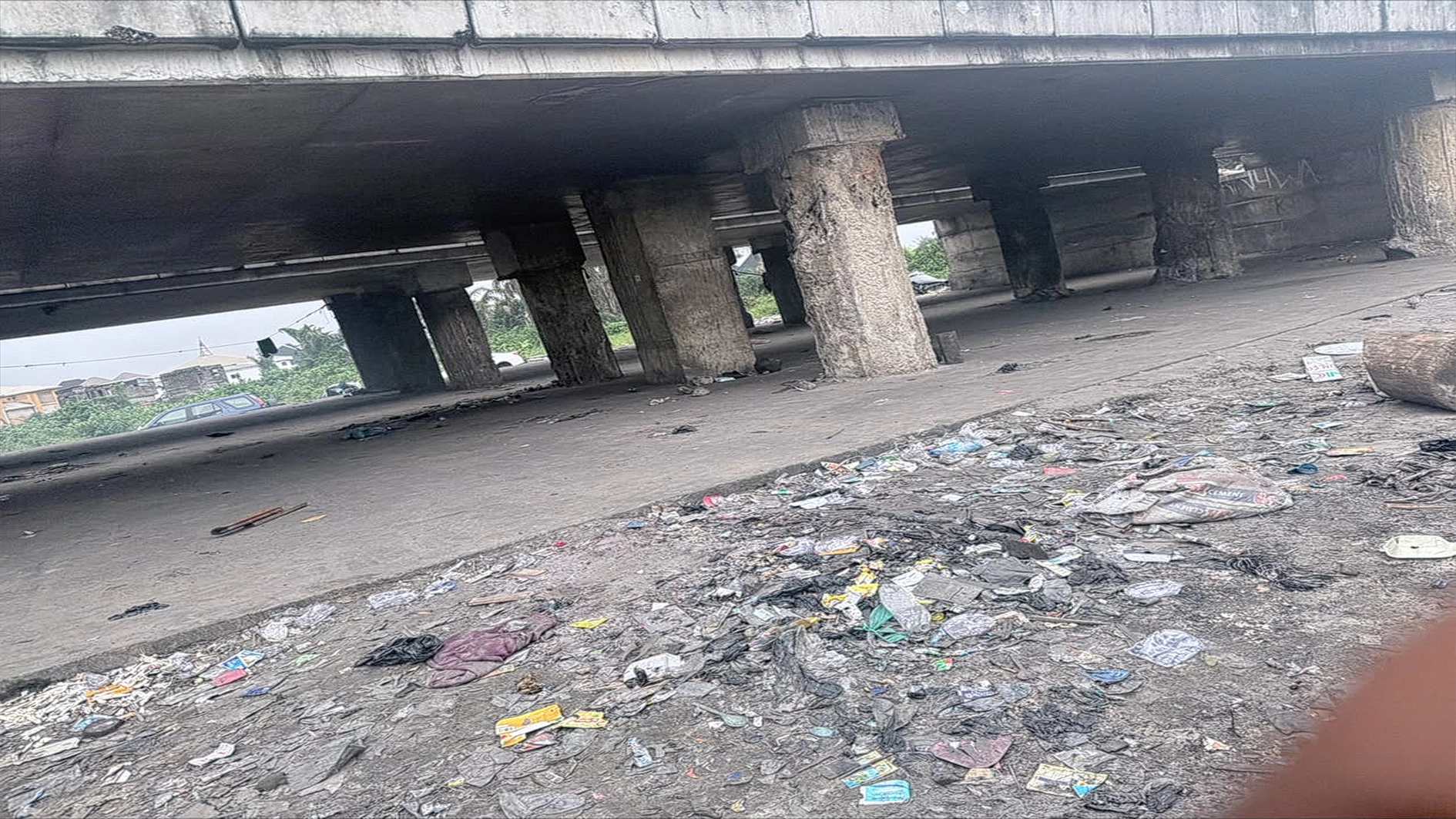
Beyond the stripping of iron rods, steel reinforcements, cables and other materials critical to the bridge linking Festac Town and Alakija in Lagos, the area underneath the bridge has become one of the most dreaded places to visit, even during the day.
The environment beneath the bridge signals a disturbing disregard for environmental laws and public safety, as well as an apparent lack of government presence.
On Friday, August 7, 2026, the Lagos State Government arrested 27 people in the area for allegedly vandalising the newly constructed bridge.
The Lagos State Commissioner for the Environment and Water Resources, Tokunbo Wahab, described the incident as a serious threat to public safety and government infrastructure.
According to Wahab, the suspects were arrested during a joint overnight operation involving operatives of the Rapid Response Squad (RRS) and the Kick Against Indiscipline (KAI) task force.
He said the state government would continue to crack down on vandalism and other offences that threaten public infrastructure.
Governor Babajide Sanwo-Olu, who spoke through the Commissioner for Information and Strategy, Gbenga Omotoso, directed security agencies to go after those responsible for vandalising the bridge.

“Lagos will not tolerate any act of vandalism because it is barbaric and criminal,” Sanwo-Olu said.
He added: “I have been informed by officials of the Office of Infrastructure who visited the bridge that the structural integrity of the bridge is intact and remedial work will be executed immediately to protect the columns.
“Anyone who is found to be culpable in this horrendous, shameful and condemnable incident will surely face the law. Lagos has no place for such barbarism and acts of violence against our critical infrastructure and other facilities.
“Lagosians are enjoined to keep an eye on public facilities to protect them against senseless attacks.”
However, when The Guardian visited the area yesterday, shortly after 11 a.m., the environment underneath the bridge presented a disturbing picture. It looked more like an ungovernable jungle than a public space, with makeshift structures and activities suggesting the presence of criminal elements.
Both sides of the bridge on the Festac end are being used as refuse dumps. Fires are regularly set to burn materials and extract metals, while shanties have been erected on the left-hand side.
The Alakija end of the bridge, located on the left side of the Mile 2-Badagry Expressway, has also been left overgrown, with destitutes sleeping underneath.
The section of the bridge from which critical materials have been stripped is bounded by a creek on the left and an illegal dumpsite operated by cart pushers on the right when descending the bridge towards Festac.
The Guardian observed that the area underneath the bridge is frequently set ablaze by men removing materials and scavengers who have turned the location into a makeshift home.
After alighting from a bus, the reporter spent nearly 15 minutes quietly observing the surroundings, while some of the men made attempts to approach him.
He eventually called one of the men, who asked him to move closer and offered to guide him through the area underneath the bridge for a fee.
But what appeared to be a simple walk soon took an unsettling turn.
As they moved deeper into the area, some of the men began to take notice of the reporter. Their demeanour changed, with suspicious glances following him and conversations becoming quieter. The atmosphere became increasingly tense.
What had started as an ordinary passage beneath the bridge suddenly felt like an uncomfortable exercise in scrutiny, as the reporter’s every movement appeared to attract attention.
At one point, the reporter had to pretend that he needed medication after noticing some medicines displayed in a gift basket.
While walking with one of the men, who was initially called Yellow and later introduced himself as Yahaya, the reporter noticed that other men repeatedly looked in their direction and spoke to Yahaya in Hausa.
Despite spending more than 30 minutes in the area, The Guardian did not see residents passing through the location, even though churches and residential estates are located nearby.
The apparent abandonment of the space has raised concerns about the security and environmental implications of leaving such a strategic public facility largely uncontrolled.
When The Guardian contacted Omotoso to ask why the men remained in the area and why enforcement had yet to take place, he said the government was already taking action.
“The clearing is ongoing. The governor has spoken and what he said is final on the matter,” he said.
Asked why KAI officials had been deployed and why shanties were being removed, Omotoso said the government had a wider programme for clearing bridges and other public spaces.
“Don’t bother yourself, we have a programme we are doing. We cleared Obalende and Ijora Bridges and other bridges will be cleared,” he said.

