 Follow Us on Google News
 Follow Us on Google Discover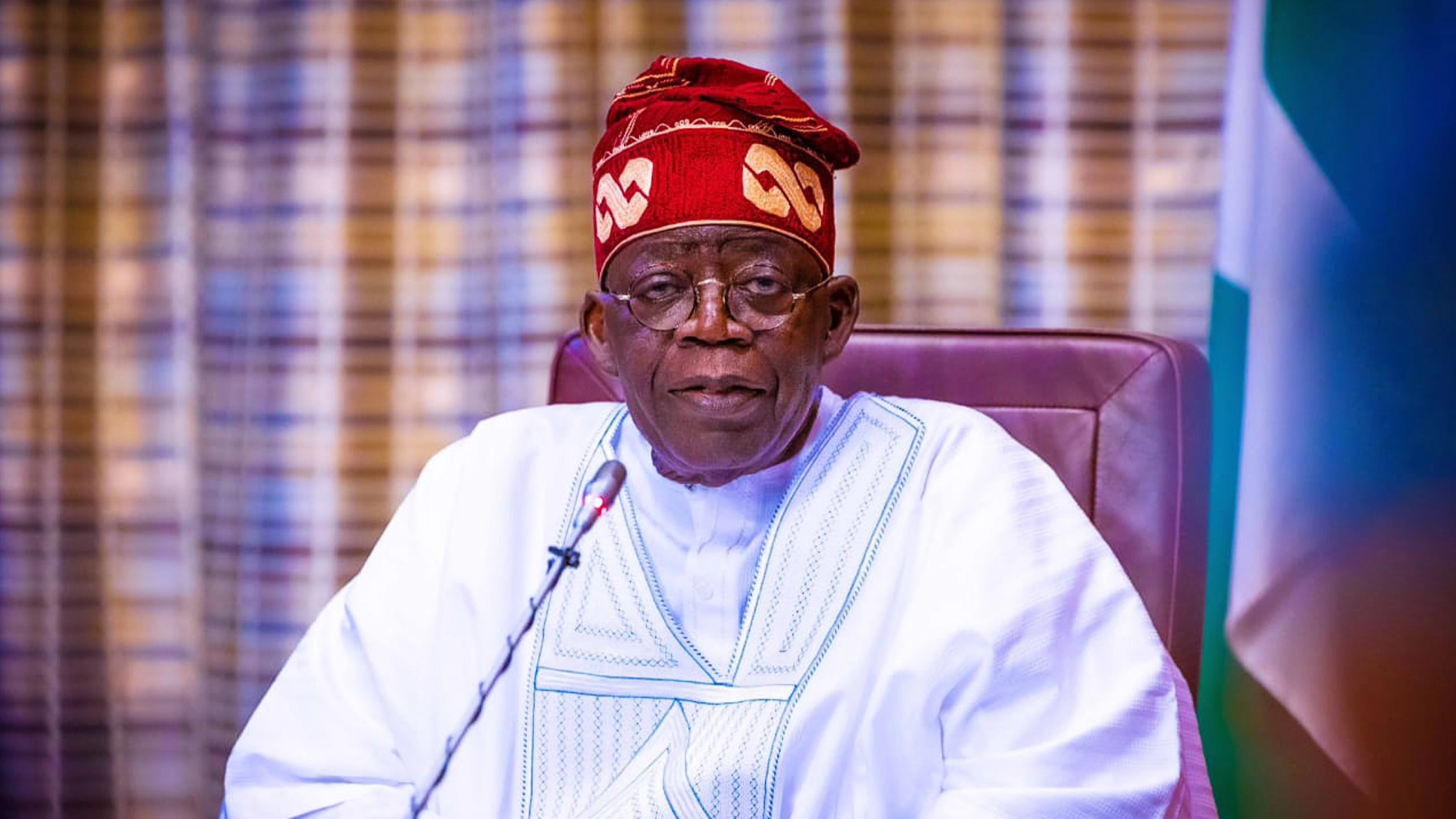
• Nigeria needs unity now than ever, says information minister
• Radicals bent on turning Nigeria into caliphate, says PFN
• Warns politicians against ethnic, religious bias ahead of 2027 polls
President Bola Tinubu has called for stronger unity among Nigerians of different faiths, stating that peaceful coexistence between Christians and Muslims is crucial to overcoming the country’s security challenges and building a stable nation ahead of the 2027 general elections.
Tinubu spoke yesterday at the International Conference on Security and National Unity, organised by the Jama’atu Izalatil Bidiah wa Iqamatis Sunnah (JIBWIS Nigeria), in collaboration with the Muslim World League. The conference brought together religious and political leaders to promote dialogue, tolerance, and peaceful coexistence between adherents of the two major faiths.
Represented by the Deputy President of the Senate, Senator Barau Jibrin, the president said the conference was coming at a critical time when countries across the world were confronted with multifaceted security challenges. He assured participants of the federal government’s commitment to sustainable security and continued collaboration with other nations to promote global peace.
He stressed that Nigeria must demonstrate that its religious and cultural diversity can be a source of strength rather than division, assuring that “the government is determined to make sure that we remain united as a country, despite our differences.”
Stating that the conference provided an opportunity for participants to examine emerging threats to national and international security and develop practical solutions that could complement the government’s efforts, he urged participants to leverage its international character to exchange experiences and contribute to efforts aimed at restoring sustainable regional, continental and global peace.

The conference also projected a strong message of Christian-Muslim solidarity, with participants stressing that Nigeria must present to the world an image of a country where citizens of different faiths can live, work and pursue common interests peacefully.
SIMILARLY, the Minister of Information and National Orientation, Mohammed Idris, urged Nigerians to set aside religious, ethnic and political differences and unite against insecurity and other challenges confronting the country.
Idris, who spoke yesterday in Abuja on the sidelines of the conference, noted that the diversity of participants at the conference reflected a growing recognition that Nigeria’s stability and development depended on cooperation across religious, ethnic and political lines.
He warned that allowing differences to overshadow the collective fight against insecurity could worsen the situation and make efforts to restore peace more difficult.
Idris further highlighted Nigeria’s strategic importance to the continent, saying the country’s stability had implications beyond its borders. According to him, “Nigeria is a country of over 230 million people. Peace and tranquility here mean peace and tranquility everywhere in Africa and, indeed, the world.”
MEANWHILE, the Secretary-General of the Muslim World League, Sheikh Mohammad bin Abdulkarim Al-Issa, reaffirmed the organisation’s commitment to religious tolerance, moderation and interfaith dialogue. He stressed that the body stands against extremism and supports initiatives that promote understanding among people of different faiths, saying religious differences should not become a justification for hatred or violence.
In his opening remarks, the Chairman of JIBWIS Nigeria, Sheikh Abdullahi Bala Lau, said the conference was designed to encourage tolerance and strengthen peaceful relations between Muslims and Christians. He said religious leaders had a responsibility to use their influence to promote peace and reconciliation, rather than allow their platforms to become instruments for division.
Also, the Executive Secretary of the Nigeria Inter-Religious Council (NIREC), Fr. Cornelius Omonokhua, said humanity remained the strongest bond between Christians and Muslims, arguing that religious differences should never override the value of human life.
According to him, “no one is created a Christian, and no one is created a Muslim. We are created as human beings; hence, what binds us together is humanity.”
Omonokhua, who explained that NIREC was established by Christian and Muslim leaders to promote the common good and peaceful coexistence, warned against attempts to weaponise religion or ethnicity, saying that adherents of both faiths were not at war with one another and urged citizens to preserve the existing bonds between the two communities.
For his part, the Sultan of Sokoto and President-General of the Nigeria Supreme Council for Islamic Affairs, Muhammad Sa’ad Abubakar III, called for sustained dialogue between Christians and Muslims, saying Nigeria’s problems could be addressed if leaders were honest and committed to implementing solutions.
“Christians should stop insulting Muslims. Muslims should stop insulting Christians. And that’s how we live in peace,” he said.
According to the Sultan, one of the major challenges confronting Nigeria is the absence of honesty and trust among citizens.
THE National Chairman of the All Progressives Congress (APC), Prof. Nentawe Yilwatda, said his personal experience growing up in an environment where his Christian father maintained a close relationship with a Muslim chief imam shaped his belief in religious harmony.
“Religious differences do not have to produce human distances and separation because of our beliefs,” Yilwatda said, urging religious leaders to make churches and mosques centres of peace, reconciliation and responsible citizenship.
Yilwatda also cautioned political leaders against exploiting religious and ethnic sentiments for electoral advantage, saying temporary political gains could inflict lasting damage on the country.
He urged Nigerians to reject hate speech and misinformation, while calling for a national commitment in which Christians protect Muslims, Muslims defend Christians, and citizens stand for one another because of their shared humanity.
In a statement by his Special Adviser on Media and Information Strategy, Abimbola Tooki, the APC national chairman said the relationship between the two religious leaders demonstrated that religious differences should never become barriers to friendship, mutual respect and peaceful coexistence.
Yilwatda, however, warned that Nigeria’s diversity could become dangerous when citizens are encouraged to dehumanise people of other faiths or ethnic backgrounds.
He identified terrorism, banditry, farmer-herder conflicts, communal violence, ethnic suspicion, religious intolerance, hate speech and the political manipulation of identity as major threats to national cohesion.
Yilwatda further proposed what he described as a “Nigerian Covenant for Coexistence” – a shared moral commitment by religious and political leaders, traditional institutions, civil society and citizens to reject violence, hate speech, religious intolerance and the politicisation of identity.
STILL on religious extremism, the National President of the Pentecostal Fellowship of Nigeria (PFN), Bishop Wale Oke, has called on the federal government to take decisive action against the menace, urging the country to seek divine intervention for its myriad challenges, including insecurity and economic hardship.
The cleric, while expressing concerns about the alleged agenda by some purported radical groups to transform Nigeria into a caliphate state, condemned the violence perpetrated in the name of religion and called on the government to take decisive action against offenders.
Speaking during the 38th Annual Convention hosted by Agape Christian Ministries in Akure, Ondo State, he described acts of terror as criminal, regardless of the perpetrator’s faith.
And with Nigeria gearing up for the 2027 elections, Oke advised politicians to avoid ethnic and religious biases, focusing instead on competence. Concerning those he said are bent on turning the country into a caliphate, the cleric said, “The constitution guarantees freedom of religion and worship.
He condemned kidnapping, taking children from school, and beheading as criminal, stating that anybody doing these in the name of religion is a criminal, whether a Christian or Muslim, and that the government should come down hard on that.
He further urged the Muslim community to “identify those radicals and hand them over to law enforcement agencies,” adding, “if you can persuade me to change from being a bishop into becoming a Muslim, and you succeed, God bless you. If
I persuade you and convince you to convert to Christianity, God bless me.
“Let’s go with it if it is persuasion. There’s a difference between criminality and religion. The government must not tolerate criminality.”
He also advocated a balance in the representation of religions in political positions to ensure fairness, describing Nigeria as a secular state that must remain neutral in religious matters to recover equitably.
The PFN president, who also stressed the need for an Independent National Electoral Commission (INEC) free from political influence, argued that the commission should regulate all political parties impartially, without bias toward any party in power, warning that the integrity of Nigeria’s democracy hangs in the balance.
More so, “if the presidential candidate is a Muslim, is it not fair to have the vice-presidential candidate as a Christian so that both parties will have somebody in the Villa?
“If the presidential candidate is a Christian, the vice president should be a Muslim to balance it. Because of the secular state of Nigeria, there’s no need for it to be altogether Muslim or altogether Christian.
Meanwhile, Oke clarified his recent remarks regarding the office of the archbishop, explaining that while titles like senior pastor or archbishop are not explicitly mentioned in the Bible, they are administrative necessities crafted for organisational convenience and proper structure within a growing church.
According to him, the absence of the titles in Scripture does not make them unbiblical or sinful.

