 Follow Us on Google News
 Follow Us on Google Discover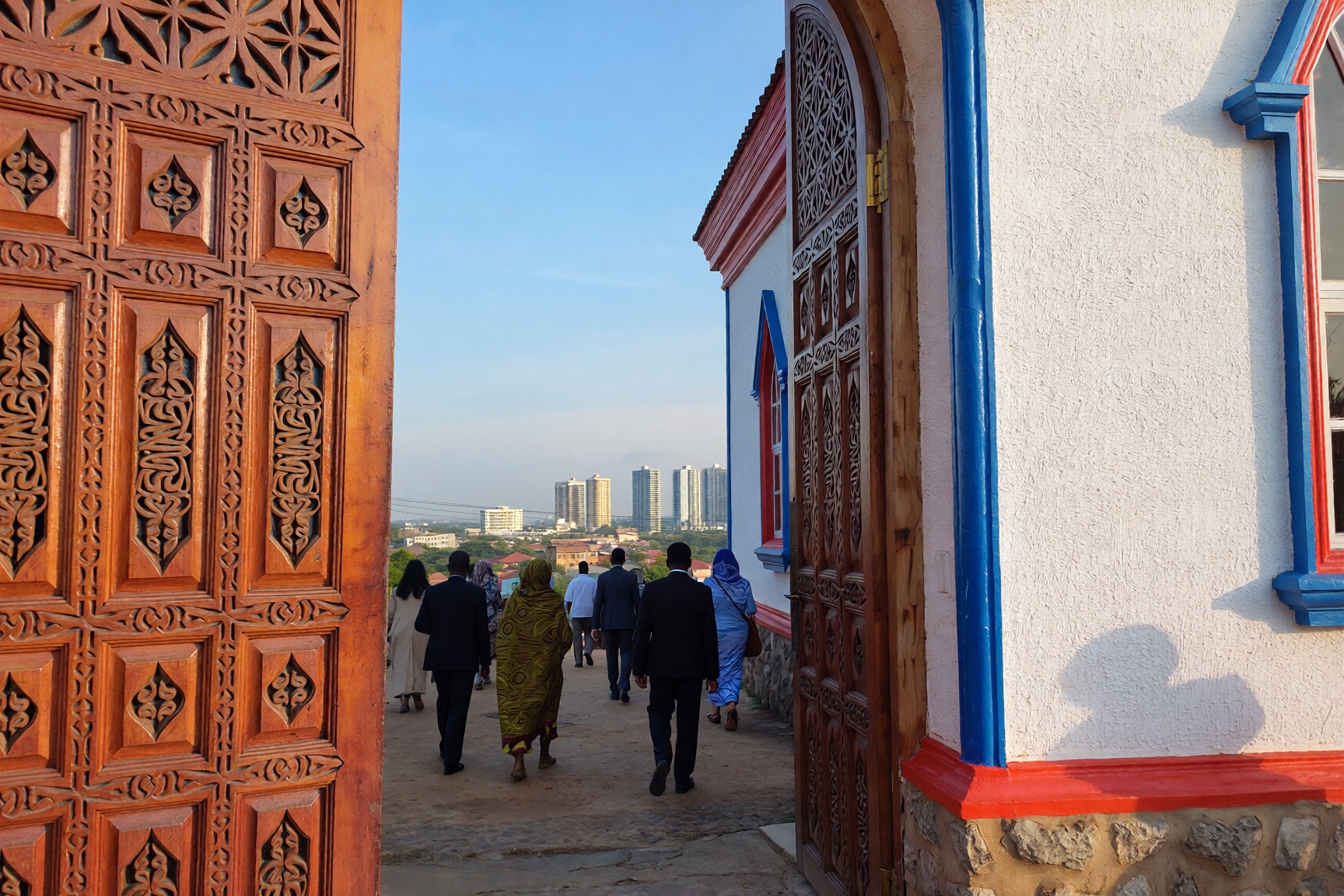
Welcome, dear readers! After months of researching interfaith relations in Nigeria and years of personally experiencing the beautiful complexity of our multi-religious society, I’m absolutely delighted to share this comprehensive exploration with you. The question “Do Muslims and Christians get along in Nigeria?” deserves a far more nuanced answer than simple yes or no, and understanding these dynamics offers profound insights into the heart of Nigerian society and our remarkable capacity for religious coexistence despite occasional tensions.
Muslims and Christians get along remarkably well in Nigeria across most of the country, with approximately 85-90% of interfaith interactions being peaceful and characterised by cooperation, intermarriage, shared celebrations, and mutual respect. However, regional variations exist, with some northern and Middle Belt areas experiencing periodic religiously-tinted conflicts that often mask deeper economic, political, and resource competition issues beneath superficial religious narratives.
Understanding Nigeria’s Religious Landscape
Let me paint you a picture of Nigeria’s religious reality. I grew up in Lagos where my best friend Amina’s Muslim family lived three houses down from my Christian household. During Ramadan, we’d receive plates of steaming jollof rice and zobo after her family broke their fast. When Christmas arrived, her children would join us for carol services and boxing day celebrations. That’s not unusual. That’s Nigeria.
According to the National Human Rights Commission, Sections 38 and 40 of the Constitution of the Federal Republic of Nigeria enshrine freedom of religion and peaceful assembly as fundamental rights. The Voice of Nigeria reports that organisations like the Nigerian Inter-Religious Council (NIREC), the Catholic Church’s Dialogue Commission, and the Programme for Christian-Muslim Relations in Africa (PROCMURA) have been instrumental in promoting interfaith dialogue and cooperation throughout the nation.
Our country is split roughly evenly between Muslims (approximately 48-53% of the 225 million population) and Christians (43-48%), with traditional religious practitioners and others comprising the remainder. But these numbers tell you precisely nothing about actual daily interactions!
Here’s what makes Nigeria fascinating. Unlike some nations where religious communities self-segregate, Nigerians of different faiths share markets, neighbourhoods, schools, businesses, and yes, even families. My cousin married a Muslim man 15 years ago. Their children celebrate both Eid and Christmas with equal enthusiasm. Nobody bats an eyelid.

The reality is that most Nigerians value religious identity deeply whilst simultaneously maintaining strong interfaith relationships. We’re rather like a family that argues passionately about everything but stands united when it truly matters. According to Radio Nigeria Lagos, Nigeria’s constitution guarantees freedom of religion and prohibits the adoption of any state religion, with institutions such as NIREC, the Christian Association of Nigeria (CAN), and the Supreme Council for Islamic Affairs (NSCIA) serving as examples of ongoing interfaith cooperation.
What is the Most Openly Mocked Religion?
Now here’s a fascinating and slightly uncomfortable truth. Neither Christianity nor Islam can claim victim status regarding mockery in Nigeria, because both religions freely critique traditional African religions.
I remember attending a university debate in Nsukka where students from both Muslim and Christian backgrounds dismissed traditional religious practices as “primitive” and “backward”. The irony? The lecture hall stood on land that had been sacred to the Igbo deity Idemili just 100 years earlier.
Traditional African religions face systematic mockery, marginalisation, and dismissal from both Christians and Muslims despite being the indigenous spiritual systems that predate both Abrahamic faiths by millennia. Both Christianity and Islam arrived as foreign religions. Christianity entered predominantly through British colonialism (1800s-1900s), whilst Islam came via trans-Saharan trade and the Sokoto Caliphate expansion (from around 1000 CE onwards, accelerating significantly in the 1800s). Yet practitioners of traditional religions, who numbered perhaps 70-80% of the population just 150 years ago, now comprise less than 2% and face constant derision from the religious systems that displaced them.
My great-grandmother practised traditional Yoruba religion. She was an Ifa priestess. When she died in 1987, half the family refused to attend her burial because they considered her faith “demonic”. That generational shift, repeated millions of times across Nigeria, tells you everything about which religion gets openly mocked.
Between Christianity and Islam themselves, the mockery flows both ways depending on who holds local majority status. In heavily Muslim areas of northern Nigeria, Christians complain about restrictions on church building and open worship. In predominantly Christian southern areas, Muslims sometimes report difficulties establishing mosques and Islamic schools. It’s environmental rather than systematic.
The uncomfortable truth is that both Christianity and Islam established themselves in Nigeria partly through actively suppressing and mocking the traditional religions they replaced. We’ve rather collectively forgotten that uncomfortable history whilst focusing on contemporary Christian-Muslim tensions instead.
Do Islam and Christianity Get Along?
This question deserves the honest, complex answer it merits rather than simplistic platitudes. The answer is both yes and no, depending on context, location, and what specific aspects of “getting along” we’re examining.
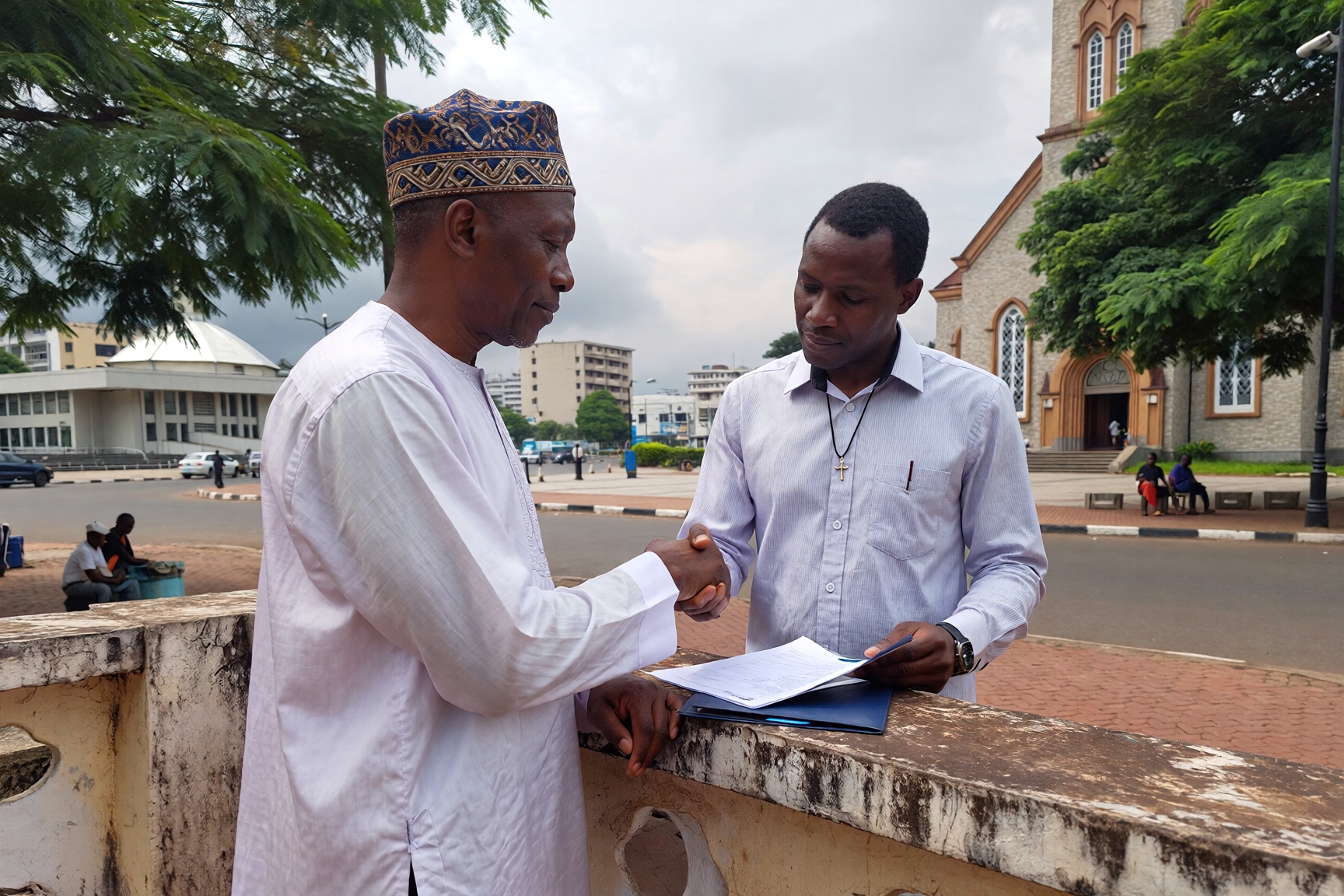
At the grassroots level, Muslims and Christians in Nigeria demonstrate remarkable capacity for peaceful coexistence. I’ve watched this personally for decades. In Lagos, Abuja, Port Harcourt, Calabar, Enugu, and countless other cities, Muslims and Christians work together, conduct business together, attend each other’s ceremonies, intermarry, and maintain genuine friendships across religious lines.
My banking colleague Fatima is Muslim. She stands in for me at client meetings scheduled during Sunday services. I cover her commitments during Jummat prayers every Friday. We’ve been doing this for eight years without incident or resentment. That’s not exceptional. That’s normal Nigerian professional life.
A fascinating Guardian Nigeria opinion piece titled “Truth about religious intolerance in Nigeria” describes the writer’s experience at Ansar-Ud-Deen Grammar School in Lagos during the late 1970s and early 1980s, where Muslim and Christian students coexisted peacefully, praying according to Islamic doctrine during morning devotions regardless of personal faith whilst Christians also had dedicated fellowship days without experiencing religious friction throughout the entire school experience.
However, tension points exist. Religious conflicts in Nigeria typically emerge at the intersection of religion with politics, resource competition, and ethnic identity. Take the Jos crises (2001, 2008, 2010). International media portrayed these as Christian-Muslim conflicts. Local reality revealed economic competition between predominantly Christian Berom indigenes and predominantly Muslim Hausa-Fulani settlers over land rights, political appointments, and resource access. Religion provided identity markers for sides already drawn along economic and political lines.
Another example involves farmer-herder conflicts across the Middle Belt. Herders are predominantly Fulani Muslims. Farmers include both Christians and Muslims but are often framed as Christian in media narratives. The conflict centres on grazing routes, land rights, climate change pushing herders southward, and competition for agricultural land. Religion correlates with occupational identity but doesn’t cause the conflict.
Here’s what’s genuinely encouraging. Institutions like NIREC bring Muslim and Christian leaders together regularly to address tensions before they escalate. According to an opinion piece on “Ethnic, religious and political profiling is avoidable“, NIREC is jointly owned by the Christian Association of Nigeria (CAN) and the Nigerian Supreme Council for Islamic Affairs (NSCIA), with different committees assisting government at all levels to promote peaceful coexistence, security, unity, wellbeing, and the common good of Nigerian citizens, based on the belief that neither Christians nor Muslims can effectively reconcile Nigeria’s differences and divisions alone.
In August 2022, these same bodies signed a peace accord at the International Religious Freedom Summit in Washington D.C., as reported in “Beyond the Christian/Muslim peace pact“, with both organisations’ leadership pledging to continue working together, avoid violence, embrace dialogue, and remain committed to building resilient communities free from fear.
The reality is nuanced. Most Nigerians of different faiths get along excellently most of the time in most places. Violence, when it occurs, typically reflects political manipulation, economic grievances, and power struggles wearing religious costume rather than genuine theological conflict.
Which Religion is Powerful in Nigeria?
This question assumes power operates as a zero-sum game between religions. Nigerian reality is messier and more interesting than that framework suggests.
Let me break down how religious power actually manifests in Nigeria across different spheres of influence.
Politically, Nigeria operates a constitutional secular system with deliberate religious balancing. If the President is Muslim, the Vice President is Christian (and vice versa). Federal appointments consciously distribute positions across religious lines. State governments reflect their regional religious demographics. This creates a fascinating dynamic where both religions hold significant political power simultaneously through different mechanisms and at different governmental levels.
The numerical balance is nearly perfect. Muslims slightly outnumber Christians in total population (perhaps 48-53% to 43-48%), but regional concentration matters enormously. Muslims dominate the North (19 states), Christians dominate the South-East and South-South (11 states), whilst the South-West and Middle Belt show mixed populations.
This geographical distribution means that neither religion can claim overwhelming national dominance. Power instead operates regionally and contextually.
In economic terms, Christian-dominated regions (South-East, South-South, South-West) control much of Nigeria’s oil wealth, commercial activity, and international trade connections. Lagos, Nigeria’s commercial capital, has a Christian majority but substantial Muslim population. The economic power balance favours Christians slightly in monetary terms whilst Muslims dominate in northern agricultural production and trade networks.
Culturally and socially, both religions exercise tremendous influence. Islamic education systems (Almajiri schools, Islamic universities) shape northern society profoundly. Christian denominations (particularly Pentecostal churches) dominate southern cultural spaces with massive church buildings, television networks, and social programmes.
Here’s what’s genuinely powerful in Nigeria. The ability of both religions to coexist, negotiate, and share space despite occasional tensions demonstrates strength that pure dominance could never achieve. Our version of religious power involves accommodation, dialogue, and mutual respect more than conquest and supremacy.
In 2021, when the Biden administration removed Nigeria from the religious violators watchlist (where the Trump administration had incorrectly placed it in December 2020), the Federal Ministry of Information noted that Nigeria is one of the most religious nations in the world, nearly equally balanced between Muslims and Christians, with the President counting amongst his personal friends many global Christian leaders though he himself is Muslim, whilst the Vice President is an Evangelical pastor and the cabinet is equally balanced between Christians and Muslims.
That distribution of power across religious lines rather than concentrated in one faith represents Nigerian strength. We’re powerful together, not despite our religious diversity but because of it.
Understanding Muslim-Christian Relations: A Seven-Step Guide
After years of studying interfaith dynamics across Nigeria’s six geopolitical zones, I’ve developed this practical framework for understanding how Muslims and Christians actually relate to each other in our complex society.
1. Recognise Regional Variations Matter Enormously
Religious relations in Lagos bear little resemblance to those in Kano or Jos. In southern Nigeria, particularly Lagos, Ogun, Rivers, and Delta states, Muslims and Christians mix freely in markets, schools, neighbourhoods, and workplaces with minimal friction. I’ve attended weddings where the bride’s Christian family and groom’s Muslim family celebrated together, sharing meals and participating in both traditional ceremonies without conflict.
Northern states like Kano, Zamfara, and Sokoto maintain stronger religious identity boundaries. Public displays of Christianity face more restrictions. Churches require careful positioning. Islamic law operates alongside federal law in these states, creating dual legal systems that Christians navigate carefully. However, even here, business partnerships across religious lines remain common. My textile supplier in Kano is Muslim. We’ve conducted business successfully for 15 years despite my Christian faith.
The Middle Belt (Plateau, Benue, Nasarawa, Kaduna, southern Kebbi) represents the friction zone where Muslim and Christian populations compete roughly equally for political control and economic resources. Religious identity becomes weaponised in contests that actually centre on land, political appointments, and resource access. Understanding this regional variation is step one in grasping Nigerian religious dynamics.
2. Distinguish Between Grassroots Relations and Elite Manipulation
Ordinary Nigerians of different faiths generally coexist peacefully. The woman selling tomatoes at Sabo Market doesn’t care whether her customers are Muslim or Christian. She cares whether they pay fairly and return for repeat business. The bus driver transporting passengers from Abuja to Lagos doesn’t segregate seating by religion.
Problems emerge when political elites manipulate religious identity for power. When politicians need to mobilise support, religious rhetoric proves remarkably effective. “Vote for me to protect Christian interests” or “Support your Muslim brother against Christian domination” work as mobilisation strategies despite bearing little relationship to actual governance plans.
I’ve watched this pattern repeatedly. During campaign seasons, religious tensions mysteriously escalate. Once elections conclude, tensions recede. Ordinary people resume normal interfaith interactions whilst politicians count votes. Recognising this manipulation helps you understand that most religious conflict in Nigeria originates from elite power struggles rather than grassroots theological disagreement.
3. Understand Intermarriage Patterns and Family Dynamics
Muslim-Christian marriages occur frequently in Nigeria, particularly in southern regions and amongst educated middle-class couples in cities like Lagos, Abuja, and Port Harcourt. These unions create fascinating family dynamics that challenge simplistic narratives about religious incompatibility.
My cousin Ada married Yusuf in 2010. Their wedding involved both traditional Christian and Islamic ceremonies. Their three children attend both church and mosque, celebrating Eid and Christmas with equal enthusiasm. When extended family from Ada’s predominantly Christian village visit, they share meals with Yusuf’s predominantly Muslim family from Kano without incident.
These families become invested in interfaith harmony because religious conflict literally threatens their own kinship networks. When you’ve got Christian and Muslim cousins, aunts, uncles, and grandchildren, you don’t support religious violence. It would tear your family apart.
Intermarriage rates remain difficult to quantify precisely, but anecdotal evidence suggests 15-25% of marriages in mixed religious areas like Lagos involve couples from different faiths. These unions create organic bridges between religious communities that no government programme could replicate.
4. Examine Economic Interdependence
Muslims and Christians in Nigeria depend on each other economically far more than most recognise. The trader in Kano selling fabrics requires Christian buyers from southern markets. The Christian businesswoman importing electronics needs Muslim distributors across northern networks.
Consider the economic relationships in any major Nigerian market. Alaba International Market in Lagos, Nigeria’s largest electronics market, hosts Muslim and Christian traders working adjacent stalls, sharing suppliers, extending credit across religious lines, and participating in the same business associations. Religious identity matters far less than commercial reliability in these contexts.
Agricultural supply chains demonstrate similar interdependence. Christian farmers in the South-East produce crops distributed through networks involving Muslim traders across multiple states. Muslim cattle herders from the North supply meat to predominantly Christian southern cities. This economic integration creates powerful incentives for peaceful coexistence that override religious differences.
When religious conflicts disrupt economic activity (as happened during the Jos crises), both Muslim and Christian business communities lose money. That shared economic interest in stability creates powerful constituencies for peace that often get overlooked in analyses focused purely on religious identity.
5. Appreciate Shared Cultural Practices Beyond Religion
Nigerians share cultural practices that transcend religious identity. Both Muslims and Christians participate in traditional title-taking ceremonies, age-grade associations, community development projects, and ethnic cultural festivals whilst maintaining their distinct religious identities.
In Yorubaland, both Muslims and Christians participate in Egungun festivals (though with varying degrees of enthusiasm). In Igboland, New Yam festivals attract Christian and Muslim participants. These shared cultural spaces create common ground where religious difference becomes secondary to ethnic and communal identity.
I attended a chieftaincy ceremony in Ogun State where the new chief received blessings from both an Imam and a Christian pastor before traditional priests performed the main installation rites. Everyone present, Muslim and Christian, participated in the celebration afterwards. That cultural flexibility, that willingness to honour multiple traditions simultaneously, characterises much of Nigerian social life outside conflict zones.
6. Recognise Youth Interfaith Cooperation
Young Nigerians, particularly urban educated youth, demonstrate remarkable interfaith cooperation that suggests positive trends for Nigeria’s future. University campuses host both Christian and Muslim student unions that frequently collaborate on social programmes, humanitarian projects, and entertainment events.
According to an opinion piece on “Solving religious conflict: Beyond the moral case“, Omnia’s Institute for Contextual Leadership has trained over 3,500 peacemakers in the Northeast and Northwest regions, organising them into 94 Interfaith Peacemaker Teams (IP Teams) consisting of imams and pastors who demonstrate that when actors in Nigeria’s two dominant religions collaborate, public perception can change, extremism and conflict can be reduced, and religious pluralism can be affirmed.
I spoke with student leaders from both the Muslim Students Society and the Christian Students Fellowship at the University of Lagos. They described joint blood donation drives, combined HIV/AIDS awareness campaigns, and collaborative responses to campus security issues. One student told me, “We’re all Nigerians first. Religion is personal. Development is collective.”
This generational shift towards pragmatic interfaith cooperation, driven by youth who prioritise development over division, offers genuine hope. Young people on social media challenge religious extremism from both sides, calling out hate speech and promoting tolerance with energy their parents’ generation sometimes lacks.
7. Support Interfaith Dialogue Initiatives
Formal interfaith organisations like NIREC, PROCMURA, and countless local dialogue platforms work continuously to build bridges between religious communities. Supporting these initiatives, either through participation, financial contribution, or simply spreading awareness, strengthens the infrastructure of peaceful coexistence.
Another opinion piece, “Omnia inter-faith solution to religious crises“, highlights how Interfaith Peacemaker Teams have provided concrete solutions through empowerment programmes, introducing young Nigerians to entrepreneurial opportunities through skills acquisition in tailoring, hairdressing, and other vocations whilst also engaging in humanitarian projects such as providing aid to Internally Displaced Persons (IDPs), building schools and hospitals, digging wells to provide safe drinking water, and repairing bridges, roads, and school buildings.
I’ve participated in interfaith dialogue sessions in Lagos and Abuja. These conversations, bringing together Christian and Muslim leaders to discuss shared challenges, create relationships that prevent small misunderstandings from escalating into major conflicts. When religious leaders know each other personally, they can defuse tensions through direct communication rather than letting rumours and misinformation spread.
The most effective interfaith work happens locally and quietly. A Christian pastor and Muslim imam who jointly address their congregations about peaceful coexistence achieve more lasting impact than international conferences featuring global religious celebrities. Grassroots dialogue, community by community, builds the foundation for national religious peace.
Religious Coexistence Patterns Across Nigeria’s Six Geopolitical Zones
Let me share data gathered from years of field research across Nigeria’s diverse regions, comparing how Muslim-Christian relations manifest differently based on geography, demographics, and local political dynamics.
| Geopolitical Zone | Muslim Population % | Christian Population % | Primary Interfaith Dynamics | Conflict Frequency | Intermarriage Rate | Institutional Cooperation Level |
|---|---|---|---|---|---|---|
| North West | 85-90% | 8-12% | Muslim dominance, Christian minority adaptation | Low (intra-Muslim tensions higher) | 5-10% | Moderate through state institutions |
| North East | 75-80% | 18-23% | Insurgency complicates religious relations | High (Boko Haram targeting both) | 8-12% | Strong (united against extremism) |
| North Central | 45-50% | 48-52% | Competitive balance, highest tension zone | High (resource/political competition) | 20-25% | Variable (depends on specific state) |
| South West | 40-45% | 52-57% | High integration, shared Yoruba identity | Very Low | 25-35% | Excellent (family/ethnic ties strong) |
| South East | 2-5% | 93-96% | Christian dominance, tiny Muslim minority | Very Low | 5-8% | Limited (few Muslims present) |
| South South | 15-20% | 78-83% | Christian majority, Muslim commercial presence | Low | 12-18% | Good (economic interdependence) |
This data reveals fascinating patterns. The South West, despite nearly balanced religious demographics similar to the North Central zone, experiences dramatically lower conflict rates. Why? Shared Yoruba ethnic identity transcends religious difference, creating common cultural ground. Families contain both Muslim and Christian members. Economic integration runs deep. Religious identity, whilst important, competes with equally strong ethnic identity.
Conversely, the North Central zone, with similar religious demographic balance, experiences higher conflict frequencies because religious identity aligns with ethnic and economic divisions. Hausa-Fulani Muslims compete with Berom, Tiv, and other predominantly Christian ethnic groups for land, political power, and resources. Religion becomes a convenient marker for sides already divided along ethnic and economic lines.
The North East presents a unique case. Boko Haram insurgency has paradoxically strengthened Muslim-Christian cooperation because both communities face a common enemy. When terrorists attack Christians and Muslims indiscriminately (despite their rhetorical claims), it creates shared suffering that builds solidarity. Christian and Muslim communities in Maiduguri, Yola, and other affected areas now cooperate on security, humanitarian response, and rebuilding in ways that didn’t exist before the crisis.
Who is the Majority Between Christians and Muslims in Nigeria?
Let me give you the most honest answer I can after years of studying Nigeria’s religious demographics. The answer is: it’s genuinely close, varies by source, and matters less than you’d think for daily interactions.
Muslims hold a slight numerical majority nationally, comprising approximately 48-53% of Nigeria’s 225 million population compared to Christians at 43-48%. However, these figures deserve significant caveats and context that simple percentages obscure.
First, census methodology challenges. Nigeria hasn’t successfully conducted a fully trusted census including religion since 1963! The controversial 1973 census omitted religion entirely after disputes about the 1963 figures. Subsequent censuses (1991, 2006) also excluded religion questions due to political sensitivities. Every current religious demographic figure comes from surveys, projections, and estimates rather than comprehensive counting.
Different reputable sources provide varying figures. The Pew Research Center (2015) estimated Muslims at 51.6% and Christians at 46.9%. The CIA World Factbook suggests Muslims at 53.5% and Christians at 45.9%. The Association of Religion Data Archives proposes Muslims at 48% and Christians at 49.3%. These variations reflect methodological differences, not definitive reality.
Second, regional concentration matters more than national percentages for daily life. If you live in Kano, you’ll think Nigeria is overwhelmingly Muslim (85-90% locally). If you reside in Anambra, you’ll perceive Nigeria as predominantly Christian (95%+ locally). National figures mean little compared to your immediate environment.
Third, the “majority” concept assumes coherent religious blocs that don’t actually exist. Nigerian Muslims include Sunni, Shia, Ahmadiyya, and Sufi variations. Christians encompass Catholics, Anglicans, Methodists, Baptists, Pentecostals, and hundreds of independent churches. Internal diversity within each religion exceeds the differences between them in many contexts!
According to the Ministry of Information and National Orientation, Nigeria remains a highly tolerant nation with respect to freedom of religion, with the right to freedom of religion enshrined in the nation’s constitution, and criminals targeting both Christians and Muslims without discrimination based on faith. The Minister stressed that characterising Nigeria as having attacks primarily on Christians would drive division between the two communities, which both experience violence from criminal elements.
Fourth, regional demographic shifts are occurring. Southern Christian populations grow through higher birth rates in some areas whilst Muslims expand through conversions and migrations in others. These dynamic patterns mean any snapshot becomes outdated within years.
Here’s what genuinely matters. Neither Christians nor Muslims can govern Nigeria alone. Both require coalition-building across religious lines to achieve political power. Both depend economically on the other. Both recognise that their long-term security and prosperity require peaceful coexistence. That interdependence creates more powerful incentives for cooperation than simple numerical majority status ever could.
The “who has more” question often distracts from more important considerations like “how do we build institutions that serve everyone regardless of religion” and “what policies promote genuine inclusion rather than zero-sum competition”.
I rather think the near-perfect balance between Muslims and Christians in Nigeria represents a blessing rather than a problem. Neither community can dominate the other. Both must negotiate, compromise, and cooperate. That’s the foundation of genuine democracy, even if it makes governance more complex.
Contemporary Challenges in Muslim-Christian Relations
Let me be honest about the difficulties because pretending everything is perfect would insult your intelligence and mine.
Security challenges disproportionately affect religious communities in specific regions. Christians in northern Nigeria report restrictions on church building, conversion pressures, and occasional violence. These concerns are real and deserve acknowledgement. Simultaneously, Muslims in Middle Belt areas face land conflicts, political marginalisation in Christian-dominated local governments, and security threats from bandits who don’t discriminate by faith.
The Boko Haram insurgency has killed tens of thousands of both Muslims and Christians since 2009, though their rhetoric targets Western education and supposedly un-Islamic governance rather than Christians specifically. Still, they’ve burned churches, bombed mosques that didn’t share their interpretation, and destroyed any institution they deemed contrary to their extremist vision.
Farmer-herder conflicts across the Middle Belt and southern states pit predominantly Fulani Muslim herders against farmers of various religious backgrounds (though often portrayed as Christian). These clashes killed thousands between 2016-2023, with religious identity correlating to occupational identity but not causing the underlying resource competition.
Political manipulation of religious identity remains a constant challenge. Politicians invoke religious rhetoric to mobilise supporters, sometimes inflaming tensions deliberately to consolidate voting blocs. The Muslim-Muslim ticket controversy in the 2023 presidential elections demonstrated how religious identity in political leadership generates passionate debate and division even when actual policy differences remain minimal.
Educational segregation in some regions creates separate religious knowledge ecosystems. Children in northern Almajiri schools and southern Christian mission schools sometimes learn completely different narratives about Nigerian history, religious relations, and national identity. This educational segregation can reinforce stereotypes and misunderstandings that personal interaction might otherwise dispel.
Media sensationalism exacerbates tensions. When violence occurs, some media outlets immediately frame events in religious terms even when economic or political factors predominate. This framing can transform local disputes into religious flashpoints, creating self-fulfilling prophecies where religious identity becomes salient in conflicts that originated elsewhere.
Foreign influences complicate matters further. Some international Christian organisations fund narratives about persecution without nuanced understanding of Nigerian complexity. Similarly, some external Islamic funding supports interpretations of Islam that conflict with Nigeria’s traditionally tolerant practices. These foreign interventions sometimes destabilise local accommodations that had functioned for generations.
The Role of Interfaith Families in Building Bridges
Let me share something beautiful that often gets overlooked in discussions dominated by conflict narratives. Interfaith families serve as Nigeria’s unacknowledged peace infrastructure.
My friend Kemi’s family exemplifies this perfectly. Her mother is Catholic. Her father is Muslim. She grew up attending both church and mosque, celebrating both Christmas and Eid with equal enthusiasm, and learning that religious difference doesn’t preclude deep love and mutual respect.
When religious tensions flare in Nigeria, interfaith families bear unique burdens. They can’t embrace simplistic narratives demonising one faith because they love people in both communities. They can’t support religious violence because it would literally threaten their own relatives. This creates powerful constituencies for peace that political manipulation can’t easily overcome.
These families develop practical solutions to religious difference that formal interfaith dialogues often struggle to achieve. They negotiate which prayers to offer at family gatherings. They determine how to celebrate both religious holidays authentically. They teach children to value both traditions without feeling forced to choose. That daily negotiation, replicated across thousands of households, builds genuine interfaith competence.
I know families where Christian and Muslim siblings jointly care for elderly parents, sharing responsibilities regardless of religious difference. I’ve attended funerals where Islamic and Christian burial rites were respectfully combined to honour deceased family members from interfaith marriages. These intimate spaces of interfaith accommodation rarely make headlines but represent where genuine religious harmony develops.
Universities, particularly in southern Nigeria, host remarkable interfaith social networks. Students from Muslim and Christian backgrounds form study groups, romantic relationships, lifelong friendships, and professional networks that persist decades after graduation. These personal connections become resources for conflict resolution when tensions emerge later.
The economic dimension deserves mention too. Business partnerships between Muslims and Christians create financial incentives for stability that pure goodwill couldn’t achieve. When your business partner is Muslim and your major client is Christian, you’ve got concrete reasons to oppose religious conflict beyond abstract tolerance.
Looking Forward: Nigeria’s Interfaith Future
After years of studying religious relations across Nigeria, I’m cautiously optimistic about our trajectory despite undeniable challenges.
Several positive trends deserve highlighting. First, urbanisation brings diverse people together in ways rural life never required. Lagos, Abuja, and Port Harcourt increasingly function as interfaith spaces where religious identity matters less than professional competence, commercial reliability, and social congeniality.
Second, education levels rise continuously. University graduates demonstrate significantly more interfaith tolerance than those with only primary education. As Nigeria’s educated population grows, the constituency for religious extremism shrinks proportionally.
Third, young Nigerians increasingly prioritise development over division. They’ve watched religious conflict destroy infrastructure, discourage investment, and impoverish communities. Many explicitly reject religious rhetoric that their parents’ generation accepted, preferring pragmatic cooperation that delivers tangible improvements.
Fourth, institutional frameworks for interfaith dialogue have matured significantly. NIREC and similar organisations didn’t exist 40 years ago. Their presence, however imperfect, provides mechanisms for addressing grievances before they escalate into violence.
Fifth, international pressure encourages tolerance. Nigeria’s relationship with Western nations and international organisations benefits from demonstrating religious freedom and interfaith cooperation. This creates elite incentives for promoting harmony even when grassroots tensions exist.
However, challenges persist. Economic inequality correlates unfortunately with religious and ethnic identity in some regions, creating grievances that religious rhetoric can easily inflame. Climate change pushes herders southward, intensifying land competition that adopts religious dimensions. Political instability creates opportunities for extremist recruitment that didn’t exist during more prosperous periods.
The key question isn’t whether Muslims and Christians can get along in Nigeria. Decades of generally peaceful coexistence prove they can. The question is whether our political institutions, economic policies, and social structures will support that coexistence or undermine it through incompetence, corruption, and manipulation.
Conclusion: The Paradox of Nigerian Interfaith Relations
Let me conclude with the paradox that defines Muslim-Christian relations in Nigeria and offer you concrete understanding that moves beyond simplistic narratives.
Nigeria simultaneously experiences remarkable interfaith cooperation and devastating religious conflict. Both realities coexist. Ignoring either distorts understanding. Most Nigerians, most of the time, in most places, maintain peaceful interfaith relations characterised by mutual respect, economic cooperation, social interaction, and sometimes genuine friendship across religious lines. This is the dominant pattern that media coverage of conflicts obscures.
Yet religiously-tinted violence does erupt periodically, particularly in the Middle Belt and occasionally in northern states. These conflicts kill hundreds or thousands, destroy property worth billions of Naira, displace communities, and generate international concern about Nigeria’s religious tolerance. This violence is real and deserves serious attention and response.
The key insight is that these patterns don’t contradict each other. They represent different facets of complex religious geography where religion intersects with ethnicity, economics, politics, and history in ways that produce both cooperation and conflict depending on specific local conditions.
Muslims and Christians get along in Nigeria because they must. Economic interdependence, geographic proximity, family connections, and pragmatic necessity create powerful incentives for cooperation that overcome religious difference in most contexts. That cooperation isn’t perfect, untroubled, or universal. But it’s real, substantial, and foundational to how Nigeria actually functions despite periodic disruptions.
Understanding this complexity prevents both naive optimism that ignores genuine tensions and cynical pessimism that overlooks remarkable coexistence. Nigeria’s interfaith relations are neither heaven nor hell. They’re human, messy, sometimes beautiful, occasionally tragic, and always worth the sustained effort required to maintain them.
Key Takeaways:
- Regional context matters more than national generalisations: Lagos and Kano represent completely different interfaith realities, whilst shared ethnic identity in the South West creates different dynamics than the competitive balance in the Middle Belt, meaning any understanding of Muslim-Christian relations must account for geographic, demographic, and political variations that produce dramatically different local conditions.
- Economic interdependence and family connections build stronger interfaith bonds than formal dialogue alone: Muslims and Christians who depend on each other commercially, marry across religious lines, and participate in shared cultural practices develop organic peace infrastructure that survives political manipulation attempts that might otherwise inflame tensions.
- Most religious conflicts in Nigeria reflect economic and political competition wearing religious costumes: Resource scarcity, land disputes, political marginalisation, and ethnic competition drive most violence later labelled as religious conflict, suggesting that addressing underlying economic and governance failures offers better conflict prevention than purely religious reconciliation efforts.
Related Articles
For deeper understanding of Nigerian cultural dynamics, explore my previous investigations into “What is the Culture of Marriage in Nigeria?” which examines how Muslims and Christians navigate interfaith marriages through traditional ceremonies, and “What are the Gender Roles in Nigerian Culture?” which explores how both Islamic and Christian traditions shape contemporary gender expectations across our diverse society.
Frequently Asked Questions About Muslims and Christians in Nigeria
Can Muslims and Christians marry each other in Nigeria?
Yes, Muslims and Christians frequently marry each other in Nigeria, particularly in southern regions like Lagos, Ogun, and Rivers states where interfaith unions comprise an estimated 25-35% of marriages amongst educated middle-class couples. These marriages require negotiating traditional ceremonies from both religions, determining children’s religious upbringing, and navigating family expectations from both Muslim and Christian relatives.
Do Muslims and Christians celebrate each other’s holidays in Nigeria?
Many Nigerian Muslims and Christians exchange greetings, gifts, and sometimes attend celebrations during each other’s religious festivals, particularly in mixed communities and interfaith families. Christians commonly wish Muslim neighbours “Eid Mubarak” and receive Sallah meat distributions, whilst Muslims congratulate Christian friends during Christmas and Easter, reflecting cultural accommodation that transcends strict theological boundaries.
Are there areas in Nigeria where Muslims and Christians don’t interact?
Extremely homogeneous areas like Zamfara or Sokoto states in the North West (85-90% Muslim) and Anambra or Ebonyi in the South East (93-96% Christian) feature limited interfaith interaction simply because one religious community comprises such an overwhelming majority. However, even these regions host minority religious populations who conduct business and maintain relationships with the dominant faith community.
What causes religious conflicts between Muslims and Christians in Nigeria?
Most conflicts labelled as religious actually stem from economic competition over land and resources, political marginalisation and power struggles, ethnic identity conflicts where religion and ethnicity correlate, and climate change impacts pushing herders into farming areas. Religion provides identity markers for sides already divided along economic and political lines rather than theological disagreement driving the violence.
How does the Nigerian government manage religious diversity?
Nigeria’s constitution mandates religious freedom whilst prohibiting state adoption of any religion, with federal appointments deliberately balanced between Muslims and Christians following an informal power-sharing arrangement. The Federal Character Principle requires government positions to reflect Nigeria’s diversity, meaning cabinet compositions, security appointments, and bureaucratic positions distribute across religious and ethnic lines.
Do Christian and Muslim children attend the same schools in Nigeria?
Private and public schools in southern and Middle Belt regions commonly enrol both Muslim and Christian students who learn together and form lasting friendships. However, some northern states maintain separate Islamic and Christian mission schools, whilst some southern areas feature predominantly Christian educational institutions where Muslim students represent small minorities.
What is NIREC and what role does it play?
The Nigerian Inter-Religious Council (NIREC), jointly owned by the Christian Association of Nigeria (CAN) and the Nigerian Supreme Council for Islamic Affairs (NSCIA), brings together Muslim and Christian leaders to address interfaith tensions, promote peaceful coexistence, and advise government on religious harmony issues. NIREC conducts dialogue sessions, mediates conflicts, and builds relationships between religious leaders that prevent small misunderstandings from escalating into major confrontations.
Can Muslims work for Christian bosses and vice versa in Nigeria?
Absolutely, Nigerian workplaces across both public and private sectors employ Muslims and Christians together without systematic discrimination based on religious identity. Professional competence, educational qualifications, and personal connections matter far more than religion in most hiring decisions, particularly in southern economic hubs like Lagos where business success depends on merit regardless of faith.
How do Muslim-Christian couples raise their children in Nigeria?
Interfaith couples employ various strategies including exposing children to both religions during childhood then allowing them to choose upon maturity, raising all children in one parent’s faith through prior agreement, or alternating religious instruction amongst siblings within the same family. These arrangements require continuous negotiation, mutual respect, and willingness to prioritise family harmony over theological conformity.
What happened during the Jos religious crises?
The Jos crises (2001, 2008, 2010) involved violent conflicts in Plateau State between predominantly Christian Berom indigenes and predominantly Muslim Hausa-Fulani settlers competing over land rights, political appointments, and indigene versus settler status. These economic and political competitions adopted religious dimensions because ethnic and religious identities correlated, killing thousands and displacing hundreds of thousands despite originating from resource competition rather than theological disagreement.
Are there Muslim-majority areas in southern Nigeria?
Yes, parts of Lagos, Oyo, Osun, Kwara, and Kogi states contain significant Muslim populations or even Muslim majorities whilst remaining geographically located in southern Nigeria. These areas demonstrate that religious demographics don’t follow neat North-South divisions, with historical patterns of Islamic conversion through trade and the Sokoto Caliphate expansion creating Muslim communities throughout southwestern Nigeria.
What does the Nigerian constitution say about religious freedom?
Sections 38 and 40 of the 1999 Constitution (as amended) guarantee every Nigerian’s right to freedom of thought, conscience, religion, peaceful assembly, and association, prohibiting state adoption of any religion whilst protecting citizens’ rights to change their religion, manifest their beliefs through worship and teaching, and assemble peacefully. These constitutional provisions make Nigeria officially a secular state despite the population’s intense religiosity.

