 Follow Us on Google News


 Follow Us on Google Discover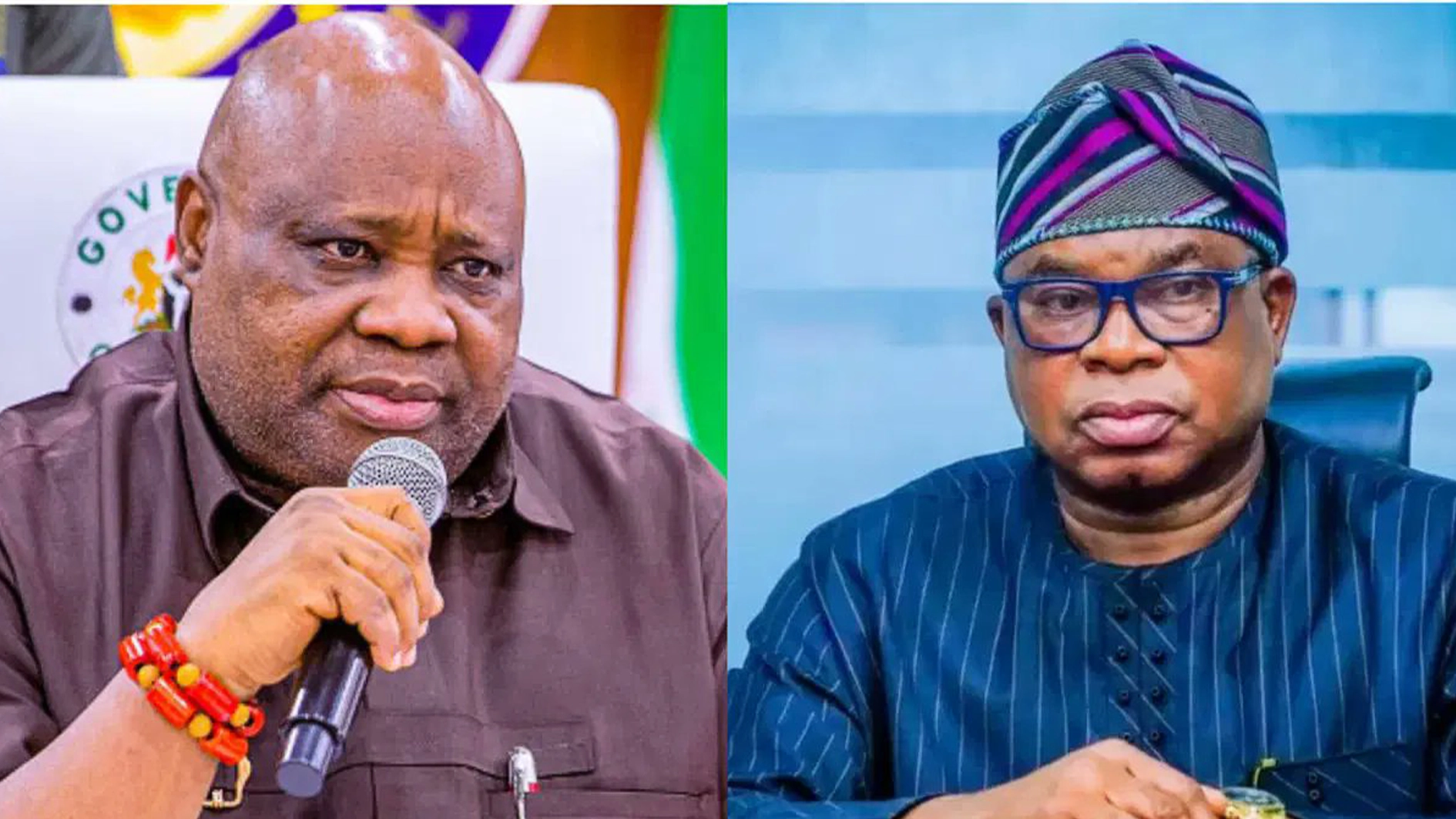
With a long history of politically-motivated killings, high-stakes interests by political merchants, tomorrow’s Osun State governorship election is heavily pregnant. While worries abound whether political actors can prevent competition from degenerating into violence, SEYE OLUMIDE, OLUWOLE IGE, TIMOTHY AGBOH and ROTIMI AGBOLUAJE examine the significance of the poll to stakeholders, its implications for the 2027 elections, and whether technology and the Electoral Act 2026 can deliver a free, fair, and credible governorship election.
What will happen on Saturday, August 15, in Osun State is more than an election. When political scientists describe an election as war by other means, their observation receives credence by the events in the lead-up to the ensuing gubernatorial contest, which pits incumbent governor Ademola Adeleke against Bola Oyebamiji, the candidate of the national ruling All Progressives Congress (APC).
Four years ago, the incumbent, then a member of the embattled Peoples Democratic Party (PDP) but now bestriding the Accord Party (AP), defeated the then APC candidate, Gboyega Oyetola, believed to be a cousin of President Bola Ahmed Tinubu.
Adeleke, during the town hall debate organised by the Arise Television Network, noted that the governorship candidate of the APC is just a proxy of Oyetola, whom he claimed is still incensed at his defeat in 2022.
However, coming at a time when the APC’s scorecard is under national scrutiny, leaders of the federal ruling party believe that a win or loss in the gubernatorial contest would positively or negatively impact the January 18, 2027, presidential poll.
On the flip side, Adeleke, who belongs to a well-heeled family with roots in business, academia and politics, believes that if tomorrow’s election is framed as a referendum on his past four years in office, Osun people have reason to return him to office.

But whether the election would be an arithmetic of performance or a bone of political contention between two dynasties, the rumours of war and clinking hoofs of war horses have combined to set every citizen, particularly the Osun electorate, on edge.
Consequently, as 1,906,390 voters armed with their PVCs out of the 2,339,233 registered voters in Osun State prepare to elect one of 14 candidates seeking the governorship seat, three critical questions are dominating the political discourse: Can technology guarantee the integrity of the ballot? Can the Electoral Act 2026 deliver a free, fair and credible contest? And will the outcome provide a reliable template for the 2027 general elections?
At the centre of the first concern is the deployment of thousands of Bimodal Voter Accreditation System (BVAS) devices by the Independent National Electoral Commission (INEC) to authenticate voters and strengthen the integrity of the accreditation process. While the technology is expected to curb some forms of electoral malpractice, stakeholders remain divided over whether BVAS alone can withstand the intense political pressure surrounding the election.
The second concern centres on the Electoral Act 2026, under which the election is being conducted. Following the Ekiti governorship election in June, which provided the first major test of the new electoral framework, Osun offers another opportunity to assess whether the law, INEC’s regulations and the technology deployed at polling units can translate electoral reforms into a process that voters and political parties can trust.
But beyond the battle for the Osun Government House, Saturday’s election carries a much larger significance. As the last off-cycle governorship election before the 2027 general elections, Osun is effectively a dress rehearsal for the country’s next major electoral contest.
Its conduct will provide an early indication of INEC’s preparedness, the reliability of electoral technology, the effectiveness of the new legal framework, and, perhaps most importantly, whether Nigeria’s political class is prepared to accept an electoral outcome determined by the ballot rather than desperation, inducement, or manipulation.
With the contest increasingly assuming the character of a high-stakes political battle, the question is no longer simply who will win Osun, but whether the election can strengthen confidence in Nigeria’s electoral process ahead of 2027.
BVAS and the credibility question
INEC has configured thousands of Bimodal Voter Accreditation System (BVAS) devices for the election, including dedicated backup units, in preparation for the exercise. The scale of the deployment underscores the importance the commission attaches to technology in the Osun election.
BVAS can potentially change the dynamics of the election by making voter accreditation more difficult to manipulate. Its biometric verification function allows the identity of voters to be checked before accreditation, while the system provides an electronic record of the accreditation process.
This could become particularly important in a closely fought election where relatively small differences in votes may determine the winner. However, BVAS should not be treated as a substitute for institutional integrity.
Even though technology can strengthen an electoral process, it cannot independently prevent vote-buying, intimidation, violence, manipulation of party agents, interference with collation, or the deployment of political influence outside the polling unit.
Indeed, the current atmosphere in Osun demonstrates why technology alone cannot resolve Nigeria’s electoral problems.
There have already been allegations and counter-allegations among political actors over electoral manipulation, while concerns about vote-buying have featured prominently in the pre-election debate. A recent viral video allegedly showing residents being induced to vote for a particular candidate further intensified the controversy, although political parties have traded blame over the incident.
The real test of BVAS, therefore, will come after the votes have been cast.
Will political parties and Osun stakeholders accept its records when they are unfavourable to them? Will agents trust the accreditation figures? Will INEC rely consistently on its technological records? And, if disputes arise, will the courts and other institutions give sufficient weight to verifiable electronic evidence?
Those questions could prove more consequential than the mere presence of BVAS at polling units.
Voters’ expectations surge as Osun decides
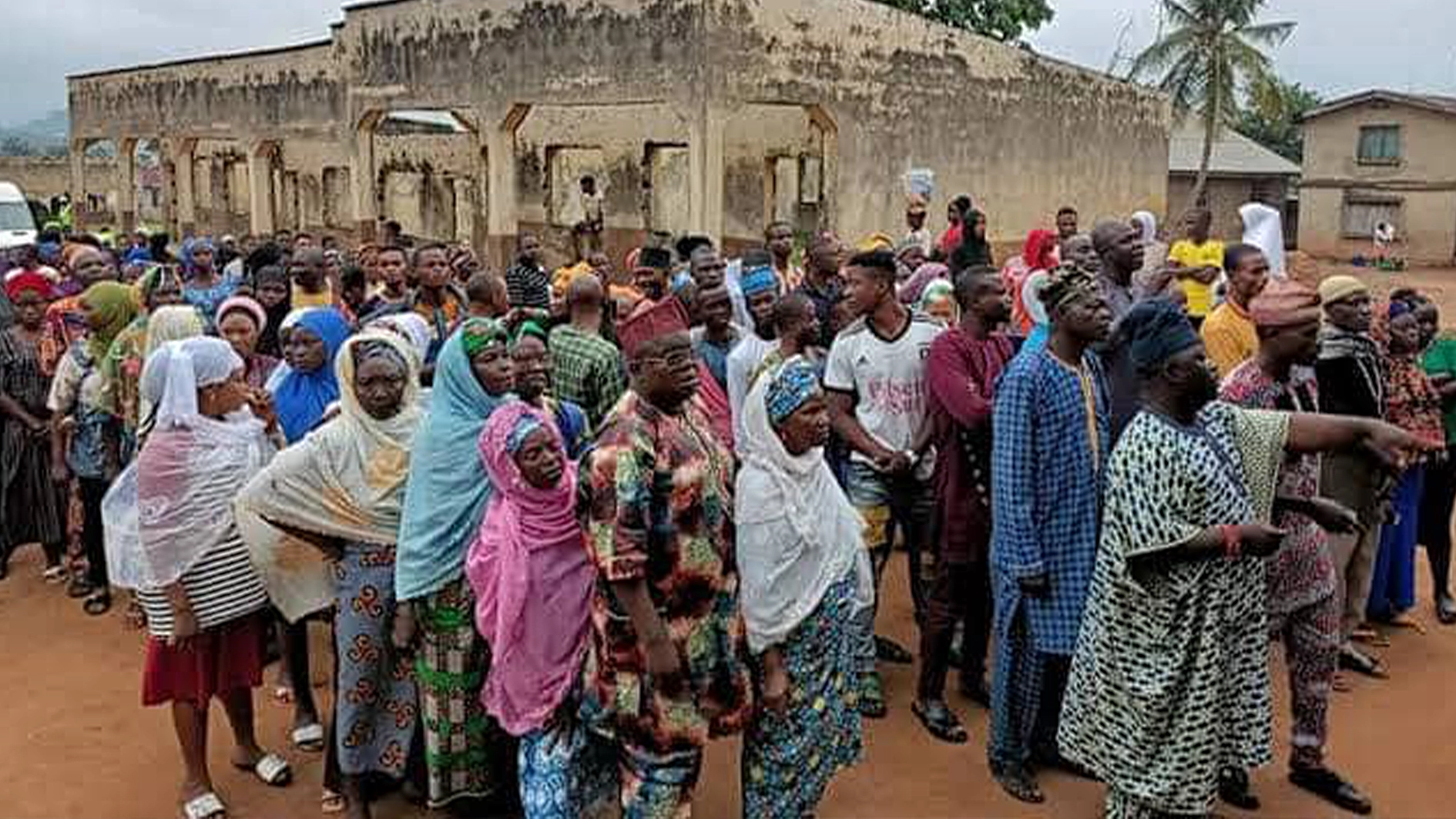
With fears of possible violence mounting as the election draws closer, the average man on the street is deeply bothered by the optics. Indeed, the fear and growing apprehension among residents, despite assurances of effective security for tomorrow’s governorship poll, is palpable given the litany of oddities that have played out thus far.
Voters across the state, who spoke with The Guardian yesterday, expressed concerns but maintained that their overriding expectation was for a free, fair and peaceful exercise devoid of interference tomorrow.
They urged government agencies, particularly security and electoral authorities, to ensure that the election is not undermined by vote-buying, intimidation, or other forms of malpractice. They also called on political parties to rein in their agents and supporters to prevent any action that could disrupt the exercise.
At Ede, a snail farmer, Bola Bisiriyu, who declined to disclose her preferred candidate, said the immediate concern for voters was to have an atmosphere in which they could exercise their franchise without fear.
“All that we are asking for is a violence-free atmosphere where we can move out, vote and return to our houses without crisis. We also want our votes to count,” she told The Guardian.
Bisiriyu said the outcome of the election would be acceptable to her if the process were transparent and peaceful, stressing that the leading contenders were already known to the people of the state.
“As long as there is no violence and the election is free and fair, I will accept whoever wins because none of the three major candidates is a stranger to us,” she added.
Similarly, at Osogbo, a commercial taxi driver in his 60s, Abiodun Adeleke, said the neutrality and professionalism of security agencies would be critical to determining whether voters could participate freely.
According to him, security personnel should not only maintain neutrality but also take preventive measures by identifying flashpoints and deploying adequate personnel to areas considered vulnerable to violence.
“The most important thing is for security agencies to remain neutral. They should also identify volatile areas and contain those who may be out to cause trouble and compromise the integrity of the election,” Adeleke said.
A secondary school teacher in Osogbo identified vote-buying as another major threat that could undermine the credibility of the election and urged authorities to strengthen surveillance around polling units and ensure that voters were not induced with money or other stuff to sway their votes.
The teacher lamented that vote-buying had remained a recurring challenge in Osun elections, warning that allowing the practice to thrive could undermine confidence in the electoral process.
“For me, all parties should cooperate for peace to reign. If we kill ourselves today, who will become beneficiaries of the outcome of the poll? All must be willing to allow peace to reign and avoid bloodshed or behaviours that would set this state on fire,” Waheed Lasisi, a commercial driver plying the Oke-Baale-Ogo Oluwa route, told The Guardian.
Why the desperation for Osun?
The intensity surrounding Saturday’s Osun governorship election is understandable, given what is at stake for the major political actors. However, the growing desperation among some stakeholders could prove dangerous if not checked.
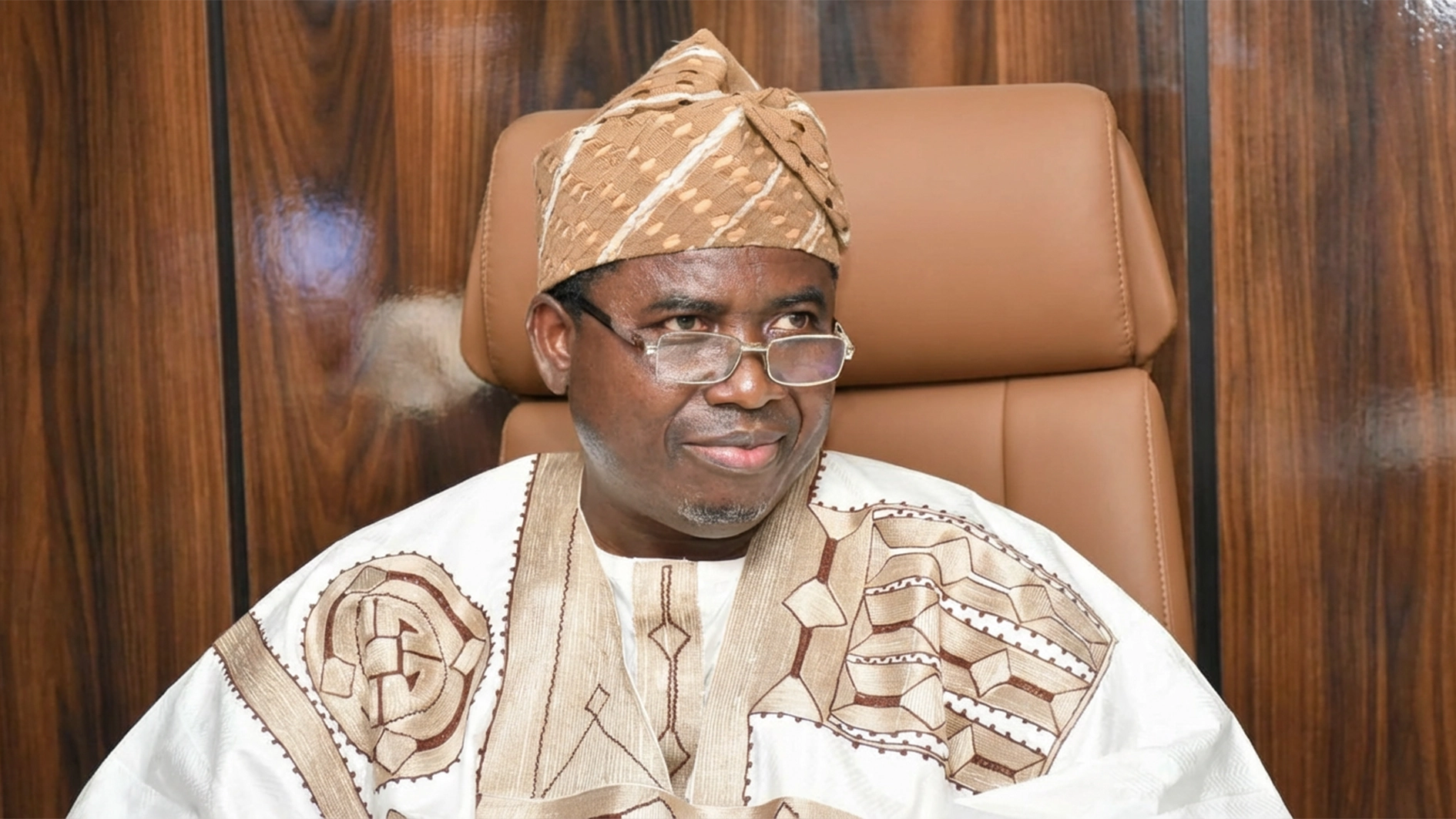
For the incumbent, Adeleke, the election is an opportunity to secure a second term and consolidate his political family’s influence in the state, while for the APC and its candidate, Oyebamiji, the contest offers a chance to reclaim Osun and demonstrate that the party can defeat an incumbent opposition governor in a strategically important South-West state.
The stakes, however, extend beyond the two leading candidates. For other political actors, particularly those seeking greater relevance ahead of the 2027 general elections, Osun provides an opportunity to demonstrate that the state’s political space is not permanently controlled by the two dominant parties.
This explains why tomorrow’s election has assumed a significance arguably disproportionate to the size of the state.
The poll is also being watched as a test of Tinubu’s political standing in the South-West ahead of his expected 2027 re-election bid. While Tinubu would be expected to seek a strong showing for the APC in the region, Adeleke is equally seeking victory to strengthen his political standing and preserve the influence of the Adeleke family in Osun.
Two non-contestants, former governors Rauf Aregbesola and Adegboyega Oyetola, also have political interests riding on the outcome.
Aregbesola, now national secretary of the coalition African Democratic Congress (ADC), is backing the party’s candidate, Najeem Salaam. A strong showing by Salaam would reinforce Aregbesola’s continuing relevance in the state and within the emerging coalition ahead of 2027.
For Oyetola, who served as Aregbesola’s chief of staff before succeeding him as governor, the APC candidate, Oyebamiji, represents the vehicle through which he could retain political influence in Osun.
Yet, amid the perception that Tinubu is determined to wrest Osun from Adeleke, a source within the APC told The Guardian that the president was not desperate to win the election at all costs.
“Mr President, I can tell you, has no problem with Governor Adeleke. The fact that he called the governor after the EFCC froze the Osun State government’s account to tell Adeleke that he was embarrassed and subsequently directed the commission to unfreeze the account is a strong indication of the president’s neutrality in the whole scenario,” the source said.
The claim, if sustained by events on election day, could complicate the prevailing narrative that Saturday’s contest is simply a proxy battle between Tinubu and Adeleke.
The fact is that each of the three major contenders represents a broader political interest that goes beyond winning tomorrow’s election to shaping how the South-West will align ahead of 2027. At present, the ruling APC controls four of the six South-West states, and a victory in Osun would increase its hold on the region to five states.
Conversely, a victory for Adeleke would preserve the Accord Party’s foothold in the South-West and could deal a significant political blow to some of the APC’s key actors in Osun, particularly those whose political relevance is closely tied to the outcome of tomorrow’s poll.
History of governorship election violence in Osun
Since the return to democracy in 1999, Osun State’s political history has been marked by fierce contests, bitter party rivalry and, at critical moments, deadly violence. What began as a struggle between the Alliance for Democracy (AD) and the Peoples Democratic Party (PDP) gradually evolved into a prolonged battle between the PDP and the opposition bloc that later became the Action Congress of Nigeria (ACN) and, ultimately, the All Progressives Congress (APC).
Chief Bisi Akande of the AD governed from 1999 to 2003 before losing to Prince Olagunsoye Oyinlola of the PDP. Oyinlola polled 493,509 votes against Akande’s 237,041 in the 2003 election.
The 2007 contest between Oyinlola and Rauf Aregbesola, however, became a defining watershed. Aregbesola challenged the PDP’s victory in court, alleging widespread irregularities and violence. He later claimed that 12 people were killed during the election violence, a figure that was also repeated in subsequent accounts of the contest.
The legal battle eventually produced a historic reversal. The courts nullified Oyinlola’s election, and Aregbesola was sworn in as governor in November 2010. The transition illustrated how electoral competition in Osun increasingly extended beyond the ballot box into the courts and the streets.
The rivalry did not disappear under Aregbesola. His 2011 political environment was again violent, with his administration later recalling that no fewer than six people were killed on the eve of the National Assembly election.
By 2014, however, the contest between Aregbesola and the PDP’s Iyiola Omisore ended without the large-scale violence feared by many. Aregbesola won 394,684 votes against Omisore’s 292,750.
The 2018 election brought another major protagonist into the long-running APC-PDP battle: Ademola Adeleke. His first governorship contest was extraordinarily close. He initially led the APC’s Gboyega Oyetola with 254,698 votes to 254,345, a margin of just 353 votes.
But because 3,498 votes were cancelled in seven polling units, INEC ordered a supplementary election. Oyetola eventually won with 255,505 votes against Adeleke’s 255,023, a margin of 482 votes.
Adeleke returned four years later, this time defeating the incumbent Oyetola. In 2022, he polled 403,371 votes against Oyetola’s 375,027, winning by 28,344 votes.
The result reversed the 2018 outcome and demonstrated Adeleke’s transformation from a narrowly defeated challenger into governor.
In 2026, the rivalry between Adeleke’s Accord Party and the APC, following the governor’s defection from the PDP, assumed another dimension. The contest now involves an incumbent seeking re-election, an APC candidate seeking to reclaim the state and an ADC candidate hoping to turn the election into a broader test of the emerging opposition coalition.
‘Why high-stakes battles, political volatility persist in Osun elections
Differing postulations have been offered regarding the searing intensity that has characterised electoral contests in the state.
For some, the intensity in the Osun political pressure cooker reflects the state’s high political consciousness and the determination of voters to protect their choices. For others, it is rooted in the fierce struggle for political power, the economic rewards associated with office, and the weakness of institutional safeguards.
A retired don of the University of Ibadan, Professor Rashid Aderinoye, disagreed with the description of Osun as inherently volatile during elections, arguing that the state’s political awareness, rather than a propensity for violence, explains the intensity of its electoral contests.
According to him, Osun voters are particularly sensitive to issues of fairness and credible elections, while the determination of leading candidates to win should not automatically be interpreted as desperation.
“I think it is a wrong claim that Osun is always volatile during the election. The only thing you can say is that because there are many intelligent people there, they wouldn’t like cheating,” he said.
A former Nigerian ambassador to the Philippines, Dr Yemi Farounbi, however, offered a different interpretation, saying Osun State reflects the political intensity historically associated with the old Western Region.
“The truth is that Osun State represents the real Wild Wild West of old. The second reason is that the three candidates have, at one time or the other, been in the APC. When old colleagues or associates become competitors, the competition will always be intense. That’s why the bitterness is so intense,” Farounbi said.
He said the strategic importance of Osun within South-West politics had further heightened the stakes but warned politicians against allowing their pursuit of power to degenerate into violence.
A professor of political science at the University of Ibadan, Dhikru Yagboyaju, said the state’s governorship elections had acquired considerable political significance since the Supreme Court overturned the outcome of the 2007 election in 2010.
He noted that subsequent contests had been characterised by political intrigues and heightened emotions, partly because Osun’s off-cycle election could influence political calculations ahead of the next general elections.
“Governorship election in Osun State has, since the upturn in 2010 of the outcome of the 2007 exercise, been important and characterised by intrigues as well as high emotions,” Yagboyaju said.
He, however, cautioned that the pursuit of victory must not be allowed to compromise the credibility of the electoral process.
An Ilesa-born scholar based in Delaware, United States, Professor Olawale Awodiya, was more critical of the political structure underpinning the contest.
He argued that weak institutional safeguards and low expectations of governance had turned the governorship into a highly lucrative prize, thereby encouraging desperate political competition.
“Politics in Osun is not sufficiently sophisticated, as the electorate is not politically sophisticated.
So, any politician who wins in the state becomes a potentate who willy-nilly directs the affairs of the state with little to no sanctions for bad governance,” he said.
Awodiya argued that the absence of sufficiently demanding standards of governance had created an environment in which almost anyone could aspire to the office, while the rewards attached to political power remained enormous.
“No wonder all manner of men and women would do anything, including untoward activities, to assume this winner-takes-all position,” he said.
He called for stronger legislative and institutional frameworks capable of setting enforceable standards for governance and ensuring that only competent candidates were attracted to political office.
A former political adviser to the late Oyo State Governor Abiola Ajimobi, Professor Gbade Ojo, identified the multiplicity of political interests and the influence of major towns and political families as additional factors driving the competition.
“There are many contending forces in Osun politics. The big towns there have principalities that desire to lord it over others. They are the Ife, the Osogbo, and the Ijesha, among others, competing with the Adeleke family that has become dominant. Additionally, politicians are hell-bent on winning the state because politics now pays more than legitimate business. The return on investment is indeed high,” Ojo said.
He urged political stakeholders to lower the temperature of the contest and recognise that politics should be treated as a game rather than a battle for survival.
Beyond Osun: 2027 echoes
Ultimately, the significance of tomorrow’s election will not be determined solely by the margin separating the winner from the runner-up. The credibility of the process will depend on whether voters are allowed to cast their ballots without intimidation, whether BVAS and other technologies function as intended, whether security agencies remain neutral and whether INEC applies its rules consistently across the state. It will also depend on what happens after the polls close.
The President of Yoruba Ronu Leadership Forum, Akin Malaolu, said: “Osun has demonstrated repeatedly that a narrow electoral margin can transform a governorship contest into a prolonged political and legal battle. The 2018 election remains a reminder that even when technology and electoral procedures are deployed, disputes over cancelled votes, collation and results can determine whether an election is accepted or contested. That makes the responsibility of the political parties as important as that of INEC.”
According to Malaolu: “If Saturday’s election is peaceful, transparent and credible, with technology functioning effectively and political actors accepting the outcome, Osun could provide a reassuring signal ahead of 2027.
“If, however, the election is marred by violence, vote-buying, technological failures, manipulation or prolonged disputes over results, it could reinforce the concerns that electoral reforms have yet to address the deeper political problems confronting Nigeria’s democracy.
“The real test, therefore, is not simply whether INEC can conduct an election with BVAS or whether the Electoral Act 2026 contains stronger safeguards. It is whether Nigeria’s institutions and political actors can allow those reforms to work. And that is the question Osun voters will begin answering tomorrow.”
For the APC, victory would strengthen its hold on the region and reinforce its claim that the party remains the dominant political force in the South-West. For Adeleke and his political allies, retaining Osun would provide a significant boost to their bargaining power ahead of the next general elections.
For the ADC and its candidate, Salaam, a strong performance could give the emerging coalition greater political visibility and demonstrate that the contest for South-West influence extends beyond the APC and PDP.

