 Follow Us on Google News


 Follow Us on Google Discover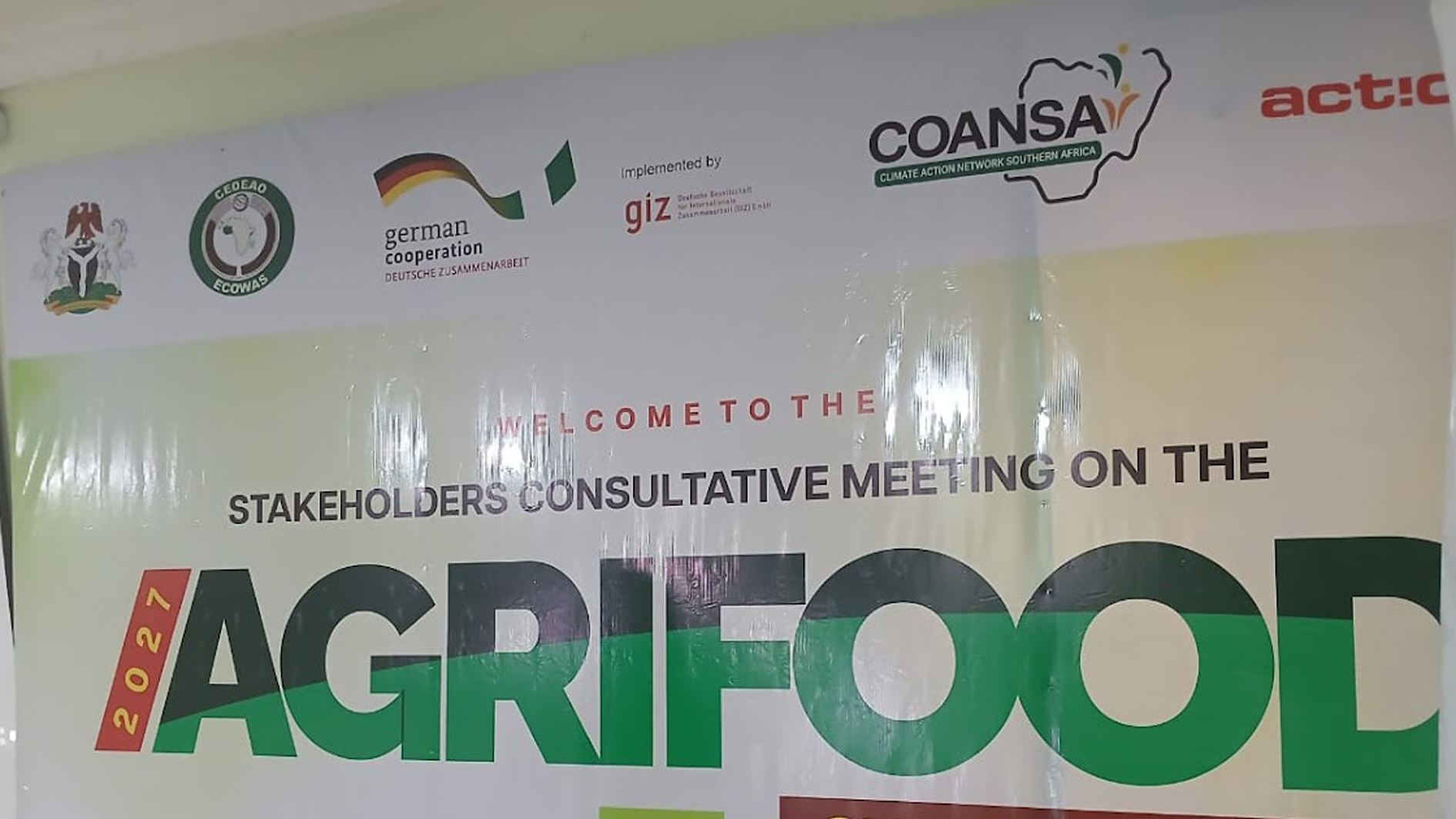
Stakeholders in the agriculture and food sector have called on the Federal Government to raise public investment in the agrifood system to N10.5tr in the 2027 budget, warning that inadequate funding, delayed releases and weak implementation are undermining efforts to tackle food insecurity and create jobs.
This call was contained in a communiqué issued at the end of a three-day National Stakeholders Consultative Meeting on the 2027 AgriFood Systems Budget, held in Lagos.
The meeting was organised by ActionAid Nigeria, the GIZ Global Programme Sustainable Agricultural Systems and Policies Nigeria, the Federal Ministry of Budget and Economic Planning, the Federal Ministry of Agriculture and Food Security, and the Department of Agriculture and Rural Development of the ECOWAS Commission.
The participants, drawn from government ministries, departments and agencies, the National Assembly, research institutions, academia, civil society organisations, farmer groups, development partners, private sector and the media, said lamented that Nigeria’s agricultural spending remained far below its continental commitments.
According to the communiqué, aggregate public expenditure on agriculture by the Federal Government, 36 states and the Federal Capital Territory was estimated at 4.58 per cent in 2026, against the 10 per cent target under Nigeria’s Comprehensive Africa Agriculture Development Programme (CAADP) commitments and the Kampala Declaration.
The stakeholders also expressed concern over poor budget implementation, noting that actual capital budget implementation for agriculture at the state level averaged about 50 per cent between 2023 and 2025.

They noted that delayed releases were particularly damaging because agricultural activities were seasonal and time-sensitive, with late disbursements resulting in missed planting windows, rushed procurement, reduced value for money and limited impact on productivity and food security.
The meeting further called for agricultural spending to be assessed not merely on allocations and releases but on measurable outcomes, including increased productivity, farmer incomes, employment, food prices, nutrition, climate resilience and poverty reduction.
The communiqué revealed that evidence presented at the meeting indicated that full implementation of approved federal and state agricultural and livestock capital budgets could generate an estimated 3.5 million direct quality jobs — 2.1 million at the federal level and 1.4 million across the states and FCT.
Stakeholders also raised concerns over the composition of agricultural budgets, particularly the inclusion of constituency projects that fall outside the core mandates of agrifood ministries.
They urged the government to rebalance investment beyond fertiliser to include extension services, mechanisation, irrigation, climate-smart agriculture, agroecology, research, storage, processing, markets and data systems
The communiqué questioned the concentration of the National Agricultural Development Fund’s 2026 capital allocation on fertiliser programmes, estimated by civil society organisations at up to 98 per cent, arguing that the fund’s broader statutory mandate should be reflected in its spending.
On climate change and insecurity, the participants warned that floods, drought, rising temperatures.

