 Follow Us on Google News


 Follow Us on Google Discover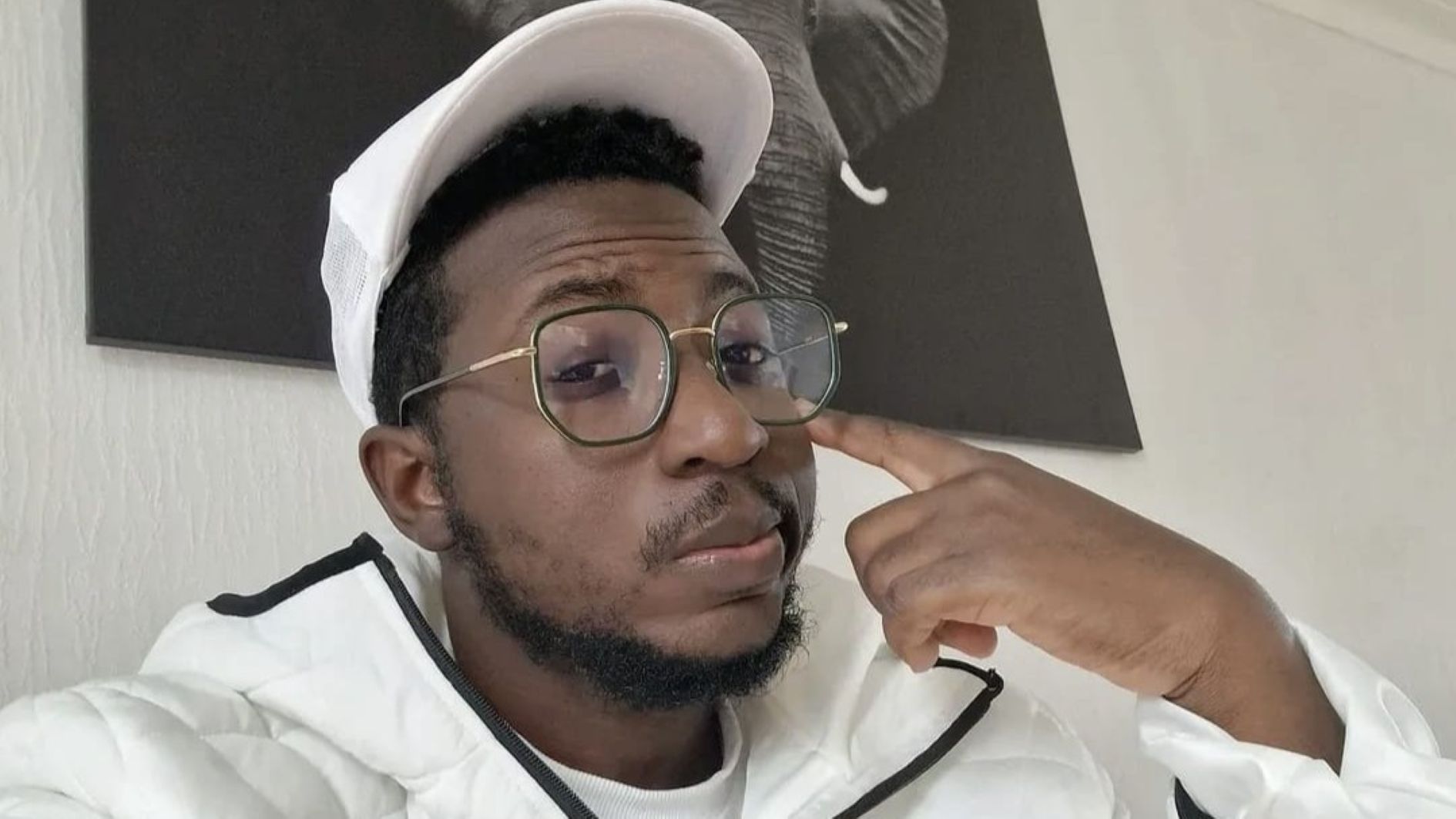
Prince Ameen Oba is an Afro-fusion artist, community advocate and entrepreneur. Formerly known as Lil Prince, the United Kingdom based artiste is a graduate of Agricultural Economics and Extension from Ladoke Akintola University of Technology, Oyo State.
In this interview, Prince Ameen spoke about his love for music, the release of his fourth album, Initial Aura, and how he established himself as a creative entrepreneur.
You have released your fourth studio album, Initial Aura. How does it feel to finally have that project out?
Honestly, it’s a very different feeling. When you’re working on an album, you are inside the process. You are recording, rewriting, changing things and sometimes questioning yourself. But the moment you release it, it no longer belongs only to you.
Initial Aura is very personal to me because it represents different parts of my journey. It’s not just another collection of songs. It’s a reflection of where I’ve been, where I am now and some of the things I’ve experienced along the way. So having people finally listen to it and form their own connection with the songs is something I’m grateful for.
The title, Initial Aura is interesting because “initial” suggests a beginning, yet you are already four albums into your career. Why call this album a beginning?
Because sometimes you have to begin again. You can have years of experience and still reach a point where you realise you’re entering a completely different chapter. For me, Initial Aura represents that reset. I have grown as a person. I have moved between countries. I’ve experienced different environments, different responsibilities and different stages of life. So although I’m not a new artiste, there’s a new version of Prince Ameen that people are meeting through this album. That’s why I like the title. It’s not saying everything before this didn’t happen. It’s saying, “This is where another chapter begins.”

One thing that stands out about Initial Aura is how personal some of the titles are — Mama, Not Alone, Africa Sweet, Country Hard, Eko City. Was there a conscious decision to make the album tell more of your story?
Definitely. As I’ve grown older, I’ve realised that music can document your life. You don’t always have to explain everything in an interview if you’ve already put it into a song.
Mama represents family and that emotional side of me. Africa Sweet connects to my roots. Eko City takes me back to Lagos and the environment that shaped me. Country Hard speaks to realities that people can relate to. So yes, there was a conscious effort to make the album feel like a journey rather than just a playlist.
You also have songs like Mean Nothing, Hold Me, Steady, Jojo and Sweet Tomato, which bring a very different, more romantic and melodic side. Was it important for you to show that side of Prince Ameen?
Very important. I don’t want people to think I only have one emotion or one personality. Love, attraction, vulnerability, happiness, they’re all part of life. I’ve always enjoyed melodic music, and I wanted Initial Aura to have songs that people could enjoy without necessarily needing to analyse them. Sometimes you just want to listen to a song because it makes you feel good. Sometimes a song reminds you of somebody. That’s also the power of music.
Before Initial Aura, you were already releasing new material throughout 2026, including Jojo, City Boy Movement, Not Alone, Run Am, Country Hard, Mad O and For Me. What was different about your approach to music this year?
2026 has been about movement for me. I didn’t want to disappear and wait until everything was perfect before putting music out. I wanted to keep creating, experimenting and allowing people to hear different sides of what I was doing. Some of the releases were more like moments or different versions of ideas, while others became part of the bigger Initial Aura journey. It has been exciting because I’ve been able to experiment with different sounds while still keeping my identity.
You’ve also released videos for songs including Mean Nothing and Not Alone in 2026. How important are visual stories to your music?
Very important. I’ve always believed that music and visuals should work together. A song gives you the sound, but a video can give people another way to understand the emotion behind that song. With Mean Nothing and Not Alone, I wanted the visuals to help people connect with the records in another way. For me, releasing a song is not necessarily the end of the creative process. Sometimes the visual is where another part of the story begins.
Your song Mad O has also been one of the records people have been picking up on socially. What does it feel like seeing people interact with your music beyond simply streaming it?
That’s one of the most exciting parts for me. Streaming numbers are important, but when someone takes your song and creates something with it, that’s different. It means the music has left the studio and entered people’s lives. With Mad O, seeing people participate and create content around it reminds me that music doesn’t always grow in the way you expect. Sometimes you release a song thinking one thing will happen, and the audience takes it somewhere completely different.
You’ve also performed and appeared at different events, including DJ AG performances and carnival/community events around Milton Keynes. How important have live performances been to your development?
Live performance is a completely different side of being an artiste. In the studio, you can take your time. You can record something again, change the production and keep working until you’re happy. On stage, it’s you and the audience. Performances such as the DJ AG events and appearances around Milton Keynes, including carnival settings, have given me opportunities to connect with people directly. I enjoy that because you get an immediate reaction. You can feel the energy in the room. And sometimes you discover that a song works differently live than it does when you’re listening to it through headphones.
Your connection with Milton Keynes has also become part of your UK story. What does performing and participating in events in the city mean to you?
It means a lot. Milton Keynes has become an important part of my life in the UK. When you live somewhere for a period of time, you become part of the environment. You meet people, build relationships and experience different communities. Being able to perform and participate in local events gives me an opportunity to contribute to that community while also representing where I come from. I’m Nigerian, but my journey now includes the UK as well. Milton Keynes is one of the places that has become part of that chapter.
You’ve lived and worked across Nigeria and the UK. Has moving between those two worlds changed the way you see yourself as an African artist?
Absolutely. Nigeria gave me my foundation. The UK has given me another perspective. Living away from where you grew up can make you appreciate certain things differently. You begin to notice the culture, language, food, music and little things that you might have taken for granted before. At the same time, being in the UK exposes you to different cultures and different ways of thinking. So I don’t see myself as having to choose between the two. Both experiences are now part of my story, and I think that naturally comes through my music.
You’ve also done things outside music, entrepreneurship, media, production, youth development and community work. Why has it always been important for you to be more than just an artiste?
Because I’ve never really seen myself as only an artiste. Music is a huge part of me, but I also believe that if you have the opportunity to influence people positively, you should. I’ve always been interested in creating things, building platforms and contributing to my community. Sometimes that’s through music, sometimes through business, sometimes through production and media, and sometimes through helping young people. I don’t want my entire identity to depend on whether I have a hit song at a particular moment. I want to build something that has value beyond entertainment.
You’ve now released four studio albums. Looking back, which version of Prince Ameen do you think would be most surprised by where you are today?
Probably the young Lil’ Prince. That version of me had dreams, but I don’t think he understood how long the journey would be. There were moments where things didn’t happen the way I expected. There were periods where I questioned myself and moments where I had to step back and learn. But that young guy would probably look at everything now and say, “You actually kept going.” And that’s probably what makes me proudest.
You recently brought Initial Aura directly to your audience with an album listening party in Birmingham. Why was it important to create that kind of experience around the album?
Because I didn’t want the album to exist only on streaming platforms. I wanted people to experience it together. The listening party gave me an opportunity to introduce the project properly, interact with people, meet supporters and create an environment around the music. There’s something special about watching people hear your work for the first time in the same room. It becomes more than an album release. It becomes a memory.
After releasing an 18-track album, do you feel like you’ve finally said everything you wanted to say, or is there still another Prince Ameen waiting to emerge?
There’s definitely another one waiting to emerge. I don’t think an artiste should ever feel completely finished. Even while making Initial Aura, I was already thinking about other sounds and other ideas. That’s just how creativity works. The album may represent a major chapter for me, but it isn’t the end of the story. If anything, I think it gives me more freedom because now I’ve been able to put this particular part of my journey into music. The next chapter can be something completely different.
Looking at everything that has happened in 2026, the new singles, music videos, live performances, DJ collaborations, carnival and community appearances, and now Initial Aura, what has been the biggest lesson for you?
The biggest lesson is that you have to keep moving. Not everything happens immediately. Sometimes you release something and you expect one reaction, but the audience gives you another. Sometimes a song takes time. Sometimes a performance opens a door you didn’t expect. Sometimes you have to change direction completely. I’ve learned to appreciate the journey more and not judge every stage only by the immediate result. Every release, every performance and every experience adds something to the next version of you.
Finally, if someone listens to Initial Aura years from now and asks, “Who was Prince Ameen at this point in his life?”, what would you want the album to tell them?
I’d want it to tell them that I was still evolving. That I had been through things, learned things, made mistakes, grown, loved, lost, started again and kept moving. I’d want them to hear the Nigerian in me. I’d want them to hear the person who had experienced life in the UK. I’d want them to hear the son, the friend, the artiste, the entrepreneur, the creative and simply the human being. Most importantly, I’d want them to hear that I didn’t give up on myself. Initial Aura is not me saying, “I’ve arrived.” It’s me saying: “This is where I am now. And I’m still becoming Prince Ameen.” From the young Lil’ Prince Ameen who began the journey years ago, to an established independent artiste with four studio albums, Initial Aura represents more than another release. It represents growth, reinvention and a new chapter. The music continues. The performances continue. The story continues. Prince Ameen is still becoming.

