 Follow Us on Google News


 Follow Us on Google Discover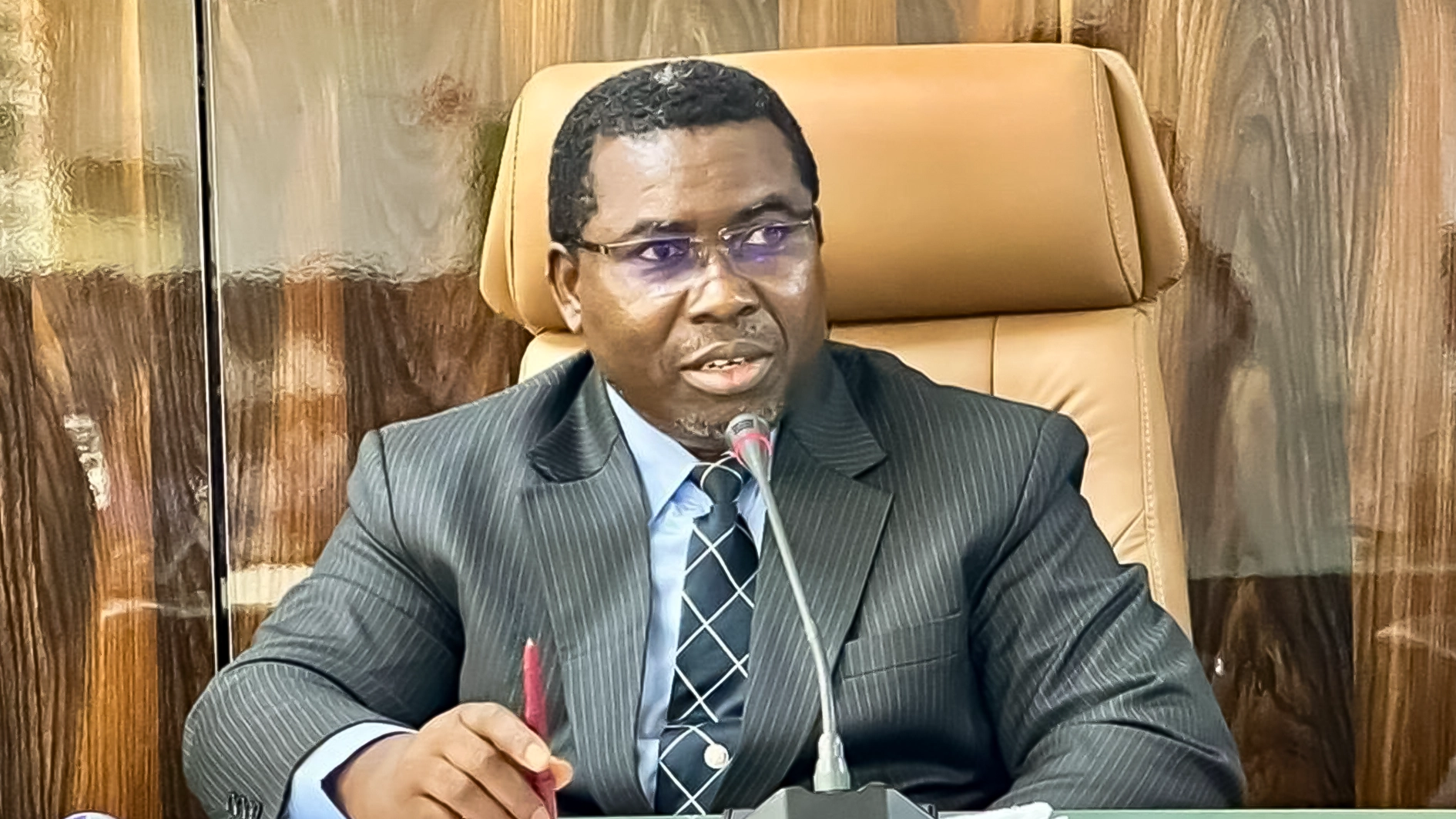
The Independent National Electoral Commission (INEC), under Professor Joash Amupitan, SAN, has emerged from the Osun State governorship election with perhaps its clearest verdict yet: the commission has demonstrated that it can conduct a competitive election with significant levels of transparency, but it has also shown that the journey towards an election Nigerians can trust completely is far from over.
The August 15 election ended with the re-election of Governor Ademola Adeleke of the Accord Party. He polled 511,067 votes to defeat the All Progressives Congress (APC) candidate, Bola Oyebamiji, who scored 444,815 votes, while the African Democratic Congress (ADC) candidate, Najeem Salaam, came a distant third with 17,180 votes.
But beyond Adeleke’s victory, Oyebamiji’s defeat or the political calculations already beginning to shape the road to 2027, Osun has provided something more important: a practical test of whether Amupitan’s INEC can translate its promises of institutional renewal, technology-driven transparency and stakeholder engagement into an electoral process whose outcome can withstand scrutiny.
The emerging answer is cautiously encouraging. It is not a clean bill of health. But neither is it the familiar story of an election whose credibility collapses under the weight of logistics, violence, opaque collation and competing claims of rigging. Indeed, the atmosphere surrounding the declaration has been significantly calmer than the intensity that characterised the build-up to the election.
That atmosphere matters. The election took place against warnings about political violence, intimidation, vote buying and other forms of electoral malpractice. INEC had identified 385 flashpoints across the state, while civil society organisations classified several local government areas as critical or high-risk.
Yet, despite those anxieties, voting was largely peaceful across the state. YIAGA Africa, which deployed observers across the 30 local government areas, said INEC and the security agencies had largely passed the test. The organisation also said the election demonstrated that institutions, technology and active citizens could work together to produce credible outcomes.

That is perhaps the first significant point in Amupitan’s favour. A victory that strengthens the credibility question Adeleke’s re-election inevitably places INEC under a particularly interesting form of scrutiny. The incumbent governor was not merely an ordinary candidate. He was the sitting governor seeking another term in a state where political competition has historically been intense. His principal challenger was the APC’s Bola Oyebamiji, while the ADC’s Najeem Salaam also entered the contest with a national opposition platform behind him.
The final margin was substantial: 66,252 votes separated Adeleke from Oyebamiji. That margin does not, by itself, establish the credibility of an election. Neither does a peaceful election automatically mean that everything went right. But what has strengthened INEC’s position is the fact that the official outcome has not been followed by the kind of immediate institutional crisis that has historically accompanied disputed Nigerian elections.
More significantly, Salaam has congratulated Adeleke and described the outcome as evidence that democracy prevailed. President Bola Tinubu has also congratulated Adeleke, describing his victory as reflecting the will of the people and urging him to use his second term to unite Osun and advance its development. The President also commended INEC and the security agencies for conducting what he described as a peaceful and transparent election.
That presidential reaction is significant. A sitting President congratulating an opposition-backed state governor after an election conducted by a federal electoral commission under a new chairman creates an important political atmosphere around the result. It does not eliminate the responsibility of independent observers to interrogate the process. But it removes one familiar source of post-election tension: the perception that the federal political establishment is unwilling to accept an outcome that goes against its preferred party.
That is important for INEC’s institutional credibility. Tinubu’s message and the politics of acceptance. There is also a striking political irony in the aftermath of the election. Adeleke won on the platform of the Accord Party, while President Tinubu remains the leader of the APC-led federal government. Yet, rather than contesting the legitimacy of the outcome, the President congratulated the governor and acknowledged the electorate’s decision.
Even more revealing is the political atmosphere surrounding Adeleke himself. After his victory, the governor reaffirmed his support for President Tinubu’s 2027 re-election bid, describing the President as a son of Osun. That development adds another layer to the meaning of the election. Osun has demonstrated that electoral competition and political cooperation do not necessarily have to become mutually exclusive. A governor can defeat the ruling party’s candidate at the state level and still express support for the incumbent President at the national level. For INEC, this is useful because it separates electoral legitimacy from the politics of permanent confrontation. The commission’s responsibility is not to produce a particular political outcome. It is to produce a process in which competing candidates can contest, voters can choose and political actors can accept the outcome where credible evidence supports it.
Osun appears, at least for now, to have moved in that direction. The atmosphere after the declaration is as important as election day. Elections are often judged by what happens before and during voting. But the hours and days after results are declared can be equally important. The immediate post-election atmosphere in Osun has been relatively restrained. There has been celebration in the Adeleke camp, disappointment among supporters of the APC and other candidates, and the normal political debate over what the result means for 2027. But there has not been a widespread breakdown of order. That is not a minor achievement.
Nigeria’s electoral history demonstrates that elections can become more dangerous after results than during voting, particularly where losing candidates reject the outcome, and supporters interpret defeat as evidence of manipulation. The willingness of political actors to acknowledge the result, subject to any legitimate legal challenge, therefore matters enormously. It is encouraging that Salaam has congratulated Adeleke and called for unity and improved governance in the governor’s second term. The same principle should apply to every political actor: acceptance should not mean abandoning the right to challenge genuine irregularities, but neither should every defeat automatically become proof of rigging.
That distinction is vital to the maturation of Nigeria’s democracy. Technology has given Amupitan an important advantage. One of the strongest features of the Osun election was the role played by technology. The uploading of polling-unit results to INEC’s Result Viewing Portal, IReV, provided citizens, parties, observers and journalists with an additional mechanism for tracking the process.
At one point during collation, INEC had uploaded 98.35 per cent of the expected polling-unit results. This represents a substantial improvement in electoral visibility. HBut the experience also demonstrates that technology is valuable only when accompanied by effective communication.
Earlier in the process, questions were raised over the pace at which the final results were being uploaded. Atedo Peterside, for example, questioned why the first tranche of results appeared to have been uploaded more quickly than the remaining results. Whether such delays were administrative or technical, the lesson for INEC is straightforward: unexplained gaps create room for speculation. In a political environment where social media can turn a few minutes of uncertainty into hours of suspicion, INEC must communicate continuously.
The commission should not assume that silence is neutral. In elections, silence is often filled by political actors. Logistics remain the weak point. The positive assessment should not obscure the commission’s vulnerabilities. The late arrival of sensitive materials following the reprinting of ballot papers and result sheets exposed the fragility of INEC’s logistics system.
The materials reportedly arrived in Osogbo late on Thursday, August 13, only two days before the election. While the correction may have been necessary, the episode raised an important question: how resilient is INEC’s electoral supply chain when unexpected developments occur close to election day? The answer must be stronger before 2027. Political parties also raised complaints about the uneven arrival of INEC officials in some locations.
Such complaints should not automatically be interpreted as evidence of deliberate manipulation. But they should also not be dismissed merely because they come from partisan actors. The mature response is verification. INEC should be able to tell Nigerians where officials arrived late, why they arrived late, what effect that had on voting and what corrective measures were taken. That is how an electoral commission builds institutional memory. The real threat remains vote buying
If there is one major area in which Osun continues to expose the limits of Nigeria’s electoral reforms, it is vote buying. Technology may authenticate voters. BVAS may improve accreditation. IReV may improve result visibility. But neither technology nor electronic result transmission can prevent a voter from accepting money before casting a ballot.
YIAGA Africa said its assessment found that the official results were consistent with its independent estimates, but it also raised concerns over widespread reports of vote buying and their implications for the integrity of voter choice. This is where INEC’s responsibility intersects with that of the security agencies and the justice system. INEC cannot prosecute every electoral offence. But it can document incidents more systematically, publish data on reported violations and strengthen its referral mechanisms with the relevant law-enforcement agencies. An election cannot be described as fully credible merely because the votes were accurately counted.
The deeper question is whether voters were sufficiently free to make their choices without intimidation, coercion or financial inducement. The citizens may have been the biggest story. Perhaps the most significant lesson from Osun is not technological. It is civic. YIAGA Africa reported that voters stayed at polling units and followed the process through ward and local government collation centres. The organisation described voter vigilance as one of the most effective deterrents to result manipulation during the election.
This is an important development. For years, electoral integrity in Nigeria has been treated primarily as a responsibility of INEC, political parties and security agencies. Osun suggests that citizens themselves are increasingly becoming part of the electoral infrastructure. Party agents watched results. Civil society organisations deployed observers. Journalists monitored developments. Citizens followed the figures. Technology provided additional visibility. And political actors, at least in the immediate aftermath, have largely allowed the result to stand as the declared outcome.
That combination is what gives an election resilience. INEC cannot manufacture it alone. Osun is a rehearsal for 2027. The significance of Osun therefore extends far beyond Osogbo. The 2027 general election will involve a vastly larger electorate, more candidates, more polling units, more political parties and substantially greater national stakes. Amupitan cannot simply reproduce the Osun model mechanically. He must improve it. The commission should now conduct a serious post-election audit covering logistics, BVAS performance, IReV uploads, personnel deployment, security coordination, voter education, accessibility and the handling of complaints.
The lessons should be published, not merely discussed internally. Where BVAS worked effectively, INEC should identify why. Where officials arrived late, the causes should be established. Where technology experienced glitches, they should be documented and fixed. Where vote buying occurred, the relevant evidence should be preserved and referred appropriately. Where communities helped protect the process, their experiences should inform the commission’s civic-engagement strategy. And where security agencies performed well, those operational models should be retained for 2027.
The President’s endorsement raises the standard. President Tinubu’s commendation of INEC and the security agencies is politically significant, but it should not be interpreted as the end of scrutiny. If anything, it raises the standard. When the President says the election reflects the will of the people and commends the electoral commission for a peaceful and transparent poll, INEC must ensure that the evidence ultimately supports that confidence.
The commission’s best response should therefore not be defensive. It should be documentary. Publish the data. Explain the anomalies. Account for the logistics. Disclose the incidents. Investigate the complaints. Audit the technology. And preserve the evidence. That is how confidence becomes institutional rather than personal.
The verdict on Amupitan
The Osun election does not make Amupitan’s INEC flawless. But it does appear to have moved the commission beyond the preliminary stage of promises into the more difficult territory of measurable performance. The election was competitive. Voting was largely peaceful. BVAS and electronic result management provided greater visibility. Observers gave the process broadly positive assessments. The declared winner has been congratulated by political opponents and the President. And, crucially, the atmosphere after the election has so far been one of celebration, disappointment and political calculation rather than widespread disorder.
Those are meaningful achievements. Yet the weaknesses remain equally meaningful. Logistical pressures persisted. Vote buying remained a concern. BVAS still requires improvement in some areas. The commission’s communication around result uploads could be more proactive. And the existence of technology does not automatically eliminate the political incentives that have historically produced electoral malpractice.
That is why Osun should neither be celebrated as the arrival of a perfect Nigerian electoral system nor dismissed as another flawed election. It should be treated as evidence. Evidence that INEC can improve. Evidence that technology can strengthen transparency. Evidence that citizens can protect their votes. Evidence that political opponents can accept defeat without immediately destabilising the system. And evidence that the credibility of an election is built not only at the polling unit, but through the behaviour of institutions and political actors after the last ballot has been counted.
For Amupitan, the real verdict will come in 2027. Osun has given him a template. The challenge now is to reproduce its strengths, eliminate its weaknesses and ensure that what worked in one state can withstand the far greater pressures of a national election. The ultimate measure of Amupitan’s tenure will not be whether he conducted one peaceful governorship election.
It will be whether he can help build an electoral system in which Nigerians increasingly believe that their votes matter, political parties believe that the rules are fairly applied, losing candidates can accept credible outcomes, and winning candidates understand that victory comes with the responsibility to govern everyone. Ademola Adeleke has won Osun. But the larger test belongs to INEC. And the real election for Amupitan may have only just begun.

