 Follow Us on Google News
 Follow Us on Google Discover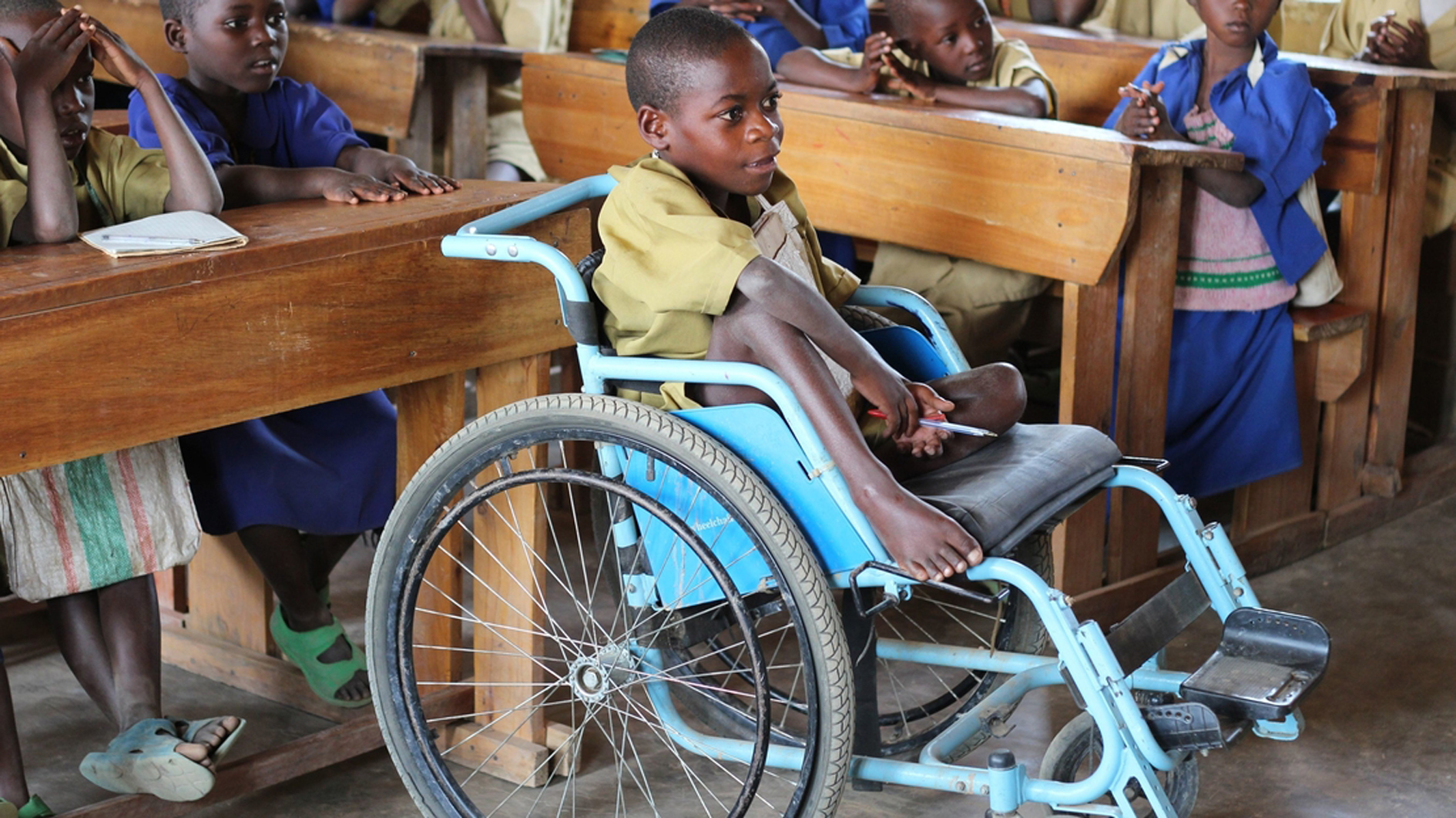
By Joy Shu’aibu
Nigeria has made one of its most significant investments in basic education in recent years. Last month, the Federal Government formally launched the Hope for Quality Basic Education for All programme, or HOPE-EDU, a $552 million initiative supported by the World Bank and the Global Partnership for Education.
Its ambition is enormous. The programme is expected to reach around 29 million children, more than 500,000 teachers and 65,000 public schools, while also supporting 10,000 non-formal learning centres.
For a country facing one of the world’s most serious education crises, this is welcome news.
But as Nigeria begins translating this investment into classrooms, teachers, learning materials and better education systems, there is an important question we should ask from the outset: will children with disabilities be among those who benefit equitably?
They must be.
Nigeria’s out-of-school crisis is often discussed as though all children face roughly the same barriers to education. They do not.
Poverty matters. Insecurity matters. Gender matters. Geography matters. But disability can multiply these disadvantages.
A child with a physical disability may live near a school but still be unable to enter a classroom because of steps, narrow doorways or inaccessible toilets. A child who is deaf may technically be enrolled but learn little because teachers cannot communicate in sign language. A child who is blind may sit in a classroom without accessible learning materials. Children with intellectual or developmental disabilities can be excluded altogether because schools lack appropriate support, or because families and communities have been led to believe that they cannot learn.
These problems are not hypothetical. The United Nations Children Fund (UNICEF) identifies disability as one of the most serious barriers to education globally and notes that children with disabilities are among those most likely to be out of school.
Nigeria provides its own painful examples. In Kaduna State, my organisation, Sightsavers, implemented a programme aimed at ensuring quality, inclusive education. We documented instances of children with disabilities being kept at home due to stigma, coupled with a widespread acceptance among parents and families that schools are not open to them. During and following the implementation of the Support Mainstreaming Inclusion so all can Learn (SMILE) project, many were able to return to school after seeing the evidence of inclusive practices, with teachers having been trained to adapt teaching methods to accommodate the needs of children with disabilities.
And that illustrates an important point for HOPE-EDU: getting children into school is not simply a question of providing more school places. We must make those places accessible.
An opportunity to build inclusion from the beginning
HOPE-EDU has the potential to change education for a generation of Nigerian children. The World Bank says the programme will support foundational literacy and numeracy, address overcrowding, strengthen school management and improve the allocation and management of basic education resources.
Disability inclusion should therefore not be treated as an add-on. It should be built into these reforms from the beginning. When schools and classrooms are constructed or renovated, accessibility should be a requirement. Ramps and accessible entrances, appropriate toilets, classroom layouts and other features that allow children with different disabilities to participate safely and independently, should all be included.
When teachers are trained, inclusive education should be part of that training. Teachers need practical skills for identifying and supporting different learning needs and for ensuring that children with disabilities participate meaningfully alongside their peers.
When textbooks and learning resources are procured, accessibility should be considered. Depending on children’s needs, that could include Braille and large-print materials, sign-language support, accessible digital resources and other appropriate formats.
Assistive technology also matters. Sometimes what stands between a child participating in school can be surprisingly practical, like a wheelchair, hearing support, appropriate glasses or low-vision devices, communication tools, or accessible learning materials.
And perhaps most importantly, we need to know which children are being reached.
Count the children who are easiest not to count
One of the dangers facing any programme operating at the scale of HOPE-EDU is that aggregate numbers can hide exclusion.
Twenty-nine million beneficiaries is an impressive target. But imagine that millions of children benefit while children with disabilities remain disproportionately outside classrooms. The overall numbers might still look successful.
That is why disability-disaggregated data should form part of how HOPE-EDU identifies beneficiaries and measures progress.Without such information, exclusion can disappear inside national averages.
Inclusion is not charity
There is a wider reason these matters.
Educating children with disabilities should not be regarded as a charitable extra to Nigeria’s education policy. It is part of delivering the right to education. And the consequences extend far beyond the classroom.
When a child is excluded from education because of disability, we increase the likelihood of exclusion from employment, economic independence and participation in society later in life. Families can also face greater economic pressures when parents or caregivers must provide support that inclusive public services should help provide.
Conversely, an education system capable of teaching children with different needs becomes better equipped to teach everyone. That is the promise of inclusive education: building an education system flexible enough to recognise that children learn and participate in different ways.
No child should be left behind. HOPE-EDU gives Nigeria an unusually important opportunity to move closer to that goal.
Prof. Shu’aibu is the country director of Sightsavers Nigeria, an organisation working to eliminate avoidable blindness and promote disability inclusion. She wrote from Abuja.

