 Follow Us on Google News


 Follow Us on Google Discover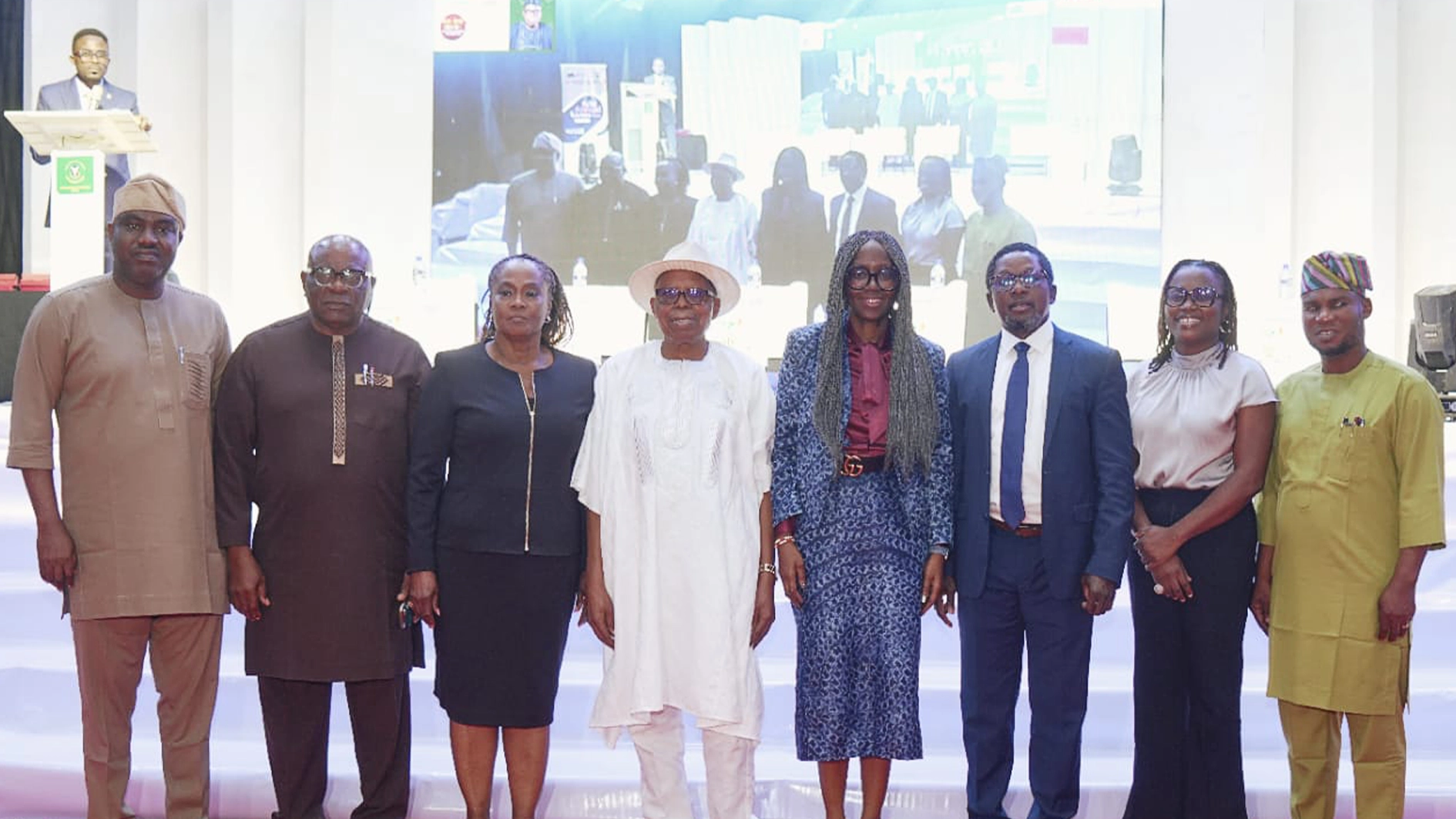
Globally, innovation and investment are reshaping energy systems amid persistent global disruptions. Yet Nigeria remains trapped in an energy paradox: despite abundant resources, the country continues to struggle to provide reliable, affordable energy. KINGSLEY JEREMIAH reports on the urgent need to drive home-grown innovation and investment to reduce Nigeria’s energy dependence.
Nigeria’s energy crisis is increasingly exposing a paradox at the heart of Africa’s largest economy.
Despite being a country endowed with some of the continent’s largest oil and gas reserves, it still struggles to provide reliable, affordable energy required to power homes, factories, hospitals and businesses. This makes the country’s capacity to convert resources into productive economic activity the major problem.
The obvious consequences are unreliable electricity, which has pushed households and businesses towards expensive self-generation, and inadequate gas infrastructure that limits power plants’ ability to operate consistently. To this end, manufacturers face rising production costs; households contend with high energy bills, and the wider economy loses competitiveness, ensuring that imported goods are cheaper than locally sourced products.
What the years of failure have done is create a situation where Nigeria has normalised a parallel energy system in which consumers increasingly finance their own electricity because the formal system cannot reliably provide it.
This has also complicated the country’s energy transition. While global pressure is mounting for economies to reduce emissions and increase renewable energy deployment, Nigeria has consistently faced a much more immediate development deficit, with millions of people still lacking reliable electricity and access to modern cooking energy. For Nigeria, therefore, the transition cannot simply mean moving away from hydrocarbons. It must mean expanding the amount of affordable and reliable energy available to citizens while gradually diversifying the sources from which that energy is produced.
That distinction is important because Nigeria risks pursuing two objectives separately when they should be integrated. Gas, for instance, can support power generation, fertiliser production, cooking and industrialisation, while solar, mini-grids and other renewable technologies can expand access to electricity for communities that conventional grid infrastructure may not reach economically. The question is not whether Nigeria should choose oil and gas or renewables, but how it can deploy each resource in line with its economic and developmental value.

The same logic applies to refining. Exporting crude while importing refined petroleum products has historically meant that Nigeria captures relatively little value from a resource it possesses in abundance. The emergence of the Dangote Petroleum Refinery has changed that equation to some extent, but dependence on a single large refinery would introduce another vulnerability. A resilient downstream market requires several commercially viable refineries competing for crude and customers, supported by transparent regulation and infrastructure.
These issues came into sharp focus at the fourth Dr Diran Fawibe Annual Lecture Series, organised by International Energy Services Limited in collaboration with the Centre for Petroleum, Energy Economics and Law at the University of Ibadan, where stakeholders examined the theme, ‘Private-Public Energy Shift: Innovation, Investment and Implementation’. But the concerns raised extend well beyond the event: they point to the structural weaknesses that have repeatedly prevented Nigeria’s energy resources, policies and investments from translating into sustained development.
Founder of Etinpower Limited, Prof. Yinka Omorogbe (SAN), argued that universities must become more directly involved in solving the country’s development problems. Her point was that Nigeria had no shortage of intellectual capacity or innovative ideas, but that a persistent disconnect between research, industry and implementation was preventing knowledge from becoming economic value.
Her argument exposes one of the less discussed dimensions of Nigeria’s energy crisis. The country does not necessarily lack ideas; it lacks an effective mechanism for moving ideas from laboratories and lecture rooms into commercial projects, regulatory decisions and infrastructure.
Nigeria has produced many energy scholars, both locally and internationally. It has conducted extensive energy-related research, granted scholarships and fellowships with dedicated taxpayer funding, and has continued to host conferences in Abuja, Lagos, Port Harcourt, Kano, and others. The state of the country’s energy crisis can answer if these have provided a sustainable solution.
Omorogbe said Nigeria’s energy transition should be developmental rather than driven solely by external decarbonisation pressures. It should create employment, support agriculture, expand industrial value chains and reduce poverty.
She also advocated greater domestic utilisation of Nigeria’s gas resources, arguing that the country should not continue exporting raw energy while domestic consumers and industries face inadequate supply.
Her position reflects a broader economic question: what is the value of having abundant resources if the domestic economy cannot capture their multiplier effects? Gas used to generate electricity, produce fertiliser, or supply petrochemical industries creates several layers of economic activity. Gas simply exported as a commodity generates a narrower value chain.
Omorogbe also called for a balanced energy mix. Hydrocarbons, she said, would remain important for electricity generation, cooking, fertiliser, petrochemicals and industrial development, while renewable energy would be crucial for expanding access through decentralised systems and reducing dependence on costly diesel generation. .
She further argued that Nigeria should not rely on a single refinery despite the significance of the Dangote project. Multiple functional refineries, she said, would create competition, strengthen energy security and support the development of petrochemical and manufacturing industries.
Chairman of International Energy Services Limited, Dr Diran Fawibe, similarly argued that energy reliability and security constitute the foundation of industrialisation, economic growth, employment, healthcare and national competitiveness.
Fawibe’s central proposition was that Nigeria’s energy future would be determined less by the size of its natural resource endowment than by its ability to convert those resources into reliable, affordable and accessible energy. He identified government, industry and academia as critical components of that process.
For him, innovation, investment and implementation cannot operate independently. Innovation without investment remains an idea, while investment without implementation remains a promise. This is particularly relevant to Nigeria, where successive governments have announced ambitious energy programmes, but many have struggled to survive the transition from policy to execution.
Sustainable energy development practitioner, Dr Temilade Sesan, emphasised the institutional problem, identifying weak institutions as the most significant constraint to universal energy access.
According to Sesan, technology and finance are important, but their effectiveness depends on the institutions responsible for deploying and regulating them. Rules, incentives and governance structures determine how resources are allocated and whether projects are completed.
Her argument suggests that Nigeria’s energy poverty cannot be solved simply by spending more money. If weak institutions continue to distort markets, delay decisions, undermine regulation or allow poor project execution, additional capital could produce more infrastructure without necessarily producing more reliable energy.
Vice-Chancellor of Edwin Clark University and Professor of Power and Energy Systems, Prof. Samuel Tita Wara, identified another dimension of the problem: inadequate collaboration among government, industry and academia.
He argued that universities should move beyond disciplinary silos and produce graduates capable of addressing real-world energy problems. Engineers, lawyers, economists and policymakers, he said, need to work together because energy challenges are simultaneously technical, financial, legal and institutional.
Wara’s observation is particularly significant given Nigeria’s persistent shortage of skilled professionals capable of navigating the intersection between technology, regulation and finance. The energy transition will require more than engineers installing equipment; it will require financiers who understand energy projects, lawyers who understand emerging markets, regulators capable of managing increasingly complex systems and policymakers able to interpret technical evidence.
For Prof. Olufemi Saibu of the University of Lagos, the binding constraint is access to affordable finance.
He argued that capital exists globally, but investors are attracted to markets where risks are predictable and returns can be reasonably assessed. Nigeria’s high borrowing costs, regulatory uncertainty and perceived institutional weaknesses therefore increase the cost of energy infrastructure.
Saibu also raised concerns about regulatory independence, arguing that investor confidence suffers when the distinction between operators and regulators becomes blurred. For a sector requiring billions of dollars in long-term investment, regulatory credibility is not an administrative detail; it is part of the infrastructure required to mobilise capital.
Regional Director of Grid Technologies Business for West and Central Africa at Siemens Energy, Oladayo Orolu, reinforced the point, arguing that technology itself is no longer Nigeria’s principal problem.
Modern transformers, switchgear and digital grid technologies already exist, he said. The greater challenge is creating the commercial and policy environment that allows those technologies to be deployed at scale.
Orolu advocated protected tenures for regulators to improve institutional stability and investor confidence. His argument goes to the heart of the investment challenge: energy infrastructure requires long-term capital, but investors cannot reasonably commit long-term money where policies and regulatory decisions are perceived as vulnerable to short-term political changes.
Chairman of Renaissance Africa Energy Company Limited, Dr Layi Fatona also stressed the need to move from policy aspiration to implementation. He argued that innovation, investment and execution must work together, warning that regulatory uncertainty continues to constrain capital flows.
Fatona highlighted the scale of Nigeria’s electricity deficit, noting that the country generates roughly 3,500MW to 5,000MW, while estimates of the power required for a reliable 24-hour supply run into hundreds of thousands of megawatts.
The numbers illustrate why incremental interventions are unlikely to resolve the crisis. Nigeria’s energy problem is structural and therefore requires structural investment in generation, transmission, distribution, gas infrastructure, storage, refining and decentralised renewable systems.
Yet infrastructure alone will not be sufficient. The country must also address the economics of energy. Electricity that is generated but cannot be delivered is a wasted investment. Gas that is produced without pipelines or reliable off-takers cannot support industrialisation. Renewable projects without affordable financing cannot scale. Refineries without dependable crude supply, infrastructure and market competition cannot guarantee affordable products.
This is why the emerging private-public model matters. Government cannot finance the entire energy transformation, but neither can the private sector operate effectively without credible institutions, infrastructure and predictable rules.
The challenge, ultimately, is to establish an ecosystem in which public policy reduces risk, private capital finances viable projects, universities generate applicable knowledge, and regulators protect market integrity.
Nigeria’s energy transition should therefore be judged by outcomes rather than the number of policies announced or projects commissioned. The meaningful indicators are simpler: Can factories operate for longer without relying on diesel? Can households access affordable electricity and clean cooking fuels? Can farmers process their produce locally? Can industries obtain reliable gas? Can petroleum resources generate domestic value and jobs?
For him, innovation, investment and implementation cannot operate independently. Innovation without investment remains an idea, while investment without implementation remains a promise. This is particularly relevant to Nigeria, where successive governments have announced ambitious energy programmes, but many have struggled to survive the transition from policy to execution.

