 Follow Us on Google News


 Follow Us on Google Discover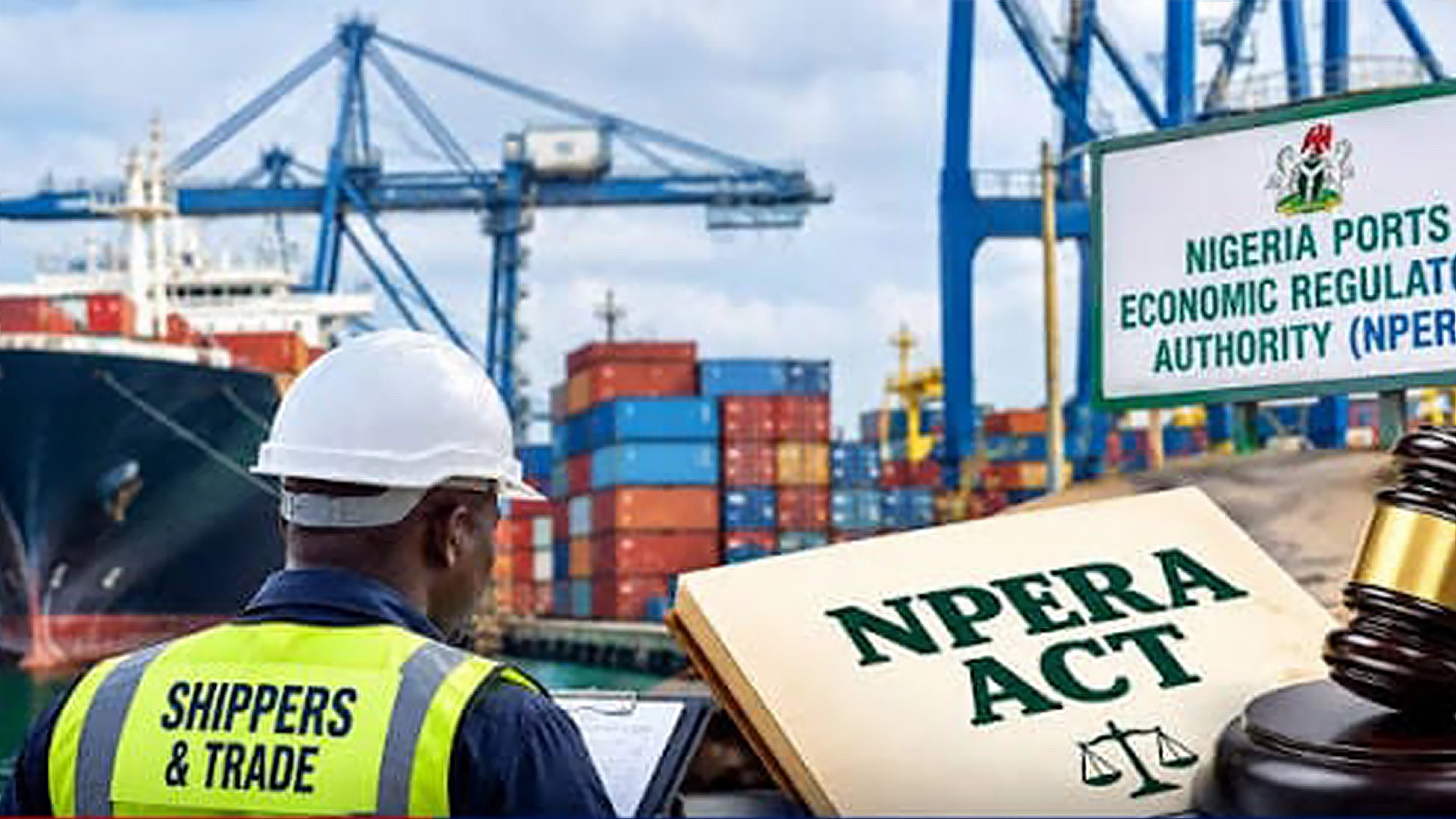
The Chairman, Nigeria Ports Economic Regulatory Agency (NPERA) Governing Board, Dr Ibrahim Shema, has clarified that the emergence of the new agency would not create institutional rivalry in ports as the Nigerian Ports Authority (NPA) retains port infrastructure and landlord functions.
Shema stated this yesterday while speaking with maritime journalists in Lagos.
He assured stakeholders that the transition from the Nigerian Shippers’ Council (NSC) to NPERA would be orderly and minimally disruptive, with attention to personnel, assets, liabilities, existing contracts, pending disputes, regulatory records and licensing arrangements.
Shema said the NPERA will prioritise transparent regulation, fair competition, predictable tariffs and improved efficiency as it assumes responsibility for economic regulation of Nigeria’s ports.
According to Shema, the NPERA Act provides a permanent statutory framework for these functions, with the agency focusing on reducing uncertainty and unnecessary regulatory barriers while supporting faster cargo movement and improving Nigeria’s competitiveness as a trading and investment destination.
“This is not about creating competing authorities. It is about establishing a coherent system in which institutions work together, each within its statutory responsibilities,” he said.

He identified transparency, fairness, predictability, efficiency and accountability as the five principles that would guide NPERA’s regulatory philosophy.
On tariffs, the chairman said port users would be able to better understand the basis for regulated charges, while service providers would have greater clarity on regulatory expectations.
He also pledged accessible dispute-resolution mechanisms and increased use of digital tools for licensing, tariff administration, monitoring, compliance and stakeholder engagement.
Shema called for collaboration among the NPA, NIMASA, Nigeria Customs Service, terminal operators, shipping lines, freight forwarders, traders and other stakeholders.
He stressed that the agency must translate legislation into improved services, greater efficiency, lower uncertainty and stronger national competitiveness.
Executive Secretary, NPERA, Dr Pius Akutah, expressed optimism that in the next one to two years, the new law and agency would clarify port regulation, ensure fair pricing and competition, improve trade facilitation and revenue mobilisation.
Akutah stressed that the new law empowers the organisation to strengthen dispute resolution and stakeholder welfare.

