 Follow Us on Google News
 Follow Us on Google Discover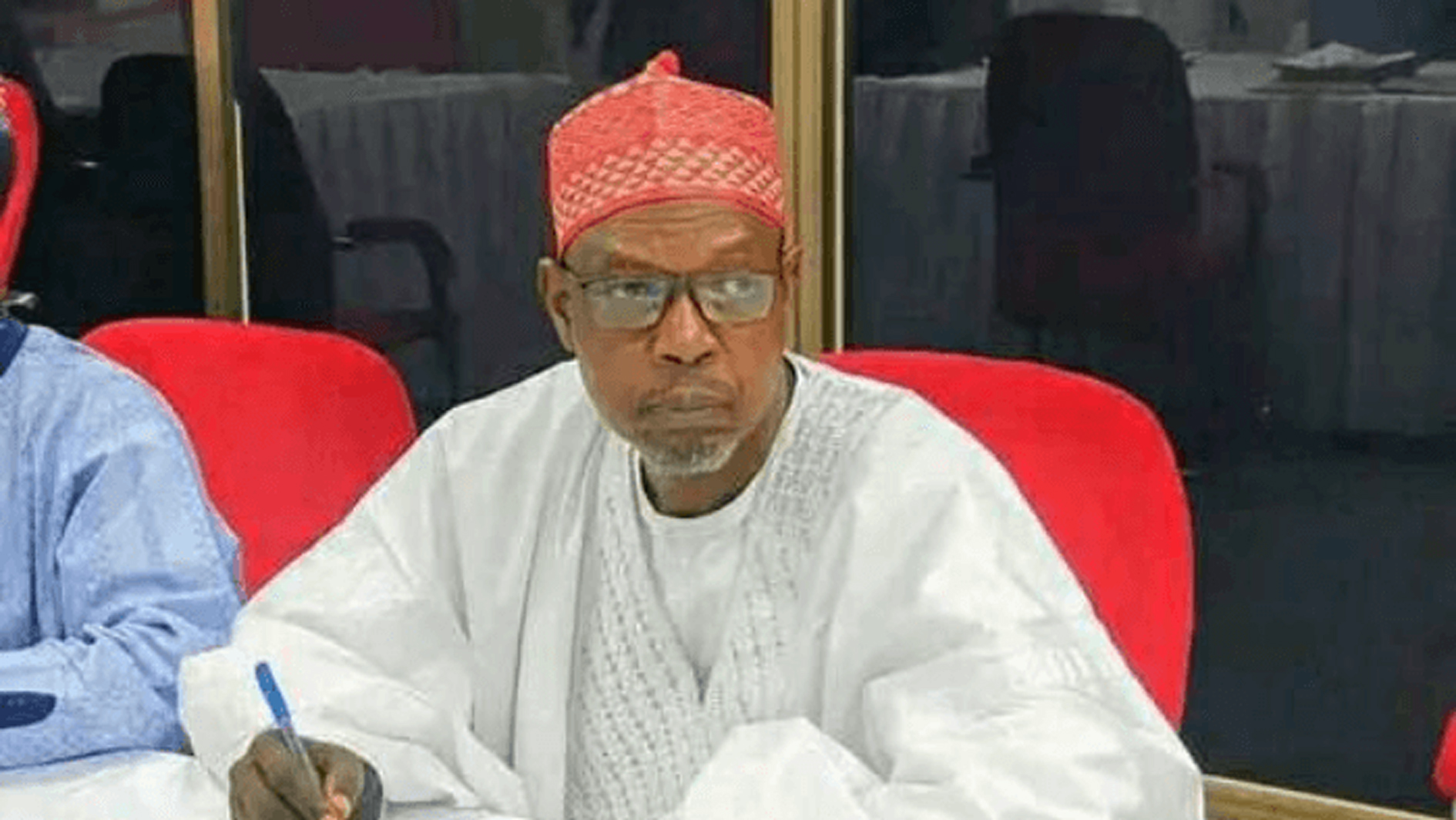
The Kano State Commissioner for Planning and Budget, Suleiman Shanono, has identified policy flip-flop as a major threat to Nigeria’s development, warning that changes in government often lead to the abandonment of programmes and projects initiated by previous administrations.
Speaking at the 65th anniversary colloquium of the Nigerian Institute of Management (Chartered) in Lagos, Shanono said the situation forces successive governments to “reinvent the wheel,” describing discontinuity as a major threat to development at both the national and sub-national levels.
He called for reforms to be institutionalised through laws and other mechanisms to ensure that institutions outlive the individuals who lead them, saying that the current scenario is like putting “a round hole in a square peg”, adding that this affects public administration.
Using his state as an example, he said Kano had sought to strengthen public administration through planning, coordination, delegation, monitoring and evaluation, and citizen participation in the budgeting process.
Also emphasising continuity, the representative of the Administrative Staff College of Nigeria (ASCON), Sena Akran, said the challenge extended beyond formulating policies to ensuring that they produced measurable and sustained impact.
Akran, who is the Head of the Public Administration Department at ASCON, stressed that public servants needed competencies to monitor and evaluate policies after implementation, noting that some policies were implemented but later disappeared, making it difficult to assess their impact.
Consequently, she called for greater use of evidence in decision-making, saying that public servants needed research and problem-solving skills to identify problems, track implementation, and close the gap between policy and impact.
Stakeholders also reinforced the call for continuity and stronger accountability during the panel discussion, urging legislation to prevent incoming administrations from abandoning inherited projects, as many projects had remained incomplete despite substantial public expenditure.
According to the Chief Executive Officer, Elshcon Nigeria Limited, Dr Emi Membere-Otaji, the public sector could learn from the private sector by strengthening recruitment, staff development, resource allocation, data management and digitalisation of government processes.

Earlier, the Chairman of Blackcod Asset Management Group, Bimbo Ashiru, said Nigeria’s challenge was not a shortage of “intelligent, talented and ambitious people” but the ability to organise people, institutions and resources in ways that consistently convert talent into results.
Ashiru identified corporate governance, capacity building, sustainability, and technology and optimisation as areas through which sound management could contribute to sustainable economic growth, institutional excellence and national transformation.

