 Follow Us on Google News


 Follow Us on Google Discover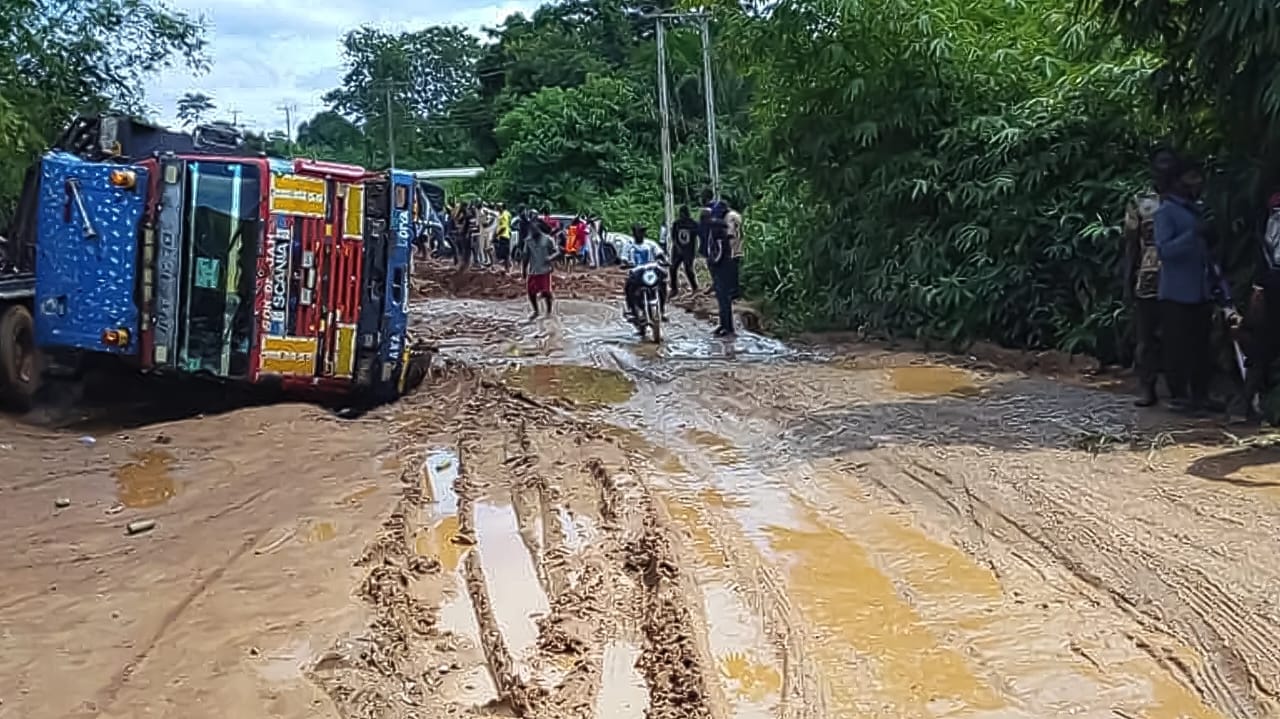
• Manufacturers warn of looming fuel, diesel scarcity
• CPPE: Crisis threatens investment, food security
• FG begins palliative works as minister visits
• Nigeria needs functional roads, not ‘headline’ projects, Obi insists
• Inter-state transport companies suspend service on Lagos-Warri route
Activities across the South-South have been disrupted by a five-day gridlock triggered by worsening conditions on major roads, a challenge that has paralysed businesses in the zone and brought the economy to a standstill.
Whereas the full effects of the crisis are difficult to estimate, manufacturers said they have lost over N500 billion to factory closures, trapped and damaged raw materials.
The figure does not capture millions of naira lost by traders and distributors to perishable items that would have been disposed of when they eventually get to their destination.
The prolonged traffic paralysis, particularly along the Benin-Sapele-Effurun Road, has left commuters stranded for days while thousands of trucks carrying raw materials, finished products and essential commodities remain trapped on the roads.
Videos circulating on social media show commuters abandoning vehicles and trekking long distances, while commercial motorcycles have become major means of escaping the gridlock.

Truck operators have reportedly spent up to a week on the road, with some goods already damaged or spoiled.
The gridlock has spread across the Edo State Capital and major towns in the state, disrupting businesses across the ancient city of Benin. Other roads, including Benin-Auchi Road, which connects Ondo/Edo to the Federal Capital Territory (FCT) and Benin-Agbor-Onitsha Road, which connects the South West and South East, are not spared.
Travellers from the South East to South West, a journey that previously took six to 10 hours, now spend as many as 24 hours on the road, a problem that has heightened safety concerns for families across the country.
The Guardian understands that two major inter-state transport companies have stopped services on the route as their buses that left for Lagos three days ago were yet to return as at press time.
On Sunday, GUO was said to have increased Lagos-Warri fare to N55,000 but suspended service yesterday pending when normalcy returns.
For millions of poor Nigerians who cannot afford flight tickets, which exchange for as much as N300,000 for a return trip, the gridlock resulting from dilapidated roads has further limited travelling options.
The crisis-ridden Benin-Sapele-Effurun Road was constructed during the administration of President Olusegun Obasanjo and was rated as one of the best in the country after its delivery. But years of neglect and zero maintenance have turned it into a death trap in the intervening years.
After years of anguish, the Delta State Government has awarded a N35 billion contract for the reconstruction of 10 kilometres at the Effurun end of the road, a contract handled by the China Civil Engineering Construction Corporation (CCECC). But those familiar with the terrain said nothing short of reconstruction of the entire stretch would save the road.
Yesterday, the Federal Government said it is moving in to intervene in the crisis.
Assistant Director, Federal Ministry of Works, Olufemi Dare, said the Minister of Works would visit the affected corridor today to assess the situation.
“He will be at the location and palliative works are going to start tomorrow (today) as well. That is all I can say for now,” Dare said.
Nigeria is at a crossroads in terms of new road needs and the demand for maintenance, a dilemma that is drawing interesting debate ahead of the 2027 election.
A frontline presidential candidate of the election, Peter Obi, has argued that the country needs to pay more attention to maintaining hundreds of impassable highways across the country.
The Benin gridlock, he tweeted yesterday, validated his position that the country does not need “new projects just for the headlines” but functional roads that support economic activities. He appealed to the government to prioritise reconstruction and maintenance of existing roads and other infrastructure over commencing new ones.
“This is not just about bad roads. It is about lost man-hours, stranded passengers sleeping on highways, wasted fuel, damaged vehicles, delayed goods and businesses losing millions of naira… A government must understand that infrastructure is not necessarily about the size of the project; it is about the number of lives and livelihoods it improves,” Obi, who lamented how an individual related to him spent two days between Onitsha and Lagos, insisted.
The Minister of Works, Dave Umahi, has bragged about how the Bola Ahmed Tinubu administration has turned Nigeria into a construction site as it works against time to fix dilapidated roads across the country. The government said more than 260 palliative and regional road projects have been completed, with more than 80 federal highways under active construction or dualisation spanning roughly 6,000 kilometres nationwide.
Manufacturers, traders and commuters are counting their losses while seeking immediate attention to address the challenge.
The Immediate Past Chairman of the Manufacturers Association of Nigeria (MAN), Edo-Delta, Okwara Udensi, said the situation had crippled manufacturing activities in the region, warning that businesses could face further distress if the roads were not urgently restored.
“This road has been a write-off for the past two years, and we have been crying out. In the past, from Effurun roundabout to Benin used to be 45 minutes. Now, it takes us four hours. Since this gridlock started, it has been taking us one week.
“We are moving from bad to worse. The road is bad. A major problem with our roads is that if a trailer falls because of the bad condition of the road, it becomes impassible.”
According to him, the deteriorating condition of the bypass has compounded the crisis, with repeated government interventions failing to produce a lasting solution.
He said the economic cost of the latest gridlock had become enormous, with factories unable to receive inputs or distribute finished products.
“If I am to quantify our losses, we have lost over N500 billion since this gridlock started. Factories are shut down; they are not working because they can’t get their raw materials in or get finished goods out.
“We cannot also send out the ones we have for marketing. Everything is on lockdown. No income is coming in and the ones we have paid for are not coming in either. They are getting spoiled on the roads. It is a monumental loss for us.”
Udensi warned that the gridlock could trigger an energy supply crisis as trucks carrying petrol, diesel and gas remain trapped on the affected roads.
He said rising fuel and diesel prices could worsen if the products became scarce, adding that manufacturers remained heavily dependent on petroleum products because of inadequate electricity supply.
“We cannot run our industries on solar no matter what the government is claiming. We still need petrol and diesel to power our machinery, seeing as the government has refused to provide electricity for us,” he said.
He described the situation as unacceptable, saying businesses could not survive under the combined pressure of poor infrastructure, unreliable electricity and rising logistics costs.
“It is a shame that in 2026, we are still stuck this way. People are risking their lives and limbs just to leave the road, as they have been stuck on the roads for days. We cannot continue like this. The suffering is too much,” he said.
Udensi also criticised the silence of elected representatives from the affected constituencies, accusing them of failing to pressure the Federal Government to address the crisis.
He said the prolonged closure of the road was already affecting transport, logistics, manufacturing and commerce, warning that continued inaction could push more businesses into distress.
Chief Executive Officer, Centre for the Promotion of Private Enterprise (CPPE), Dr Muda Yusuf, described the situation as a major economic disruption rather than merely a transportation problem.
“This is not just a transportation problem, but an investment, security, food security and production problem because raw materials are stuck in gridlock,” he said.
According to Yusuf, the prolonged gridlock exposes people and cargoes to security risks while also disrupting contractual obligations and supply chains.
“Imagine lives and goods stuck in the middle of nowhere, exposed to bandits and thieves for a week. This is a serious issue and should never be allowed to happen,” he said.
He added that businesses could incur additional costs through contractual penalties where delayed deliveries breached supply agreements.
“Even transporters that are stuck there have lost millions of naira in terms of the trips they ought to have made, but they are stranded on the road. The implications are enormous and it is a shame that we have allowed our roads to degenerate to this terrible level where goods and humans are stranded for almost a week.”
Yusuf urged the Federal Government to accelerate road maintenance while developing rail infrastructure to take heavy cargo off the nation’s highways.
“Heavy items should not be moving on the roads and this is why our roads do not last. Government should fix the rail system so that we can move more goods that way and our roads will last and maintenance costs will be reduced,” he said.
He also criticised the response time of the Federal Ministry of Works, arguing that the authorities should have intervened much earlier.
“We have a road maintenance agency and they should have responded faster to this disaster. The response time is too long. We are getting to a week of the gridlock with no solution and it shouldn’t take this long for us to fix it,” he said.
The crisis also threatens Nigeria’s food supply chain, particularly as perishable goods remain trapped on the roads.
The African Development Bank (AfDB) had identified poor rural infrastructure, especially inadequate roads, transportation and storage facilities, as major contributors to Nigeria’s post-harvest losses.
The Bank’s Nigeria Country Food and Agriculture Delivery Compact estimated Nigeria’s annual post-harvest losses at N3.5 trillion, noting that improved roads could reduce losses by connecting farming communities to markets.
It identified poor infrastructure, high transport costs and post-harvest losses of more than 50 per cent for some crops as factors driving food prices higher while eroding farmers’ incomes.
Last month, Nigeria’s food inflation spiked to a multi-month high of 20.31 per cent. The Guardian reported that near-zero and negative food inflation in some food-producing states in the north suggested a strong correlation between food prices and cost of haulage.

