 Follow Us on Google News


 Follow Us on Google Discover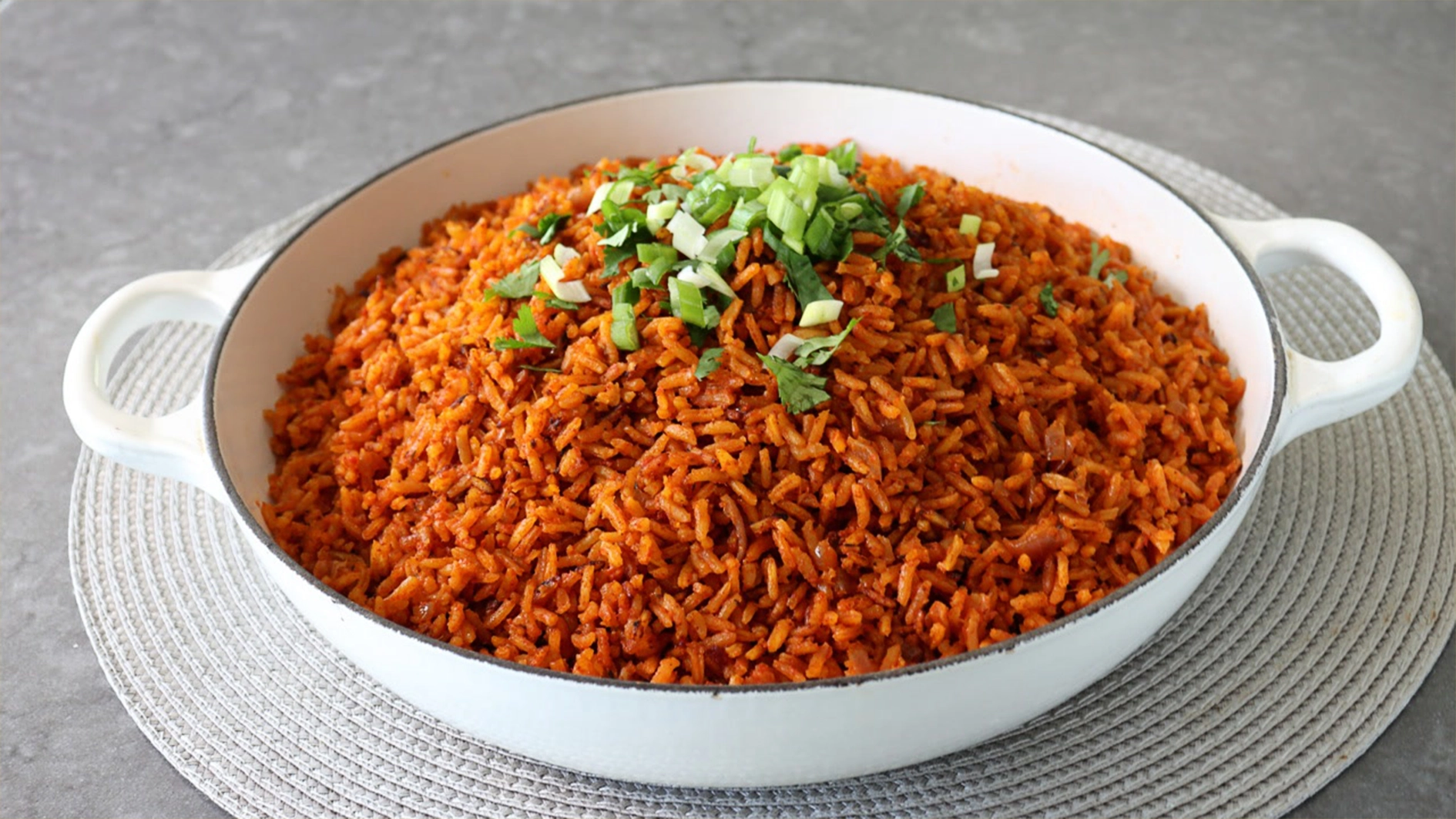
The average cost of preparing a pot of jollof rice for a family of five in Nigeria rose to N30,435 in the first quarter of 2026, marking a 19.4 per cent increase in six months, according to a new report by SBM Intelligence yesterday.
The report links the surge to rising fuel prices, transport disruptions, and global energy shocks triggered by conflict in the Middle East, which pushed Brent crude above $110 per barrel and drove up domestic fuel costs.
According to the report, petrol prices in major cities climbed above N1,300 per litre, while diesel exceeded N1,500, increasing logistics costs across food supply chains and feeding into retail food inflation nationwide.
“This edition of the Jollof Index spans October 2025 to March 2026 and distils the turmoil into a single meal. The national average cost of cooking a pot of jollof rice for a family of five rose 19.4 per cent to N30,435. Beneath that average, Abuja markets jumped by double digits, Lagos spiked 23 per cent in a month, and Port-Harcourt completed a six-month climb of 55 per cent,” the report added.
A Lagos respondent captured the impact on household consumption patterns, saying: “I don’t bother about meat again. The protein I use now is smoked dry fish, because the cost of meat, chicken, or turkey is high.”
Another respondent described changes in shopping behaviour as driven by transport costs.

“I no longer go to the market whenever I feel like it. I buy in bulk or shop in my neighbourhood for small items,” she said.
Lagos recorded monthly increases above 23 per cent, while Port Harcourt saw a 55 per cent rise over six months. Abuja markets remain among the most expensive, with some locations exceeding N36,000 per pot of rice.
Despite differences across regions, the report concludes that Nigeria’s food inflation trend is becoming increasingly structural, driven by persistent fuel dependence, logistics bottlenecks, and currency pressures.
One respondent summarised the broader reality, saying: “We now eat when we are hungry.
There is no ‘can I have more?’ You just manage the portion you are given.”
The report adds that the jollof rice index has become a key indicator of household purchasing power, reflecting how global energy shocks are increasingly shaping everyday food affordability in Nigeria.
The SBM Jollof Index tracks the cost of preparing a pot of jollof rice for a family of five, based on the average household size reported by Nigeria’s National Bureau of Statistics (NBS) as of the last quarter of 2014.
“Jollof rice was chosen because it is a delicacy common throughout Nigeria and West Africa; hence, the reason we deemed it a suitable benchmark,” the report said.
This is as the NBS said the average price of 50kg local rice (short grains) rose by 20.5 per cent in March 2026 to N112,000 from N92,946 in February 2026. BS disclosed this yesterday in its Selected Food Price Watch report for March 2026. The NBS report also showed that the price of 50kg of foreign rice grew by 3.06 per cent to N133,975 in March from N110,589 in February.
It noted that some selected food items also recorded an increase in price during the review period.

