 Follow Us on Google News
 Follow Us on Google Discover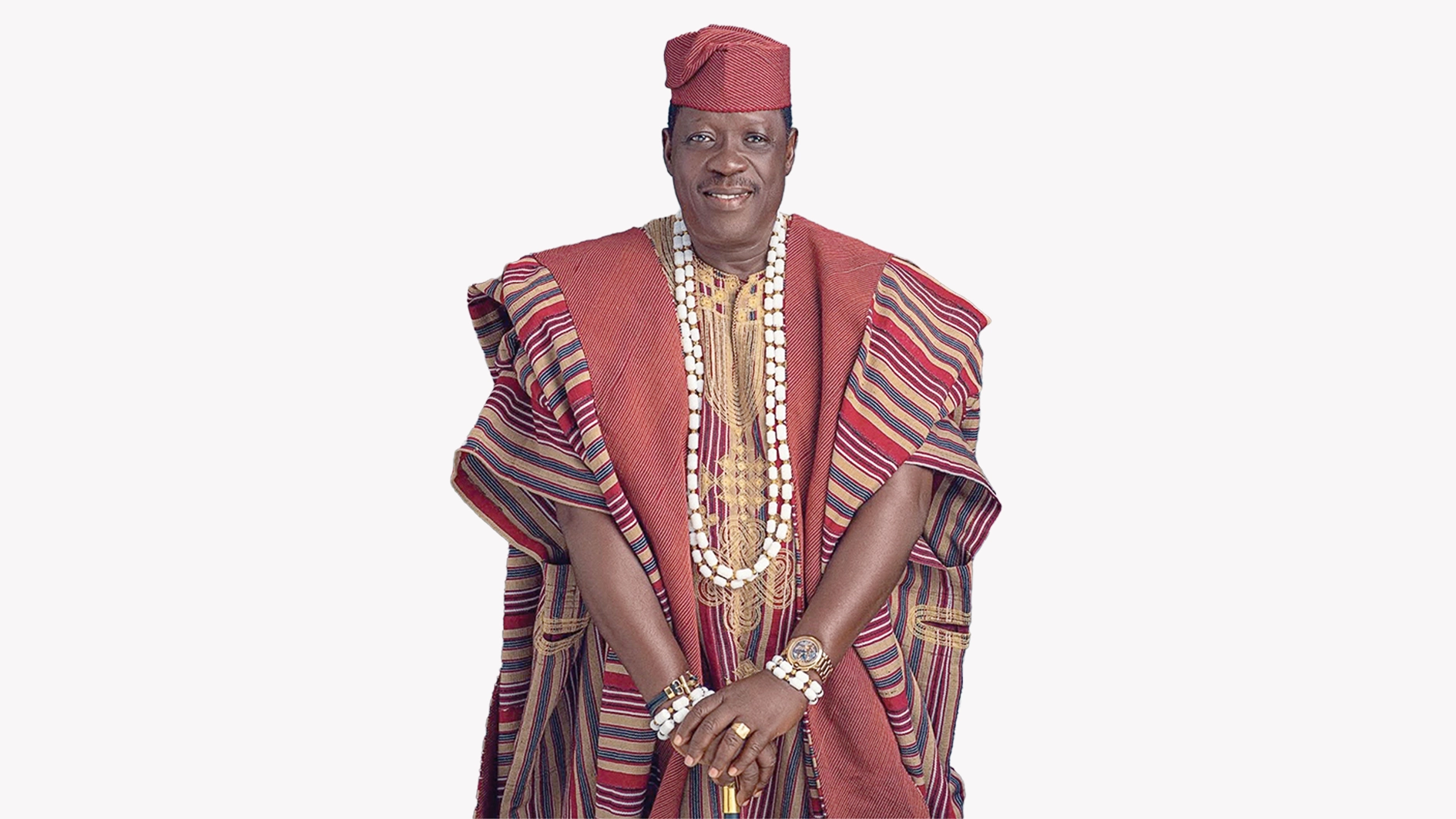
Just before he became a household name in the film industry, Taiwo Hassan, popularly known as Ogogo, was a mechanic, who worked with the Ogun State Water Corporation for about 13 years, combining his job with acting, before eventually leaving in 1994 to pursue acting full-time.
For more than four decades, Ogogo, was one of the most recognisable faces in the Yoruba film industry until his demise on August 23, 2026, at the age of 66 bringing an end to a career built with dedication and passion.

His passionate interpretation of roles in movies with imposing, authoritative and unmistakably command in Yoruba language made his name, personality and character accorded the kind of respect that made any movie he was featured in a blockbuster.
Ogogo could deliver a line with a combination of calmness and authority that made even ordinary dialogue sound weighty. His use of Yoruba proverbs, traditional expressions and oriki further strengthened the cultural identity of his performances.
The Market Place Journey
Born in Ilaro, Ogun State, in 1959, Hassan began acting in 1981. His entire life, career path and impact in the industry before his demise brings to the fore the reality of the Yoruba saying ‘aye l’oja, orun ni ile’ meaning ‘earth is a market place, afterlife is the home.’
Hassan’s earliest years in entertainment were rooted in Yoruba theatre and oral performance. In a 2024 interview with City People, he recalled that he began his career as an Akede Oba, a praise chanter who performed oriki for kings and chiefs.
This experience became important to the actor he eventually became.
He was known for his ability to deliver Yoruba praise poetry and for the commanding voice with which he performed it. His skill earned him the nickname ‘Olohun-Iyo’, before another name from his family’s oriki eventually became the identity by which millions of Nigerians would know him – Ogogo. What began as part of his lineage and cultural identity eventually became one of the most recognisable stage names in Nigerian entertainment.
The Odunfa years
One of the most important chapters in Ogogo’s career was his association with the Odunfa Caucus, a group that played a significant role in the development of Yoruba theatre and film.
Ogogo was one of the group’s co-founders, alongside other members of the Yoruba theatre community practitioners including Yinka Quadri.
The group took its name from Odunfa Street in Ebute-Metta, Lagos, where members gathered and developed their craft.
In an earlier interview published by The Guardian, Hassan explained that the caucus was not created to isolate its members from others in the industry. Rather, the group was intended as a platform through which the practitioners could pool their resources, talents and experience. This collaborative approach became one of the characteristics of the group.
The Odunfa Caucus would go on to become associated with several prominent names in Yoruba entertainment, helping train and develop actors who would later establish themselves in the industry – influence within the structure extended beyond his own acting career.
From Theatre To Film
As Nigeria’s entertainment industry evolved from stage productions into the home-video era, Ogogo made the transition to film.
Ogogo’s early works included Agbo-Meji (1989), The Wicked Boy (1992), Atitebi (1994), Agbelebu (1995), Danfo Driver (1995), Dr Brown (1995), Eni Bi Okan (1995), Gogongo (1995), Irawo Ayo (1995), Ede (1996), Ekun-Ayo (1996), Iyawo Olele (1996), Owo Blow Parts 2 & 3 (1996), Adopted Child (1997), Baba No Go Die (1997).
Throughout his career, he also worked as a producer, director and screenwriter. But it was a film released in the mid-1990s that would establish Ogogo as one of the major stars of his generation – ‘Owo Blow’
In 1996, Ogogo appeared in Tade Ogidan’s Owo Blow, playing the character Wole Owolabi.
The film followed a young man whose difficult circumstances pushed him into crime. But Owolabi was not presented as a conventional villain. His character operated according to his own code and eventually tried to leave his criminal life behind.
The role provided an opportunity for Ogogo to show the range that would become a defining feature of his career.
His performance earned him the Best Actor award at the 1997 THEMA Awards. More importantly, Owo Blow turned Ogogo into a household name.
The success of the film established him beyond the Yoruba theatre circle and gave him a much wider audience. His performance as Owolabi became one of the roles with which his career would forever be associated.
Decades later, the film continued to live in Nigerian popular culture. Its title was referenced in music, while Ogogo’s performance remained part of the collective memory of viewers who grew up during the home-video era.
The Making Of An Action Star
Following the success of Owo Blow, Ogogo became increasingly associated with action-oriented roles.
He frequently played characters with authority: fathers, chiefs, traditional figures, community leaders and men whose presence could immediately change the atmosphere of a scene. His physical presentation and look was part of his appeal, but his voice was a big deal. His name eventually became associated with the expression “Action pọ̀ bí Ogogo”, a phrase that captured the kind of energetic, dramatic performances audiences had come to expect from him.
Yet reducing him to an action actor would overlook the breadth of his career. He also played romantic, emotional, dramatic and comic roles, while continuing to appear in stories rooted in Yoruba history and culture.
Among the films associated with his long career are Omin, Elewon, Delicate Cane, Tears of Joy, Idajo Olorun, Legal Wife, Eleran Igbe, Ore Ijiji, Iya Ibeji, Ojo Ogbo, Omo Ghetto, Aye O, Tenant of the House, Amerah and Bank Alert.
A Career That Survived Changing Times
What distinguished Ogogo’s career was not simply its length but his ability to remain relevant as the Nigerian film industry changed. He became prominent during the home-video boom of the 1990s and 2000s, when Yoruba-language films reached millions of households across Nigeria. And he remained active as the industry moved towards cinema releases, international audiences and streaming platforms.
One example of that later relevance was his appearance in Kunle Afolayan’s Aníkúlápó, where he played Alaafin Ademuyiwa.
The film introduced him to another generation of viewers, many of whom had encountered him through more recent Nollywood productions rather than the older Yoruba home videos that established his reputation.
He later reprised the role in Aníkúlápó: Rise of the Spectre, the Netflix series that expanded the story.
For an actor who had started performing in the early 1980s, the transition was significant. Ogogo had managed to remain visible through several generations of Nigerian entertainment.
Ogogo’s career therefore mirrors the transformation of Yoruba entertainment itself from travelling theatre to home video, from home video to mainstream Nollywood, and from local television audiences to global streaming platforms.
He spent more than four decades moving through those changes without losing the cultural identity that first defined him.
More Than An Actor
Ogogo’s importance to Yoruba cinema extended beyond the number of films in which he appeared, his career connected different eras of Nigerian storytelling.
He belonged to a generation that carried the traditions of Yoruba travelling theatre into the home-video industry. His performances retained elements of Yoruba language, oriki, proverbs and traditional characterisation even as the medium itself changed.
His decision to remain strongly identified with Yoruba-language productions was also deliberate.
Ogogo’s Final Moment And Destination
When Ogogo got to the destination, his final bus stop came with the name ‘cancer’. His death came after a battle with stage-four cancer.
His passing on August 23 prompted tributes from colleagues, fans and political leaders, with many remembering him as both an entertainer and a custodian of Yoruba culture.
President Bola Tinubu, in a statement mourning the actor, described his career as one that contributed to the growth of Yoruba-language theatre and Nigerian cinema. The president also noted his influence on younger artistes. These tributes reflected the breadth of Ogogo’s career.

