 Follow Us on Google News


 Follow Us on Google Discover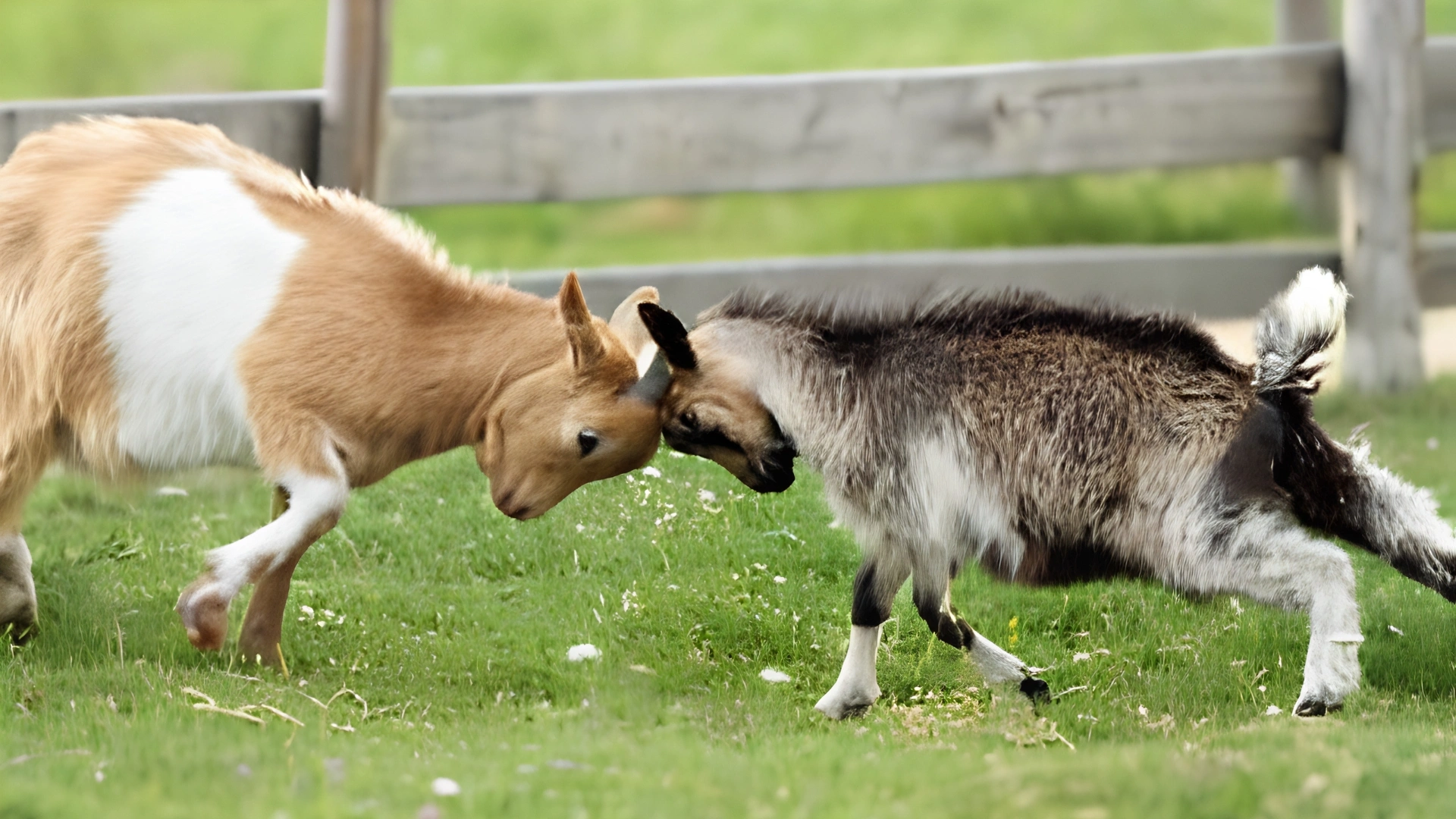
For many weeks every year in Lagos and other cities, crowds gather to watch rams lock horns in fierce competition, a beloved pastime that has been part of Nigerian street culture since the 1980s. To the fans, it is sport. To the animals, it may be something far more consequential. Now, a Nigerian scientist working at one of America’s leading research universities has produced evidence that animals who repeatedly bash their heads, whether in the wild, on a farm, or in a Lagos stadium, may be accumulating silent, progressive brain damage with striking similarities to human neurodegenerative diseases like Alzheimer’s.
Dr. Ayodele Oyadeyi, a biomedical researcher at Huntington University, is the lead author of a pilot study conducted at the University of Alabama, Tuscaloosa. The research, published as a preprint on the international scientific repository bioRxiv and featured prominently in Science magazine, one of the world’s most prestigious scientific publications, is generating interest in the global neuroscience community.
The Study
While the study’s title is deceptively simple, “Headbutting goats self-inflict traumatic brain injury”, its implications are anything but. Working under the supervision of Dr. Nicole Ackermans at the University of Alabama, Dr. Oyadeyi and the research team acquired three six-month-old male Nigerian goats – named Alvin, Simon, and Theo – and housed them at a nearby agricultural college, where cameras recorded their every move for six months.
Over that period, the three animals collectively delivered an average of 227 headbutts per day, accumulating between 5,000 and 7,000 individual head impacts each. Sensors mounted on their horns recorded collision forces of up to 388 Newtons and peak accelerations of up to 16.5 g, comparable to impacts seen in contact sports like American football.
Each month, the researchers collected blood, saliva, and cerebrospinal fluid samples, testing for biological markers associated with brain injury and neurodegeneration. At the beginning and end of the study, the goats were placed inside human MRI and PET scanners.

What the scans and samples revealed was surprising. Although the goats showed no large-scale structural brain damage and performed normally in maze tests, the biological evidence told a different story. Levels of GFAP, a protein released by the brain’s immune cells in response to injury, exceeded concentrations considered normal in healthy humans. More significantly, when the animals were euthanised and their brain tissue examined, researchers found phosphorylated tau proteins and reactive astrocytes that were entirely absent in two younger, non-headbutting goats used as controls.
Why This Matters: Beyond Rodents, Toward Better Medicine
For decades, scientists studying traumatic brain injury (TBI) and neurodegenerative diseases have relied almost exclusively on rats and mice. The problem, as Dr. Ramon Diaz-Arrastia, a neurologist at the University of Pennsylvania, told Science magazine, is that this has created a “rodent monoculture”, and rodent brains are simply too different from human brains to reliably predict how treatments will work in people. This mismatch is widely believed to be a key reason why so many promising therapies for Alzheimer’s and related conditions have failed in human clinical trials.
Goats offer a compelling alternative. Unlike rodents, goats naturally produce tau and beta-amyloid, two proteins central to human neurodegeneration. Their brains are larger and folded, more closely resembling the human brain in structure. And crucially, they self-inflict their injuries through natural behaviour, eliminating the ethical and scientific complications of artificially inducing brain trauma in a laboratory setting.
“This multi-modal observational study is the first to characterise neurodegeneration biomarkers and kinematics in headbutting goats,” the authors write. “This system shows promise as a large-animal model for the longitudinal study of the onset and progression of neurodegenerative disease.”
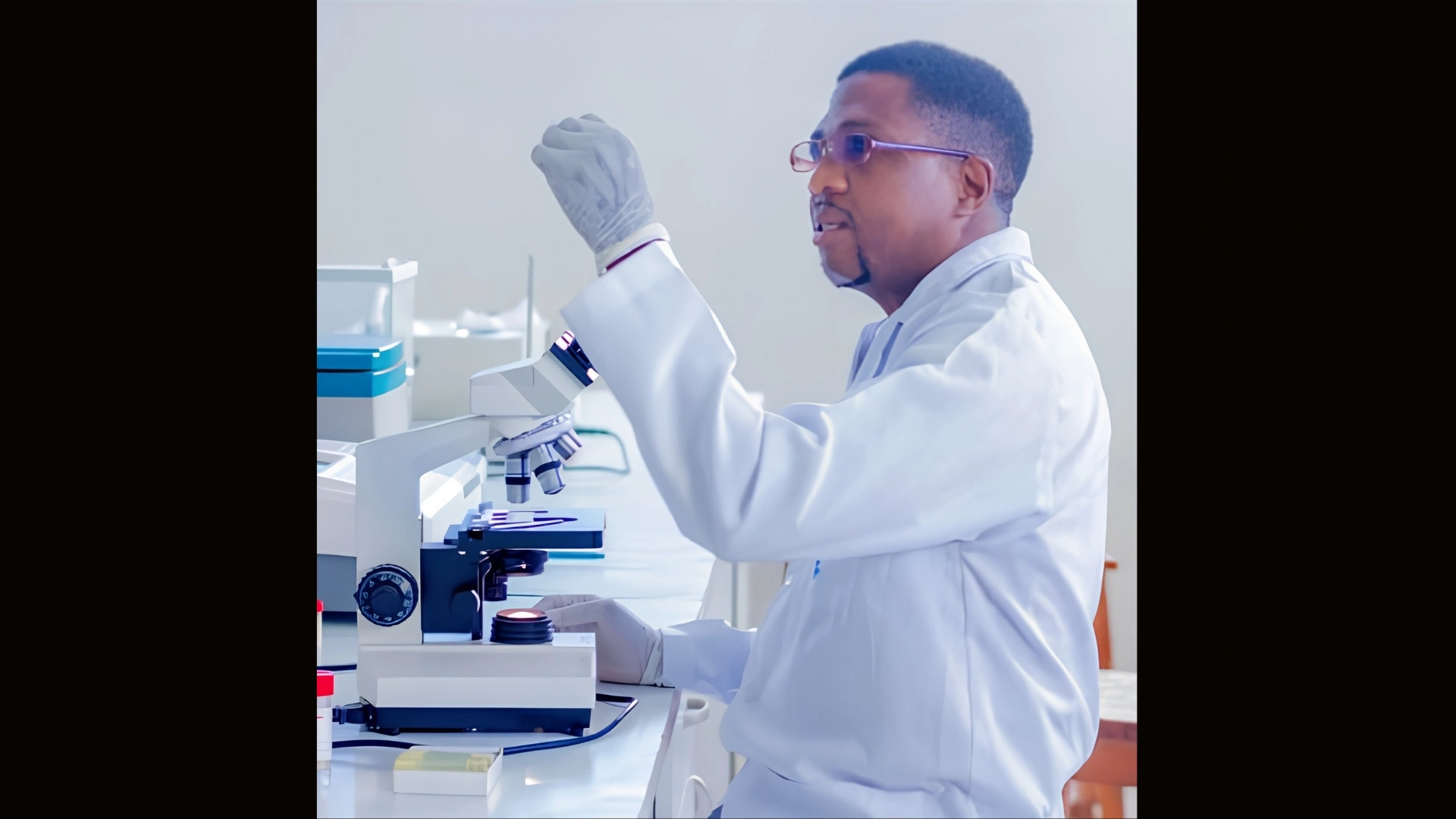
For Nigerian readers, there is pride in knowing that this research carries a Nigerian fingerprint. Dr. Oyadeyi’s scientific journey began in Nigeria. In 2019, this newspaper reported his feat. And the Nigerian relevance does not end with Dr. Oyadeyi’s biography. Ram fighting, a sport with deep roots in Lagos and other Nigerian cities, particularly around the Eid-el-Kabir festival, involves animals sustaining dozens, sometimes hundreds, of head impacts in a single tournament. Under current rules, rams in betting competitions may deliver 70 or more blows before a match is called. Animal rights campaigners in Nigeria have long warned that the sport causes brain damage; science is now beginning to provide the biological evidence to support those concerns. Dr. Oyadeyi’s research, while conducted on goats rather than rams, offers the first rigorous scientific framework for understanding exactly what that brain torture looks like at the cellular and molecular level – and why it matters.
Dr. Ackermans has described the next phase of research as working out the “tipping point” – the threshold at which accumulated head impacts in goats transition from mild neurodegeneration to full-blown neurodegenerative disease. Is it 100,000 headbutts? Does the force of each impact matter more than the frequency? The answers could reshape how scientists understand the progression from head injury to Alzheimer’s and chronic traumatic encephalopathy (CTE) in humans. Nigeria has long exported talent to the world. In Dr. Ayodele Oyadeyi, it has exported a scientist whose work may one day help unlock the mysteries of the human brain.
The preprint, “Headbutting goats self-inflict traumatic brain injury,” is available at bioRxiv. The study was conducted at the University of Alabama, Tuscaloosa, under Dr. Nicole Ackermans. Dr. Oyadeyi is currently affiliated with Huntington University.

