 Follow Us on Google News
 Follow Us on Google Discover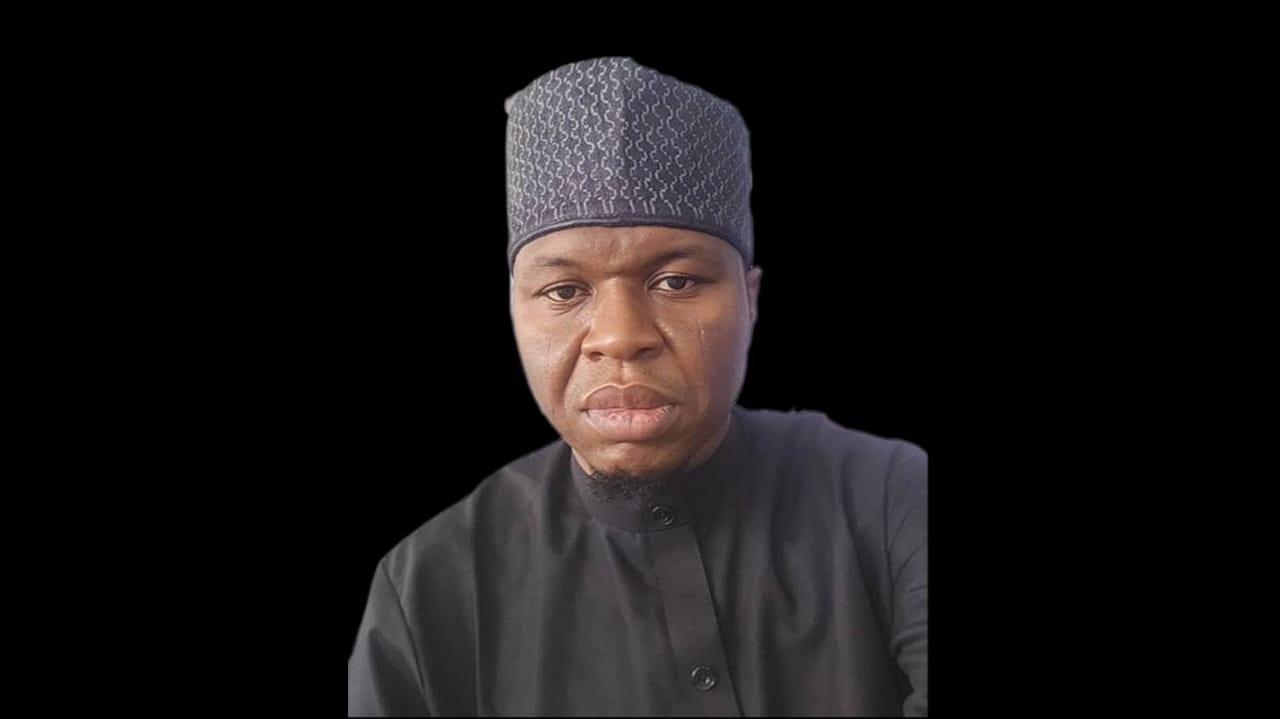
By: Abdulrahman Abu Hamisu
Winning the hearts and mind of the people, usually commences with humanitarian assistance, livelihood support, peace building, reconstruction and redevelopment of a conflict area. That of Nigeria is not different.

More than a decade of the Boko Haram insurgency and despite large-scale federal and donor interventions, governance failures at the grassroots have distorted outcomes, prolonged displacement, making the recovery and reconstruction of the Northeast region of Nigeria plugged by insurgency to remain constrained by systemic corruption at different levels, especially Local Government Area’s (LGA).
Corruption and insecurity operate as mutually reinforcing cycles, slowing economic recovery and resources diversion extending displacement timelines, undermining the efficiency of post-conflict reconstruction, and poverty reduction efforts.
Service collapse on the other hand which was most noticeable across broad spectrum of service delivery before and during the insurgency, directly increases human insecurity and reduces community resilience. Without anti corruption reforms, reconstruction exercise in the Northeast region of Nigeria would become one hollow exercise, write Abduralman Abu Hamisu.
Corruption, a practice, an action and deed that is known to deny, influence, erode, derail and destroy has been identified as the major causative factor of insurgency in many parts of the world (MacLachlan, 2018; Chayes, 2015). Magrin and Perouse de Montclos (2018) in their study of the Lake Chad revealed that Borno State which is the epicenter of the insurgency has a long history of corruption dating back to colonial era when people pay kickbacks to officials for services. It is not surprising then that it became the epicenter of the insurgency.
Rose- Ackerman (2008) in her study of post conflict reconstruction of three countries, namely, Angola, Guatemala and Kosovo concluded that post conflict reconstruction furnishes incentives for corruption, self-seeking and self-dealing, admonishing that the only way out is to check corruption in post conflict reconstruction by pursuing institutional reforms, increase transparency and accountability, and the protection of rights and civil liberties. Harvey (2012) on the other hand noted that post conflict reconstruction is highly susceptible to corruption and wonders why anticorruption reforms are always marginalised in post conflict reconstruction.
Corruption, a practice, an action and deed that is known to deny, influence, erode, derail and destroy has been identified as the major causative factor of insurgency in many parts of the world (MacLachlan, 2018; Chayes, 2015).
Corruption, whether it is committed in the Northeast or elsewhere in Nigeria, is known to deny people the much needed resources, development and anti-corruption programmes and reforms that would foster efficient service delivery capable of communicating positive changes to the people in order to win their hearts and minds, which is the purpose of governance and service delivery in a post conflict reconstruction environment. When corruption persists under the reconstruction, it has the tendency to prevent reform and the most important changes that ought to have win their hearts and minds of the people who are both victims of corruption and the insurgency that warranted the reconstruction in the first place. The resultant consequences of corruption and abuses in an environment such as the Northeast where the fight againt insurgency is being combined with reconstruction is institutional dysfunction, absence of efficient and effective service delivery and diversion of funds meant for post conflict reconstruction, which usually affect the quality of services being delivered and its impact on the psyche of people. As Nixon and Mallet (2017:vi) argued:
It’s of note that recovery funding channeled through programs such as Presidential Initiative for the North East (PINE) has been subjected to significant leakages as Independent Corrupt Practice Commission (ICPC) data shows 767 projects in the Northeast worth N112.737 billion were tracked between May 2022 and July 2025, with assets and cash recovered from several officials. High-profile cases, including allegations against the former Secretary to Government of the Federation (SGF) regarding Internal Displacement Person’s (IDP’s) relief funds, illustrate how resources meant for shelter, health, and education are diverted.
Local Government Areas are constitutionally mandated to provide primary health, education, water, and sanitation. However, governance risk assessments indicate that 85% of Nigerian LGAs operate under “very high or critical risk” due to opacity and weak enforcement.
Corruption at the LGA level is characterised as “kleptocratic capture” involving contract fraud, ghost workers, and unaccounted security votes. Between May 2022 and July 2025, 171 cases were investigated across the region, yet no convictions were recorded in the Northeast. It should be of note that absence of sanctions normalises corrupt behavior and weakens citizen’s trust in state institutions, which is critical for stabilisation.
According to informed sources, corruption in LGAs obstructs recovery by diverting reconstruction capital, fracturing essential service delivery, deepening poverty and malnutrition and undermining trust and state legitimacy. While efforts such as ghost worker audits and civil society monitoring show intent, impact remains limited without enforceable accountability and fiscal reform.
Cases of corruption ranging from grand corruption, administrative to political corruption abound in reconstruction process in the Northeast in the past (Brechenmacher, 2019; Magrin and Perouse de Montclos, 2018; Ayitogo, 2018). Like the diagnosis of the causative factor(s) of the conflict by government policy documents which refused to acknowledge the role of corruption and abuse of public office in the emergence of Boko Haram, anti-corruption reforms were never contemplated or even highlighted and discussed as a major factor in the conceptualisation and delivery of post conflict reconstruction for the Northeast. Either because framers of the post conflict reconstruction model for the Northeast has corruption mindset or because they are not willing to give up their corrupt dealings and practices. It could also be that they don’t want to indict themselves or confirm Muhammad Yusuf’s indictment of public officials as responsible for the mass poverty and deprivation people were subjected he exploited to recruit young men and women that were eager for a change. Whatever is the motive, reconstruction as African Union Policy on Post Conflict Reconstruction and Development argued is about human security (AU, 2006).
Reconstruction in Nigeria has two meanings. The one that are in the books as conceptualised and the one that will manifest during the implementation. Both may end up contradicting one another as a result of corruption as argued by Brechenmacher (2019:16):
Although Local Government Areas (LGAs) all over the federation except for the FCT are under the indirect control of the state governments. They are lacking in all governance structure and institutions. This has been affecting governance and development of the LGAs. The reconstruction of the conflict affected areas should restore civil authorities and it should be based on LGA by LGA to avoid opacity that will continue to gulp money in the name of reconstruction without commensurable output and impact. For instance, the unit of intervention of the Victims Support Fund (VSF) and even the Borno State Government is LGA by LGA. This model should be adopted. Anti-corruption reforms are needed at this level more than at any other tier of government. This should be pursued going forward. In fact, everything in the LGAs needs to be reconstructed.
While it is good to indulge in self-seeking and dealing, it should not be to the extent of jeopardizing the interest of all, especially the people who are supposed to be the primary target of reconstruction and development. Everything should be done to assist Nigeria overcome the insurgency, corruption and poverty, which pushed pushed the people into tight embrace of the insurgent in an economy that is oscillating between a formal economy and a war economy that care must be taken to ensure that the economy do not tilt more towards a war economy. Because allowing such a situation will be a fatal blow to the current efforts that has pivoted the region towards stabilisation, recovery and expansion.
It is important that programmes that enhance the capacity of the people of the region and government officials should be pursued. Donors and development partners need to do more to push for governance reforms that win hearts and minds of the people, as an antidote to grievances that aided recruitment in the first place. Actions and activities that are inimical to the interest of the people of the North East and their well-being should be avoided at all cost to avoid suspicion.
As already established, reconstruction and rebuilding are aspects of post conflict reconstruction that rely on human and material resources to bring positive and impactful changes into the lives of the people. Notwithstanding, it is a fact that human beings are inherently greedy and selfish which makes them to prefer self over everyone. This explains why self-seeking and dealing that amount to abuse and corruption in public space is part of human nature. However, the same man who is selfish and greedy is also empathic, sympathetic and altruistic in deeds at other times. The Northeast has witnessed and continues to witness presence and prevalence of both – selfishness and love from the same man who is selfish and greedy. The two opposing groups that have been battling each other for the soul of the reconstruction in the Northeast derived their very existence from this. This has produced two types of actors whose action and inactions have also produced impact that continued to influence and shape the direction of the reconstruction. These two opposing groups cut across federal, state and local government levels agencies and the entire Northeast. They are there in the military and those agencies that are charged with the responsibility of rebuilding the desire peace in the Northeast, the focus must changed from self-seeking which is always the bane of good governance and efficient service delivery to infrastructure provisioning, poverty reduction, reconstruction of social relationship and job creation. This is the only way the insurgency can be defeated.
Abdulrahman Abu Hamisu
A Researcher, Public Affairs Analysts, and Leader, Independent Researcher writes from Abuja
+2348022893329
[email protected]

