 Follow Us on Google News


 Follow Us on Google Discover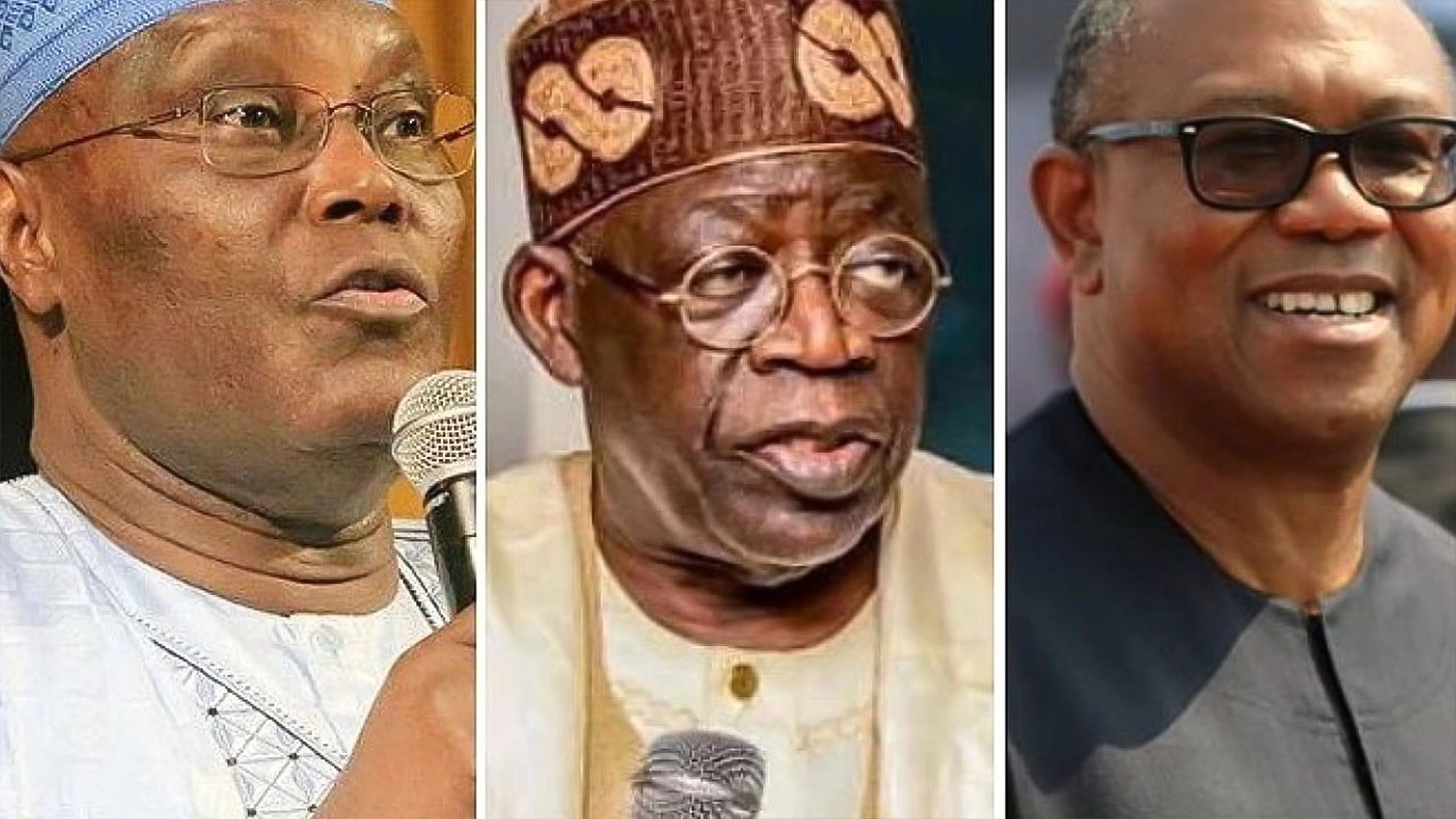
President Bola Tinubu and the All Progressives Congress (APC) face a tougher test to retain their 2023 advantage in the North, where they narrowly edged Atiku Abubakar, now the African Democratic Congress (ADC) candidate. With hardship and insecurity fuelling discontent, the North is shaping up as a crucial battleground in 2027, ADAMU ABUH reports.
Barely two weeks after campaigns for the 2027 presidential election officially began on August 19, the battle for the North is assuming a sharper political dimension, with economic hardship, insecurity and declining purchasing power emerging as major issues that could test the All Progressives Congress (APC)’s hold on the region.
The contest is particularly significant because the North was not a uniform electoral bloc in 2023, despite the political importance of the Muslim-Muslim ticket adopted by President Bola Ahmed Tinubu and his running mate, Kashim Shettima.
Tinubu won two of the three northern zones, polling 2,641,306 votes in the North-West and 1,760,993 in the North-Central, while former Vice President Atiku Abubakar dominated the North-East with 1,741,846 votes. Peter Obi, although he won none of the three zones, emerged as a major force in the North-Central, where he secured 1,415,557 votes to finish ahead of Atiku.
Across the three zones, Tinubu polled 5,587,757 votes, compared with Atiku’s 5,233,473, giving the APC candidate an aggregate advantage of about 354,000 votes. Obi recorded 2,080,846 votes.
The figures underline both the strength and vulnerability of the APC in the region. Tinubu’s margin over Atiku across the North was relatively narrow, while Atiku maintained a formidable base in the North-East and Obi demonstrated that the North-Central could accommodate a significant third-force vote.

It is against this background that the 2027 campaign is unfolding, with the APC seeking to retain its northern advantage while the opposition attempts to turn hardship and insecurity into a political liability for the ruling party.
The opposition’s argument is that the conditions that shaped voting in the region way back in 2023 have changed. Atiku, the African Democratic Congress (ADC) presidential candidate, has already made economic hardship a central plank of his campaign, including a renewed pledge to restore petrol subsidy through a targeted intervention aimed at reducing transportation costs and easing pressure on households, farmers and businesses.
But the APC has moved quickly to challenge that proposition.
The Director-General of the APC 2027 Presidential Campaign Council, Senator Abdul’aziz Yari,rejected the proposal, describing promises to restore petrol subsidy as deceptive and unrealistic, which according to him will not impact vote in the north come next year.
Yari argued that the subsidy issue was already unsustainable before Tinubu assumed office, pointing out that there was no provision for petrol subsidy in the 2023 budget passed by the National Assembly. He also questioned the transparency of the former subsidy regime and the accuracy of fuel-consumption figures used to justify payments.
Rather than allowing the subsidy debate to dominate its campaign, Yari said the APC would focus on the performance of the Tinubu administration.
“We are on the right path. By God’s grace, we have the data. This is what we are going to do in our campaign — facts and figures,” he said, insisting that Tinubu deserved another term.
That argument reflects the broader APC strategy: to persuade northern voters that the hardship accompanying the removal of petrol subsidy is part of a wider economic restructuring that will ultimately produce stronger government finances and greater investment.
Governor Abdullahi Sule of Nasarawa State recently provided an example of that argument, saying the state’s monthly allocation from the Federation Account had risen from about N4.5 billion to approximately N16 billion, which he attributed to the Federal Government’s reforms. He argued that the increased resources had created fiscal space for major development projects.
The political challenge for the APC, however, is whether increased government revenue can translate into improvements voters can feel.
The National Bureau of Statistics’ 2022 Multidimensional Poverty Index found that about 65 per cent of Nigeria’s multidimensionally poor population, approximately 86 million people, lived in the North. Nationally, 63 per cent of Nigerians, about 133 million people, were classified as multidimensionally poor.
The burden is particularly severe in states such as Sokoto, where the multidimensional poverty rate was put at 91 per cent, Jigawa at 87.2 per cent, Adamawa at 75.4 per cent, and Yobe and Zamfara at about 72.3 per cent each.
These figures give political weight to complaints about food prices, transportation, unemployment and the cost of basic services.
For northern farmers, higher transport costs affect the movement of agricultural produce to markets. For traders, they raise operating costs. For households, the increase in food, education, healthcare and transport expenses has reduced disposable income.
Insecurity has compounded the problem. Banditry, kidnapping and insurgency have disrupted farming and trade across parts of the North, while displacement has placed additional pressure on already fragile local economies.
For many communities, therefore, the political question is becoming increasingly practical: can they farm safely, move their goods, send their children to school and protect their families? This is the argument being advanced by the opposition.
National Publicity Secretary of the ADC, Malam Bolaji Abdullahi, said the religious calculation that helped the APC in 2023 would face a different test in 2027 because voters have now had four years to assess the administration.
According to him, economic hardship does not discriminate according to religion.
“The North has seen what four years of the Muslim-Muslim ticket has given them. And they have seen that there is no different market for Muslims,” Abdullahi told The Guardian, arguing that Muslims and Christians face the same rising cost of food, transportation and petrol.
He maintained that insecurity could be even more decisive, pointing out that banditry and attacks have affected Muslim communities as much as Christian communities.
His position reflects an emerging argument among sections of the opposition that northern voters may increasingly prioritise welfare and security over religious identity.
That argument, however, should not be mistaken for evidence that religion has ceased to matter.
The APC is actively reinforcing its religious and political networks in the region. A recent gathering in Jigawa State involving about 500 Muslim scholars, clerics and intellectuals reportedly culminated in an endorsement of Tinubu for a second term. The participation of northern APC governors, Deputy Senate President Jibrin Barau and presidential political adviser Ibrahim Masari further underscored the political significance of the mobilisation.
The party is therefore combining religious affinity with political organisation and its economic-development narrative.
But the North is too politically diverse to be treated as a single electoral constituency.
Sheikh Muhammad Nuru Khalid, popularly known as the Digital Imam, has urged Nigerians to make security and welfare central to their electoral choices rather than allowing religion to dominate the 2027 debate.
Reacting to killings and abductions in Niger State and other parts of the North, Khalid argued that elections should be used to demand leaders capable of protecting lives and property.
His position provides a counterweight to clerics such as Sheikh Sani Yahaya Jingir and others who have continued to defend the Muslim-Muslim ticket and its potential to consolidate the APC’s northern support.
The competing positions demonstrate that the religious debate within the North is itself far from settled.
The economic argument is also not limited to Atiku. Obi, the Nigeria Democratic Congress (NDC) presidential candidate, has maintained that while subsidy removal was necessary, the implementation and management of the reform have failed to deliver sufficient benefits to Nigerians.
The distinction is important because the opposition is offering different responses to the same economic grievance. While Atiku is advocating targeted interventions to cushion the impact of fuel price increases, Obi has focused more on managing the resources released by the reform. The APC, meanwhile, insists that the reforms are laying the foundation for long-term economic growth.
Ultimately, the 2027 northern contest may not be decided by any single issue.
The APC has the advantage of incumbency, a strong political structure and the continuing appeal of religious affinity among sections of the electorate. Its governors, lawmakers, grassroots networks and religious allies provide an extensive mobilisation structure.
The opposition, however, has an opportunity to turn the daily experience of voters into an electoral verdict on the administration.
The 2023 figures show why neither side can afford complacency. Tinubu’s combined northern advantage over Atiku was only about 354,000 votes, while the North-Central demonstrated its willingness to support a third candidate in significant numbers. Atiku’s strength in the North-East also showed that the APC’s religious and political appeal was not absolute.
Four years later, the question is whether those voting patterns will survive the experience of the Tinubu administration.
For APC, the challenge is to demonstrate that increased government revenue, infrastructure projects and economic reforms are translating into tangible improvements in the lives of northern voters.
For the opposition, hardship alone may not be enough. It must convince voters that its alternative policies are credible, affordable and capable of delivering security and economic relief.
The Muslim-Muslim ticket may remain an important political asset for the APC, but the 2027 election is likely to test whether religious affinity can withstand the pressure of economic reality.
For the northern voter, the ultimate calculation may be less complicated: whether food is affordable, whether the farmer can safely reach his farm, whether the trader can move goods, whether children can go to school and whether families can sleep without fear.
The answer to those questions could determine whether the APC retains the northern advantage it secured in 2023, or whether economic hardship and insecurity redraw the political map of the region in 2027.

