 Follow Us on Google News
 Follow Us on Google Discover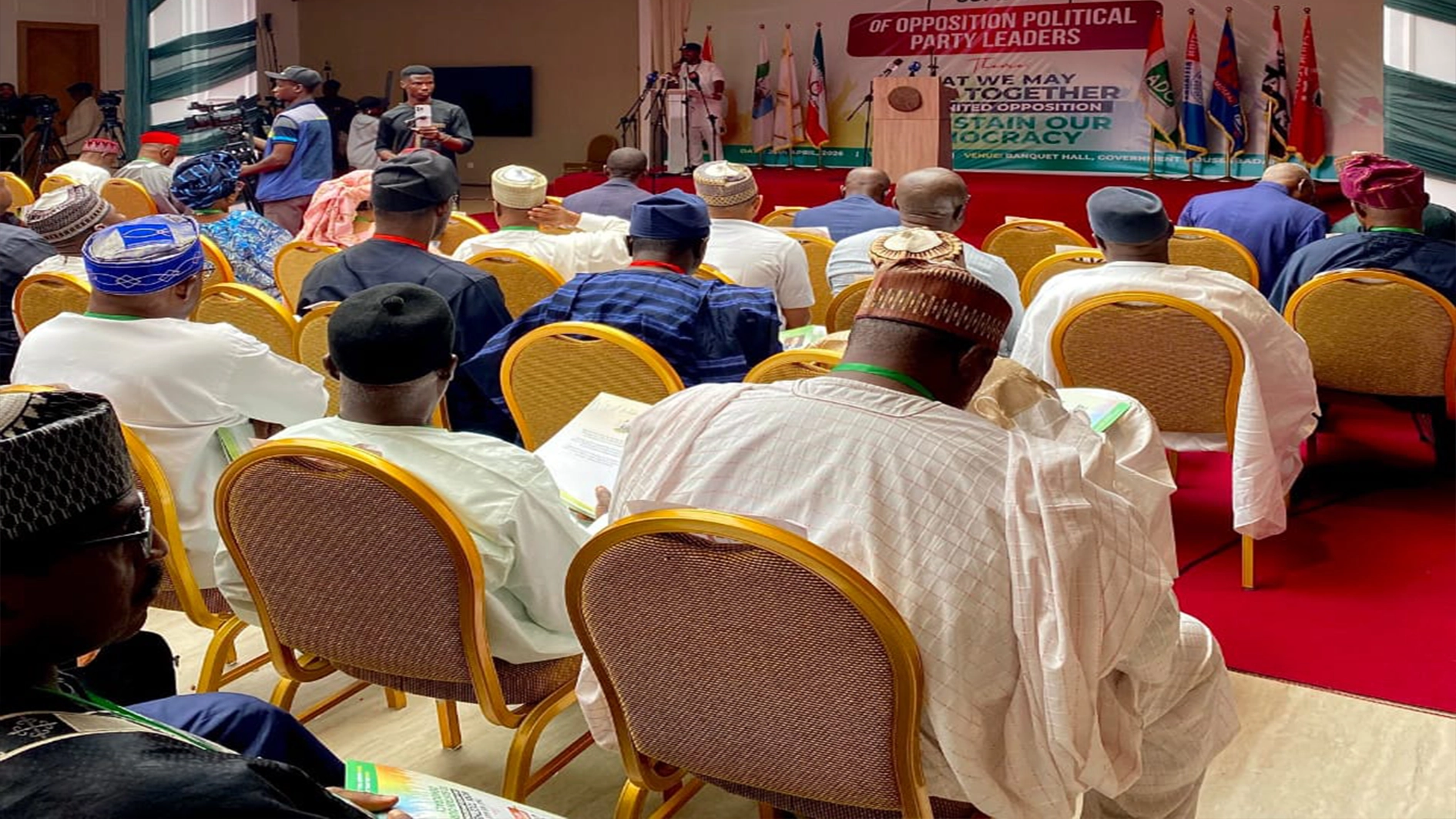
• DP raises concerns over coalition structure, implementation • Oppposition parties an’t agree on
consensus candidate, says APC * NDC accuses INEC of replacing its candidates with strangers
There are mixed expectations over the outcome of today’s opposition political parties’ summit in Abuja, organised by the G100 conveners to initiate formal discussions on cooperation ahead of the 2027 general elections.

The summit will bring together leaders and key stakeholders of six opposition parties — the African Democratic Congress (ADC), Allied Peoples Movement (APM), National Democratic Congress (NDC), Peoples Democratic Party (PDP), Peoples Redemption Party (PRP) and Social Democratic Party (SDP) — to deliberate on a framework for cooperation and coordination.
Amid the summit, the NDC accused the Independent National Electoral Commission (INEC) of conniving with unknown persons to doctor the list of its nominated candidates in Anambra State to favour an unnamed political party.
The G100 said the meeting, with the theme, ‘A Framework for Opposition Cooperation and Coordination’, would provide a platform for the parties to discuss the terms, institutions and principles that could guide their proposed collaboration.
However, expectations about whether the gathering could eventually produce a consensus presidential candidate have led to divergent positions among the parties and political actors .
National Publicity Secretary of ADC, Bolaji Abdullahi, yesterday dismissed suggestions that the summit was primarily designed to persuade presidential candidates to withdraw from the 2027 race in favour of one contender.
Abdullahi said the immediate focus was on strengthening cooperation among opposition parties, including developing a joint monitoring mechanism to safeguard the electoral process.
He said individual parties could decide to withdraw from the presidential race, but stressed that such an outcome was not the principal objective of the summit.
His position, however, differs from that of the immediate past National Chairman of the ADC, Ralphs Nwosu, who told The Guardian that if the opposition eventually decides to adopt a consensus candidate, former Vice President Atiku Abubakar would be favoured.
Nwosu based his position on what he described as Atiku’s contributions to Nigeria’s democratic development, including his involvement in the struggle that led to the end of military rule and his role in consolidating democracy since 1999.
Meanwhile, the SDP has expressed reservations about whether the proposed opposition collaboration can translate into a workable political coalition.
National Secretary of the party, Dr Olu Agunloye, said while the SDP supported efforts by opposition parties to cooperate ahead of the 2027 elections, the more difficult task was determining how such an alliance would operate.
Agunloye urged the parties to learn from the experience of the Coalition of United Political Parties (CUPP), formed ahead of the 2019 election, which he said had a sound concept but suffered from poor implementation.
MEANWHILE, the APC has dismissed the summit, insisting that the opposition parties would struggle to agree on a common presidential candidate.
APC National Chairman, Nentawe Yilwatda, who spoke through his spokesman, Abimbola Tooki, said the real test would come when opposition leaders decide who should secure the 2027 presidential ticket.
“How can they agree? They will fight. At the end of the day, who will step down for who?” he asked.
Yilwatda said the APC was not intimidated by the summit, arguing that competing presidential ambitions would eventually undermine any proposed alliance.
ACCORDING to NDC, 10 names contained in the list of House of Assembly candidates published by the electoral umpire are unknown to the party, stressing that it would be approaching the courts to compel INEC to abide by the Supreme Court ruling that only a political party could identify its members and representatives for an election.
In a statement signed by its National Chairman, Senator Moses Zuwoghe, the party identified the strange names as follows: Onitsha South 1 – Umennaajiego Jude Ezenwa; Onitsha South 2 – Akpotue Obinna Chibuike; Orumba North – Nwankwo Chiemerie; Anaocha 1 – Maduagwu Eric K 5 and Idemili North – Ngoebisi Obinna.
Others include: Njikoka 1 – Isintume Charles; Nnewi South – Nwachukwu Nonso; Nnewi South 2 – Okeke Ifeanyi Akunne; Ayamelum – Nnonyelu Samson E, and Dunukofia – AzotaniChuks Francis.
The party stressed that by systematically removing its nominated candidates for the 2027 general elections and replacing them with strangers unknown to the party, INEC was unwittingly undermining its capacity to be competitive in the February 8, 2027, House of Assembly poll in Anambra.
Expressing exasperation over the untoward development, Zuwoghe said: “The names published by INEC read like a deliberate plot to sabotage the NDC ahead of the general elections and cause dissatisfaction among its millions of supporters.”
Describing the approach as devious, the NDC chairman noted that it not only runs against the grain of the Electoral Act and INEC’s own guidelines, but is also simply unacceptable.
“At the very worst, INEC could have left us with no candidates for those positions if they knew they were unwilling to engage us in addressing any perceived anomaly. Even as we move to approach the court of competent jurisdiction to seek redress and restore our authentic candidates, the general public and our millions of supporters should note that these are not our candidates,” the chairman asserted.

