 Follow Us on Google News


 Follow Us on Google Discover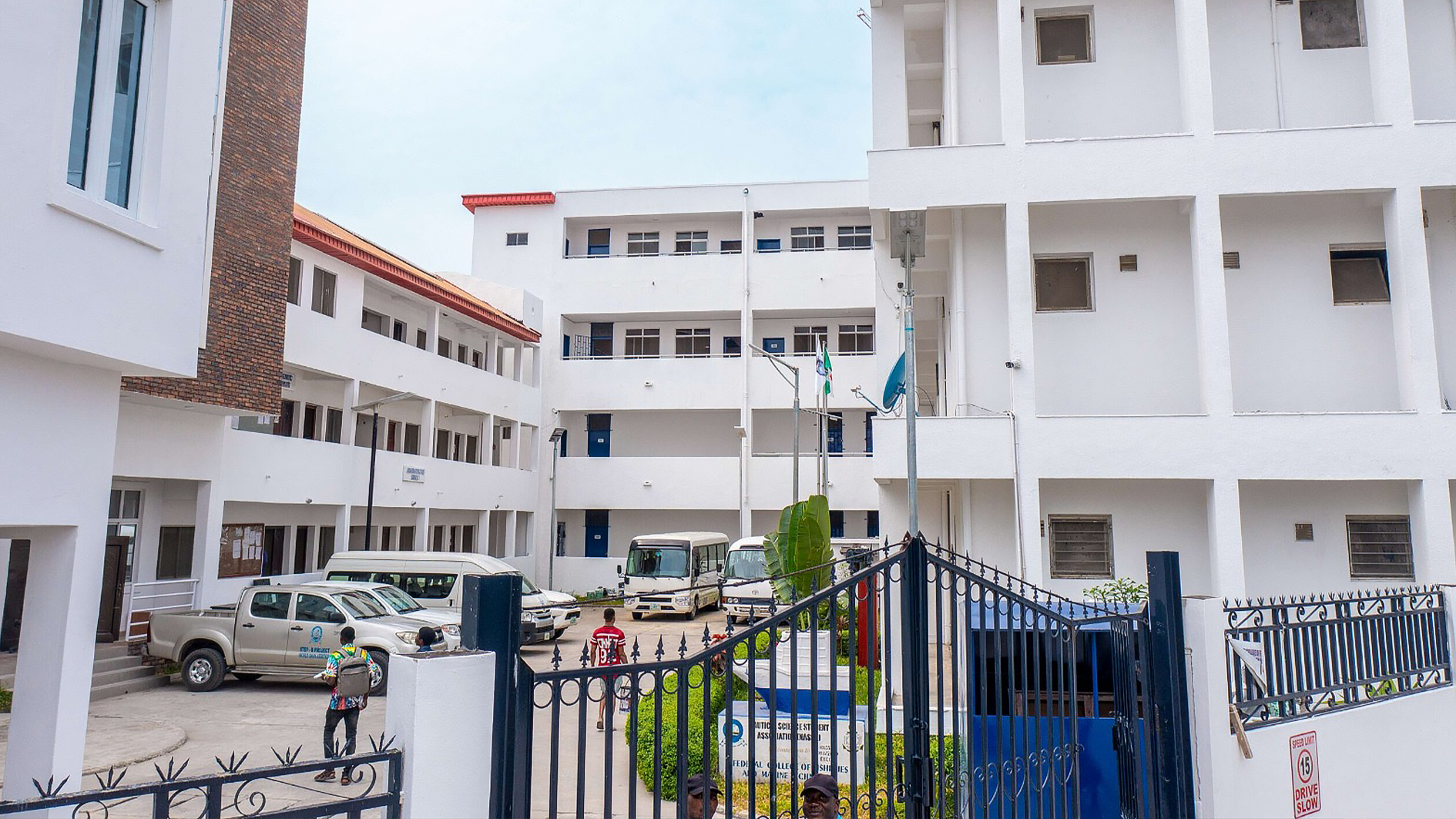
The Federal College of Fisheries and Marine Technology (FCFMT), Lagos, has said it is repositioning its academic programmes to produce graduates with practical skills capable of creating employment for themselves amid the country’s limited indigenous shipping capacity.
The Provost, FCFMT, Dr Chukwudi Onuoha, stated this while receiving members of the Maritime Correspondents’ Organisation of Nigeria (MARCON) during an official visit to the institution.
Onuoha, who was represented at the occasion by the Deputy Provost Academics, Dr. Adebowale Aderonke, told journalists that the college’s transition from the former Ministry of Agriculture to the Ministry of Marine and Blue Economy had improved its recognition within Nigeria and in the maritime industries of other African countries.
He cited an instance when officials from The Gambia visited Nigeria in search of an institution where they could train their students, noting that the delegation eventually chose FCFMT after inspecting its facilities and human resources.
The provost said the college’s approval and accreditation from the Nigerian Maritime Administration and Safety Agency (NIMASA) as a Maritime Education and Training Institution (METI), integrated it fully into the maritime industry to run professional maritime programmes.
According to Onuoha, FCFMT had also expanded beyond its traditional fisheries and maritime programmes to respond to changing industry needs.

He noted that the institution now offers programmes in maritime transport and business management, marine engineering, nautical science, mechanical engineering, computer science, hydrology and water resources management, fisheries, oceanography and fisheries technology, industrial and labour relations and public administration.
Onuoha harped on securing sea-time training for students as one of the maritime industry’s major challenges, stressing that the college’s new METI status would enable it to make significant progress.
The Provost, however, acknowledged that the employment prospects of maritime graduates remained constrained by the limited number of Nigerian-owned ships and trawlers.
Responding to concerns over whether FCFMT graduates were securing placements aboard fishing vessels and contributing to productive fishing activities, Onuoha said there were employment opportunities but questioned the domestic fleet’s capacity to absorb the growing number of trained Nigerians.
He stressed that the problem was not necessarily a shortage of trained manpower, but a shortage of vessels and corresponding employment opportunities.
According to him, Nigeria’s maritime training institutions could continue to produce qualified marine engineers, navigators and other professionals, but the absence of sufficient vessels limits the industry’s ability to absorb them.
He said beyond preparing students for conventional employment, the FCFMT was deliberately incorporating practical skills into its programmes to equip graduates to create value and employment.
The objective, according to the provost, was to ensure that graduates who were unable to immediately secure employment aboard vessels could still deploy their skills to establish businesses and earn a living.

