 Follow Us on Google News


 Follow Us on Google Discover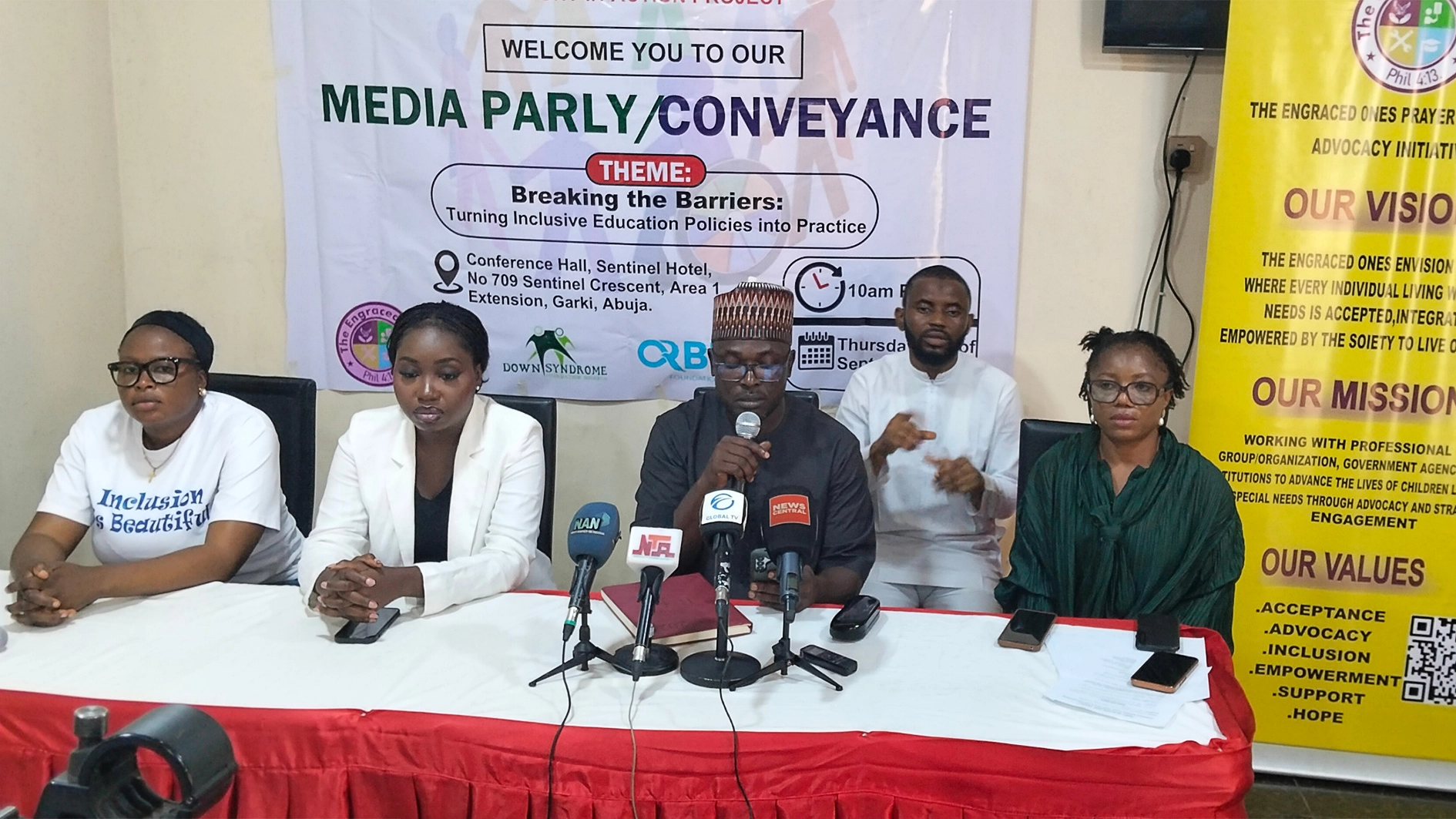
Experts and disability rights advocates have called for the integration of neurotypical and neurodivergent children in the same classrooms, saying inclusive education would foster empathy, reduce stigma, and prepare children to live together as equals.
They made the call in Abuja at a media parley and convening organised by the Intellectual Disability Cluster Right-in-Action Project, with the theme, “Breaking the Barriers: Turning Inclusive Education Policies into Practice.”
The experts said segregating children with disabilities from their peers deprives both groups of important opportunities to learn, socialise and understand one another.
Speaking at the event, Programmes Officer, Ria by Maria Autism Foundation, Becky Selekere, said placing neurotypical and neurodivergent children in the same classrooms would have far reaching benefits for their social and emotional development.
Selekere said children naturally learn from one another and that allowing them to interact freely could significantly improve the development of neurodivergent children.
“These children are playing with one another. They also want to follow what the other children are doing, and that can impact their progress very well,” she said.

She, however, stressed that the benefits of inclusive classrooms were not limited to children living with disabilities, noting that neurotypical children also stood to gain significantly from the experience.
“When neurotypicals and neurodivergent children are in the same classrooms, it brings about empathy and love,” Selekere said.
According to her, early interaction would teach children how to relate with people with disabilities and help shape their attitudes well into adulthood.
“They learn about how to relate with their peers that are with disabilities, and it helps them to not just relate with them now, but also later in life and whenever they meet themselves, even in the future,” she added.
Selekere linked the persistence of disability stigma in society to the isolation of children with disabilities from their peers in previous generations.
“We understand that the reason why there is a lot of stigma when it comes to disability is because many adults today did not really grow up knowing much about neurodivergent children,” she said.
“In the past, neurodivergent children were usually isolated from their mates. So many adults grew up with a lot of mentalities that were built in their mindset, not just by them, but by society itself.”
She said such isolation had contributed to misconceptions and harmful stereotypes about people living with disabilities, including beliefs that disability was a curse or something to be feared.
Selekere argued that inclusive education could begin to dismantle such beliefs by allowing children to grow up seeing disability as part of human diversity rather than something that should lead to separation.
“Bringing neurotypicals and neurodivergent children in the same classroom, they grow up with empathy. It eradicates that mindset of thinking that maybe children with disabilities are cursed or have some kind of [negative] condition,” she said.
Also speaking, Programmes Manager, The Engraced Ones Prayer Support and Advocacy Initiative, Ayobami Adefioye, stressed the need for inclusive education to move beyond policy statements to actual implementation in schools.
Adefioye said meaningful inclusion required schools to provide the necessary support systems, trained personnel and appropriate learning environments to ensure that children with disabilities were not merely admitted into mainstream schools but were able to participate fully in learning.
She maintained that inclusion should be viewed as a right rather than charity, urging stakeholders to ensure that children with disabilities were given equal opportunities to learn, participate and develop their potential.
Similarly, the Legal Resources person at Down Syndrome Foundation Nigeria, Ijeoma Fynecontry, called for stronger enforcement of existing laws and policies protecting the rights of persons with disabilities.
Fynecontry emphasised the importance of translating Nigeria’s inclusive education commitments into enforceable practices, particularly at the level of schools and communities.
She noted that having policies on paper would not be sufficient if children with disabilities continued to face barriers to admission, participation, learning materials, infrastructure and social acceptance.
Also, the Country Director, CBM, Abdulazeez Musa, called for stronger commitment to inclusive education, stressing that children with disabilities should not be excluded from mainstream learning environments.
He urged government and other stakeholders to move beyond policies and ensure their effective implementation through adequate funding, trained teachers, accessible facilities and appropriate learning support for children with disabilities.
The experts collectively urged government, schools, parents, teachers, civil society organisations and communities to work together to dismantle the barriers preventing children with disabilities from accessing quality education.
They said inclusive education should not be regarded simply as a programme designed for children with disabilities, but as an approach that benefits the entire society by raising a generation that understands diversity, rejects stigma and treats people with dignity.
They further called for increased public awareness, teacher training, accessible school infrastructure and stronger implementation of disability and inclusive education policies across the country.

