 Follow Us on Google News
 Follow Us on Google Discover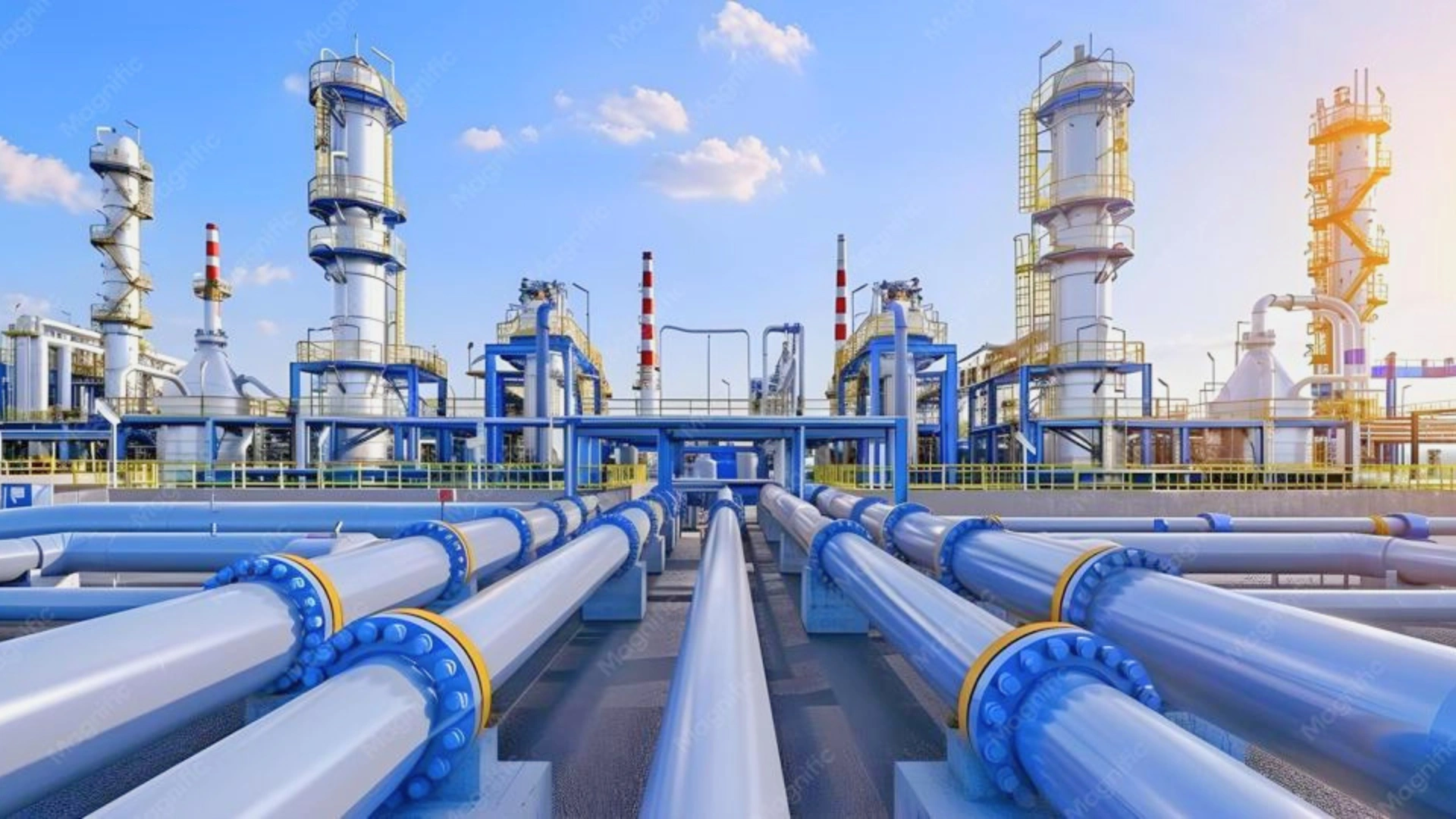
The Federal Government’s acknowledgement of the role and potential of the Dangote Petroleum Refinery and Petrochemicals complex in relation to the growth of the Nigerian economy is highly instructive and right on point. It signals that the government fully grasps the tremendous role the private sector can play, in collaboration with government, in the growth of the economy. For the refinery, this much has been widely acknowledged by many stakeholders as very momentous. The complex indeed shapes the future of industrialisation as well as the trajectory of the economy.
It is timely, therefore, that the Bola Tinubu administration, through its Minister of State for Industry, Mr John Enoh, gave further vent to this fact. The Minister of State led a high-level delegation from the Ministry on an extensive tour of the 700,000 barrels-per-day Dangote Petroleum Refinery, the Dangote Petrochemicals complex, and Dangote Fertiliser Limited in Lagos.
The government asserted that the project is a cornerstone of its ambition to grow the economy to attain a gross domestic product (GDP) size of $1 trillion by 2030. Though insightful, the declaration raises several questions in relation to the management of the economy as well as the performance of governments over the years in the enhancement of economic growth.
First, the government has indirectly indicted itself as having failed in the management of the oil and gas sector and the economy at large. The Dangote Refinery is a private enterprise and was not part of a government programme to refine petroleum products and develop other by-products from the refining activity. The government, which has four refineries, has failed in the management of these refineries and this is despite the huge sums of money spent on Turnaround Maintenance (TAM) over the years and yet nothing positive has come out of all these expenses. None of the four refineries is working presently and the same government is now relying on the success of a private enterprise to help it grow the economy, to attain its dream of a $1 trillion economy by 2030.
Second, it needs to be noted that the $1 trillion target was set for 2030, which is just four years away and one wonders how that projection can be attained when the current size of the economy is less than $300 billion presently. That dream is a tall order that even the Dangote Refinery may face huge difficulties in assisting the government to achieve. For the dream to be realistic, the economy would be required to grow in a sustained manner and at significant double-digit rates over the next few years to be in a position to achieve this goal. The deeper collaboration the government is calling for between it and the Dangote refinery will definitely not cut it, but at least it is obvious that the refinery will contribute significantly in the attainment of the goal, through accelerated industrialisation, job creation and economic transformation.
The other issue in the government plan, albeit in the short term, to rely on Dangote to grow the economy is the issue of monopoly in a key growth sector of the economy, in which the government has displayed gross failure. For now, the Dangote Refinery controls the majority of the output of domestic production of refined diesel and premium motor spirit. The transportation linkages to the other sectors of the economy are quite huge. This monopoly affects the issue of product pricing, which, as in virtually all monopolies globally, is not efficient. The ordinary Nigerian bears the brunt.
In the sustenance of this production situation, the people’s demand for the output of Dangote refineries is huge; and the products are only supplemented by the few imports in this regard. Nigerians have yet to gain from the fall in global price of crude oil since the Israel/United States and Iran war ameliorated. The reduction in the pump price of premium motor spirit has been very little. Dangote Refinery, as the main supplier of petroleum products in the country, can do better.
Presently, the consumer has been left with little or no choice except to patronise the output of the Dangote refinery as well as imported products. It will be dangerous to the economy if the entire country has to be at the mercy of the Dangote Refinery, a situation which will persist until another local refinery comes on board or the government revives its moribund refineries, as recently promised by Mr President. Until then, while the Dangote Refinery is contributing to growth, it is also taking advantage of the local consumer as well as the global fluctuations in oil prices. While the Refinery reaps huge profits in this regard, what is the government doing to address these anti-trust issues which are antithetical to the fair competition and growth of any economy?
Despite the downside as articulated above, it must be acknowledged that the development of the Dangote refinery is a huge value addition to the Nigerian economy. As acknowledged by the Minister of State, the integrated Dangote industrial complex is one of the most significant investments in Africa and a model for the type of industrial development required to drive Nigeria’s economic growth aspirations. It has emerged as a powerful symbol of value addition, industrial competitiveness and Nigeria’s growing manufacturing capability. It has also fundamentally changed global perceptions of Nigeria by helping to transform the country from a major importer of refined petroleum products into an exporter serving international markets.
The statement by the core investor himself, Mr Aliko Dangote, that the refinery, at full capacity, will account for the equivalent of about 10 per cent of the United States’ refining capacity and consume approximately 2.5 per cent of globally traded crude oil, is quite instructive as well as refreshing.

Nigeria needs to encourage others willing to develop refineries or have already embarked on such projects, as there is room for growth and the country can earn enormous foreign exchange by exporting refined products to countries within Africa and beyond that have deficits in the supply of petroleum products in the running of their economies.
Yes, the operation of the Dangote refinery is a huge value addition to the Nigerian economy. However, the government should not rest on its laurels and bask in the euphoria of déjà vu that a breakthrough has been attained in industrialisation and in meeting its dream of having a $1 trillion economy in 2030.
It should acknowledge that a lot needs to be done beyond the functioning of the Dangote refinery to achieve its dream. It should address the negative consequences of the monopoly that the refinery represents presently, as well as ensure that the ordinary Nigerian is not at the receiving end of this anticipated economic growth.

