 Follow Us on Google News
 Follow Us on Google Discover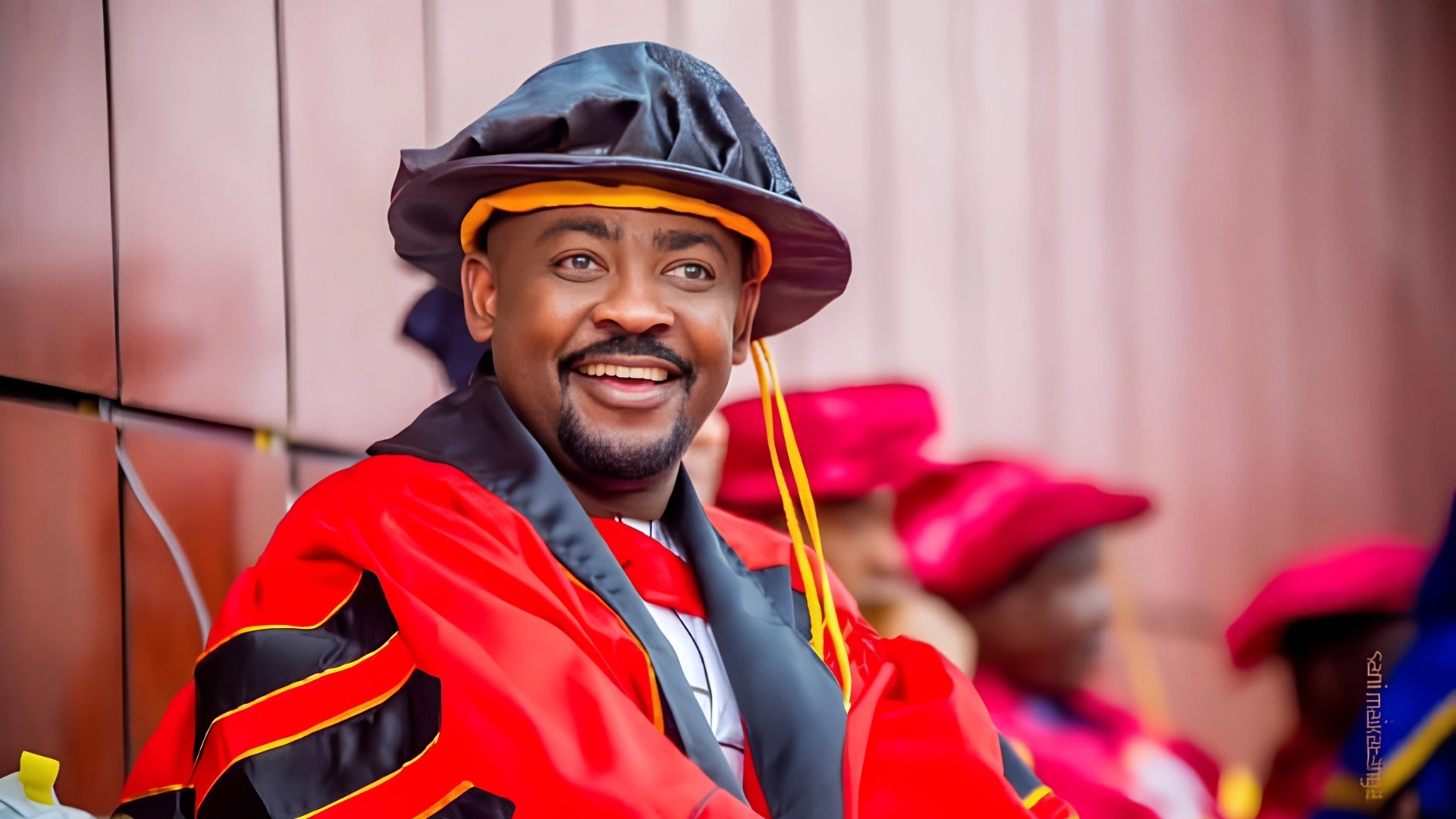
Professor Adamu Abubakar Gwarzo represents a distinctive generation of African leaders who have moved beyond the conventional understanding of education as merely imparting knowledge to embrace it as a powerful instrument of human transformation, economic development, social mobility, innovation and nation-building.
Born January 1, 1978, in Lagos State, Nigeria, with proud roots in Kano’s Gwarzo Local Government Area, Professor Gwarzo has forged an extraordinary career anchored on a single, transformative conviction: Africa’s future hinges on the quality, accessibility and relevance of its higher education. His life journey seemingly bridges rigorous scholarship, entrepreneurship, institutional leadership, philanthropy and social responsibility, making him a defining force in modern African education.
He is far more than just a proprietor of educational institutions. He is an architect of opportunities. Through his vision, he builds platforms where young Africans acquire critical knowledge, hone essential skills, unlock their potential and take an active role in transforming their societies.
This educational philosophy is the core of MAAUN Group of Universities, encompassing Maryam Abacha American University of Niger, Maryam Abacha American University of Nigeria, Franco British International University Kaduna and Canadian University of Nigeria, Abuja. Together, these institutions share a unified mission: democratizing access to affordable, high-quality education while cultivating the next generation of talented leaders.
A Scholar of Dual Disciplines, A Professor Across Two Fields
Professor Gwarzo’s academic journey is remarkable for both its breadth and depth.

He pursued his higher education in France, earning a Bachelor’s degree in French, a Master of Arts in French, a PhD in French Linguistics and a second PhD in Higher Education.
These achievements culminated in his appointment as a professor in Modern European Languages and Leadership, a rare distinction that established his dual professorship, anchored by dual doctoral qualifications. The rare convergence of language, humanities, leadership and higher-education scholarship deeply enriched his worldview.
This rich academic foundation carries significance for Africa, a continent whose trajectory depends on leaders who not only understand abstract knowledge, but also the complex interplay of institutions, cultures, languages, leadership systems and international cooperation.
His fluency in French and English, together with Hausa and Yoruba, further equips him with a rare capacity to navigate Nigeria’s rich linguistic landscape and engage seemingly across both Francophone and Anglophone.
From Scholarship to Institution Building
Professor Gwarzo’s most enduring legacy lies in translating his educational philosophy into thriving institutions. He is the founder and catalyst behind the expanding network of a group of universities spanning Nigeria and Niger Republic:
* Maryam Abacha American University of Niger (MAAUN), Maradi
* Maryam Abacha American University of Nigeria (MAAUN), Kano
* Franco-British International University (FBIU), Kaduna
* Canadian University of Nigeria (CUN), Abuja
The pioneer campus was established in Niger Republic in 2013, laying the groundwork for his subsequent institutions in Nigeria. International quality-assurance bodies recognise his founding of four private universities as a landmark contribution to the expansion and elevation of African higher education.
The core of his vision is the conviction that Africa need not export its brightest minds to secure world-class education. Instead, the continent can, and must, build world-class institutions on its own soil. This philosophy is evident in his drive to establish institutions that combine international standards with African realities.
His universities actively bridge the gap between academia and industry by embedding technology, entrepreneurship, innovation, employability, leadership, research, professional development and global exposure in every graduate.
Building Cross-Border African Education Ecosystem
Professor Gwarzo’s institutional footprint is particularly significant because it transcends national borders. Spanning Maradi in Niger Republic, Kano, Kaduna and Abuja in Nigeria, his educational investments present deliberate, strategic efforts to establish an interconnected African higher-education ecosystem.
Yes, the true measure of his impact extends beyond the number of institutions he has established for the region. His work acts as a powerful catalyst for regional transformation, fueling knowledge production, skills development, human capital, employment, entrepreneurship, innovation, community development, and sustainable economic growth.
His position as the president of the Association of African Private Universities (AAPU) has extended his transformative vision well beyond his campuses. Under his leadership, AAPU plays a pivotal role in strengthening collaboration, elevating quality assurance standards, building institutional capacity and advancing private higher education across Africa.
The AAG Foundation: Turning Philanthropy into Development
At the centre of Professor Gwarzo’s social-impact philosophy is the Adamu Abubakar Gwarzo Foundation. Beyond education, his humanitarian work is institutionalised through the Abubakar Adamu Gwarzo Foundation. Driving by the belief that academic institutions alone cannot solve systemic societal challenges, the foundation delivers targeted interventions across education, scholarships, healthcare, youth and women empowerment, empowerment, entrepreneurship, skills development, water and sanitation, community infrastructure, student transportation, support for vulnerable people, leadership development, humanitarian assistance, environmental sustainability, healthcare outreach, construction of boreholes and gifting student transport to partner institutions, among others.
The philosophy is straightforward: educate the mind, support the vulnerable, build the community, create opportunity, strengthen institutions, leave people better than you found them.
Recognition
Professor Adamu Abubakar Gwarzo’s pioneering work in education and institutional development has earned widespread national and international acclaim. Notable among them is an award from Morgan State University in 2025 for his distinguished scholarship, leadership and edupreneurship.
Honorary Fellowship from the International Association for Quality Assurance in Pre-Tertiary and Higher Education (QAHE). The latter specifically highlighted his contributions to expanding education, educational access and the establishment of four private universities in Africa.
In addition to these honours, various professional and educational organisations within and outside Nigeria continue to acknowledge his leadership. Rather than merely serving as personal accolades, these awards reflect a growing consensus on Professor Gwarzo’s impact on African education and socio-economic development.
A New African Development Model: Education, Philanthropy and Institutions
The most compelling feature of Professor Gwarzo’s legacy is the convergence of three forces:
- Institutional Building: Creating universities and platforms capable of producing knowledge, skills and professionals.
- Philanthropy: Removing economic and social barriers that prevent vulnerable people from accessing opportunities.
- Human-Capital Development: Preparing young Africans to become productive participants in their communities, economies and institutions.
Together, these form a development model that can be expressed as ACCESS -EDUCATION-SKILLS-OPPORTUNITY-EMPLOYMENT-LEADERSHIP-DEVELOPMENT. This is the architecture of sustainable impact.
Prof. Gwarzo’s Legacy
The true measure of Professor
Adamu Abubakar Gwarzo’s legacy cannot be found solely in buildings, campuses, titles or awards, but in the lives he has transformed: in the over 4000 students who received life-changing scholarships; the hundreds of alumni now advancing professional careers in the US, Saudi Arabia, Canada, etc.
His impact lives in the orphan whose education continues uninterrupted; the community provided with clean water, classrooms, tables, chairs and writing materials; the families relieved of tuition fees; the university provided with student transportation; the vulnerable patients receiving critical healthcare; the young persons who acquired essential skills. From civil-society workers empowered to mobilise development and resources to teachers; entrepreneurs granted platforms to thrive, Professor Gwarzo has fundamentally improved the economic prospects of families.
The Road Ahead: One Million Lives Through Education
Looking to the future, Professor Gwarzo has set a bold target: to empower one million lives through accessible higher education and targeted philanthropic support. This ambitious campaign against illiteracy places his work at the very centre of Africa’s paramount demographic challenge: whether the continent can develop its rapidly expanding youth population into a sustainable development advantage. His ongoing efforts offer a practical and proven model on how Africa can educate, skill and empower its next generation to lead on the global stage.
In conclusion, Professor Gwarzo exemplifies the modern African education entrepreneur, scholar and philanthropist whose work centres on human capital development across the continent. Holding dual doctoral qualifications and professorial standings, his academic achievements underpin a practical vision for expanding access to higher education. Through the establishment of private universities, he has converted education and strategy into tangible infrastructure, pairing institutional growth with extensive scholarship programmes to ensure marginalised groups gain access to quality learning.
Beyond education, Gwarzo’s impact extends into comprehensive social development through his dedicated Foundation and community interventions. His philanthropic framework addresses critical socio-economic barriers by integrating education with healthcare, clean water access, livelihood support and mobility initiatives.
Furthermore, his continental engagements actively strengthen higher education networks beyond national borders, reinforcing his core conviction that investing in Africa’s people is the key driver for the continent’s long-term progress.

