 Follow Us on Google News
 Follow Us on Google Discover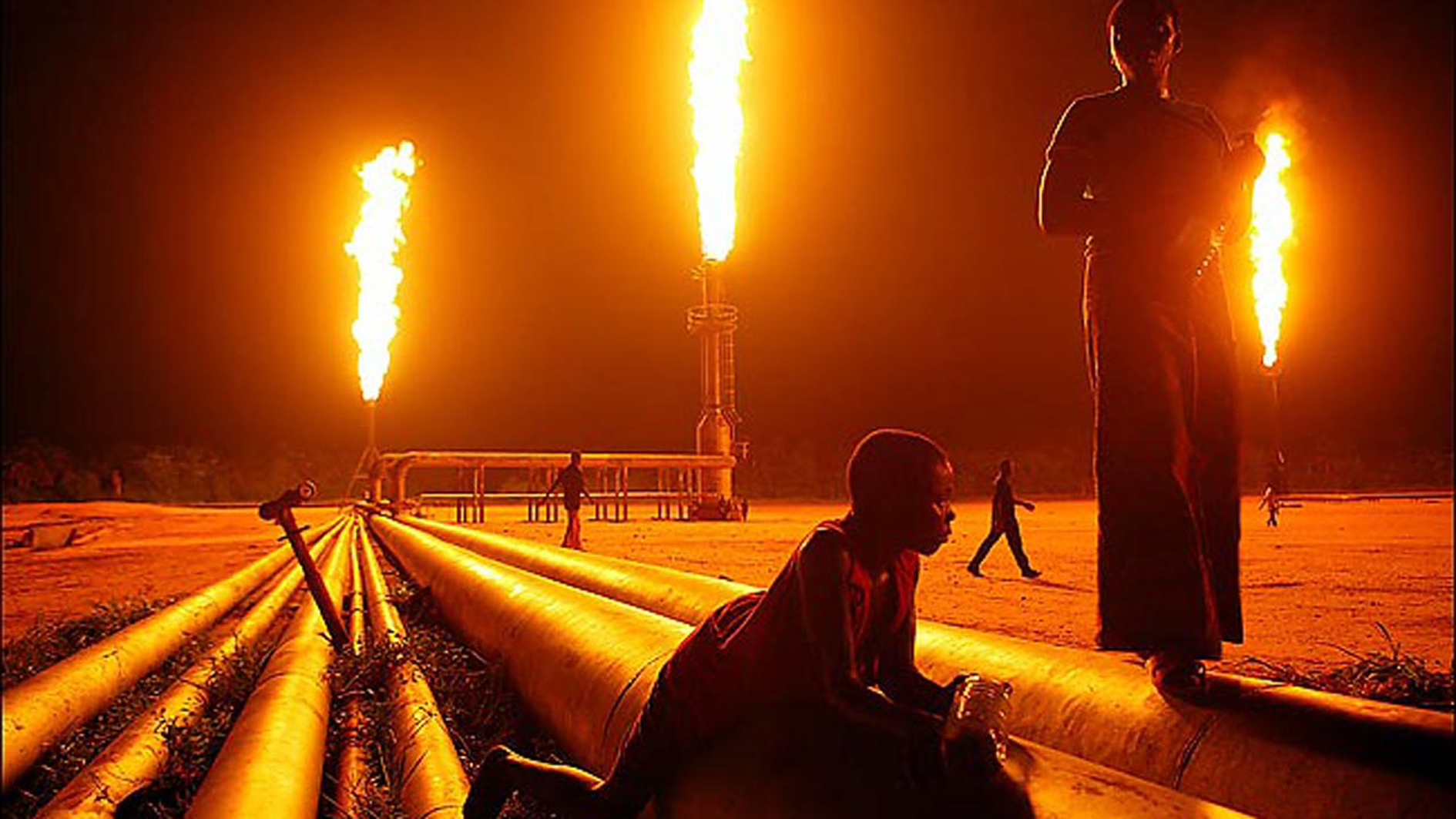
Flared gas near $1b in 2025 as stakeholders seek fresh measures
Nigeria’s long-running battle to eliminate gas flaring is entering another critical phase, with the Federal Government threatening to revoke the licences of investors that fail to develop projects awarded under its gas flare commercialisation programme, even as oil producers continue to flare significant volumes of natural gas.
The warning by the Nigerian Upstream Petroleum Regulatory Commission (NUPRC) comes against the backdrop of N521.87 billion collected from gas-flare penalties in 2025, a substantial revenue stream that has, however, not translated into the elimination of routine flaring.
The development yesterday raises a fundamental question from stakeholders who queried whether increasingly punitive regulation can achieve what years of penalties, policy reforms and commercialisation initiatives have failed to deliver.
NUPRC Chief Executive, Oritsemeyiwa Eyesan, disclosed the planned regulatory action during a working visit to the Minister of State for Petroleum Resources (Gas), Ekperikpe Ekpo, in Abuja, where she presented an update on the Nigerian Gas Flare Commercialisation Programme (NGFCP).
Eyesan said the Commission reviews the performance of each award one year after it is granted and would act where investors fail to demonstrate meaningful progress.

“Where there is insufficient progress, the Commission will take appropriate regulatory action, including revocation of the award where necessary,” she said.
Under the programme, 43 flare gas sites were initially identified, while 27 sites have so far been awarded for development, with implementation ongoing despite resistance encountered in some areas.
The latest threat is significant because the commercialisation programme was designed to address one of the fundamental weaknesses in Nigeria’s approach to gas flaring, where simply penalising producers for burning associated gas does not necessarily create the infrastructure or commercial conditions required to capture and monetise it.
The government therefore sought to turn what is currently an environmental liability into an economic asset by allowing investors to develop flare sites and commercialise the gas.
Although the commercialisation plan initially faced a delay of over six years, the delay has become more consequential as gas flaring continues to deprive the economy of potentially valuable energy resources while imposing environmental and health costs on oil-producing communities.
NUPRC’s 2025 penalty figures show that collections were highly volatile throughout the year.
In January, the Commission collected only N839 million from gas-flare penalties against a monthly budget of N58.32 billion, representing just 1.44 per cent performance and a shortfall of N57.48 billion.
Collections increased sharply to N10.29 billion in February, equivalent to 17.64 per cent of the monthly target, before rising further to N55.20 billion in March, or 94.64 per cent of the target.
The upward movement was interrupted in April, when collections fell to N30.41 billion, representing 52.14 per cent of the monthly budget. Receipts recovered to N42.99 billion in May and climbed to N68.94 billion in June, exceeding the monthly target by N10.62 billion.
July produced N53.11 billion, while August recorded N59.42 billion, slightly above the N58.32 billion target.
The highest monthly collection came in September, when N69.08 billion was recorded, representing 118.46 per cent of the monthly budget.
Collections remained above target in October at N61.90 billion before falling to N51.84 billion in November and N48.86 billion in December.
Taken together, NUPRC collected N521.87 billion during the year against an annualised target of about N699.84 billion. This represented 74.57 per cent performance and left a shortfall of approximately N177.97 billion.
The figures demonstrate the scale of the financial penalties associated with gas flaring but also show that the revenue mechanism has not, by itself, resolved the underlying problem.
Indeed, Nigeria continued to flare gas even as penalty collections reached hundreds of billions of naira.
The strongest quarter was the third quarter, which generated N191.55 billion, accounting for about 36.7 per cent of yearly collections. The fourth quarter followed with N162.60 billion, while the second quarter generated N142.34 billion. The first quarter produced only N66.33 billion.
The persistence of flaring becomes clearer when viewed against Nigeria’s gas production and utilisation figures.
Between January 2025 and June 2026, Nigeria produced about 4.132 trillion standard cubic feet of gas and utilised more than 3.823 trillion standard cubic feet, while recording an average flaring rate of 7.3 per cent.
The country flared approximately 301.60 billion standard cubic feet during the 18 months.
At a prevailing gas price of $2.84 per million British thermal units, the flared volume translates into an estimated market value of about $888.24 million.
This is not necessarily equivalent to revenue Nigeria could immediately have earned from the gas, because monetising associated gas requires gathering, processing, transportation, markets and other infrastructure. But the estimate illustrates the economic opportunity embedded in a resource that is still being burned.
The World Bank’s Global Gas Flaring Tracker Report showed that Nigeria remained among the world’s nine largest gas-flaring countries in 2025, with flaring volumes increasing by eight per cent alongside an eight per cent rise in oil production.
The report attributed the increase partly to inadequate infrastructure for transporting associated gas to domestic and export markets, as well as ageing gas-processing facilities vulnerable to operational disruptions.
The country has vast gas resources, but the infrastructure needed to capture and monetise those resources has not developed at the same pace as oil production.
NUPRC says Nigeria’s proven gas reserves have now exceeded 215 TCF, with an estimated total resource base of about 600 TCF.
Chairman of the Board of Trustees, Community Development Committees of Niger Delta Oil and Gas Producing Areas, Joseph Ambakederimo, said the problem requires a broader intervention.
He identified infrastructure deficits, market incentives, regulatory enforcement and local gas-to-power and off-grid monetisation as critical areas that must be addressed if routine flaring is to end.
Ambakederimo argued that captured associated gas could be directed towards captive power generation, industrial hubs and CNG, while small-scale processing plants could convert gas from remote fields into products such as LPG.
He described the NGFCP as having failed to produce the results originally envisaged by the government and supported the threat to revoke licences where investors are not making progress.
His position meant that if the commercialisation programme is struggling partly because of infrastructure and economics, mere reallocating of licences may not solve the problem
Former President of the Nigerian Economic Society, Prof. Adeola Adenikinju, believes the economics of gas utilisation deserve greater attention.
He said the government’s proposed sanctions route, withdrawal of licences or heavier penalties, could be complemented or replaced by incentives that make investment in gas utilisation commercially viable.
“The real question is: why are companies willing to pay penalties rather than invest in gas utilisation infrastructure?” he asked.
According to Adenikinju, marginal-field operators in particular face location and other constraints that can make investment in downstream gas projects difficult.
He suggested the establishment of a fund that companies could access to finance gas-utilisation projects, while operators could also be encouraged to pool resources and develop shared infrastructure where individual projects are not commercially viable.
But the economics of flaring cannot be separated from its environmental and public-health consequences, as Environmental activist and Executive Director of Health of Mother Earth Foundation, Dr Nnimmo Bassey, said the government had not demonstrated sufficient commitment to ending gas flaring, arguing that successive deadlines had effectively become “shifting goalposts”.
For Bassey, the issue goes beyond greenhouse-gas emissions.
He pointed to the health and environmental consequences experienced by communities in the Niger Delta, arguing that gas flaring must be considered alongside the wider impacts of petroleum extraction.
Bassey also questioned the continued burning of specific oil wells and the response to communities affected by persistent gas emissions.
His criticism comes amid a wider concern that the financial value of petroleum production continues to receive greater attention than the environmental costs imposed on communities where extraction takes place.
The Minister of State for Petroleum Resources (Gas), Ekperikpe Ekpo, has urged regulators and operators to accelerate implementation of the commercialisation programme to meet Nigeria’s target of ending routine gas flaring by 2030.
Nigeria has introduced successive policies and deadlines aimed at reducing flaring, while penalties have created a financial deterrent. The NGFCP was subsequently introduced to create another route; rather than simply punishing companies for flaring, investors would capture the gas and convert it into an economic product.

