 Follow Us on Google News


 Follow Us on Google Discover
MTN Nigeria’s ₦620.5 billion capital expenditure in the first half of 2026 has coincided with rising data consumption and a subscriber base that has now crossed 100 million, highlighting the scale of investment required to support Nigeria’s expanding appetite for mobile connectivity.
The operator reported average monthly data consumption of 14.8 gigabytes per user, while broader industry measurements indicate that median mobile download speeds in Nigeria increased from about 16.5 megabits per second at the beginning of the year to 20 Mbps by mid-year.
Taken together, the figures point to two developments occurring simultaneously: substantial investment in telecommunications infrastructure and growing demand from consumers making heavier use of mobile data.
MTN Nigeria’s ₦620.5 billion capital expenditure for the first half of 2026 forms part of a considerably larger investment programme.
Since January 2025, the company has deployed about ₦1.62 trillion in network infrastructure across roughly 66,000 sites.
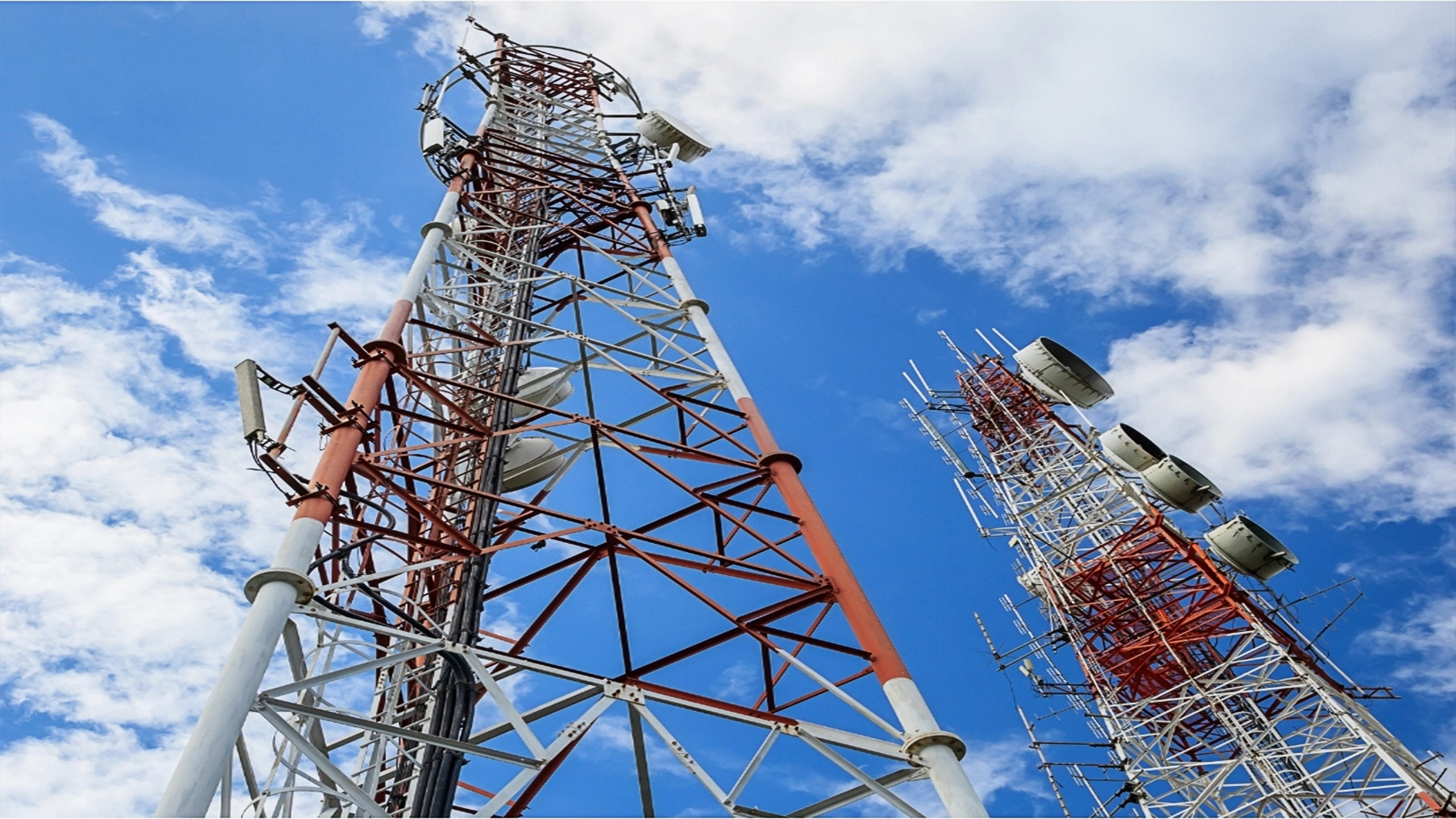
The spending has supported tower upgrades, spectrum deployment, fibre expansion and the continued rollout of 5G infrastructure. MTN’s 5G network has reached about 730 sites across 27 states.

The expansion comes as Nigeria’s telecommunications industry responds to sustained growth in mobile internet usage and increasing smartphone adoption.
Smartphone penetration has reached 66.4 per cent, while MTN reported that average data consumption per user increased by 15.2 per cent year-on-year to 14.8GB per month.
The growth has continued despite a difficult operating environment for telecommunications companies.
Diesel prices have risen substantially since 2023, while exchange-rate movements have increased the naira cost of imported equipment and other infrastructure inputs.
Telecommunications tariffs were also adjusted in 2026 following regulatory approval for increases after years without a major industry-wide review.
Yet demand for mobile connectivity has continued to expand.
MTN’s subscriber base has crossed 100 million, while the company reported 55.7 million active data users during the first half of the year.
The scale of data consumption is particularly significant because the economics of mobile networks increasingly depend not simply on how many subscribers an operator has, but on how intensively those customers use digital services.
Streaming, social media, financial services, cloud applications, remote work and other internet-based activities are increasing the amount of data moving across telecommunications infrastructure.
For operators, accommodating that growth requires continuing investment in spectrum, fibre, towers, transmission capacity and power infrastructure.
Energy remains one of the major cost pressures.
In 2025, diesel accounted for 58.11 per cent of MTN Nigeria’s energy mix, while gas supplied through independent power producers represented 23.63 per cent. Electricity from the national grid accounted for 18.04 per cent, with renewables contributing 0.05 per cent.
Reducing dependence on diesel could therefore become increasingly important to the economics of operating the network.
In June, MTN Nigeria signed its first utility-scale solar agreement, contracting 34 megawatts of solar capacity across eight of its largest sites through a partnership with First WATT.
The project represents part of the operator’s attempt to diversify its energy sources and reduce exposure to diesel costs.
If renewable power becomes a larger component of the network’s energy mix, it could reduce some of the operating-cost pressures associated with running telecommunications infrastructure in a country where grid electricity remains unreliable in many locations.
Infrastructure security presents another challenge.
MTN Nigeria Chief Technology Officer Yahaya Ibrahim said in August that the company’s network experiences around 450 incidents of vandalism daily across fibre and tower infrastructure.

Such incidents range from fibre cuts to damage affecting telecommunications sites, creating additional repair costs and increasing the operational burden of maintaining service.
Against that backdrop, the continued expansion of infrastructure illustrates the amount of capital required not only to extend coverage but also to maintain existing network capacity.
The financial impact of rising data consumption is already visible.
MTN Nigeria reported data revenue of ₦1.699 trillion for the first half of 2026, representing a 38.4 per cent increase year-on-year.
That growth has been supported by the expanding number of active data users, increasing consumption per subscriber and wider smartphone adoption.
The relationship between infrastructure investment and demand is likely to remain central to Nigeria’s telecommunications industry.
More smartphones and heavier data consumption create pressure for additional network capacity. Greater network capacity, in turn, can make more data-intensive digital services practical for consumers and businesses.
The challenge for operators is ensuring that investment keeps pace without making connectivity increasingly unaffordable for consumers.
For MTN Nigeria, the ₦1.62 trillion deployed since the beginning of 2025 provides an indication of the scale involved.
The longer-term test will be whether continued investment in fibre, spectrum, 4G and 5G infrastructure, alongside efforts to reduce energy costs, translates into consistently faster and more reliable connectivity across a wider part of the country.
For subscribers, ultimately, that is the measure that matters.

