 Follow Us on Google News
 Follow Us on Google Discover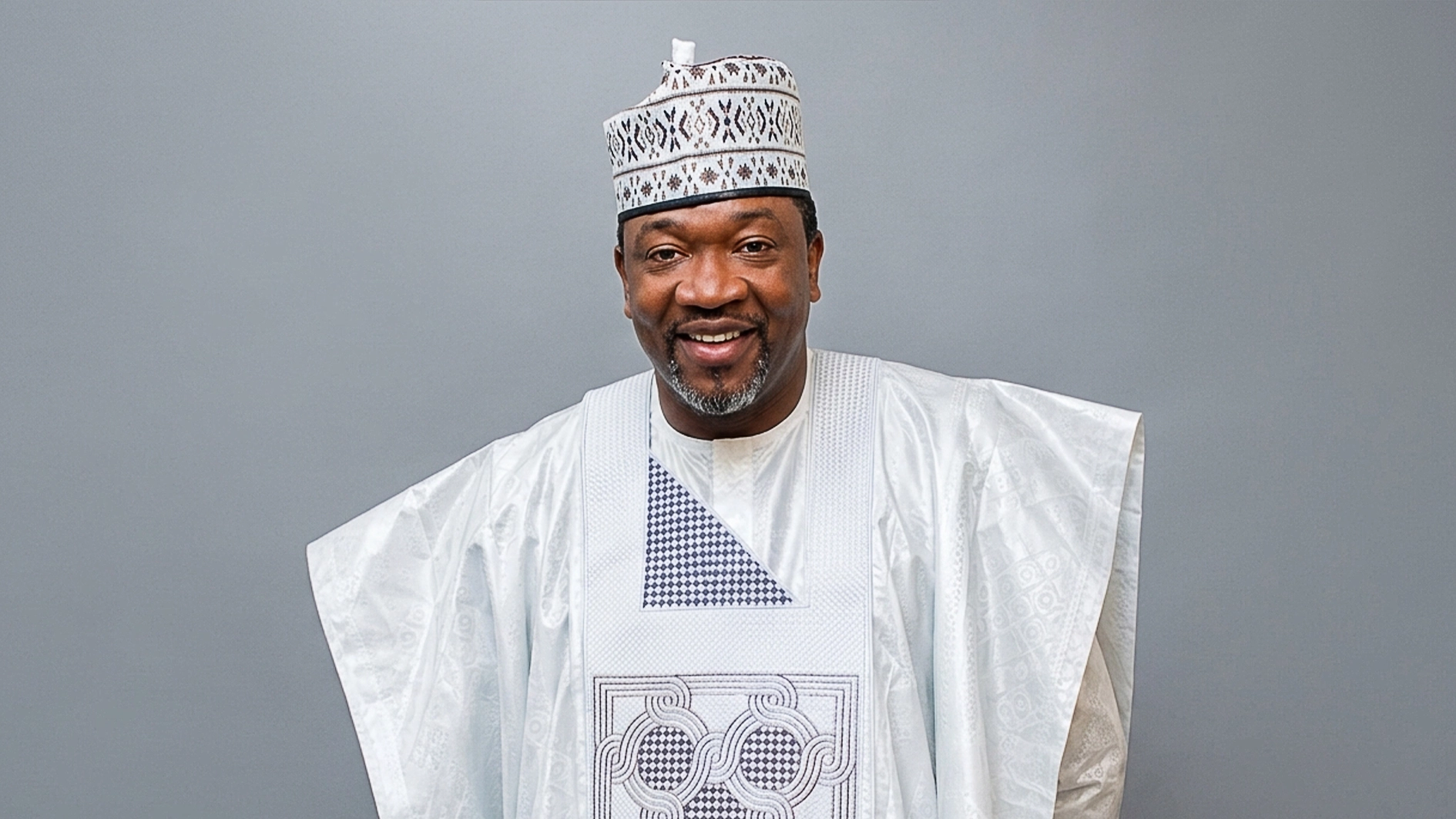
As preparations for the 2027 governorship election gather pace in Taraba State, Professor Nuhu Abubakar Atta is stepping into the political arena with a record that cuts across academics, development finance, public service, business, and political strategy.
For Atta, however, the journey is not simply about adding another name to the list of governorship aspirants. He is presenting himself as someone who has spent years studying public affairs and participating in development and political processes, and who now wants to take direct responsibility for governance.
Born on April 8, 1982, Atta hails from Serti in Gashaka Local Government Area of Taraba State. His professional journey has taken him through Nigeria and beyond, covering international relations, diplomacy, peace and conflict management, development finance and private-sector leadership.
He obtained a doctorate in International Political Relations and Diplomacy from Hankuk University of Foreign Studies in Seoul, South Korea, in 2014. Three years later, he earned another doctorate in Peace and Conflict Management from Freedom University Theological Seminary in the United States.
Those experiences shaped much of his interest in how government, the economy, and social institutions can work together to improve people’s lives.
One of the early areas of his career was development finance. According to his professional biography, Atta was among young experts involved in developing the blueprint for the Delta State Micro-Credit Programme in 2007.

The initiative focused on expanding access to finance for small businesses and supporting agricultural value chains.
That experience appears to have influenced his approach to poverty reduction. His argument has been that lasting economic improvement requires more than temporary assistance. People, he believes, need access to capital, markets and opportunities that can support sustainable livelihoods.
Atta also has experience within the public sector. His professional profile records that he previously served as Special Assistant to the Director of Economic Intelligence in the Office of the National Security Adviser.
The role exposed him to the relationship between economic policy, national security and strategic planning.
Beyond public service, he has undertaken consulting and advisory assignments involving government institutions, multinational organisations and non-governmental bodies.
His areas of work have included public policy, international economic relations, peacebuilding, conflict resolution and institutional management.
Politics, therefore, is not entirely new territory for him.
Before declaring interest in the Taraba governorship race, Atta had participated in the strategy, coordination and operations of three governorship elections, including one in Bayelsa and two in Taraba.
Those experiences gave him an understanding of the political process from behind the scenes. His current ambition marks a shift from advising others to seeking the mandate to govern.
His professional journey has also included youth development and civic engagement. He has been associated with organisations and initiatives focused on young people, social enterprise and national development.
His profile also lists recognition connected with youth development, including a 2016 mention among Forbes’ 30 Most Promising Youth Africa Social Entrepreneurs.
In business, Atta has worked in areas ranging from agriculture and investment to real estate, technology, hospitality and philanthropy.
These experiences have shaped his belief that government should create the conditions for businesses to grow rather than attempt to control every aspect of economic life.
That thinking forms a major part of his proposed agenda for Taraba.
He calls the plan The Taraba Resurgence: A Covenant with the People. It covers power, roads, water, healthcare, education, agriculture, industry, tourism, technology, revenue and security.
At the centre of the proposal is an attempt to connect these sectors rather than treat them as separate government projects.
Reliable electricity, for instance, can support businesses and processing industries. Better roads can link farms to markets. Improved security can encourage investment, while technology can expand access to government services.
On electricity, Atta proposes a mix of hydropower, solar energy, mini-grids and other off-grid solutions. The aim is to expand access to power, particularly in rural communities, while supporting commercial and industrial activity.
His road proposal focuses heavily on rural connectivity. The agenda includes plans to address feeder roads and establish a structure dedicated to road maintenance.
The objective is to make it easier for farmers and rural communities to move goods, reach markets, and connect with other parts of the state.
Agriculture occupies a prominent place in the proposal. Taraba has significant potential in crops such as rice, yam, cassava, maize, tea, coffee, sesame, and cashew.
Atta’s plan seeks to move beyond the sale of raw produce by encouraging processing and agricultural industries within the state.
The agenda proposes support for smallholder farmers, improved extension services, storage facilities and agro-processing clusters.
The idea is simple: agriculture should create more value and more jobs within Taraba.
Tourism also features in the plan, particularly around the Mambilla Plateau, Gashaka-Gumti National Park and other natural and cultural sites.
Atta proposes improved tourism facilities and greater private-sector participation to turn these assets into sources of employment and revenue.
Technology forms another part of his proposal. His agenda includes e-government services, digital education, telemedicine and technology hubs.
The goal is to make digital tools part of everyday governance and economic activity, including in communities far from major urban centres.
Security, however, remains one of the major issues addressed in the blueprint.
The plan proposes stronger community intelligence, improved emergency response, specialised training and closer coordination among security agencies.
It also proposes a Taraba State Security Trust Fund to support equipment, logistics and other security needs.
Atta’s argument is that development cannot succeed where insecurity limits farming, business, investment and movement.
As the 2027 election approaches, Atta’s credentials and plans will face increasing scrutiny. Academic qualifications and professional experience may introduce a candidate, but voters will ultimately judge whether the ideas offered can work.
For Atta, that is the real political test.
His journey from political science and international relations to development finance, public service and political strategy has brought him to a point where he now seeks to move from analysing governance to leading it.
Whether Taraba voters will embrace his vision remains a question for the ballot box.
But as the contest takes shape, Professor Nuhu Abubakar Atta is placing his ideas, experience and plans before the people, with a clear message that Taraba’s future can be approached differently.

