 Follow Us on Google News
 Follow Us on Google Discover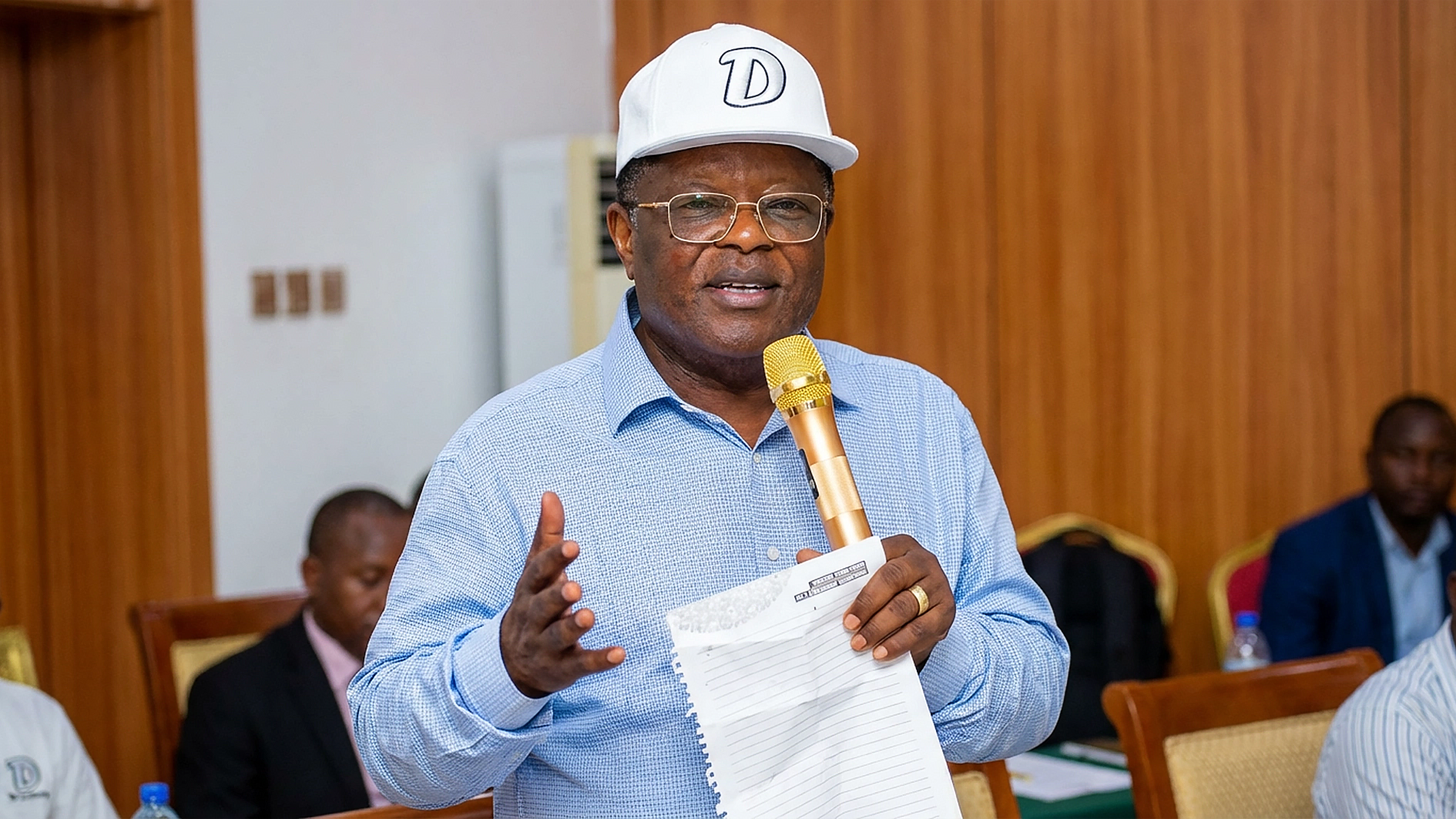
The worsening gridlock on major highways across the nation, particularly the Benin-Agbor-Onitsha Road and the Benin-Sapele-Effurun corridor of the South-South region, is more than an inconvenience for motorists and commuters. It is a stark reminder of how neglect of critical infrastructure can paralyse an entire regional economy and impose enormous costs on businesses, households and government.
For nearly a week, thousands of commuters and truck operators were trapped on roads linking Edo, Delta and other parts of the country. Vehicles carrying raw materials, finished products, food, fuel and other essential commodities were immobilised. Some travellers resorted to trekking long distances, while commercial motorcycles became a desperate alternative for those trying to escape the gridlock.
The consequences are already severe. Manufacturers in the Edo-Delta axis estimate they lost more than N500 billion through factory closures, disrupted supply chains, damaged raw materials, and an inability to distribute finished products. That figure, staggering as it is, does not capture the losses suffered by traders, transporters, farmers and distributors whose perishable goods were trapped on the roads.
The crisis exposes a fundamental weakness in Nigeria’s approach to infrastructure: a tendency to celebrate the commissioning and construction of new projects while paying insufficient attention to maintaining existing assets.
The Benin-Sapele-Effurun Road was once regarded as one of the country’s better highways. Constructed during the administration of former President Olusegun Obasanjo, the road served as a critical economic artery connecting communities, industries and markets across the region. Years of inadequate maintenance, however, have transformed sections of the highway into a nightmare for motorists.
The lesson is clear. Roads are not monuments to be built and forgotten. They are economic assets that require continuous maintenance, timely rehabilitation and effective management throughout their lifespan.

The Federal Government’s decision to intervene following the worsening crisis is welcome. The visit by the Minister of Works, Dave Umahi, and the commencement of palliative works are necessary first steps. But emergency intervention must not become another temporary measure that merely restores traffic for a few weeks or months before the underlying problems return.
What the affected corridors require is a comprehensive rehabilitation strategy based on engineering assessments, drainage improvement, pavement reconstruction and effective traffic management. Where sections have deteriorated beyond repair, reconstruction should be undertaken rather than repeated patchwork.
The Federal Government and the affected state governments must also establish clear responsibility for every section of the road network. The current confusion surrounding federal roads, concession arrangements and state interventions cannot be allowed to become an excuse for inaction. Citizens do not distinguish between federal and state roads when they are stranded. They simply expect government to ensure that critical infrastructure works.
The controversy surrounding the Benin-Asaba Expressway is particularly disturbing. The Minister of Works’ criticism of the concessionaire for removing existing asphalt without adequate drainage and his accusation that the company lacks the technical capacity to execute the project raise serious questions about project supervision and procurement.
If these allegations are established, appropriate sanctions should follow. Public infrastructure cannot be handed to private operators without rigorous technical scrutiny, effective monitoring and clearly enforceable performance standards. A concession is not a licence to compromise engineering standards.
At the same time, contractors must be given realistic working conditions. Heavy rainfall can affect road construction, while continuous traffic can complicate drainage and pavement works. But these challenges should have been anticipated in project planning. Weather, traffic and logistics are not unforeseen circumstances in a country where roads are often constructed during difficult climatic conditions and where alternative routes are limited.
The same principle applies to the Federal Government’s growing catalogue of road projects. The administration says more than 260 palliative and regional road projects have been completed and more than 80 federal highways are under construction or dualisation. These investments are significant. But their value will ultimately be measured not by the number of projects announced, but by whether Nigerians can use the roads safely and reliably.
There is therefore merit in the argument that maintenance deserves the same political attention as new construction. The country cannot afford to build roads at great cost and then allow them to deteriorate because routine maintenance is delayed.
The economic argument for maintenance is overwhelming. Every hour a truck remains stranded represents lost productivity. Every factory that shuts down because raw materials cannot arrive represents lost output and employment. Every farmer whose produce spoils on the highway loses income. Every passenger forced to spend 24 hours on a journey that once took six to 10 hours suffers a loss of time, money and personal safety.
The food-security implications are equally serious. Nigeria already suffers enormous post-harvest losses because of poor transportation, inadequate storage and weak logistics infrastructure. The African Development Bank has estimated annual post-harvest losses at about N3.5 trillion. When major food corridors become impassable, the consequences inevitably extend to food prices and household welfare.
The situation also exposes the weakness of Nigeria’s overdependence on road transportation. Heavy trucks carrying fuel, cement, agricultural produce and industrial inputs place enormous pressure on highways. A functioning rail freight network would provide an important alternative, reduce road congestion and extend the life of major highways.
Government should therefore pursue an integrated transport strategy in which roads, railways, inland waterways and other modes complement one another. It is economically irrational to continue moving virtually every category of heavy cargo by road while watching highways deteriorate under the burden.
The Federal Government’s announcement of new and redesigned road projects in the Southwest, including the N297 billion Ibadan-Ijebu-Ode Road and the planned reconstruction of the Ibadan-Abeokuta Road and other highways, demonstrates the scale of its infrastructure ambition. Such investments are welcome. But the lesson from Benin is that new projects should not come at the expense of maintaining existing roads that millions already depend upon.
More troubling is the politicisation of road infrastructure. Infrastructure should not become an electoral bargaining chip. The suggestion that citizens should reciprocate road construction with votes undermines the principle that public infrastructure is an obligation of government, not a favour for which citizens owe political loyalty.
Roads should be built according to economic priorities, population needs, safety requirements and strategic importance, not electoral calculations. The Benin gridlock should therefore be treated as a national emergency and a policy warning. Immediate palliative works are necessary to free stranded commuters and goods. But beyond that, government should conduct a comprehensive audit of critical highways, establish predictable maintenance schedules, strengthen project supervision and enforce engineering standards.
Nigeria cannot build a productive economy on impassable roads. The country’s manufacturers cannot compete when inputs cannot reach factories; farmers cannot prosper when produce cannot reach markets; traders cannot survive when goods rot in transit; and citizens cannot be expected to tolerate journeys that expose them to danger and needless hardship.
The crisis in Benin is not merely about traffic. It is about governance, economic productivity, food security, public safety and the quality of life of millions of Nigerians. The government must act decisively, not simply to clear today’s gridlock, but to ensure that another Benin does not emerge on another highway tomorrow.

