 Follow Us on Google News
 Follow Us on Google Discover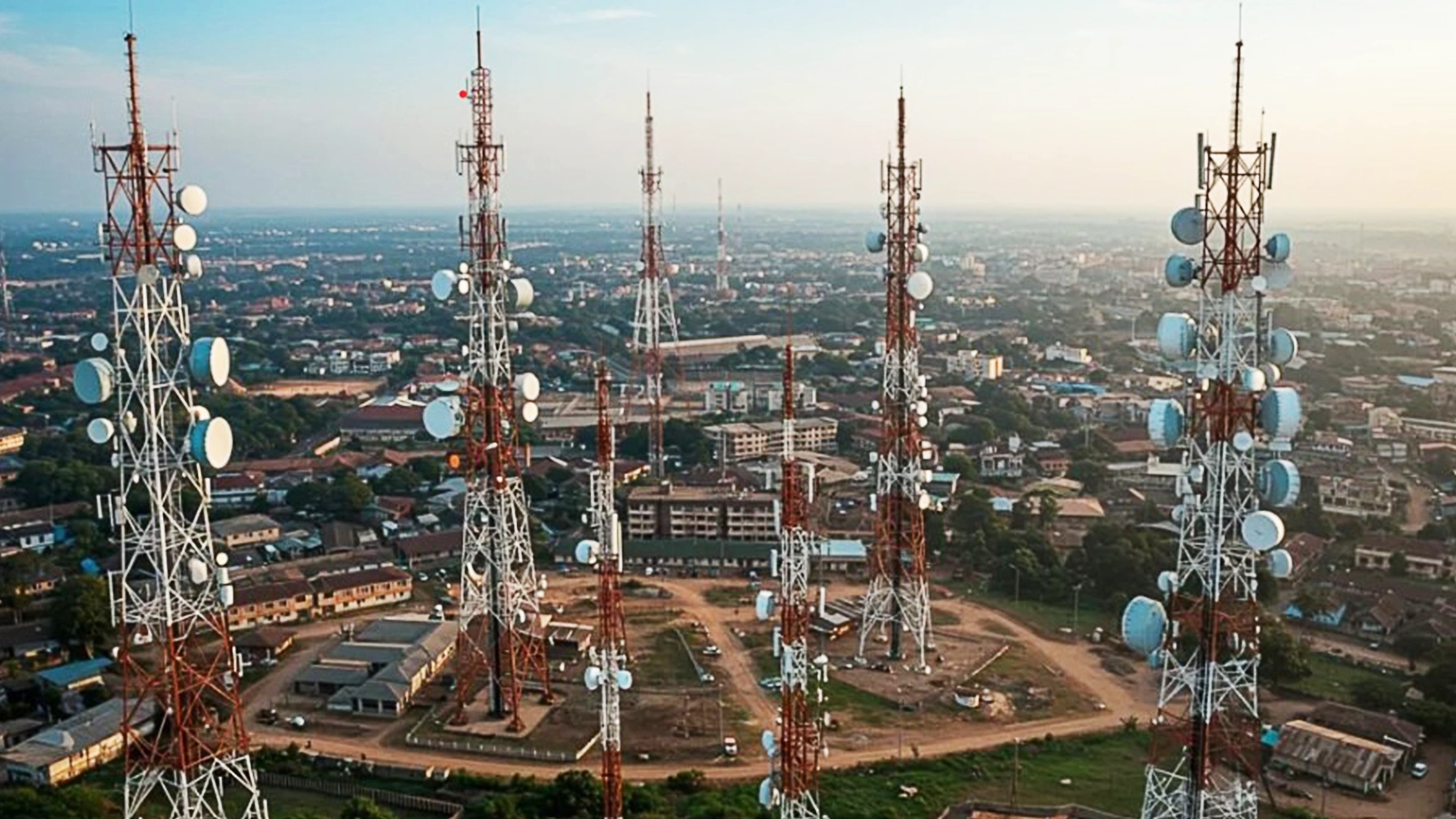
Nigeria and Africa’s broader digital future may be constrained less by capital than by confidence, with regulatory uncertainty, political instability, and unpredictable policies threatening to slow billions of dollars in planned telecommunications investment.
Mobile operators have pledged $76 billion for network infrastructure across Africa between 2025 and 2030, reflecting the continent’s growing importance in the global digital economy. But without greater certainty, the investment could be delayed, diverted or reduced, according to the Global System for Mobile Communications Association (GSMA).
In 2025 alone, the mobile sector contributed $240 billion, or 7.8 per cent, to Africa’s Gross Domestic Product (GDP), supported 13 million jobs and generated $45 billion in taxes and fees. By 2030, its contribution is projected to rise to $290 billion.
The issue, therefore, is not whether capital is available, but whether the investment environment is sufficiently predictable to sustain successive rounds of capital expenditure.
According to GSMA’s Caroline Mbugua, investors can price measurable risks, but uncertainty increases the cost of capital and can discourage further investment.
“Investors can price risk they can measure. What raises the cost of capital is uncertainty, and much of that can be removed at very little cost,” she said in an article titled, Africa’s Digital Investment Gap is a Certainty Problem, not a Capital Problem.

Africa’s paradox is that while only about nine per cent of its population lives outside mobile broadband coverage, nearly one billion people remain offline. This means the challenge is increasingly not simply about network availability, but about whether people can afford and use the connectivity already deployed.
Mbugua identified four critical areas where risk can be reduced: finance ministries, regulators, operators and financiers.
She noted that telecommunications investment decisions are often influenced more by finance ministries than ICT ministries, particularly through taxation of devices.
Of the $45 billion generated in taxes and fees by the mobile sector in 2025, nearly $20 billion came from VAT, sales taxes, excise duties and customs charges on handsets, according to the GSMA analysis.
The impact is significant. An entry-level internet-enabled phone costs an average of 24 per cent of monthly income in low- and middle-income countries, rising to as much as 80 per cent for the poorest consumers.
Mbugua argued that the handset, rather than the network, is increasingly the key determinant of whether people can afford connectivity.
South Africa’s 2025 reform, she said, demonstrated the impact of reducing device taxation. Following the removal of a nine per cent excise duty on entry-level smartphones, entry-level smartphone sales reportedly increased by 80 per cent within 11 months, while feature-phone sales fell by 87 per cent. An additional 1.1 million smartphones were sold.
She described putting more users on existing networks as one of the lowest-risk forms of digital growth.
Currency risk, she added, is another major constraint. Telecommunications operators earn primarily in local currencies while much of their equipment is purchased in dollars. Without reliable access to foreign exchange, operators may struggle to reinvest profits in network expansion.
“Designating telecommunications as critical national infrastructure, with the same forex priority and legal protection as power and water, would remove this uncertainty at zero fiscal cost,” she said.
Spectrum pricing and licensing terms are another pressure point. Mbugua cited analysis of more than 1,000 spectrum assignments across 102 countries, which found that final spectrum prices in developing markets were three times higher than those in developed markets after adjusting for income.
She said operators in the highest-priced markets could have extended 4G coverage to 7.5 per cent more people if spectrum had been priced at the median level. When spectrum was released two years earlier, coverage was reportedly 11 to 16 percentage points higher.
Among the measures she recommended are licence terms of more than 20 years to align payback periods with investment cycles; technology-neutral authorisations to facilitate migration from 4G to 5G; published spectrum roadmaps to support long-term capital planning; and fees denominated in local currency to reduce exposure to currency depreciation.
Nigeria, she said, provides a case study of how regulatory reforms can influence investment.
By October 2025, 11 states had waived right-of-way fees for fibre deployment, while 17 had capped the charges. According to Mbugua, the Nigerian Communications Commission linked the reforms to $1 billion in additional broadband rollout commitments.
Operators, she added, must also match long-term licences with long-term investment commitments by extending infrastructure into areas with slower payback periods, sharing towers and fibre infrastructure rather than duplicating facilities, and ensuring that reductions in handset duties translate into greater device access through financing schemes.
“Every new user improves the return on infrastructure already paid for. Shared infrastructure, separate competition, that is the model that makes the next round of investment bankable,” she said.
Mbugua also called for longer-term financing for telecommunications infrastructure.
She noted that development banks, commercial banks and African pension funds routinely provide infrastructure financing for roads, ports and power projects over periods of 20 years or more, often at infrastructure rates. However, financing for telecom towers and fibre is frequently provided on shorter terms and at higher technology-sector rates.
She argued that the financing mismatch should be addressed because digital infrastructure can have long economic lives, while expensive short-term debt can constrain further investment.
On the demand side, she identified device financing as another missing component.
“Cutting duties helps households that can afford a phone outright. But for households where a handset costs up to 80 per cent of monthly income, installment financing is essential. Banks and development partners must structure credit with operators, not around them,” she said.
She also called for the deployment of billions of dollars already collected through universal service funds but left undisbursed across the continent.
According to her, the ultimate test of a de-risked market is whether investment happens more than once.
“Did the operator that committed capital three years ago return with more — into harder districts than before?” she asked.
Mbugua argued that while some African markets were attracting second-round investment, others had recorded major investment announcements without comparable follow-up capital.
“Africa does not need to convince investors to come. They are already here, with billions committed. What Africa needs is to convince them to stay, and to expand,” she said.
She identified lower device taxes, reliable forex access, spectrum reforms and recognition of digital assets as infrastructure as key measures for reducing investment risk.
“Africa’s digital divide is not a capital problem. It is a certain problem. Solve that, and Africa’s billion offline citizens can finally step into the digital age,” she said.

