 Follow Us on Google News
 Follow Us on Google Discover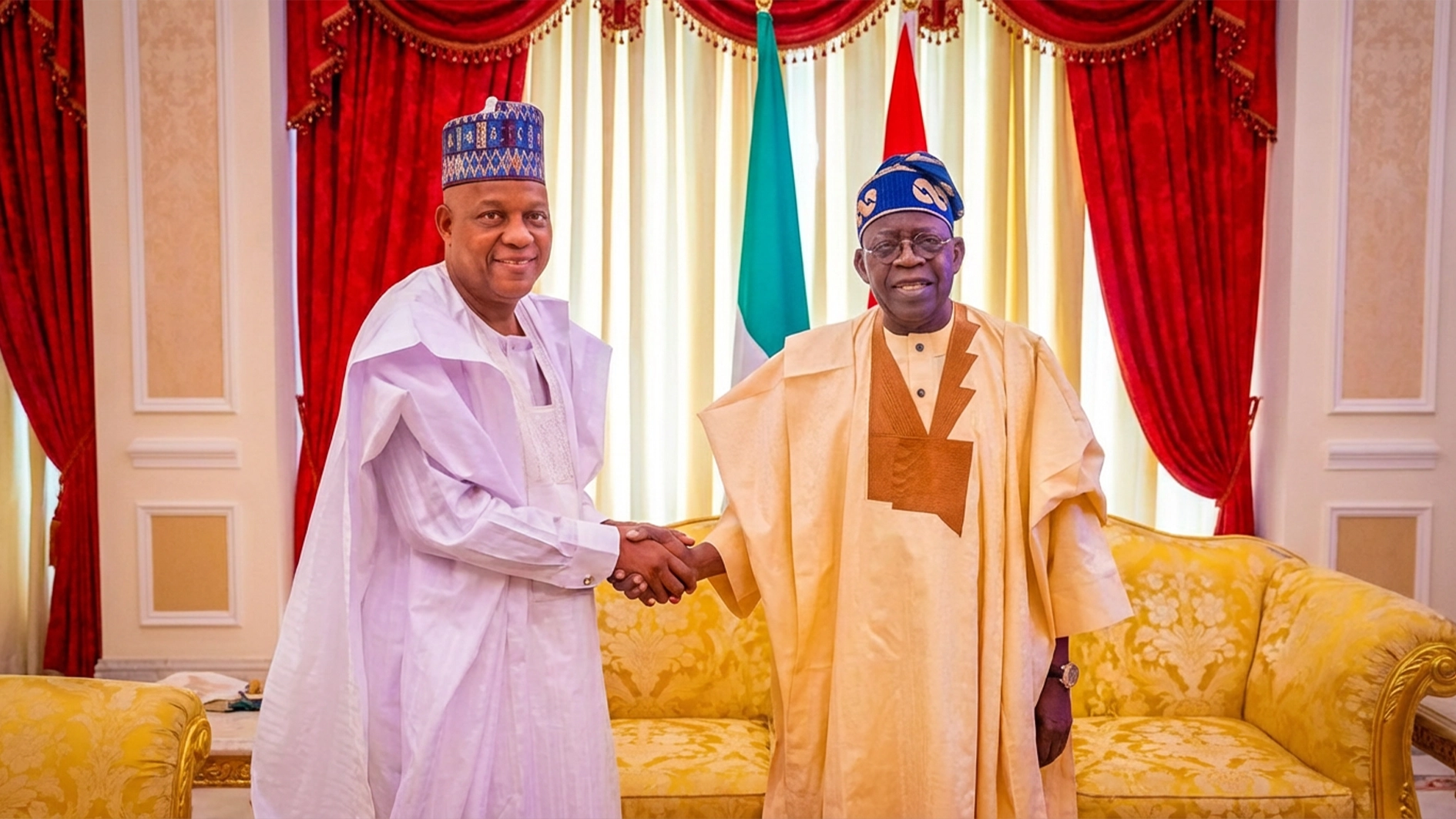
President Bola Tinubu’s extended working vacation in France and Vice President Kashim Shettima’s assignment at the BRICS summit in India, and now at the United Nations General Assembly (UNGA) in New York, have raised questions about who exercises executive authority when Nigeria’s two highest-ranking political leaders are simultaneously abroad, TERHEMBA DAKA reports.
President Bola Ahmed Tinubu left Nigeria on August 30 for a working vacation, first travelling to London, then to Paris, France. The Presidency announced on Monday that the President had extended his vacation by a few days and would return to Nigeria at the weekend.
Shettima, who had earlier represented Tinubu at the 18th BRICS Leaders’ Summit in India, travelled to New York on September 20 to lead Nigeria’s delegation to the 81st UNGA, whose general debate opens yesterday, September 22. He is expected to deliver Nigeria’s statement and participate in high-level and bilateral meetings.
The coincidence has generated a fresh constitutional debate: whether the President can continue to exercise his functions from abroad, whether he is required to formally transmit power to the Vice President while on vacation, and what happens when both men are outside the country.
At the centre of the argument is Section 145 of the 1999 Constitution, which provides for temporary absence. It states that whenever the President is proceeding on vacation or is otherwise unable to discharge the functions of his office, he shall transmit a written declaration to the President of the Senate and the Speaker of the House of Representatives. Until he transmits a declaration to the contrary, the Vice President is to perform the functions of the President as Acting President.
The same provision provides a further mechanism where the President fails to transmit the declaration within 21 days. The National Assembly may, by a simple majority in each chamber, mandate the Vice President to perform the functions of the President until the President communicates his readiness to resume. The provision was introduced in its present form by the 2010 First Alteration to the Constitution following the constitutional crisis surrounding the late President Umaru Yar’Adua’s prolonged absence.

The significance of the provision becomes clearer against the background of Nigeria’s previous experiences with presidential absence.
During the Olusegun Obasanjo administration, the practice of formally transmitting power during periods of absence was not consistently observed, according to subsequent legal arguments. The issue did not, however, produce the constitutional crisis that followed Yar’Adua’s prolonged medical absence.
Yar’Adua’s experience exposed the weakness in the arrangement. After travelling to Saudi Arabia for medical treatment in November 2009, he did not submit the written declaration required under the then-Section 145.
As his absence stretched into weeks, Vice President Goodluck Jonathan could not formally assume the powers of Acting President. On February 9, 2010, after 78 days, the National Assembly invoked the doctrine of necessity to recognise Jonathan as Acting President. The legality and constitutional basis of that intervention were themselves disputed.
Jonathan subsequently became President following Yar’Adua’s death in May 2010. More importantly for the present debate, the Yar’Adua crisis led to the 2010 constitutional amendment, which made written transmission mandatory and introduced the 21-day mechanism that allows the National Assembly to mandate the Vice President to act when the President fails to transmit the declaration.
Under Muhammadu Buhari, the procedure was more regularly formalised. Buhari repeatedly notified the National Assembly of vacations and medical trips and transferred presidential functions to Vice President Yemi Osinbajo. But even that practice generated controversy.
In May 2017, Buhari informed the National Assembly that Osinbajo would “coordinate the activities of government” during his medical trip rather than expressly referring to him as Acting President. The Senate rejected the ambiguity and insisted that Osinbajo should function as Acting President under Section 145.
It is against this history that the present controversy over Tinubu’s absence is being viewed.
Since assuming office in May 2023, there has been no publicly documented instance in which Tinubu transmitted presidential powers to Shettima under Section 145 before embarking on a vacation. Similar questions arose during his foreign vacations in 2024 and 2025. The Presidency has maintained that there was no leadership vacuum because Tinubu remained engaged in the affairs of government while abroad.
The current episode has attracted renewed scrutiny, particularly because Tinubu’s original three-week vacation elapsed on September 20, the same day Shettima left Nigeria for the UNGA.
Legal practitioner Ehidiamen Isibor of E.O. Isibor Attorneys Law Office, Abuja, said Section 145 was deliberately designed to deal with a President who proceeds on vacation or is otherwise unable to perform his functions. In his interpretation, the requirement of a written declaration establishes the formal basis for the Vice President to act.
But the question becomes more complicated because Shettima, rather than being in Nigeria to perform presidential functions, is himself abroad on official duty.
The Presidency has maintained that there is no leadership vacuum. It said Tinubu has remained in touch with developments at home and continues to direct the affairs of government while on his working vacation. It cited, among other actions, his directive for an independent panel to investigate the deaths of 37 suspected illegal miners in Minna.
The government has also stressed that Shettima is carrying the President’s mandate in New York and will deliver Nigeria’s national statement. The Presidency said the Vice President’s representation at the UNGA ensures Nigeria remains fully represented at the international gathering.
Yet the arrangement has attracted criticism from opposition quarters. African Democratic Congress (ADC) National Publicity Secretary Bolaji Abdullahi has questioned who is constitutionally in charge when both Tinubu and Shettima are outside Nigeria. He has also queried the role of Secretary to the Government of the Federation, George Akume, who has represented the President at some official functions during the absence of the two principal executive office holders.
Former Vice President Atiku Abubakar has similarly questioned the absence of a publicly disclosed letter transmitting presidential authority to Shettima, particularly after the 21-day period.
Emmanuel Onwubiko of the Human Rights Writers Association of Nigeria (HURIWA) takes the argument further, insisting that the President should formally hand over to the Vice President if he is operating outside Nigeria on vacation.
For Onwubiko, the issue is territorial: the President is elected to govern Nigeria and should not, in his view, continue to exercise presidential authority from abroad without formally activating the constitutional mechanism for the temporary transfer of functions.
His position, however, contrasts with the interpretation offered by Isibor and Dr Kunle Yusuf, Director-General of the Civil Society Organisation on Community Advancement and Humanitarian Empowerment Initiative (CSCHEI).
Yusuf argues that governance should not be reduced to the physical location of the President or Vice President. He instead points to the administrative structure of government, arguing that career officials, ministers, and other institutions continue to implement government decisions regardless of where the President is physically located.
For him, the increasing use of technology and electronic governance also means that physical presence should not automatically be equated with an inability to govern.
The constitutional distinction between temporary absence and vacancy is, however, clearer.
Section 146 deals with situations in which the office of the President becomes vacant, including death, resignation, impeachment, permanent incapacity, or removal from office. In such circumstances, the Vice President assumes the office of President.
The President of the Senate enters that succession arrangement only when the offices of President and Vice President are both vacant. The provision, therefore, does not expressly establish the Senate President as Acting President merely because the President and Vice President are simultaneously outside Nigeria.
This distinction is important in the present circumstances because neither Tinubu nor Shettima has ceased to hold office. Their absence from Nigeria is therefore different constitutionally from a vacancy in either office.
The more immediate issue is whether Tinubu has transmitted the written declaration contemplated under Section 145 and, if so, what arrangements have been made to exercise presidential functions while the Vice President is also outside the country.
The Constitution does not expressly set out a separate procedure for the unusual circumstance in which the President is abroad and the Vice President, who would ordinarily act in his absence, is also abroad on official duty. This is where the competing interpretations become significant.
Isibor acknowledges that simultaneous absence could raise questions in an emergency requiring an immediate decision at the highest level of government. He suggested that such circumstances could potentially bring the Senate President into consideration under the doctrine of necessity, although that would be different from saying that the Constitution automatically transfers presidential powers to the Senate President.
Onwubiko, on the other hand, considers the continued exercise of presidential functions from abroad without a formal handover problematic.
Yusuf sees the matter differently, arguing that the machinery of government remains operational and that the important test should be whether the government’s institutions continue to function.
The Presidency’s latest position reinforces that interpretation. With Tinubu expected back in Nigeria at the weekend after extending his working vacation, the government maintains that he has remained engaged with affairs at home.
Meanwhile, Shettima’s presence at the UNGA means that Nigeria has senior representation at the international gathering.
The controversy, therefore, goes beyond the immediate whereabouts of the two leaders. It touches on how Nigeria interprets constitutional authority in an era in which government decisions can be communicated and implemented remotely.
It also raises a question of institutional clarity: if both the President and Vice President are outside the country at the same time, who has the authority to make an immediate presidential decision in an emergency that requires the physical presence or direct authority of the Commander-in-Chief?
That question has acquired additional political significance as preparations for the 2027 elections intensify. Any uncertainty surrounding the exercise of executive authority is likely to attract greater scrutiny from opposition parties, civil society organisations and the public.
For now, however, the constitutional provisions distinguish between absence and vacancy. Section 145 establishes a procedure for temporary transfer of presidential functions when the President proceeds on vacation or is otherwise unable to discharge his functions, while Section 146 deals with an actual vacancy.
Tinubu’s extended working vacation and Shettima’s UNGA assignment, therefore, present an unusual constitutional and administrative circumstance, but not, on their face, a straightforward succession under Section 146.
The unresolved issue is whether the constitutional procedure for temporary transfer of functions has been fully activated and, given that the 21-day period has now elapsed, what constitutional and institutional steps, if any, should follow.
That, rather than the mere fact that both leaders are abroad, remains at the heart of the debate over who runs Nigeria.

