 Follow Us on Google News
 Follow Us on Google Discover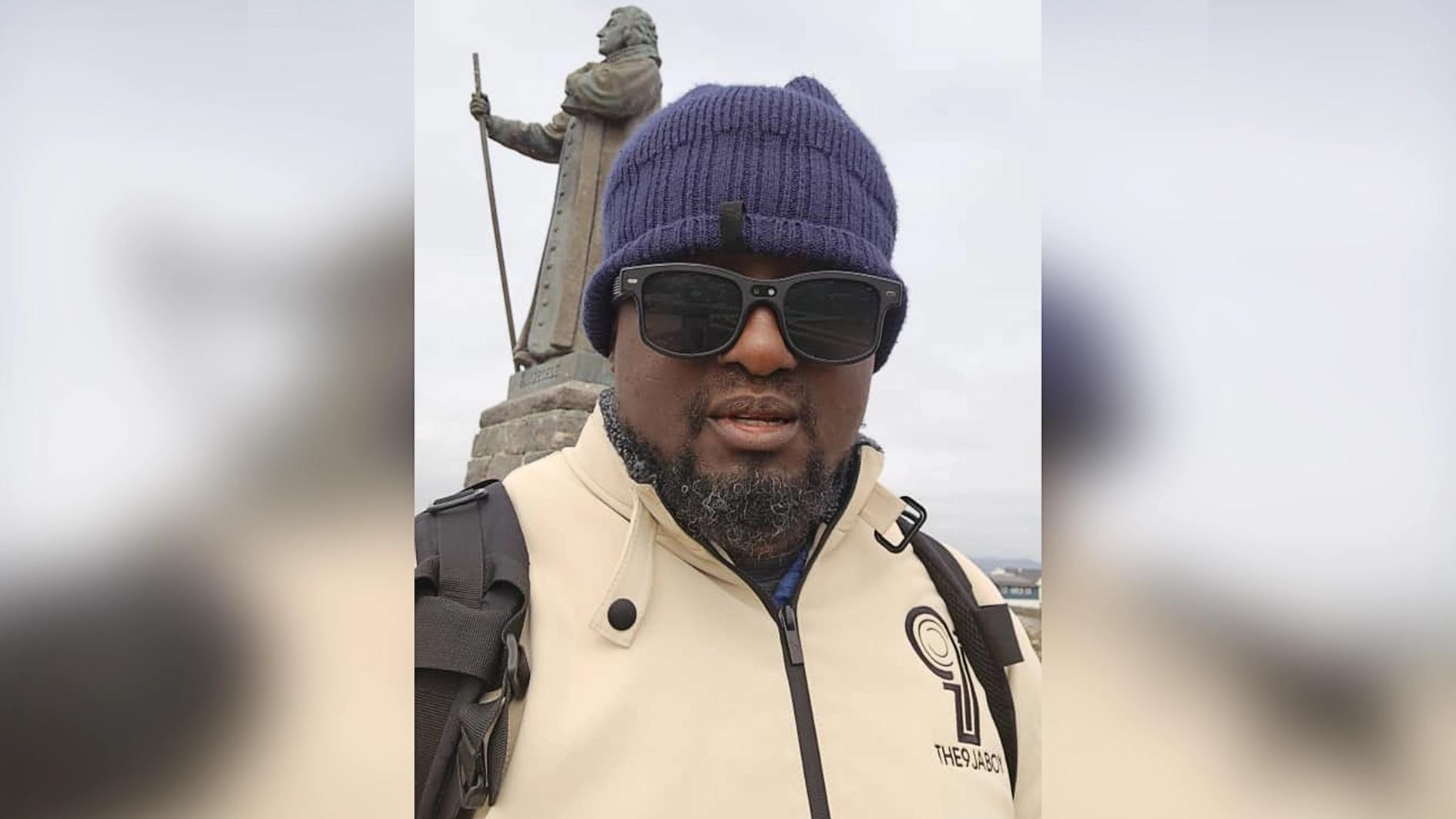
International traveler and travel documentarian, McDolly Ogundana, has called on Nigeria, Spain, the European Union and African transit countries to intensify efforts to curb deaths along the Atlantic migration route, warning that the journey to Europe should not end at sea.
Ogundana, who is popularly known as The9jaboy, made the call, on Wednesday, in a statement issued in Ibadan, the Oyo State capital.
He said his experience in Tangier, Morocco, where he stood looking across towards Spain, made him appreciate the dangerous reality facing thousands of desperate Africans who undertake perilous journeys in overcrowded and unseaworthy boats in search of better opportunities.
Ogundana said, “How many more people must die at sea before we treat unsafe migration as the humanitarian emergency that it is?”
He stressed that his intervention was not an argument against migration, adding that migration had always been part of human civilisation, while Nigerians had travelled around the world to study, work, establish businesses and contribute to other societies.
Ogundana, who is regarded as one of Nigeria’s most travelled citizens, has travelled to more than 130 countries using a Nigerian passport. He said his experiences navigating visa restrictions, refusals, additional scrutiny and complicated border requirements had strengthened his belief that limited passport mobility should never mean limited dreams.

“Yet my travels have also taught me something important: limited passport mobility should never push anyone into surrendering their life to a smuggler. The problem is not that Africans want better lives. The problem is when desperation convinces people that dying for one is a reasonable risk,” he said.
On the scale of the crisis, Ogundana cited figures from the International Organization for Migration, saying approximately 60,000 migrants and refugees had reached Europe by sea by mid-September 2026, representing about 39 per cent fewer arrivals than the approximately 98,000 recorded during the comparable period of 2025.
He said at least 2,292 people had been recorded dead or missing during the period, compared with 1,999 during the comparable period a year earlier.
“In other words, fewer people are making these journeys, but the journeys have become deadlier. The actual number could be higher because not every disappearance or shipwreck is documented,” he said.
Ogundana said the West African Atlantic route towards Spain’s Canary Islands remained particularly dangerous, noting that the IOM recorded 17,788 irregular arrivals in the Canary Islands in 2025, a 62 per cent decline from 46,843 in 2024.
Despite the decline in arrivals, he said 54 shipwrecks were recorded on the route, resulting in 1,214 recorded deaths or disappearances.
He further noted that across broader routes from West and Central Africa towards Europe, including the Atlantic, Mediterranean and Sahara, 3,845 migrants were recorded dead or missing in 2025.
“These figures remind us that falling arrival numbers do not necessarily mean the humanitarian crisis is over. Behind every number is a human being – someone’s son, daughter, mother or father; someone who left home believing there was a better future somewhere else,” he said.
Ogundana also referred to a recent tragedy involving a migrant boat that departed The Gambia and was rescued near Spain’s Canary Islands after spending 27 days at sea.
He recalled that five deaths were confirmed, while survivors reportedly told migrant-rights organisation Walking Borders that as many as 83 people, including women and a baby, may have died during the journey, although the larger figure had not been independently confirmed.
He said 41 survivors were brought ashore in Gran Canaria, while three others required hospital treatment.
Ogundana noted that the tragedy occurred at a time when official figures showed arrivals to the Canary Islands from West Africa had fallen by more than half in 2026.
“That combination tells us something important: success cannot be measured only by how many boats fail to reach Europe. It must also be measured by how many lives are saved,” he said.
The travel documentarian called for a coordinated four-point response, beginning with stronger public-awareness campaigns that allow survivors and affected families to tell young Africans the realities of desert crossings, overcrowded boats, trafficking and migrant smuggling.
He also urged Nigeria to work with European countries to expand transparent legal labour-migration pathways where genuine employment opportunities exist, including in agriculture, healthcare, construction, hospitality and technology.
Ogundana also called for stronger intelligence and law-enforcement cooperation among Nigeria, Spain and relevant African transit countries to dismantle trafficking and smuggling networks, alongside targeted investment in vocational training, entrepreneurship, agriculture, technology and job creation in communities where irregular migration is prevalent.
“Telling a young unemployed Nigerian simply, ‘Don’t go,’ will achieve little if that person believes there is nothing to stay for. We have to provide credible alternatives,” he said.
He proposed a sustained Nigeria–Spain–Africa Safe Migration Initiative, bringing together Nigeria’s Ministry of Foreign Affairs, NAPTIP, NiDCOM, the International Organization for Migration, Spain, the European Union, relevant African governments, civil society, the private sector and diaspora representatives.
According to him, such cooperation should focus on safe migration, expanded legal opportunities, youth employment, anti-trafficking enforcement and human dignity, with measurable outcomes rather than conferences and declarations.
Ogundana said his advocacy reflects what he has sought to represent through The9jaboy: Representation, Inspiration and Authenticity, while demonstrating that Nigerians can pursue global opportunities despite the limitations associated with the Nigerian passport.
“For me, travelling to more than 130 countries has never been only about collecting passport stamps or counting countries. It is about showing what is possible while also being honest about the difficulties of travelling with a Nigerian passport,” he said.
“My message to young Nigerians is simple: travel the world, chase opportunities, cross borders and dream beyond where you were born—but do it legally, safely and with dignity.”
Ogundana said he was prepared to work with government agencies, international organisations, civil society and the media to support safe-migration awareness, document migration corridors responsibly and amplify the experiences of survivors, affected families and policy experts.
“I am not raising this issue simply to criticise government or Europe. I want to be part of the solution,” he said.
“Migration is not merely a political debate; it is a human one. Behind every boat is a story, and behind every missing migrant is a grieving family.
“People should be able to pursue opportunities beyond the borders of the countries where they were born. But nobody should have to die trying.
“The African dream of a better life should not end somewhere in the Sahara Desert or at the bottom of the Atlantic Ocean. The journey should not end at sea.”
…Watch out for detailed story on Saturday, September 26, 2026

