 Follow Us on Google News
 Follow Us on Google Discover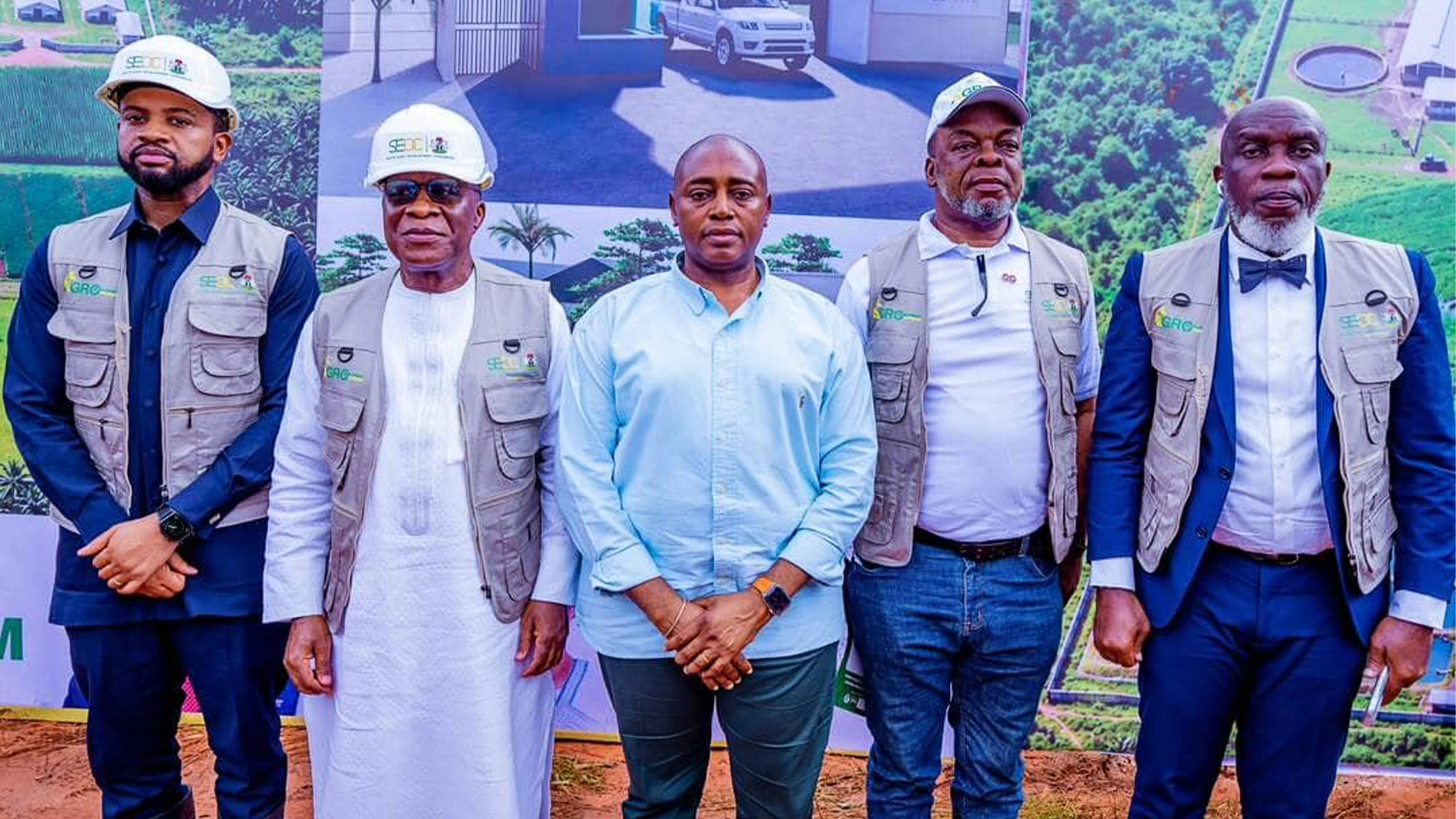
The South East Development Commission, SEDC, has commenced the development of a 200-hectare integrated model farm at Nomeh Unataeze in Nkanu East Local Government Area of Enugu State.
The project, launched as part of the Commission’s South East Agro-Development Programme, seeks to increase food production, create jobs, develop agricultural skills and strengthen value chains across the region.
The statement, signed on Wednesday by the Executive Director, Natural Resources, Agriculture and Rural Development, Dr Cliff Ogbede, said the initiative marked a shift from programme planning to physical implementation.
The flag-off ceremony attracted the Deputy Governor of Enugu State, Barr. Ifeanyi Ossai, who represented Governor Peter Mbah; Minister of Regional Development, Engr. Abubakar Momoh; SEDC Chairman, Dr Emeka Wogu; Managing Director and Chief Executive Officer of SEDC, Mr Mark Okoye; traditional rulers, community leaders and other stakeholders.
Ossai described the project as an example of what collaboration between the state government and SEDC could achieve.
He said the facility would go beyond food production by creating jobs, developing skills and supporting farmers across the agricultural value chain.

“Enugu State is committed to creating the conditions for productive investment, and we are pleased to partner with SEDC on a project that will not only produce food, but also create jobs, develop skills, support farmers and strengthen the agricultural value chain,” Ossai said.
The project forms part of SEDC’s wider agricultural development and mechanisation strategy. The Commission aims to position agriculture as a platform for food security, enterprise development, employment and regional economic growth.
Unlike a conventional farm that focuses on one enterprise, the Nomeh facility will combine dairy, poultry, fisheries, fodder production, greenhouse farming, processing, mechanisation, renewable energy and practical agricultural training.
The integrated model will allow different farm activities to support one another. Fodder production, for instance, will supply the livestock component, while manure and poultry waste can support energy generation and improve soil fertility.
The farm will also include a 200-head dairy herd and poultry production capacity of up to 20,000 birds per cycle. Fisheries infrastructure, silage production and processing facilities will form part of the development.
Okoye said the project would demonstrate how technology, mechanisation, production, processing, training and markets could operate within one agricultural system.
“The South East Agro-Development Programme is about building productive capacity of the region,” he said.
He added that the real measure of success would extend beyond the 200-hectare facility.
According to him, the project would create opportunities for young people to acquire practical skills, while farmers could gain access to inputs, technical support, mechanisation and markets.
The programme also includes an out-grower scheme designed to bring surrounding smallholder farmers into the agricultural value chain.
The initiative is expected to begin with about 300 households within a 10-kilometre radius of the farm. The number will increase as production expands.
Participating farmers will have access to planting materials, technical assistance, mechanisation and aggregation services. Dairy farmers will also receive support in breeding, feeding and milk production, with opportunities to supply the farm for processing.
The training centre is expected to accommodate between 100 and 120 trainees at a time. Its programmes will cover dairy husbandry, fodder and silage production, poultry, fisheries and mechanisation.
At full maturity, SEDC projects that the farm could support more than 1,000 direct jobs. It also expects additional opportunities through seasonal activities and the wider out-grower network.
Momoh said the project aligned with the Federal Government’s focus on food production, agricultural productivity, mechanisation, processing and stronger value chains.
“The objective is not simply to produce more food. We must build an agricultural system that is productive, resilient and capable of creating value across the entire chain,” he said.
He stressed the need to produce, process, create markets, reduce post-harvest losses and improve farmers’ incomes.
For SEDC, the project also represents an effort to increase the South East’s contribution to Nigeria’s food supply.
Wogu said the Commission would work with state governments, communities, private investors and development partners to deliver sustainable regional development.
“Regional development requires partnership. The Commission cannot and should not work in isolation from the state governments, communities, the private sector and development partners,” he said.
SEDC said the Nomeh project would serve as a pilot for similar agricultural and mechanisation interventions across Abia, Anambra, Ebonyi, Enugu and Imo states.
Okoye said the Commission would use lessons from the project to improve and replicate the model across the region.
“Nomeh is the starting point. This is a pilot. We want to learn from what we build here, document what works, improve what does not, and replicate the model across the South East in line with our mandate,” he said.
The host community has also pledged its cooperation. The President General of Nomeh Unataeze, Dr Chukwudi Anyianuka, said residents welcomed the project and understood the responsibility that came with hosting an initiative of its scale.
He said the community was ready to work with SEDC, the Enugu State Government and other partners to ensure that the project creates opportunities for farmers and young people.
The Commission said community participation would remain central to the project, which it described as more than a farming initiative.
It said the broader objective was to build the productive capacity needed for a more food-secure, economically active and resilient South East.

